
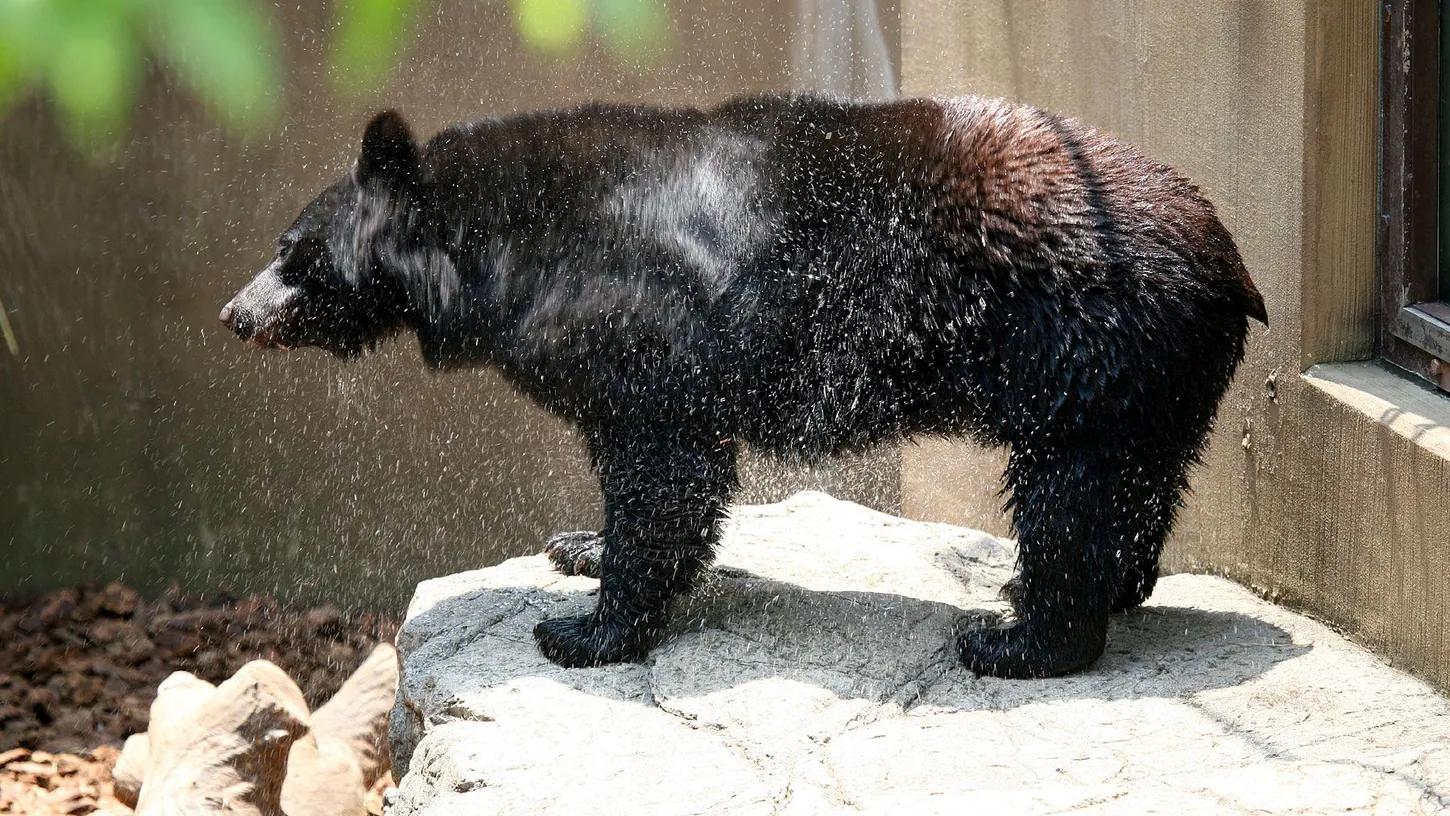
Japan’s Ministry of the Environment is paying for 10 field trials of drones, AI cameras and four-legged robots meant to keep bears out of towns and cities. The teams running them briefed Environment Minister Hiroyoshi Sasagawa on November 25, and the trials run until the end of February 2027.
Most of the test sites are in Tohoku and Hokkaido, where bears come out of the hills most often. Bears injured or killed 76 people in Japan between April and October, six of them fatally, and this month one showed up in the city streets of Maebashi. A year ago Gifu Prefecture was preparing to fly drones that barked like dogs over its mountain villages. The national program goes further, and at least two teams want drones that launch and patrol with nobody standing next to them.
Sasagawa also holds the cabinet’s portfolio for bear damage. He told the teams he expects legal obstacles.
Ten Teams Won Ministry Money Out of 56 Applicants
The ministry picked the 10 projects on October 30 from 56 applications filed between September 8 and October 7. Each project gets about 10 million yen. Applicants had to pair a technology with a named test site and a partner local government.
The program comes out of a bear-damage roadmap Japan’s cabinet ministers adopted in March 2026, and the ministry runs it through a new urban bear response team. The ministry’s preliminary injury count shows how spread out the problem is: Iwate leads with 12 victims and three deaths, and Fukushima has 11 victims.
TOPPAN Plans Remote Drone Patrols Along Fukushima Bear Routes
Tokyo-based TOPPAN wants to install drone bases along rivers that bears use as travel routes in Fukushima Prefecture, in the towns of Aizubange and Yugawa. Operators would fly the drones remotely on patrols at dawn and dusk, when bears are most likely to appear, NHK reported.
The ministry’s project list describes the rest of TOPPAN’s plan as a “remote shared” drone platform tied into other systems, so a sighting turns into an alert that is shared instantly.
Six of the 10 Projects Put Drones Over Bear Country
Six of the 10 project titles name drones, and five name cameras that spot bears. SOARREC flies infrared drones in Morioka to find bears and map their routes into town. NTT East pairs data analysis with drones in Shari, Hokkaido, and Daitoku is placing “Bear-AI” cameras in Fukushima and Hokkaido.
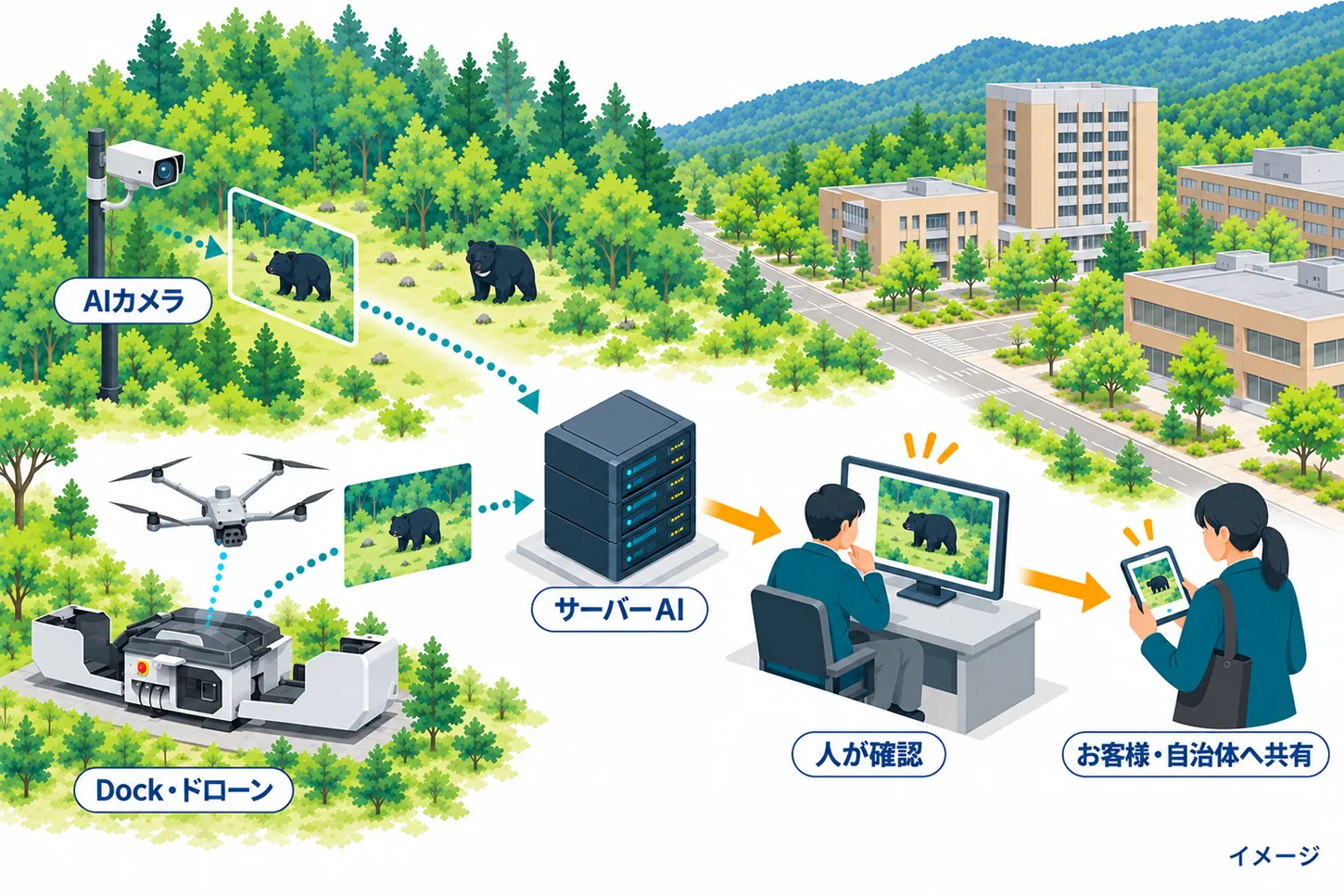
Kyoto equipment maker Fujitaka, which runs a drone school and installs DJI docks, goes furthest toward taking people off the scene. Its trial at the Meiji University of Integrative Medicine campus in Nantan pairs Pegara Japan’s video AI with a docked drone. When the AI detects a bear, staff get a phone alert and the drone is launched remotely from its dock to check the scene. Fujitaka’s release points to its DJI Dock 3 installs and names aging hunters and overstretched town staff as the problem. It is taking inquiries from local governments for fiscal 2027.
Persol Business Process Design is the one team bringing robots. In Nasu, Tochigi Prefecture, it is testing four-legged robots alongside AI cameras and drones to detect bears at the edge of town and steer them back out.
DroneXL’s Take
Montana already showed that a drone moves bears. In the Fish, Wildlife and Parks study we covered in January 2025, drones beat vehicles and trained dogs at pushing grizzlies away from people, with a biologist flying them on scene. Japan is testing whether the drone can get there before any person does. A dock that launches on an AI alert at 5 a.m. is the useful version for a town whose hunters are aging out. I suspect it’s also what Sasagawa had in mind when he warned about legal obstacles, because those are flights with nobody watching from the ground. The ministry says it will share the results with local governments nationwide. If those results show docked drones reaching bears faster than a hunter can, Japan will have a reason to fix the rules, and that’s the finding I’ll be looking for once the trials end in February.
Sources: Ministry of the Environment, NHK, Fujitaka
DroneXL uses automated tools to support research and source retrieval. All reporting and editorial perspectives are by Haye Kesteloo. Read our editorial standards.
Advertise with DroneXLYour company hereReach 200,000+ drone readers a month with a sponsored article, a banner on your beat, or a partnership.See the options →


