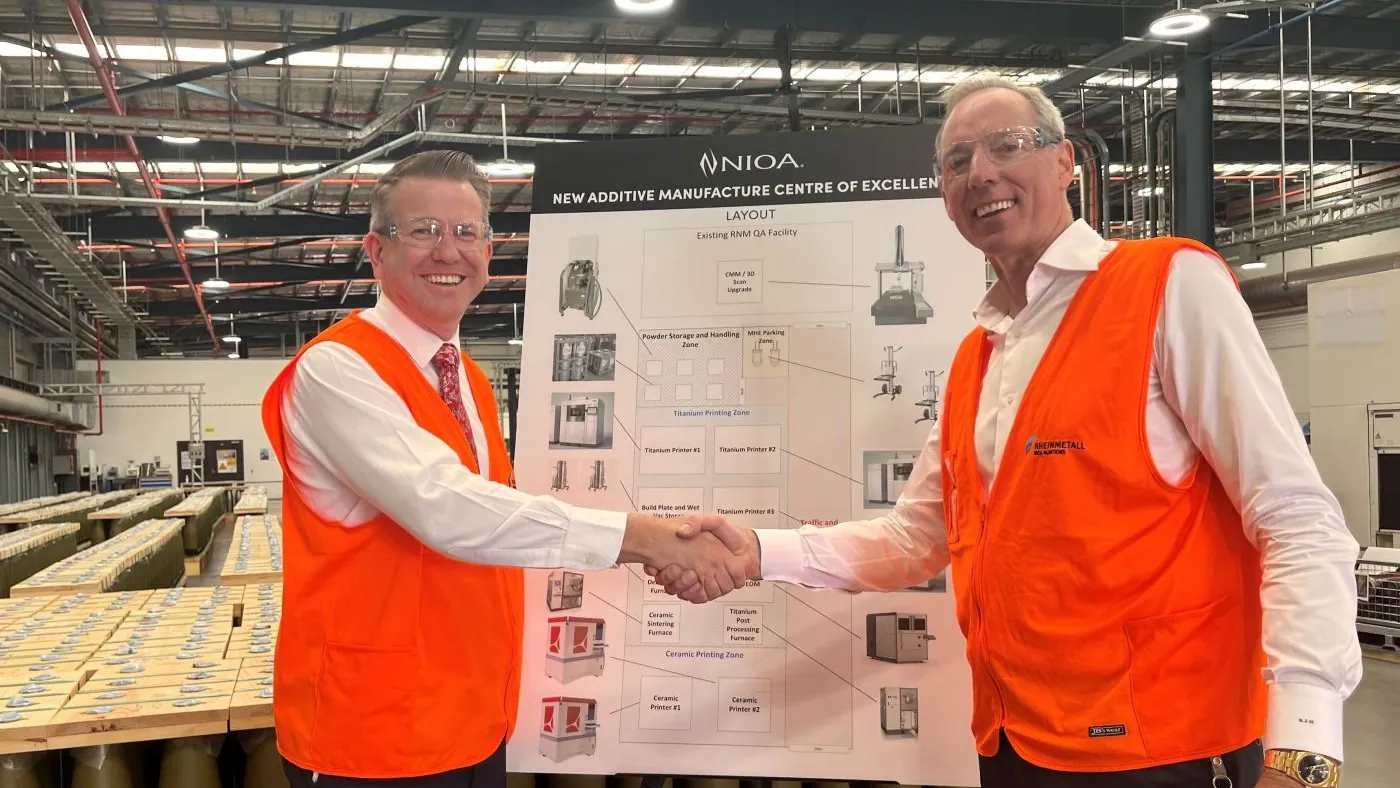
Queensland is giving NIOA up to A$15 million (about US$10 million) to add industrial metal and ceramic 3D printing to the Rheinmetall NIOA Munitions artillery shell plant in Maryborough. Deputy Premier Jarrod Bleijie announced the grant on November 25. The printers are meant to make parts for missiles, rocket motors, drones and counter-drone systems, with the line fully running by late 2028.
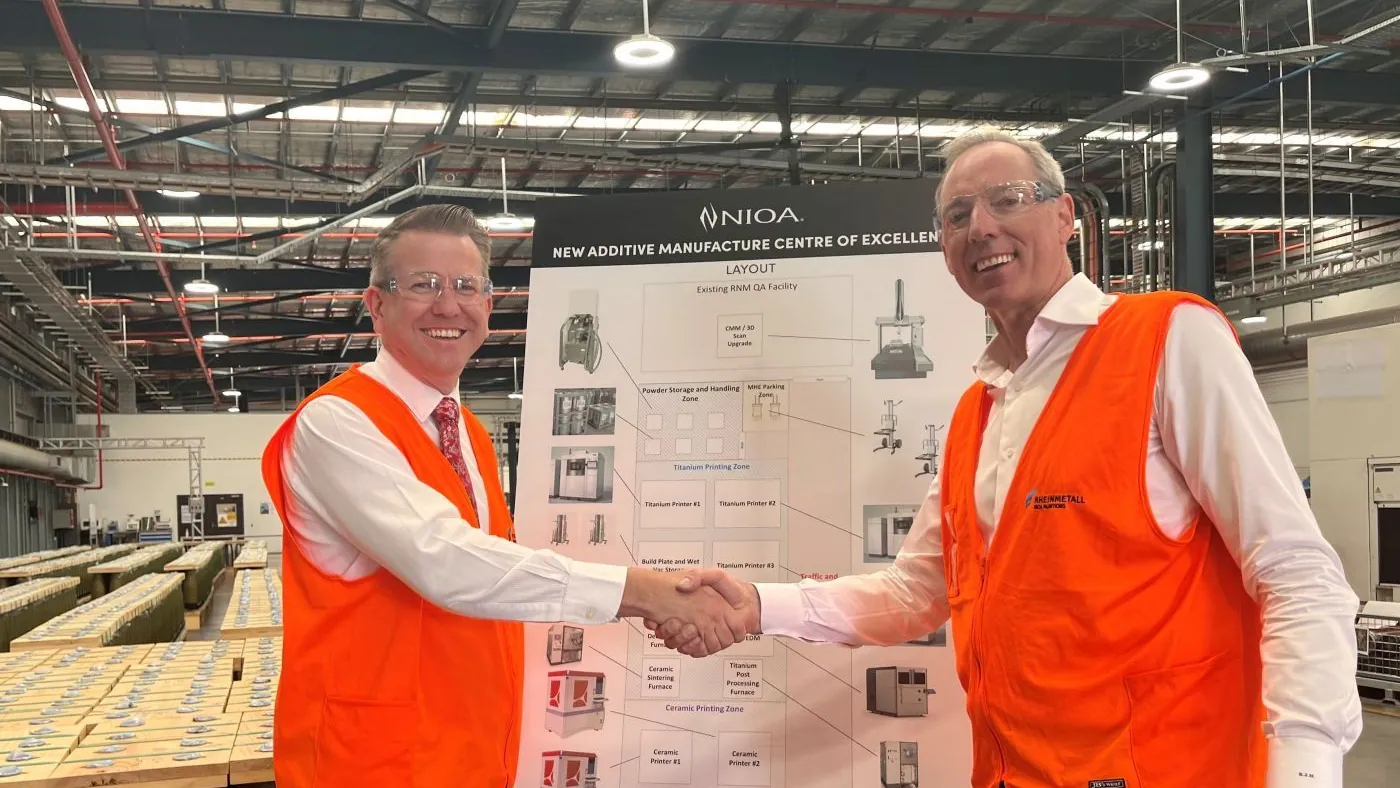
NIOA’s written announcement and the floor plan in its own announcement photo do not list the same printers.
Queensland Pays Half of a A$29.85 Million Printing Line
The A$15 million grant comes from Queensland’s A$180.6 million Sovereign Industry Development Fund and covers about half of a A$29.85 million project, according to the Queensland government statement. The state says the grant takes its defence spending through the fund past A$90 million.
Rheinmetall NIOA Munitions is a joint venture with Germany’s Rheinmetall. It opened in 2022 and forges and machines 155mm artillery shell bodies. The state calls the new line Australia’s first industrial-scale ceramic 3D printing production capability. NIOA’s release adds two post-print sintering ovens, a prototype oven and up to 18 jobs, and says the ceramic parts are for “high-speed defence systems” it does not name.
NIOA’s Floor Plan Shows a Different Printer Mix
NIOA’s formal release lists three ceramic and two metal 3D printers. The layout board behind Bleijie and NIOA CEO Rob Nioa in the company’s photo shows three titanium printers and two ceramic ones, plus a titanium post-processing furnace and a ceramic sintering furnace. The release never names titanium.
The plan also includes an upgrade to the existing quality lab’s coordinate measuring and 3D scanning equipment. Neither announcement names the printer supplier or says which drone or counter-drone parts the line will make first.
NIOA Already Supplies Fuzes and Warheads to SYPAQ’s Corvo Strike
NIOA is not new to counter-drone work. In April it agreed to deliver an inert proximity fuze and an effector payload, and to design a fragmenting warhead, for SYPAQ’s Corvo Strike interceptor, which is being developed under Australia’s ASCA Mission Syracuse program, according to NIOA’s announcement of the deal.
That agreement came days after Canberra set out plans to spend up to A$7 billion on counter-drone capability, which we covered in Australia Bets $5B on Laser and Interceptor Drone Defense. Rheinmetall, NIOA’s partner in Maryborough, is going after the same market in Europe, including a drone shield it is planning with Deutsche Telekom.
DroneXL’s Take
I think missiles, not drones, are the main customer for these printers. Titanium printers on the layout board, ceramic parts for “high-speed defence systems” and rocket motors on the state’s list all point at missiles, and NIOA also runs the Australian Missile Corporation. That is still useful for Australia, which wants to build more of its own weapons instead of waiting on overseas supply chains. But anyone hoping this plant will turn out cheap interceptor drones should note the timeline. The machines are not fully running until late 2028, and neither announcement says which drone parts will come off them.
Sources: Queensland Government ministerial statement, NIOA.
DroneXL uses automated tools to support research and source retrieval. All reporting and editorial perspectives are by Haye Kesteloo. Read our editorial standards.
Advertise with DroneXLYour company hereReach 200,000+ drone readers a month with a sponsored article, a banner on your beat, or a partnership.See the options →