
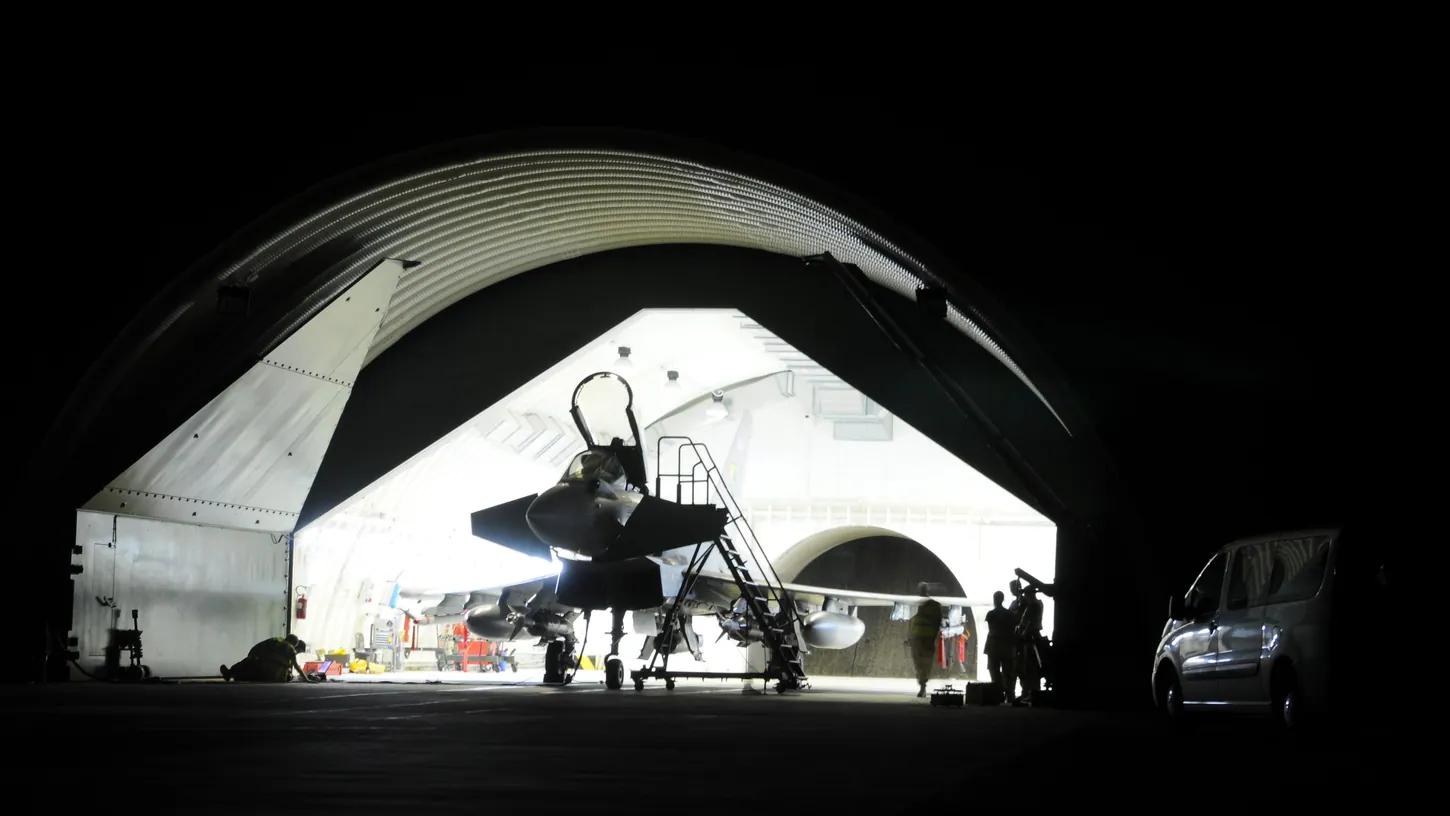
Britain’s Royal Air Force is moving aircraft into hangars and hardened shelters at night to protect them from drone attacks, The Times and Sky News reported on Wednesday, November 25. The Times said troops have also been told to put up Kevlar anti-drone nets, like the ones Ukraine uses, around aircraft that have to stay outside. Neither paper named its sources or said where the threat comes from.
The Ministry of Defence did not confirm the measures. A spokesperson said the ministry takes base security very seriously and is always adapting to potential threats. The reports came a day after MI5 and the MoD warned of a rising Russian sabotage threat to companies supporting Ukraine’s military, and after weeks of alerts at US-run bases in England, including the B-1 pullout from RAF Fairford that US and British officials tie to Iran.
A retired RAF air marshal says the fighters have spent their nights under cover all along.
The RAF’s Large Aircraft Are the Ones Without Shelters
The RAF lacks the hangar space for its larger aircraft, retired Air Marshal Greg Bagwell wrote on X. Its fighters already sleep under cover, much of it hardened. The tankers and transports stay out on the runway or apron, and The Times says those aircraft are getting Kevlar nets.
“No need for panic,” Bagwell wrote, in a post quoted by The War Zone. He added that the big aircraft need other measures, and that the times have changed.
Air Chief Marshal Sir Harv Smyth, the head of the RAF, said on Tuesday night that the service needs to practise spreading its aircraft across the country rather than keep its “eggs in one basket” at a few bases. The RAF already did this in recent months while a new runway was built at RAF Brize Norton, its transport and tanker hub. “We need to do more of that,” Smyth said, as quoted by The War Zone.
The MoD told The War Zone it is spending an extra £470 million on security at military sites, covering physical protection, surveillance and counter-drone systems. It said it has already spent £15 million on drone and counter-drone technology and has restricted the airspace over 44 critical defence sites.
The US Air Force Won’t Say Whether Its Jets in England Get Nets
The US Air Force, which flies F-35s from RAF Lakenheath and tankers from RAF Mildenhall, would not tell The War Zone whether it is adding nets at its English bases, citing operational security. Both bases went to Force Protection Condition Charlie, the second-highest US level, this month.
Mildenhall sent away many of its KC-135 tankers and three of its CV-22 Ospreys at the time, reportedly over Iranian threats. On November 13, US security forces at Lakenheath responded to “suspected unauthorised drone activity”. A ferry pilot later told the BBC the lights were his formation of three Cirrus SR20 light aircraft on its way to Belgium.
The Air Force’s own chief of staff has already said nets work. Gen. Kenneth Wilsbach told Breaking Defense in July that nets that keep a drone costing a few hundred dollars away from a $2 billion aircraft are effective and cheap. In the same interview he said he did not want to spend heavily on hardened shelters.
DroneXL’s Take
I think the nets are the right call, and they are about 18 months late. Operation Spiderweb in June 2025 showed everyone what cheap quadcopters can do to bombers parked in the open, and Britain’s tankers and transports are parked the same way. A net doesn’t care whether the light over the fence is a hostile drone or three Cirrus planes heading for Belgium, and that is why I like it. British bases logged 340 drone incidents in the year to August and the MoD named nobody behind any of them. Until it can say who is flying, Kevlar over the jets it can’t fit indoors is a better use of the £470 million than another round of statements about taking security seriously.
Sources: Reuters, The War Zone, The Times, Sky News, BBC
DroneXL uses automated tools to support research and source retrieval. All reporting and editorial perspectives are by Haye Kesteloo. Read our editorial standards.
Advertise with DroneXLYour company hereReach 200,000+ drone readers a month with a sponsored article, a banner on your beat, or a partnership.See the options →


