Kongsberg, the Norwegian company behind the NASAMS air defense system, has built Ukraine a second air defense system, and this one fires Ukrainian-made missiles. It is called DESNA and it is already in service against Russian drones. Norway said on Tuesday, November 24, that it wants to spread it across more of Ukraine.
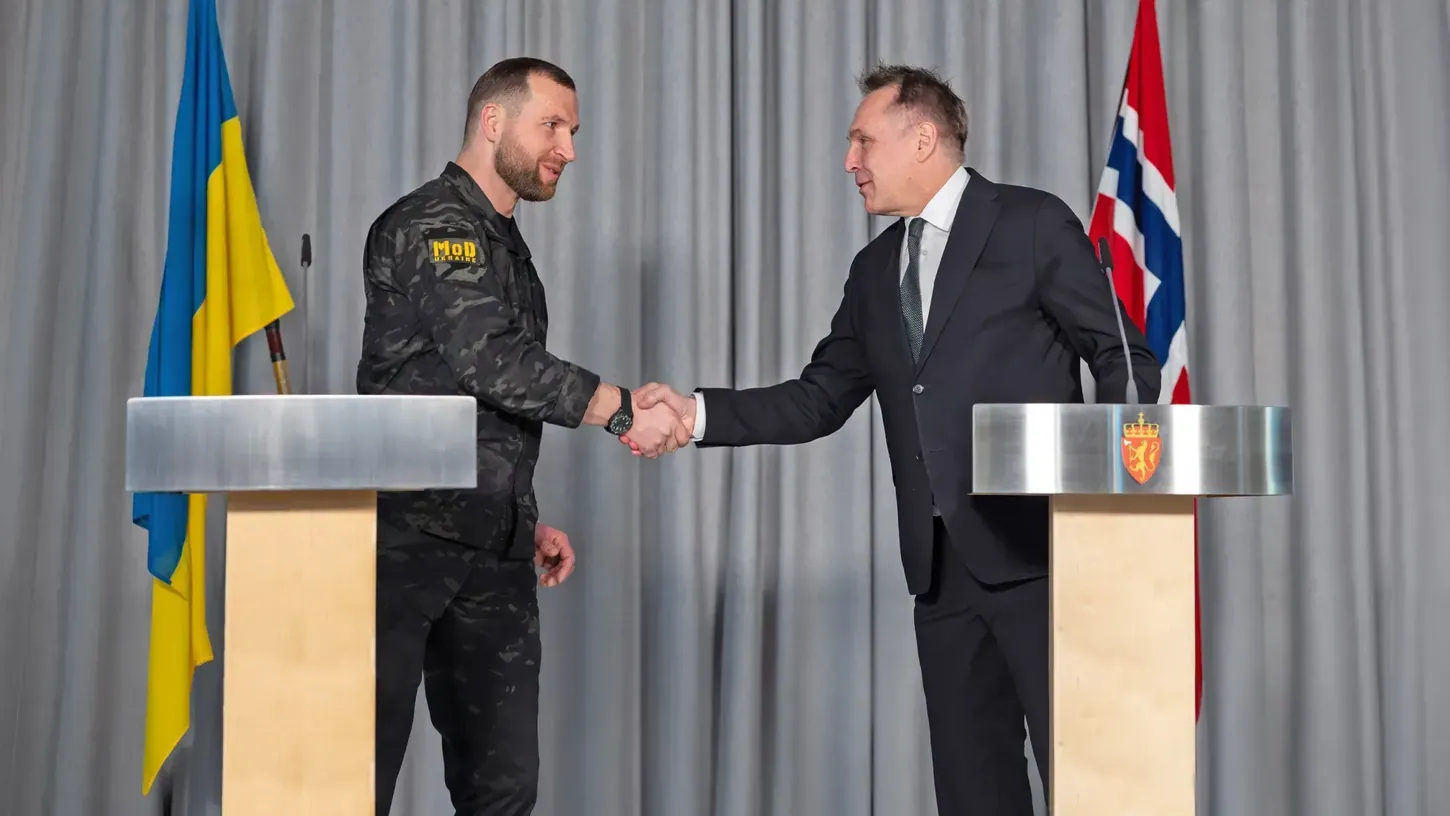
Norwegian Defense Minister Tore O. Sandvik and Ukrainian Defense Minister Yevhenii Khmara discussed the expansion in Oslo. Norway has bought and donated several of the systems in recent months, and Khmara says DESNA is destroying drones, the jet-powered ones included.
Kongsberg and the two governments have not named the missile or the Ukrainian company that builds it. A Ukrainian state arms group showed a missile for a system called Desna at a Polish arms fair in September, and that missile started out as an anti-tank weapon.
DESNA Links Ukrainian Missiles To Kongsberg Fire Control
DESNA consists of Ukrainian-made air defense missiles and launcher units connected to a Kongsberg fire command and control center, the company said on November 24. Kongsberg developed it with Norwegian and Ukrainian authorities and one unnamed Ukrainian partner, and the name comes from a river in Ukraine.
Kongsberg’s announcement says DESNA complements NASAMS, which has been operating in Ukraine since 2022, and that both run on Kongsberg command and control. Kongsberg says the Ukrainian missiles can be built in large quantities at a lower unit cost, and Sandvik said, in remarks carried by NRK, that air defense missiles are scarce on the international market because demand is so high.
Kongsberg CEO Eirik Lie said the company’s staff and their Ukrainian partners “have created new air defence capacity in a short time.” The release gives no price or range for the missile, and the only count of systems delivered is Sandvik’s “several.”
The Only Missile Shown For Desna Began As An Anti-Tank Weapon
Ukroboronprom, Ukraine’s state arms group, displayed the RK-2PZ anti-aircraft missile at the MSPO arms fair in Poland in September. Militarnyi reported it as the missile for a new system called Desna. The RK-2PZ is derived from the Barrier anti-tank missile, part of the Luch Design Bureau’s R-2 family.
Militarnyi’s report describes a laser-guided weapon. The operator picks a target through a television or thermal sight, the system tracks it automatically, and the missile is guided by laser until a proximity sensor sets off a fragmentation warhead. The outlet described Desna as a new launch module for the RK-2PZ on a chassis that had not been shown, and said the system’s specifications were not public.
Kongsberg’s release does not mention the RK-2PZ or Ukroboronprom, so the connection rests on the shared name and on Militarnyi’s reporting. If it holds, the missile would be an anti-tank design adapted to hit aircraft, which is one way to get the low unit cost Kongsberg describes. Ukraine is short of short-range air defense missiles of its own. Pavlo Yelizarov, Mykhailo Fedorov’s partner in a new missile company, said this month that the country cannot yet build a 15-kilometer (9.3-mile) missile with a radar seeker.
Norway Will Test Delta And Plans $7 Billion In Aid Next Year
The two ministers also signed a letter of intent that lets the Norwegian armed forces test Delta, Ukraine’s battlefield software, with no exchange of operational data. Ukraine’s Defense Ministry said Norway’s bilateral aid will be at least $7 billion in 2027, aimed mostly at air defense and unmanned systems.
Norway is the second country in two days to sign for Delta. Germany signed its own letter of intent in Berlin on Monday, on the same terms about combat data. The Ukrainian ministry’s account of the Oslo talks also covers interceptor missiles for existing systems and a project to fit more missile types to the NASAMS batteries Ukraine already runs.
DESNA follows the deal Sandvik and then-Defense Minister Denys Shmyhal signed on November 30, 2025, to build Ukrainian drones with Norway.
Khmara Says DESNA Downs Jet Drones And Gives No Numbers
“DESNA is already working in Ukraine and proving effective at destroying drones,” Khmara said in a Ukrainian-language statement carried by the ministry’s news agency on November 24, in DroneXL’s translation. He named jet-powered drones specifically, and he gave no interception rate or count of drones destroyed.
The claim matters because jet-powered Shaheds are the drones Ukraine’s cheap defenses struggle with. In October, President Volodymyr Zelensky said the best interceptor drone Ukraine has, the Bars, downs up to 30% of its targets. His Defense Ministry has since opened grants for air-to-air missiles launched from drones to catch them. Khmara’s statement, in ArmyInform’s report, calls DESNA a launcher fitted with Ukrainian missiles and integrated with Norwegian fire control.
The expansion has no public shape yet. Reuters reported that the Norwegian ministry said the plan is to use the system in more parts of Ukraine and did not elaborate. None of the statements DroneXL read from Kyiv or Kongsberg gives a budget or a date, and a country at war has obvious reasons to keep the details of its air defenses to itself.
DroneXL’s Take
This is the right way to build air defense in 2026. Kongsberg already had the fire control and Ukraine has the factories and the urgency, so Norway paid to join them and the result is already in service. NASAMS is a Kongsberg and Raytheon product that fires American missiles, and that is the kind of missile Sandvik says the world is short of. A Ukrainian missile on the same kind of command network takes pressure off that supply, and every NASAMS operator, the United States included, should want to know how well it works.
Nobody published that number on Tuesday. I think a ground-launched missile has a better chance against a jet Shahed than a quadcopter does, but Zelensky’s 30% is the only hit rate against these drones I have seen from Kyiv, and Khmara’s “effective” does not replace it. Until Norway or Ukraine says how many jet drones DESNA has shot down, and with which missile, I’d call it promising and unproven.
Sources: Kongsberg, Ministry of Defence of Ukraine, ArmyInform, NRK, Militarnyi, Reuters, Norwegian Ministry of Defence.
DroneXL uses automated tools to support research and source retrieval. All reporting and editorial perspectives are by Haye Kesteloo. Read our editorial standards.
Advertise with DroneXLYour company hereReach 200,000+ drone readers a month with a sponsored article, a banner on your beat, or a partnership.See the options →