
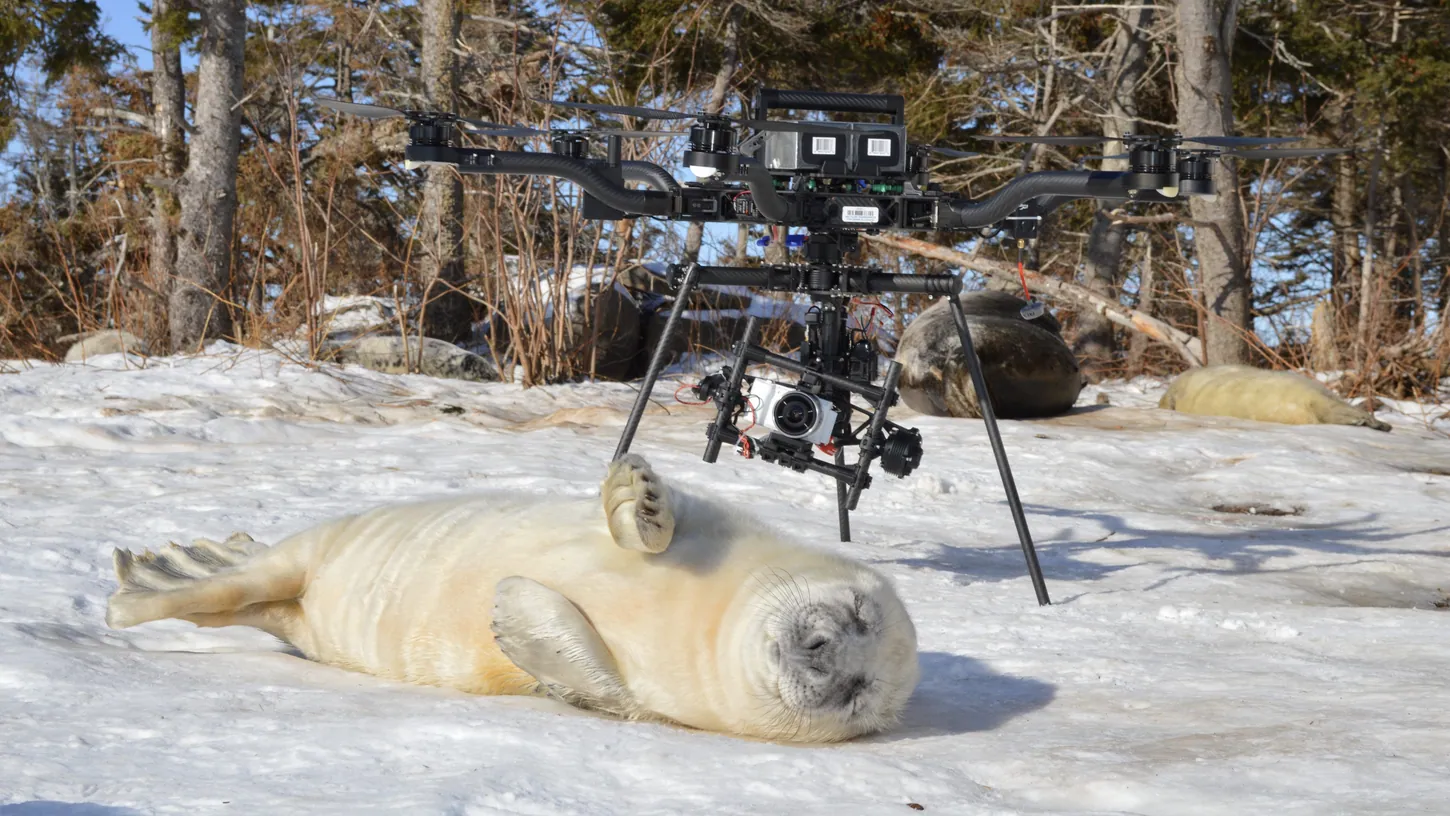
Drones can photograph a seal or a whale and turn the picture into length, width and body volume. They can’t show whether the animal is carrying fat or muscle. That is the warning in a review in Science, announced on November 26, by researchers at the Woods Hole Oceanographic Institution (WHOI), Oregon State University and the University of Maryland Center for Environmental Science.
Michelle Shero, an associate scientist in WHOI’s Biology Department, is the lead author. The review draws on more than a decade of research measuring body composition and energy reserves in Weddell seals. Seen from outside, their pups barely grow between weaning and their first birthday.
Weddell Seal Yearlings Turn Leaner Inside While Barely Growing Outside
Weddell seal yearlings that look little bigger than at weaning are much leaner inside, with muscles built for underwater foraging, says co-author Jennifer Burns of the University of Maryland Center for Environmental Science. Body composition data show they are “directing energy toward maturation rather than structural growth.”
A drone image can’t make that split between lipid and lean tissue on its own, the review says. Weddell seal mothers lose substantial fat and lean tissue while they nurse, and once the pups are weaned they rebuild lean tissue first. Lean tissue comes from muscle and working organs, so losing it can do more harm than losing fat. A photo of a mother getting smaller can’t say how much of the loss was which.
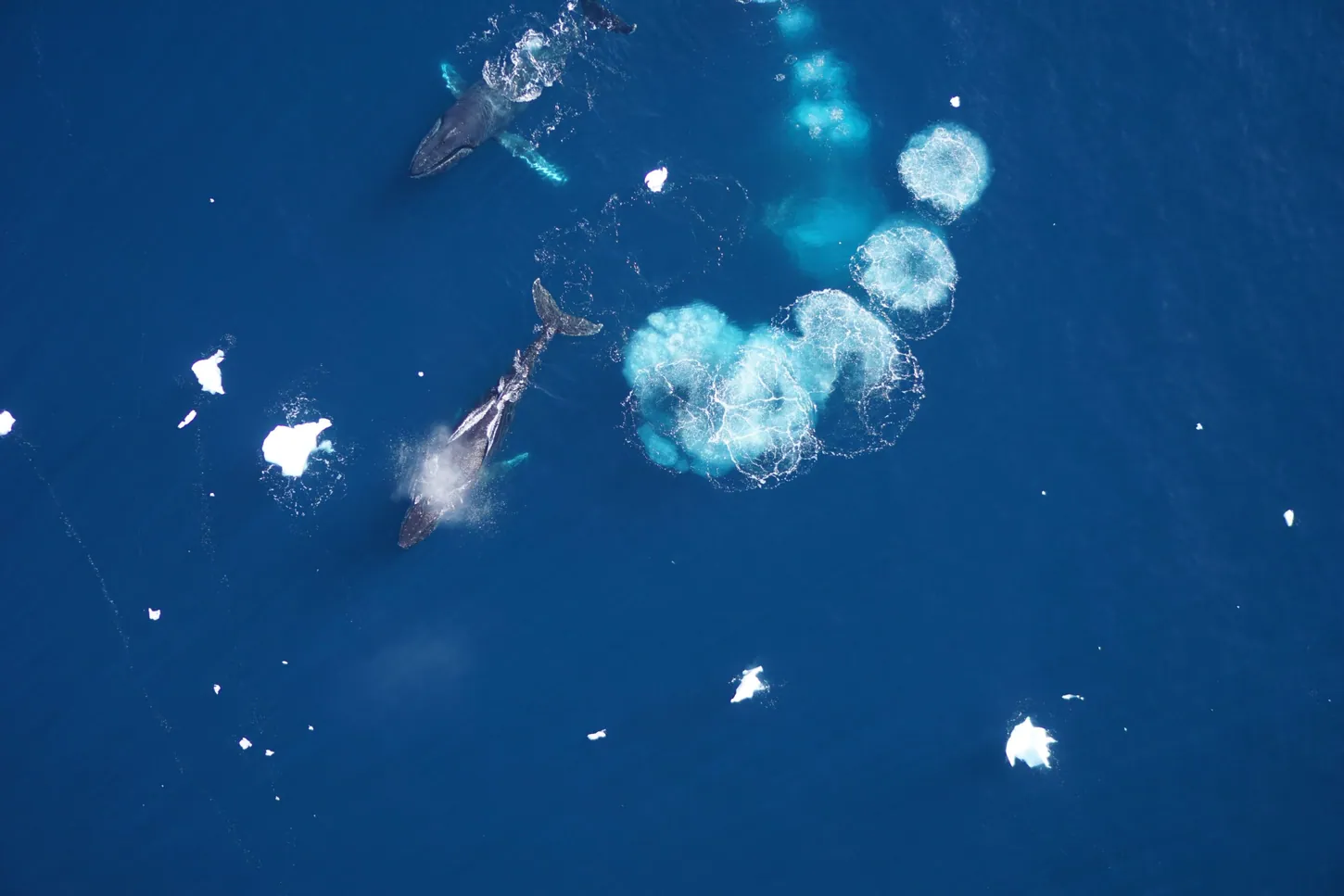
Hormone Samples Can Flag A Stressed Whale That Looks Healthy From Above
A baleen whale can be in average body condition on a drone image and still carry high stress levels. That stress may keep it from gaining more mass, says co-author KC Bierlich of Oregon State University’s Marine Mammal Institute. Hormone measurements can give key insight there, he said.
Pregnant females often need to gain more mass in a feeding season to cover gestation, which often overlaps with migration and fasting. Bierlich said a failure to gain it may hurt reproduction and, in turn, the population.
Bierlich has been measuring whales from the air since his Ph.D. at Duke, when DroneXL covered his program in April 2020 in How do you measure a whale? With a drone, of course! Drone body-condition work has since tracked humpback mothers losing body volume in Hawaii and gives North Atlantic right whales a check-up without a capture. WHOI’s announcement cites the right whale record, where aerial images and repeat sightings documented long-term changes in body size tied to pressures including fishing-gear entanglements and vessel strikes.
Shero has flown the method herself. In 2019 WHOI reported she flew a hexacopter over gray seal mothers and pups in Nova Scotia from roughly 100 feet (30 meters) and predicted their mass within 22 pounds (10 kilograms), under 6% for an average-sized seal. Combining hands-on and drone methods means researchers can “really tailor the scope of how we look at wildlife health,” she said this week.
DroneXL’s Take
I like this paper because the warning comes from a scientist who flies drones herself and still tells the field where the photos stop. Volume from a photo can’t tell fat from muscle, and a conservation decision made on a misread photo aims money and protection at the wrong problem.
I think drone surveys still come out ahead, because they reach whole populations that no capture team can. They earn that place only after each species has a ground-truth set of animals that were weighed and sampled on the ground and photographed from the air, so the photos have something to be checked against.
Sources: Woods Hole Oceanographic Institution, WHOI, Seal Spy (2019), Science, “Integrating established and emerging tools to assess wildlife condition from the ground up” (DOI 10.1126/science.aed3374)
DroneXL uses automated tools to support research and source retrieval. All reporting and editorial perspectives are by Haye Kesteloo. Read our editorial standards.
Advertise with DroneXLYour company hereReach 200,000+ drone readers a month with a sponsored article, a banner on your beat, or a partnership.See the options →


