
DJI Mini 4K Review: The Beginner Benchmark, Tested
Russ from 51 Drones puts the DJI Mini 4K through real flight tests: measured battery life, wind handling at 24 mph, range checks, and the honest case for why this is the first drone to buy.
Last updated August 20, 2026 · Kept current by the DroneXL newsroom
For over seven years, one question has dominated the comments on my channel: what drone should a first-time buyer get? Since April 2024 my answer has been the DJI Mini 4K. High-bitrate 4K video, a 249-gram takeoff weight that skips FAA registration for recreational pilots, and a street price that has fallen as low as $209 make it the easiest first-drone recommendation I have ever given. It comes with one honest warning attached: there is no obstacle avoidance, so fly it like it costs more than it does.
I’m Russ, and I’ve been flying and teaching people about drones since 2017. The hardest part of that job has always been finding an aircraft that is genuinely good and genuinely affordable at the same time. The Mini 4K is the first one where I stopped hedging.
What you get and what it costs
The Mini 4K launched at $299 for the base kit with the RC-N1C controller, and the Fly More Combo adds two extra batteries and a carry bag. The price has only moved in one direction since: $239 around Valentine’s Day 2025, a record $209 with a clippable coupon in April 2026, and a reliable floor every Black Friday. Our DJI deals page tracks where the price sits today.
One quirk worth knowing: at launch DJI sold this drone through Amazon and Best Buy rather than its own store. If you already own an RC-N1 controller from an older DJI drone, it works with the Mini 4K, so the drone-only option can save you real money.
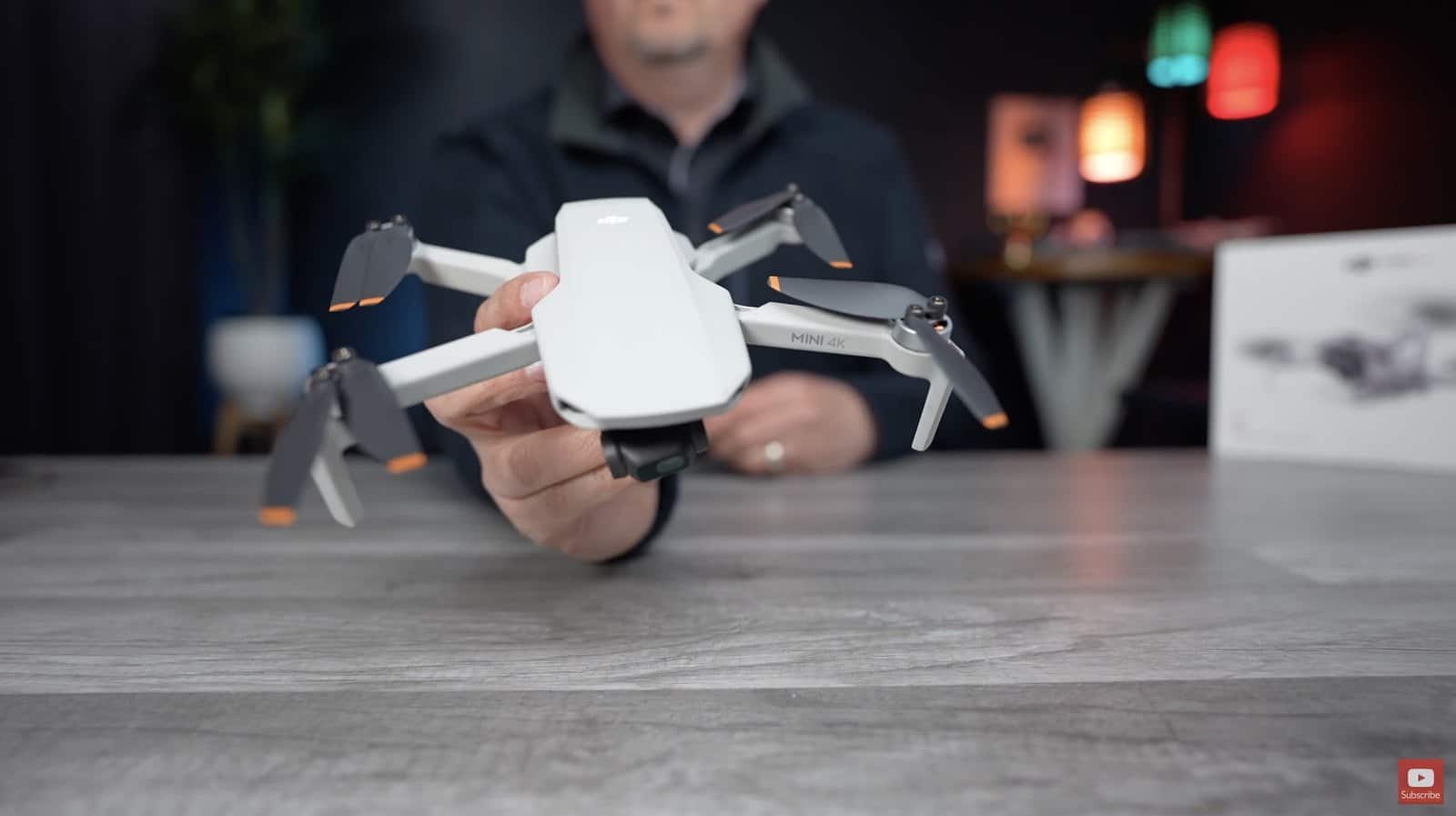
Is the DJI Mini 4K good for beginners?
Yes. The Mini 4K pairs high-bitrate 4K video with the safety net beginners actually use, GPS position hold and return-to-home, at a price that regularly dips under $250. What it lacks is obstacle avoidance, which rewards careful flying instead of punishing wallet-first mistakes with an expensive repair bill.
The camera is the number one reason I recommend it. The 1/2.3-inch sensor captures 12-megapixel photos and 4K video at a bitrate that holds up: you hit record and get footage worth sharing, with zero editing knowledge required. I will be straight with you about the ceiling. These are not photos for an art gallery wall. They are photos for prints in your home and for every social platform you post to, and at this price that is the right trade.
How long does the Mini 4K really fly?
DJI rates the battery at 31 minutes, and my measured result was just under 25 minutes flying from 100 percent down to 5 percent, in a 15 mph wind gusting to 22 mph. That is 80 percent of the advertised number, and I am satisfied whenever any DJI drone hits 80 percent of its rating.
Wind handling surprised me more than the battery did. The Mini 4K is rated for Scale 5 wind, right around 24 mph. I shot a panorama at 200 feet in a measured 24 mph wind and the drone held completely steady the entire time. I would not head out for a leisurely flight in those conditions, but if the wind comes up while you are in the air, this little aircraft can handle the trip home.
Range and signal, tested at the bridge
The O2 transmission system is rated to 10 km under FCC rules, which is not a number you should ever use. My real test is a bridge down the road from my house: if I hold signal all the way there, I am happy, and the Mini 4K made it with five bars still showing. O2 is an older link than DJI’s current systems, and that is fine, because this drone belongs within visual line of sight anyway. No obstacle avoidance means the closer you keep it, the longer you keep it.

What the Mini 4K does not have
The missing obstacle avoidance is the big one, and I speak from experience: I clipped a tree branch on my very first flight. There is a silver lining, because flying without a sensor safety net teaches the careful habits every pilot needs. There is also no onboard storage, and the 720p cache saved to your phone is no substitute, so a microSD card in the slot is non-negotiable. The controller situation is phone-based only, with no built-in screen option. And the advanced flight modes stop at QuickShots and panoramas: no waypoints, no hyperlapse, no cruise control.
None of those omissions changed my recommendation. Every one of them is exactly where a $250 drone should save its money.
Two years on: does it still hold up?
It does, and the market keeps proving it. The Mini 4K remains the drone our deal coverage returns to more than any other, still selling every holiday season at prices no competitor with a real camera matches. The card, guards, and batteries worth adding are in our Mini 4K accessories guide. The full specification table lives on our DJI Mini 4K specs page, and if you are weighing it against DJI’s $179 camera-in-the-sky, our Neo vs Mini 4K comparison settles that question. Pilots who outgrow it usually step up to the Mini 4 Pro for obstacle avoidance, or straight to the Mini 5 Pro, whose price we track on the Mini 5 Pro deal page. New to the hobby entirely? Start with our guide to flying your first drone.
Frequently asked questions
Is the DJI Mini 4K good for beginners?
Yes. It pairs high-bitrate 4K video with GPS position hold, return-to-home, and a 249-gram weight that skips FAA registration for recreational flying. The one thing to respect is the missing obstacle avoidance: keep it close and away from trees while you learn.
How long does the DJI Mini 4K really fly?
DJI advertises 31 minutes. In our testing it flew just under 25 minutes from 100 percent down to 5 percent, in a 15 mph wind gusting to 22 mph. That is 80 percent of the advertised number, a solid real-world result for any DJI drone.
Does the DJI Mini 4K need FAA registration?
Not for recreational flying, since it takes off under the FAA's 250-gram threshold. Commercial use under Part 107 requires registration regardless of weight, and that includes any flight you get paid for.
Does the DJI Mini 4K have obstacle avoidance?
No. It carries downward sensors for landing and nothing looking forward or sideways. That is the biggest practical difference between the Mini 4K and the Mini 4 Pro, and the main reason to fly it cautiously around trees and buildings.
How much does the DJI Mini 4K cost?
It launched at $299 in April 2024 and has been discounted relentlessly since: $239 in early 2025 and a record $209 in April 2026. Our DJI deals page tracks the current floor.
DroneXL uses automated tools to support research and source retrieval. All reporting and editorial perspectives are by Haye Kesteloo and the credited author.