
Transport Canada Clears DJI Mini 5 Pro Despite Weight Variance Concerns

Check out the Best Deals on Amazon for DJI Drones today!
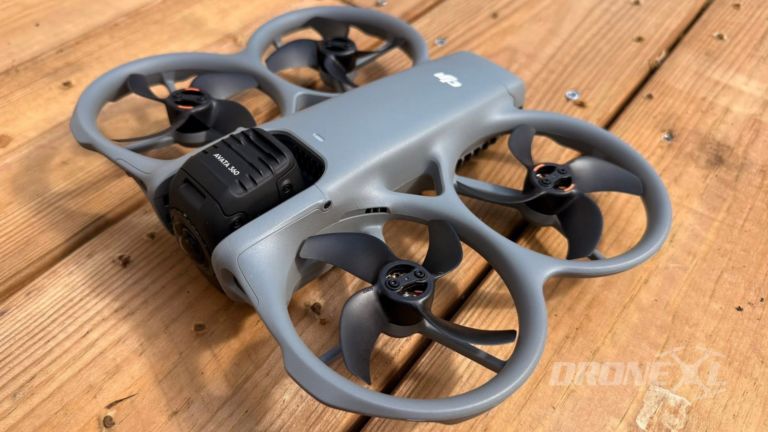
Transport Canada has officially confirmed that the DJI Mini 5 Pro will maintain its micro drone classification despite weight variations that can push some units above the critical 250-gram threshold, according to an official statement obtained by drone community member, Mat Mathews from Blackhawk Aeronautical Solutions. The clarification comes as drone operators worldwide have expressed concerns about the DJI Mini 5 Pro’s weight specifications. While DJI markets the drone as weighing 249.9 grams, the company acknowledges a manufacturing tolerance of ±4 grams, meaning some units could weigh up to 253.9 grams – technically exceeding the 250-gram limit that separates micro drones from more regulated aircraft categories. Correction: We have just received an email from Transport Canada clarifying the matter. Please see below:
Hello,
We are reaching out to you regarding your article titled “Transport Canada clears DJI Mini 5 Pro despite weight variance concerns” which was posted on September 25, 2025.
For the benefit of your readers, we would like to clarify that there is an inaccuracy in the first paragraph, stating the following: “Transport Canada has officially confirmed that the DJI Mini 5 Pro will maintain its micro drone classification despite weight variations that can push some units above the critical 250-gram threshold, according to an official statement obtained by drone community member, Mat Mathews from Blackhawk Aeronautical Solutions.”
Drone pilots are solely responsible for confirming the weight of their drone. The weight and capabilities of the drone, distance from bystanders, and airspace rules define your category of drone operation. Each category has a different set of rules that drone pilots must follow.
In Canada, drones that weigh less than 250 grams are called microdrones. If the operating weight of the drone is 250 grams or more, it isn’t a microdrone. If you wish to operate a drone that weighs 250 grams or more, you must register it and obtain a Pilot Certificate. If you are concerned that your drone might weigh 250 grams or more, you should register it and obtain a Pilot Certificate – Basic Operations or Pilot Certificate – Advanced Operations.
In addition to following Part IX of the Canadian Aviation Regulations (CARs), drone pilots are subject to all federal, provincial, territorial and municipal laws that may apply, including with respect to privacy and trespassing.
Finally, anyone who witnesses unsafe or illegal drone use should contact Transport Canada or local law enforcement. Transport Canada encourages them to record as much information as possible to help Transport Canada review incidents more effectively (i.e. clear photos or videos, date, time, drone type, other identifying marks). Witnesses can report their concerns to Transport Canada at: Report a drone incident.
We hope this clarifies the matter, and please do not hesitate to contact us at …@tc.gc.ca for further information.
H. A.
Senior Communications Advisor, Media Services | Conseiller principal en communications, Services aux médias
Transport Canada | Transports Canada
Government of Canada | Gouvernement du Canada
Canadian Regulators Provide Manufacturing Tolerance Relief
Mike Tomm, Civil Aviation Inspector for General Aviation at Transport Canada’s Prairie and Northern Region, addressed the issue directly in a communication shared through drone community channels.
“If the operator is utilizing standard batteries, the +/- 4g issue not considered to be a big issue (at this time),” Tomm stated in the official message.
The inspector emphasized a crucial condition:
“What this means (for the time being) is that so long as you do NOT use a high capacity battery and stick with the standard OEM batteries, Transport Canada WILL recognize the Mini 5 as a mRPA [micro Remotely Piloted Aircraft].”
This decision aligns Canada with the European Union Aviation Safety Agency (EASA), which previously announced that the Mini 5 Pro would retain its C0 classification despite the weight variance. However, it contrasts with the U.S. Federal Aviation Administration’s approach, which doesn’t appear to allow similar manufacturing tolerances.

DJI Mini 5 Pro Weight Variance Creates Global Regulatory Patchwork
The DJI Mini 5 Pro’s weight issue has created an unusual situation where the same drone model faces different regulatory treatment across jurisdictions. In Europe, EASA’s acceptance of manufacturing tolerances means operators can fly the Mini 5 Pro under relaxed micro drone rules regardless of minor weight variations.
The 250-gram threshold is significant because crossing it typically triggers additional requirements including drone registration, operator certification, and more restrictive flight rules. For recreational pilots staying under this limit means simpler compliance and greater operational flexibility.

Community Collaboration Delivers Clarity
The official clarification came through the efforts of Mat Mathews from Blackhawk Aeronautical Solutions, who worked with Transport Canada contacts to obtain definitive guidance on the weight issue. The information was subsequently shared through the Calgary Drone Group Facebook community, demonstrating how drone operators are actively seeking regulatory clarity on emerging issues.
Transport Canada’s position provides relief for current and prospective Mini 5 Pro owners in Canada, allowing them to operate under micro drone regulations as long as they use standard factory batteries rather than higher-capacity alternatives.
DroneXL’s Take
Transport Canada’s pragmatic approach to the Mini 5 Pro weight variance shows how regulators can adapt to real-world manufacturing realities while maintaining safety standards. The key restriction on battery types suggests authorities recognize that weight tolerances should have practical limits – operators can benefit from regulatory flexibility, but not if they’re actively trying to circumvent weight restrictions with aftermarket modifications.
This decision creates an interesting precedent for how aviation authorities might handle similar manufacturing variance issues in the future. It also highlights the value of community advocacy in obtaining regulatory clarity – sometimes the best way to get answers is simply to ask the right questions to the right people.
What’s your experience with Mini 5 Pro weight measurements? Have you encountered any regulatory challenges with weight variance in other drone models? Share your thoughts in the comments below.
Discover more from DroneXL.co
Subscribe to get the latest posts sent to your email.
Check out our Classic Line of T-Shirts, Polos, Hoodies and more in our new store today!

MAKE YOUR VOICE HEARD
Proposed legislation threatens your ability to use drones for fun, work, and safety. The Drone Advocacy Alliance is fighting to ensure your voice is heard in these critical policy discussions.Join us and tell your elected officials to protect your right to fly.

Get your Part 107 Certificate
Pass the Part 107 test and take to the skies with the Pilot Institute. We have helped thousands of people become airplane and commercial drone pilots. Our courses are designed by industry experts to help you pass FAA tests and achieve your dreams.

Copyright © DroneXL.co 2026. All rights reserved. The content, images, and intellectual property on this website are protected by copyright law. Reproduction or distribution of any material without prior written permission from DroneXL.co is strictly prohibited. For permissions and inquiries, please contact us first. DroneXL.co is a proud partner of the Drone Advocacy Alliance. Be sure to check out DroneXL's sister site, EVXL.co, for all the latest news on electric vehicles.
FTC: DroneXL.co is an Amazon Associate and uses affiliate links that can generate income from qualifying purchases. We do not sell, share, rent out, or spam your email.












This is not how Transport Canada Laws work. Someone employed saying so, doesn’t make it magically cleared. Individually units, it might possible to clear one specific unit to one person.
But until they update the rules, this is just written with pure speculation without direct references.. I won’t be buying a mini 5 until it’s officially clarified.
Fair point. An official statement would be very helpful.
Is there going to be a follow-up conversation to this post to see if your able to get actual concrete documentation that the mini 5 pro is or isn’t going to be considered a sub 250 gram drone here in Canada? Would love some concrete clarity on the matter so I can assess which drone I should consider buying in 2025/26. Thanks a bunch.
We’re trying. This is the best we have so far.
I mean while manufacturers should absolutely strive to keep their drone under 249g, a tolerance of a few grams to allow for manufacturing or aftermarket filters should absolutely be allowed.
After all it’s a few GRAMS not a few hundred grams, the difference in weight upon impact is so small that it would make virtually zero difference, now once you start adding the plus batteries and or the prop guards then sure the drone has to be operated as an over 249g drone and follow the according rules but for something so trivial, common sense needs to prevail.
The head of Transport Canada’s RPAS unit, Paul Bolt just stated the official TC position: only drones under 250g are micro drones, and it is the pilot’s responsibility to weigh it. Basically what I said in my video…leaving it as a personal decision and up to enforcement. https://youtu.be/IjkEM3Tg1CU
This information is not verified. It is not official until a release from Transport Canada is issued.
As others have noted, this isn’t official (although, I’m not aware of any official list of drone classification by drone in Canada – so this may well be a general policy statement and so, kind of is official), but I will give a little WOOHOO for now. 🙂
The head of TC’s RPAS unit has refuted this statement, indicating the 250g rule stands, and it is up to the pilot to weigh their drone.
Understood, and “WOOHOO” is withdrawn. 🙂
Unfortunately, that makes buying a M5P (if you want to stay in the microRPA world) a bit of a crapshoot. If you buy one and it it’s over 250g, unless you can find a way shave it down or find a lighter battery (which do not seem to exist yet), you just wasted CA$1186 (basic kit and tax).
Just got my dji mini 5 pro last week, and so far great drone.