EU Fast-Tracks ‘Drone Wall’ Defense System After Russian Incursions Expose Airspace Vulnerabilities

Check out the Best Deals on Amazon for DJI Drones today!
European Union leaders are meeting today in Copenhagen to advance plans for a “drone wall” defense system along the bloc’s eastern border, following a series of Russian drone incursions and mystery drone sightings that shut down major airports across Scandinavia. The New York Times reports that the initiative gained urgent momentum after 19 Russian drones violated Polish airspace on September 10 and unidentified drones forced multi-hour closures of airports in Copenhagen, Oslo, and several Danish cities.
The accelerated timeline signals Europe’s recognition that cheap, readily available drone technology has fundamentally changed the security landscape. NATO spent millions firing missiles at drones that cost just a few thousand dollars each.
What the ‘Drone Wall’ Actually Is
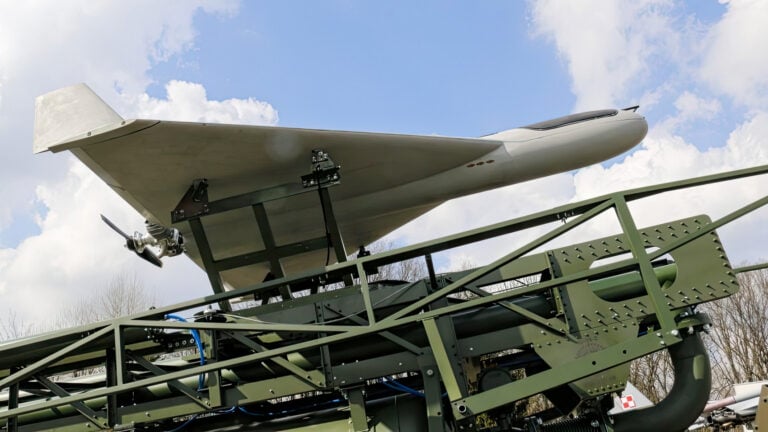
Despite its name, the drone wall won’t be a physical barrier. According to EU officials, it’s a coordinated network of detection and interception systems using radar, electronic jammers, acoustic sensors, and autonomous interceptor drones deployed along Europe’s eastern flank from Finland to Romania.
The system draws heavily on battle-tested technology already deployed in Ukraine. At its core is Eirshield, an AI-assisted counter-drone platform developed by Estonian company DefSecIntel and Latvia’s Origin Robotics. The system can detect threats at ranges up to 5 miles using multi-layer sensor fusion, then either jam drone signals or deploy autonomous Blaze interceptor drones equipped with fragmentation warheads.
Estonian DefSecIntel CEO Jaanus Tamm emphasized the technology is operational now, not theoretical. “This is not a concept or a PowerPoint,” Tamm told defense reporters. “It is a live, integrated system ready to protect Europe’s eastern flank today.”
Why Russian Drone Incursions Triggered Urgent Action
The September incidents marked unprecedented escalations. On September 10, NATO fighter jets shot down several Russian drones that entered Polish airspace during attacks on Ukraine—the first time the alliance fired shots since Russia’s 2022 invasion began. Polish Prime Minister Donald Tusk called it “the closest we have been to open conflict since World War II.”
Less than two weeks later, large unidentified drones forced Copenhagen Airport to close for nearly four hours, disrupting travel for tens of thousands. Similar incidents followed at airports in Aalborg, Billund, and Oslo. Danish authorities called the incidents a “hybrid attack” by a “professional actor” and suggested Russian involvement, though Moscow denied responsibility.
NATO Secretary General Mark Rutte characterized the pattern as “absolutely reckless” behavior that demanded a coordinated response. In a September 10 statement, Rutte praised the alliance’s rapid defensive response but emphasized the economic absurdity of using million-dollar missiles against thousand-dollar drones.

Implementation Timeline and Technical Challenges
EU Defense Commissioner Andrius Kubilius stated the drone shield could take one year to build, with an “effective detection system” as the immediate priority. However, German Defense Minister Boris Pistorius expressed skepticism about the accelerated timeline, warning implementation could take three to four years.
The technical hurdles are substantial. The system must distinguish between legitimate commercial drone operations and hostile incursions while maintaining normal aviation operations. This requires sophisticated AI-driven threat assessment capable of real-time decisions across multiple countries with varying airspace regulations.
Denmark’s recent experience highlighted these challenges. Officials chose not to shoot down drones over Copenhagen Airport due to safety concerns with passengers, aircraft, and nearby fuel depots creating too much collateral damage risk.
Cost Economics Driving the Shift
The economic case for dedicated counter-drone systems is compelling. According to system developers, Eirshield operations cost “tens of thousands” of euros per engagement compared to “millions” for conventional air defense missiles. NATO Secretary General Rutte emphasized this disparity, stating “we cannot spend millions of euros or dollars on missiles to take out drones which are only costing a couple of thousand dollars.”
Latvia has already awarded €10 million ($10.6 million USD) in contracts to Origin Robotics and other defense firms for counter-drone solutions. Lithuania received €11 million from the EU specifically for anti-drone equipment. The broader Eastern Flank Watch initiative, which includes the drone wall, could tap into the €150 billion ($159 billion USD) loans-for-weapons SAFE scheme and the €1.5 billion ($1.6 billion USD) European Defence Industry Program.
Commercial Drone Operations Face New Restrictions
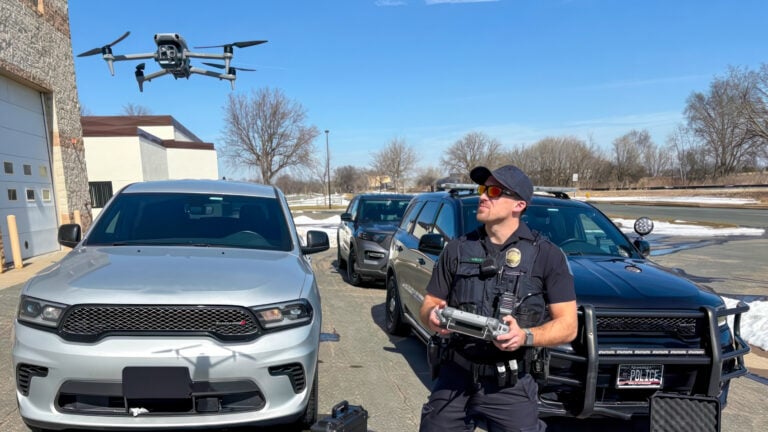
The security measures are already affecting drone operators. Denmark banned all civilian drone flights through Friday to secure this week’s summit. Transport Minister Thomas Danielson explained the ban eliminates risks of hostile drones being mistaken for legal operations.
As the drone wall becomes operational, commercial operators across Europe should expect increasingly sophisticated airspace monitoring and potentially stricter authorization requirements near border regions. The system’s AI-assisted classification will need to rapidly identify legitimate flights, suggesting future requirements for transponders or electronic identification systems on commercial drones operating near sensitive areas.
DroneXL’s Take
The EU drone wall represents a watershed moment for the counter-drone industry—and a reality check for anyone who thought cheap consumer drones were just recreational toys. We’ve been covering the convergence of commercial drone technology and security concerns for years, but the September incidents crystallized what many defense analysts warned about: adversaries can weaponize widely available technology to probe defenses and disrupt critical infrastructure at minimal cost.
The speed of Europe’s response is remarkable. Just three weeks ago, we reported on the accelerating drone wall plans after the Polish airspace violations. The fact that Baltic companies already have operational systems deployed in Ukraine shows this isn’t vaporware—it’s combat-proven technology ready for immediate deployment. That Ukrainian expertise is now being directly integrated into European defense planning speaks volumes about how drone warfare has evolved.
For drone professionals and manufacturers, this creates massive opportunity. Europe will need detection systems, interceptor platforms, AI-driven threat assessment software, and operator training at unprecedented scale. But it also signals a more restrictive regulatory environment ahead. Commercial operators should prepare for heightened scrutiny, especially near border regions, military installations, and critical infrastructure. The days of flying wherever regulations technically permit are giving way to an era where security concerns increasingly trump convenience.
The broader question remains whether technology can keep pace with the threat. Drones are becoming smaller, faster, and more autonomous. A fixed defensive line—even a sophisticated one—may struggle against swarm tactics or AI-enabled evasion. Europe is betting it can build and deploy this system faster than adversaries can adapt. That’s a race worth watching closely.
What do you think? Share your thoughts in the comments below.
Discover more from DroneXL.co
Subscribe to get the latest posts sent to your email.
Check out our Classic Line of T-Shirts, Polos, Hoodies and more in our new store today!

MAKE YOUR VOICE HEARD
Proposed legislation threatens your ability to use drones for fun, work, and safety. The Drone Advocacy Alliance is fighting to ensure your voice is heard in these critical policy discussions.Join us and tell your elected officials to protect your right to fly.

Get your Part 107 Certificate
Pass the Part 107 test and take to the skies with the Pilot Institute. We have helped thousands of people become airplane and commercial drone pilots. Our courses are designed by industry experts to help you pass FAA tests and achieve your dreams.

Copyright © DroneXL.co 2026. All rights reserved. The content, images, and intellectual property on this website are protected by copyright law. Reproduction or distribution of any material without prior written permission from DroneXL.co is strictly prohibited. For permissions and inquiries, please contact us first. DroneXL.co is a proud partner of the Drone Advocacy Alliance. Be sure to check out DroneXL's sister site, EVXL.co, for all the latest news on electric vehicles.
FTC: DroneXL.co is an Amazon Associate and uses affiliate links that can generate income from qualifying purchases. We do not sell, share, rent out, or spam your email.