Military Reconnaissance Drones Shut Munich Airport Twice As Europe’s Airspace Crisis Intensifies
Check out the Best Deals on Amazon for DJI Drones today!
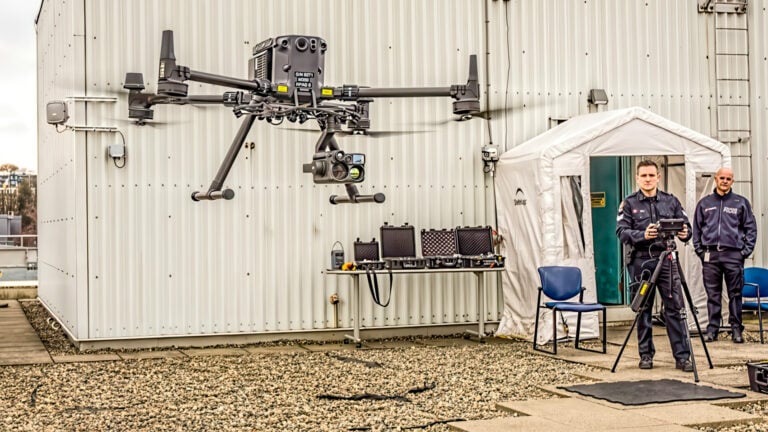
Germany’s Munich Airport suffered its second drone-related shutdown in two days Friday evening—and a classified German security report reveals the aircraft were military reconnaissance drones, not hobbyist quadcopters. According to BILD, which obtained the confidential assessment, the drones that repeatedly violated Munich’s restricted airspace represent a sophisticated surveillance operation that has rattled European security officials.
The revelation transforms what appeared to be mysterious sightings into confirmed military-grade aerial reconnaissance targeting one of Europe’s busiest airports, underscoring why EU leaders are now racing to build a multi-billion-euro “drone wall” defense system.
BILD Report Confirms Military-Grade Reconnaissance Operation
The classified report seen by BILD identifies the Munich drones as military reconnaissance platforms—a far cry from the consumer drones that European authorities initially suspected. The document details incidents not only at Munich but also at Frankfurt Airport and locations across Lower Saxony (Niedersachsen), painting a picture of coordinated surveillance across German aviation infrastructure.
This confirmation elevates the threat assessment significantly. Military reconnaissance drones typically feature extended flight times, sophisticated cameras, encrypted communications, and the ability to operate in GPS-denied environments—capabilities that dwarf consumer models and explain why German air traffic control struggled to neutralize the threat.
Friday’s closure came just hours after the airport resumed operations from Thursday night’s incident, which forced the cancellation of 17 flights and disrupted travel for nearly 3,000 passengers. Another 15 arriving flights were diverted to Stuttgart, Nuremberg, Vienna and Frankfurt.
Repeated Shutdowns Compound Passenger Chaos
By Saturday morning, the total impact reached approximately 6,500 passengers, with 23 diverted flights plus 58 cancellations and delays, according to CNN. German air traffic control restricted operations around 10:18 PM local time Thursday before suspending them entirely due to multiple drone sightings over restricted airspace.
The timing couldn’t be worse—Munich is hosting its famous Oktoberfest, drawing millions of visitors, and Friday marked German Reunification Day, a national holiday that typically sees heavy travel. Airport operations were briefly delayed again Saturday morning after additional sightings overnight.
Police and fire officials deployed federal police helicopters to search for the drones, but darkness prevented identification of their size and type during the nighttime operations, a police spokesman told BILD at the time. The classified report now fills in those gaps.
European Pattern Reveals Coordinated Military Surveillance Campaign
Munich’s troubles are part of a disturbing pattern across Europe. Copenhagen Airport was forced to close for nearly four hours on September 22 after sightings of “two to three large drones,” with Denmark’s National Police Commissioner Thorkild Fogde stating these were “not amateur or hobby drones, but rather large drones that likely had a capable operator.”
Norway’s Oslo Airport shut down the same evening for three hours. Denmark later reported drone activity at multiple airports—including Aalborg and Billund—as well as military installations like Skrydstrup Air Base, home to F-35 and F-16 fighter jets. Belgium’s Elsenborn military base also reported unauthorized drone overflights.
Danish Prime Minister Mette Frederiksen called the incidents “the most serious attack on Danish critical infrastructure to date,” describing them as part of a “hybrid war” facing Europe. While authorities haven’t officially named suspects, Frederiksen noted, “There is only one country willing to threaten us, and it is Russia.”
The BILD report’s confirmation that military reconnaissance drones were involved lends substantial credibility to these assessments. Such platforms require significant resources, training, and operational planning—hallmarks of state-sponsored activities rather than rogue actors.
EU Launches €140 Billion “Drone Wall” Emergency Defense Initiative
The crisis prompted an emergency European Union summit in Copenhagen on October 1-2, where leaders backed plans for a continent-wide “drone wall”—not a physical barrier, but a layered network of sensors, AI-powered detection systems, jammers, and counter-drone weapons along Europe’s eastern flank.
“Europe must be able to defend itself,” Danish Prime Minister Frederiksen said after the summit. The European Commission has proposed dedicating €131 billion ($140 billion USD) to defense projects through 2034, with the drone wall identified as requiring “special urgency.”
NATO Secretary-General Mark Rutte endorsed the initiative Tuesday, calling it “timely and necessary,” while noting the cost imbalance: “We cannot spend millions of euros or dollars on missiles to take out drones which are only costing a couple of thousand dollars.”
However, Rutte’s cost assessment may need revision now that military reconnaissance drones—not cheap consumer models—are confirmed as the threat. Professional military UAVs can cost $50,000 to $500,000 depending on capabilities, though still far cheaper than the million-euro missiles required to intercept them.
German Response and Implementation Timeline
German Defense Minister Boris Pistorius warned the drone wall concept is unlikely to be “realized in the next three to four years,” while Latvia’s Prime Minister Evika Silina insisted three years is “not fast enough.”
Russian President Vladimir Putin joked Thursday that he “would not fly drones over Denmark anymore,” but Moscow has denied responsibility for any incidents. The Kremlin spokesperson called allegations “unfounded,” stating that “making unfounded accusations every time leads to the continuation of such statements no longer being taken into account.”
The classified BILD report provides the most concrete evidence yet that these incidents involve sophisticated military hardware, not misidentified aircraft or amateur hobbyist drones.
DroneXL’s Take
BILD’s reporting changes everything. We’re no longer talking about potential mass hysteria like the New Jersey 2024 drone panic, where TSA analysis revealed misidentified commercial aircraft and even Jupiter. This is confirmed military reconnaissance—professional surveillance operations targeting European aviation infrastructure with platforms that can loiter for hours, evade detection, and gather intelligence.
The implications for the drone industry are profound. While we’ve long advocated for measured responses to drone incidents rather than knee-jerk restrictions on hobbyists, military reconnaissance drones represent a genuine national security threat that demands serious counter-UAS investment. The €140 billion drone wall suddenly looks less like security theater and more like necessary infrastructure.
What concerns us most is how this will impact legitimate commercial and recreational drone operators. History shows that security crises often lead to broad restrictions that sweep up law-abiding pilots alongside actual threats. Remote ID mandates, expanded no-fly zones, and enhanced enforcement could all accelerate in response to military reconnaissance operations that have nothing to do with DJI Mavics or racing quads.
The challenge for European regulators will be designing countermeasures sophisticated enough to detect and neutralize military-grade platforms without creating a surveillance dragnet that criminalizes legitimate drone use. Based on what we know about military reconnaissance drones—encrypted comms, GPS independence, professional operators—the technical requirements are worlds apart from hobbyist detection.
Europe needs counter-drone systems that can distinguish a $50,000 surveillance platform from a $500 consumer drone. Whether the proposed drone wall can achieve that level of discrimination remains the €140 billion question.
What do you think? Share your thoughts in the comments below.
Discover more from DroneXL.co
Subscribe to get the latest posts sent to your email.
Check out our Classic Line of T-Shirts, Polos, Hoodies and more in our new store today!

MAKE YOUR VOICE HEARD
Proposed legislation threatens your ability to use drones for fun, work, and safety. The Drone Advocacy Alliance is fighting to ensure your voice is heard in these critical policy discussions.Join us and tell your elected officials to protect your right to fly.

Get your Part 107 Certificate
Pass the Part 107 test and take to the skies with the Pilot Institute. We have helped thousands of people become airplane and commercial drone pilots. Our courses are designed by industry experts to help you pass FAA tests and achieve your dreams.

Copyright © DroneXL.co 2026. All rights reserved. The content, images, and intellectual property on this website are protected by copyright law. Reproduction or distribution of any material without prior written permission from DroneXL.co is strictly prohibited. For permissions and inquiries, please contact us first. DroneXL.co is a proud partner of the Drone Advocacy Alliance. Be sure to check out DroneXL's sister site, EVXL.co, for all the latest news on electric vehicles.
FTC: DroneXL.co is an Amazon Associate and uses affiliate links that can generate income from qualifying purchases. We do not sell, share, rent out, or spam your email.