
FCC Chairman Reveals New Drone Exemptions at CES 2026, Outlines Path to “American Drone Dominance”

Check out the Best Deals on Amazon for DJI Drones today!
I just watched the C-SPAN video of FCC Chairman Brendan Carr’s appearance at CES 2026 in Las Vegas, and while most tech coverage focused on his Wi-Fi and 6 GHz announcements, the drone community should be paying closer attention to what he said about “unleashing American drone dominance” and the new exemption pathways he outlined for the Covered List restrictions.
The timing matters. Just two weeks ago, the FCC added foreign-made drones to its Covered List, effectively blocking new DJI products from entering the U.S. market. At CES, Carr revealed that his agency has already issued guidance creating three distinct exemption pathways for drone operators and manufacturers caught in the regulatory crossfire.
The Las Vegas Police Demonstration That Set The Tone
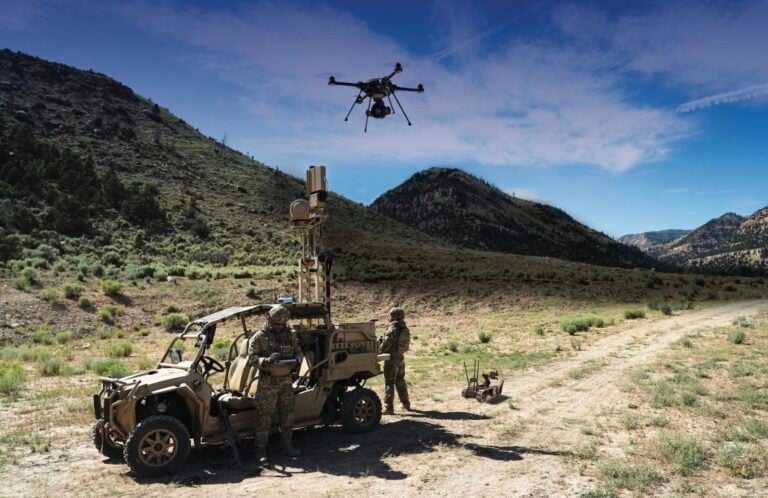
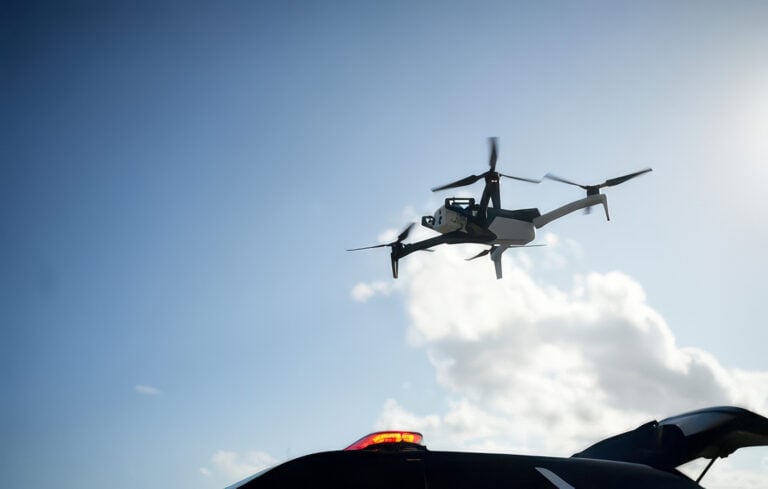
Before taking the CES stage, Carr made an adjacent stop that reveals where the administration’s priorities actually lie. He attended an event at the Las Vegas Police Department where they unveiled “more than a dozen new U.S. drones to help improve public safety.“
This wasn’t coincidental photo-op scheduling. It was a deliberate message: the Covered List restrictions aren’t meant to ground American drone operations. They’re meant to shift market share from Chinese manufacturers to domestic producers. “Tech that you usually just see here on the show floor, you can already see out on the street in Las Vegas,” Carr told the audience.
The LVPD demonstration featured American-made UAS systems from manufacturers on the Pentagon’s Blue UAS list. For Carr, it was proof-of-concept that U.S. law enforcement can transition away from DJI without losing operational capability.


Three Exemption Pathways The Industry Needs To Understand
The most significant news from Carr’s CES appearance came almost as an aside. He confirmed that his agency has created new guidance establishing three distinct pathways for drones to avoid Covered List restrictions.
First: Pentagon Blue UAS List. Drones that appear on the Department of Defense’s approved list are now explicitly exempted from FCC Covered List restrictions. This was expected but hadn’t been formally confirmed until now. The Blue UAS list currently includes manufacturers like Skydio, Parrot, and several smaller American drone makers.
Second: Buy America Domestic End Products. Drones that qualify as domestic end products under the Buy America program, meaning 65% or more of their components are manufactured in the United States, receive automatic exemption. This creates a pathway for foreign-designed drones with substantial U.S. manufacturing to remain legal.
Third: Case-by-Case Clarity Mechanism. “We created another third mechanism where folks that want additional clarity, and there will be them, can seek some additional clarity about our approach to drones,” Carr explained. The specifics of this petition process remain unclear, but it suggests individual manufacturers or operators can request exemption determinations directly from the FCC.
For Part 107 operators and commercial drone businesses, that third pathway may prove critical. If you’re operating foreign-made drones in critical infrastructure inspection, agriculture, or public safety applications, there may be a formal process to continue those operations while the industry transitions.
The National Security Determination That Changed Everything
Carr provided new context on how the December Covered List addition actually happened.
“At the end of last year, the administration, the executive branch, National Security Agencies, sent the FCC a national security determination that found that foreign-made drones pose an unacceptable national security risk to the country,” he said.
This matters because it clarifies the chain of authority. The FCC didn’t initiate the ban. They implemented a determination that came from national security agencies.
“Our job at the FCC, under the statutory framework, is to take that national determination and implement it through our Covered List, which we did,” Carr explained.
For those who argued the FCC bypassed the NDAA-mandated audit requirement, Carr’s comments confirm the interagency workaround that allowed the December 23 deadline to pass without a formal security review. Multiple agencies “concurred” in a determination, satisfying the statutory requirement without the individual agency audit the law originally mandated.

What “American Drone Dominance” Actually Means
The phrase “American drone dominance” appeared multiple times in Carr’s CES appearance, echoing language from President Trump’s executive order on airspace sovereignty. But what does it mean in practice?
“President Trump and all across the administration were working to unleash American drone dominance,” Carr said. “I think generally trying to make sure that America dominates in this space is a good thing, and we’re going to continue to work with industry to provide the certainty that they need.”
The Las Vegas Police deployment illustrates the intended trajectory. American manufacturers filling the gap left by restricted foreign competitors. Government contracts flowing to domestic producers. A drone industrial base that doesn’t depend on Chinese supply chains.
Whether American manufacturers can actually meet this demand at competitive price points remains the central question. The policy framework is now in place. The supply side has yet to prove itself.
DroneXL’s Take
Carr’s CES appearance revealed something important: the FCC isn’t treating the drone restrictions as a static ban. They’re actively building exemption pathways and working with domestic manufacturers to ensure the transition doesn’t crater American drone operations.
The three exemption pathways are significant. The Blue UAS list exemption was expected. The 65% domestic content threshold creates a clear manufacturing target for companies that want to continue serving the U.S. market. And the case-by-case petition process suggests individual operators aren’t completely without recourse.
But here’s what concerns me: the Las Vegas Police demonstration featured a dozen American drones. A dozen. DJI’s market share suggests hundreds of thousands of drones are currently operating in professional applications across the United States. Can American manufacturers actually scale to replace that capacity? And at what price point?
The policy machinery is moving fast. The domestic manufacturing capacity isn’t moving at the same speed. That gap is where real operational problems will emerge for commercial operators over the next 12 to 24 months.
What exemption pathway are you pursuing for your operations? Let us know in the comments below.
Editorial Note: AI tools were used to assist with research and archive retrieval for this article. All reporting, analysis, and editorial perspectives are by Haye Kesteloo.
Discover more from DroneXL.co
Subscribe to get the latest posts sent to your email.
Check out our Classic Line of T-Shirts, Polos, Hoodies and more in our new store today!

MAKE YOUR VOICE HEARD
Proposed legislation threatens your ability to use drones for fun, work, and safety. The Drone Advocacy Alliance is fighting to ensure your voice is heard in these critical policy discussions.Join us and tell your elected officials to protect your right to fly.

Get your Part 107 Certificate
Pass the Part 107 test and take to the skies with the Pilot Institute. We have helped thousands of people become airplane and commercial drone pilots. Our courses are designed by industry experts to help you pass FAA tests and achieve your dreams.

Copyright © DroneXL.co 2026. All rights reserved. The content, images, and intellectual property on this website are protected by copyright law. Reproduction or distribution of any material without prior written permission from DroneXL.co is strictly prohibited. For permissions and inquiries, please contact us first. DroneXL.co is a proud partner of the Drone Advocacy Alliance. Be sure to check out DroneXL's sister site, EVXL.co, for all the latest news on electric vehicles.
FTC: DroneXL.co is an Amazon Associate and uses affiliate links that can generate income from qualifying purchases. We do not sell, share, rent out, or spam your email.








No matter which way you slice it.. The USA can not afford to take over the Drone industry.. Only Government contracts will be possible at the cost of tax payers monies and bug company payouts.. meaning.. The USA will develop the “Sputnik” of drones.. and lose out on a multi billion dollar consumer market.
You are right that in the bigger, global picture, the U.S. loses. DJI and the world will go on and be just fine. My article was focused on what happened in the U.S. market and the consequences for DJI, other drone makers and us, commercial drone operators and recreational fliers.