China vs. Ukraine: FT Investigation Exposes Beijing’s Dual-Track Drone Strategy That Leaves Kyiv Behind

Check out the Best Deals on Amazon for DJI Drones today!
Chinese component suppliers are scheduling factory visits to ensure Ukrainian and Russian drone buyers never meet in the same building. That detail alone tells you everything about Beijing’s actual position in this war.
A major Financial Times investigation published January 21, 2026 reveals the mechanics of how China has become the hidden fulcrum of the drone war in Ukraine. Both Russia and Ukraine depend on Chinese processors, cameras, motors, and flight controllers. But the evidence suggests Beijing’s thumb is firmly on Russia’s side of the scale.
The investigation lands at a moment when DroneXL has been tracking the China-Russia drone supply chain for years, documenting a pattern that’s impossible to dismiss as neutral commerce.
Ukrainian drone makers describe a two-faced supplier relationship
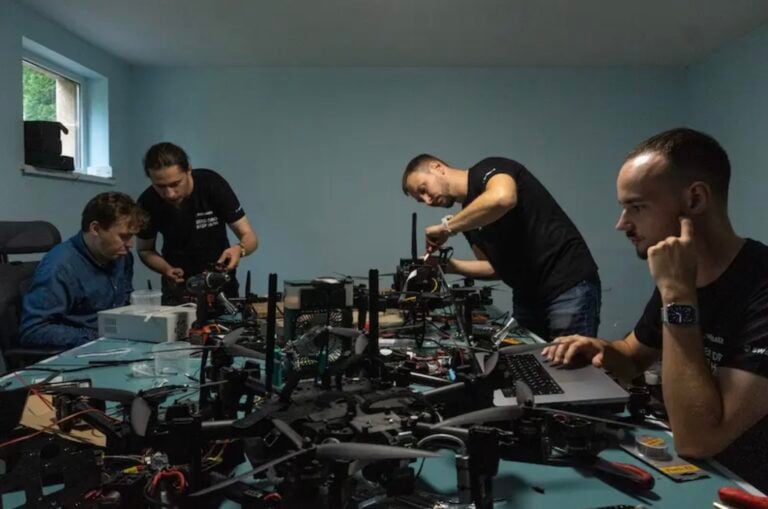
Oleksandr Yakovenko, founder of TAF Industries and one of Ukraine’s largest military drone producers, describes visits to Chinese component suppliers where hosts meticulously manage timing to prevent Ukrainian and Russian customers from crossing paths.
“Our suppliers make an effort to manage Ukrainian and Russian customers,” Yakovenko told the FT. “They try to make it so we will not be in the same factory at the same time.”
The logistics are precise. Separate doors. Service corridors. Empty conference rooms.
“They invite us for one time, but they invite the Russians for a different time,” Yakovenko added. “So as soon as the car with the Russians drives away, the car with Ukrainians goes in.”
Yakovenko says Ukraine remains dependent on China for about 85% of the components that go into first-person view drones. These are the small, fast, cheap quadcopters piloted by remote operators that have become the war’s defining weapon. By some estimates, drones now account for three-quarters of casualties on both sides.
Technology advances reach both sides simultaneously, but not equally
Oleksiy Babenko of Vyriy Drone, another major Ukrainian supplier, describes how new Chinese technology appears on Russian drones almost immediately after Ukrainian forces spot it.
“We might see a new video transmitter on Russian drones, and we will understand immediately what company in China produced it,” Babenko told the FT. “So we write to them. Of course, they say, ‘No, it’s not ours.’ But we ask again and they say, ‘OK, we can sell it to you too.'”
The reverse happens too. When Ukraine asks Chinese manufacturers to produce something specific, samples appear in Russia within a week. Then full production begins for Russian buyers.
Babenko’s frustration is tangible. On the front lines, TAF engineers improvise amid parts shortages. Across the trenches, Russian forces appear well supplied with Chinese technology. This echoes what DroneXL has reported about TAF’s CEO warning that without technological leaps, Ukraine will struggle to maintain its defense within two years.
The numbers confirm China’s global dominance in drone components
China already manufactures 70-80% of the world’s commercial drones, according to analytics provider Drone Industry Insights. The country dominates production of speed controllers, sensors, cameras, propellers, and the other critical elements that determine how far a drone can fly and how clearly it can see.
Chinese components cost roughly one-third of Western equivalents. This economic reality has locked both sides of the Ukraine war into dependence on suppliers operating under Beijing’s jurisdiction. China’s restrictions on component exports to Western nations, which we reported in December 2024, demonstrated how Beijing can weaponize this dominance whenever it chooses.
Catarina Buchatskiy of the Snake Island Institute, a Kyiv-based military think-tank, puts it bluntly:
“It just puts into perspective how much control the Chinese actually have over the outcome of this war.” She added: “They could just choose to supply or not to supply the Ukrainians. I mean, the drone is such a definitive battlefield weapon now.”
Russia’s production line strategy bypasses component restrictions
While export controls target individual components, Russia has found a workaround. According to multiple sources in the FT investigation, Russian companies are buying entire production lines from China and relocating them to Russia.
Babenko received a phone call from a Chinese factory offering motors that had previously been unavailable. The reason?
“The Russians had opted to buy an entire production line instead of components. They no longer needed the motors that had been allocated to them.”
This shifts the equation entirely. Component-level sanctions become meaningless when manufacturing capability itself moves to Russian territory. Western intelligence sources and Ukrainian policymakers cited by the FT say China’s government enables these transfers despite its stated neutrality and export control commitments.
D3, a Ukrainian venture capital firm investing in defense companies, confirms both nations can easily evade export restrictions by creating intermediary entities in Germany, Poland, or Central Asian countries.
“There are all these loopholes,” said managing partner Eveline Buchatskiy. “Export controls just created a little bit of friction in the supply chain, but it certainly has not interrupted it at all.”
Geran and Garpiya drone production has exploded
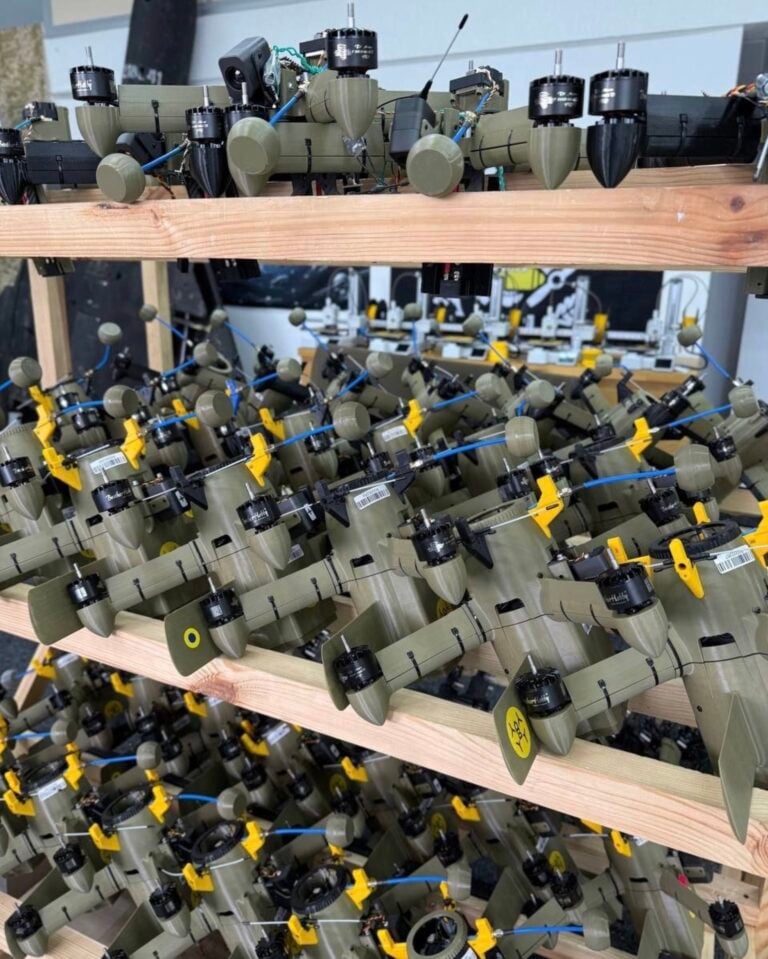
The scale of Russia’s drone buildup is staggering. Output of Geran and Garpiya drones, based on Iranian Shahed designs, has increased from dozens per month in 2022 to more than 5,000 per month by November 2025.
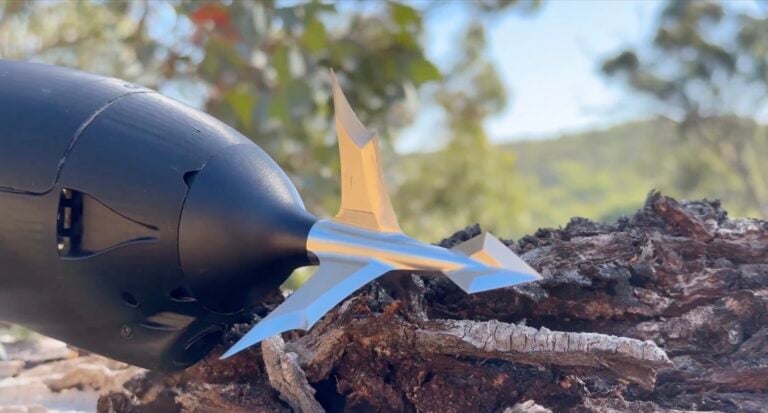
The Garpiya-A1 uses Chinese L550E engines originally designed by Germany’s Limbach but now manufactured by Xiamen Limbach Aircraft Engine Co in China. DroneXL first covered the Garpiya’s Chinese engine supply chain in September 2024, documenting how Kupol, a subsidiary of Russian state weapons maker Almaz-Antey, produced over 2,500 units in a single year.

The US Treasury Department sanctioned Xiamen Limbach and Redlepus Vector Industry Shenzhen Co in October 2024 for selling Russia parts to produce the Garpiya drone. Our coverage of those sanctions detailed how these companies formed a critical supply line that kept Russian drone production humming.
But sanctions haven’t stopped the flow. Our July 2025 investigation revealed how new front companies like Beijing Xichao International Technology and Trade stepped in after sanctions hit, shipping engines labeled as “industrial refrigeration units” to evade Chinese customs.
Chinese parts dominate downed Russian drones
Ukrainian armed forces last year published photos of a two-stroke engine with an intact serial number recovered from an intercepted Gerbera drone. The manufacturer was identified as Yunnan-based Mile Haoxiang Technology, according to Frontelligence Insight. Experts caution that finding Chinese parts doesn’t prove intent to supply Russia. But the pattern is consistent.
Analysis by the Centre for Defence Reforms, a Kyiv think-tank, showed that Chinese parts narrowly edged out US parts in downed Russian drones in 2025, with Swiss components coming in third. Mile Haoxiang did not respond to FT requests for comment.
Oleksandr Danylyuk of the Centre for Defence Reforms described how the supply chain works:
“Chinese equipment, materials and components enable the Russians to deploy so-called local engine production while in reality remaining tied to the Chinese technological and raw-material supply chain.”
Western officials: Chinese state directly assists Russian sanctions evasion
The FT investigation cites Western officials who claim the Chinese state appears to be directly helping Chinese sellers and Russian buyers evade both Western sanctions and China’s own export controls.
“We understand that a Chinese state-linked company was assisting a Russian defence company with circumventing Chinese government export controls, by using a central Asian country as a proxy end-user,” the officials said.
They did not identify the state-linked company or the central Asian country.
US Treasury sanctions from January 2025 identified Kyrgyzstan-based Keremet Bank as the operator of a regional financial clearing platform that facilitated these transactions. Keremet did not respond to FT requests for comment.
The officials added that after US Treasury exposed the Russian counterparty in August 2025,
“Russia and China kept the mechanism operational and set up new front companies in an attempt to evade further sanctions.”
The Wang Dinghua connection: direct Chinese investment in Russian drone manufacturing
Perhaps the most damning evidence emerged in November 2025. The FT reported that Wang Dinghua, a Shenzhen-based businessman, owns a 5% stake in Rustakt, a manufacturer of the VT-40 drone widely used by Russian forces to attack Ukrainian positions.
Rustakt is no ordinary company. The Centre for Defence Reforms identified it as Russia’s largest importer of FPV drone components between July 2023 and February 2025. The company is sanctioned by both Ukraine and the EU for its role in Russia’s drone program.
Russia scrubbed the ownership records within 24 hours of the FT’s inquiries. As we noted in our coverage, parts sales can be explained away as “dual-use” commerce. Ownership stakes cannot. Wang has a direct financial interest in the success of Russian FPV drone production.
Zelenskyy: Chinese Mavic drones blocked for Ukraine, open for Russia
Ukrainian President Volodymyr Zelenskyy has repeatedly alleged that China’s government helps Russia import drone technology by selectively enforcing export controls. Last May, he stated:
“We once relied on Chinese Mavic drones… [Sales of] these are now blocked for Ukraine but remain open to Russia. Our forces now self-produce drones.”
DroneXL covered Zelenskyy’s accusation when Bloomberg first reported it. The DJI Mavic series, particularly the Mavic 3 Pro and Mavic 4 Pro, became essential battlefield tools for reconnaissance and modified kamikaze attacks. China’s decision to restrict these sales to Ukraine while allegedly maintaining supply channels to Russia represents a strategic choice, not a neutral market outcome.
Ukraine has responded by scaling domestic manufacturing. Babenko says the country has made “great progress” in localizing production, but remains dependent on China for key components and vulnerable to export restrictions and political pressure.
Former MI6 chief: Beijing’s support has been critical in prolonging the war
Sir Richard Moore, the former head of Britain’s MI6, said before stepping down in September that there was no doubt Beijing’s backing had been critical in prolonging the Ukraine war.
“It is the support that China has consistently given to Russia, both diplomatically and also in terms of dual-use goods,” Moore said. He cited Chinese chemicals ending up in Russian shells and electronic components in Russian missiles as evidence of systematic support that “have prevented Putin from reaching the conclusion that peace is his best option.”
China’s Ministry of Foreign Affairs responded to the FT’s questions by saying it had no relevant information on drone exports to Russia. The ministry added that China remained strictly neutral on the Ukraine conflict and “has always opposed unilateral sanctions that have no basis in international law and are not authorised by the UN Security Council.”
DroneXL’s Take
This FT investigation validates what we’ve been documenting for three years. The 85% dependency figure from TAF Industries matches the structural reality we’ve tracked across dozens of stories about China’s drone component dominance.
The scheduling of factory visits to separate Ukrainian and Russian buyers isn’t just anecdotal color. It’s evidence of a coordinated system. Chinese suppliers know exactly who they’re selling to and they’re managing the optics while maintaining the flow to both sides, with Russia clearly getting preferential treatment when production capacity or new technology is constrained.
What concerns me most is the production line strategy. When Russia buys entire manufacturing facilities rather than components, it moves beyond the reach of traditional export controls. The sanctions regime was designed for a world where you track individual items. It wasn’t built for a competitor willing to relocate entire factories to evade restrictions.
The Wang Dinghua ownership stake in Rustakt was the clearest evidence yet of direct Chinese investment in Russian military drone production. Now we have Western intelligence officials on record saying a Chinese state-linked company actively assisted sanctions evasion using a Central Asian proxy. Beijing’s neutrality claims have become fiction.
Expect this story to accelerate. As Ukraine’s domestic production scales and Western nations attempt to build alternative supply chains, China’s leverage over battlefield outcomes will become an increasingly central issue in any ceasefire or peace negotiations. Control of drone components has become as strategically important as artillery shells or aircraft carriers.
Editorial Note: AI tools were used to assist with research and archive retrieval for this article. All reporting, analysis, and editorial perspectives are by Haye Kesteloo.
Discover more from DroneXL.co
Subscribe to get the latest posts sent to your email.
Check out our Classic Line of T-Shirts, Polos, Hoodies and more in our new store today!

MAKE YOUR VOICE HEARD
Proposed legislation threatens your ability to use drones for fun, work, and safety. The Drone Advocacy Alliance is fighting to ensure your voice is heard in these critical policy discussions.Join us and tell your elected officials to protect your right to fly.

Get your Part 107 Certificate
Pass the Part 107 test and take to the skies with the Pilot Institute. We have helped thousands of people become airplane and commercial drone pilots. Our courses are designed by industry experts to help you pass FAA tests and achieve your dreams.

Copyright © DroneXL.co 2026. All rights reserved. The content, images, and intellectual property on this website are protected by copyright law. Reproduction or distribution of any material without prior written permission from DroneXL.co is strictly prohibited. For permissions and inquiries, please contact us first. DroneXL.co is a proud partner of the Drone Advocacy Alliance. Be sure to check out DroneXL's sister site, EVXL.co, for all the latest news on electric vehicles.
FTC: DroneXL.co is an Amazon Associate and uses affiliate links that can generate income from qualifying purchases. We do not sell, share, rent out, or spam your email.