Illinois bill requires sex offenders to register drones with state police

Check out the Best Deals on Amazon for DJI Drones today!
Illinois Rep. Katie Stuart (D-112th) has introduced HB4332, a bill that would force individuals on the state’s Sex Offender Registry to disclose drone ownership to the Illinois State Police. The bill amends the Illinois Sex Offender Registration Act to add drones to the list of items registrants must report, including make and model information.
Here’s what you need to know:
- The bill: HB4332 would require sex offenders in Illinois to register drone ownership, including make and model, with the Illinois State Police.
- Why it matters: Drones equipped with cameras present obvious voyeurism risks, and registered sex offenders already have documented histories of using drones for surveillance.
- The source: WTVO first reported the bill’s introduction in January 2026.
The bill adds drones to an existing registration framework
Illinois HB4332 does not create a new monitoring system or authorize drone-based surveillance of offenders. Instead, it expands the list of personal property and digital accounts that sex offenders must already report to law enforcement. Under the current Sex Offender Registration Act, registrants are required to provide a current photograph, home address, employer information, phone numbers, email addresses, instant messaging identities, and details related to all internet communications.
Stuart’s bill simply adds drone ownership to that list. The logic is straightforward: if the state already tracks a sex offender’s online accounts and vehicles, tracking whether they own a camera-equipped aircraft fills an obvious gap. (Note: an opinion piece in The Intelligencer mischaracterized HB4332 as requiring drones to surveil sex offenders. That is not what the bill does. It requires offenders to disclose drone ownership, not for the government to fly drones over them.)
This is not Illinois’ first attempt to address the intersection of sex offenders and drones. A separate bill, HB3649, introduced in a prior legislative session, proposed making it a Class 4 felony for anyone on the sex offender registry to operate a drone for the purpose of following, contacting, or capturing images of individuals while under conditional release, parole, or other court-imposed conditions. A second offense would escalate to a Class 3 felony.
Real cases show why this gap exists
The concern behind HB4332 is not theoretical. In 2023, we covered a case in Cranston, Rhode Island, where a convicted sex offender named Christopher Jones was arrested for flying a drone outside his neighbor’s bathroom window while she was preparing to shower. Jones, who had a 1999 conviction for assault with intent to commit first-degree sexual assault, admitted to operating the drone. Investigators later found footage showing he had viewed the victim naked multiple times before getting caught. He was charged with three counts of felony video voyeurism.
That case exposed a blind spot. Jones had completed his sex offender registration obligations years earlier, but nothing in the system tracked whether he owned a drone. Law enforcement had no way to connect his registered status to the aerial surveillance tool he purchased off the shelf.
Similar drone voyeurism concerns have driven legislation in other states. Ohio introduced a bill specifically targeting drone-based trespassing and voyeurism over private property. Florida’s SB1422 advanced through the legislature in 2025, addressing homeowner rights against drone surveillance. The common thread in all of these efforts: existing privacy laws weren’t written with camera drones in mind.
Registration is not the same as restriction
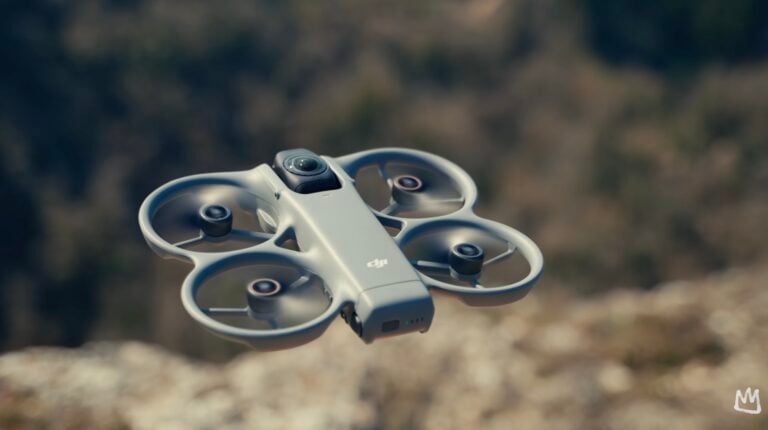
An important distinction here: HB4332 does not ban sex offenders from owning or operating drones. It requires disclosure. An offender who legally purchases a DJI Mini 5 Pro or any other consumer drone would need to report that ownership, just as they currently report vehicle ownership and internet accounts.
For law enforcement, the value is investigative. If a voyeurism complaint involves an aerial component, knowing which registered offenders in the area own drones immediately narrows the pool. Without that information, investigators are working blind.
The bill also raises practical enforcement questions. FAA drone registration already creates a federal record of ownership, but that database is not cross-referenced with state sex offender registries. Remote ID broadcast requirements, which transmit a drone’s registration number in real time, could theoretically help law enforcement connect a flying drone to a registered owner. But connecting that owner to a sex offender registry still requires the kind of state-level reporting that HB4332 would create.
Illinois already updated its drone laws in 2023
HB4332 arrives as Illinois continues to expand its drone-related law enforcement capabilities. In 2023, the state passed HB3902, also known as the Drones as First Responders Act, which expanded the circumstances under which police can deploy drones. That law authorized drone use for assisting emotionally disturbed persons, monitoring crowds at special events, and responding to dispatched emergency calls.
The Oak Brook Police Department made national news in 2025 as the first agency in Illinois to launch a fully autonomous drone-as-first-responder system, built by Flock Safety. That system provides live video, license plate recognition, and real-time data across the village’s 8-square-mile coverage area.
The state’s approach to drone privacy law continues to evolve on multiple fronts, and HB4332 fits into the broader pattern of closing regulatory gaps that consumer drone technology has opened.
DroneXL’s Take
This is one of those rare drone bills that makes obvious sense. If the state already tracks a registered sex offender’s email accounts, phone numbers, and vehicles, there’s no logical reason to exempt a camera-equipped aircraft that can fly to a second-story window.
I’ve covered drone voyeurism cases for years, and the Rhode Island incident stands out because it demonstrated exactly the gap this bill targets. The offender had completed his registration obligations, walked into a store, bought a drone, and used it to spy on his neighbor. Nobody in the system knew he had it.
The bill also doesn’t overreach. It doesn’t ban ownership. It doesn’t restrict flight. It adds one line to a registration form. That’s proportional.
That said, the enforcement gap is real. This is a self-reporting requirement. A sex offender who intends to use a drone for voyeurism is not going to voluntarily register it. The bill creates a penalty for non-disclosure, but detecting that non-disclosure requires separate police work. The real value here is investigative, not preventive: when a drone voyeurism complaint comes in, law enforcement can check whether any registered offenders nearby have reported drone ownership. And when they haven’t, that itself becomes a prosecutable offense.
One note of caution for the drone community: this is the kind of legislation that could expand if it passes. Once drone ownership becomes a reportable item for sex offenders, expect other states to copy the model and potentially apply similar registration requirements to other categories of offenders or restricted individuals. By mid-2027, I’d expect at least five more states to introduce similar bills.
For recreational and commercial drone pilots, this bill changes nothing about your operations. It’s narrowly targeted and appropriately scoped. The bigger concern for Illinois pilots remains the expanding counter-drone authorities granted under the 2026 NDAA, which affect everyone.
Editorial Note: AI tools were used to assist with research and archive retrieval for this article. All reporting, analysis, and editorial perspectives are by Haye Kesteloo.
Discover more from DroneXL.co
Subscribe to get the latest posts sent to your email.
Check out our Classic Line of T-Shirts, Polos, Hoodies and more in our new store today!

MAKE YOUR VOICE HEARD
Proposed legislation threatens your ability to use drones for fun, work, and safety. The Drone Advocacy Alliance is fighting to ensure your voice is heard in these critical policy discussions.Join us and tell your elected officials to protect your right to fly.

Get your Part 107 Certificate
Pass the Part 107 test and take to the skies with the Pilot Institute. We have helped thousands of people become airplane and commercial drone pilots. Our courses are designed by industry experts to help you pass FAA tests and achieve your dreams.

Copyright © DroneXL.co 2026. All rights reserved. The content, images, and intellectual property on this website are protected by copyright law. Reproduction or distribution of any material without prior written permission from DroneXL.co is strictly prohibited. For permissions and inquiries, please contact us first. DroneXL.co is a proud partner of the Drone Advocacy Alliance. Be sure to check out DroneXL's sister site, EVXL.co, for all the latest news on electric vehicles.
FTC: DroneXL.co is an Amazon Associate and uses affiliate links that can generate income from qualifying purchases. We do not sell, share, rent out, or spam your email.