Drone jobs are booming across the Mountain West, and a Reno kids club is building the next generation of pilots

Check out the Best Deals on Amazon for DJI Drones today!
The U.S. drone industry now employs hundreds of thousands people either directly or indirectly, The Boys and Girls Club of Truckee Meadows in Reno, Nevada, is training its own staff to fly and code drones so they can pass those skills on to kids who might one day fill those jobs. Meanwhile, from wildfire response to autonomous firefighting startups, the Mountain West is becoming a proving ground for some of the most consequential drone applications in the country, according to KUNR.
Here is what you need to know:
- The development: The Boys and Girls Club of Truckee Meadows partnered with the Desert Research Institute to run a multi-day drone certification training for its staff, who will then teach students aviation technology, coding, and flight safety.
- Why it matters: Under FAA rules, you can earn a Part 107 commercial drone pilot certificate at 16. Most of these kids have no idea that path exists.
- The bigger picture: The U.S. Forest Service now operates more than 400 drones and logs over 10,000 flights per year. Startup Seneca just landed a five-year deal to deploy autonomous firefighting drones in Aspen, Colorado. Demand for trained drone operators is growing across agriculture, energy, public safety, and defense.
- The source: KUNR Public Radio / Mountain West News Bureau, reported by Kaleb Roedel.
Staff members are learning first, then teaching the kids
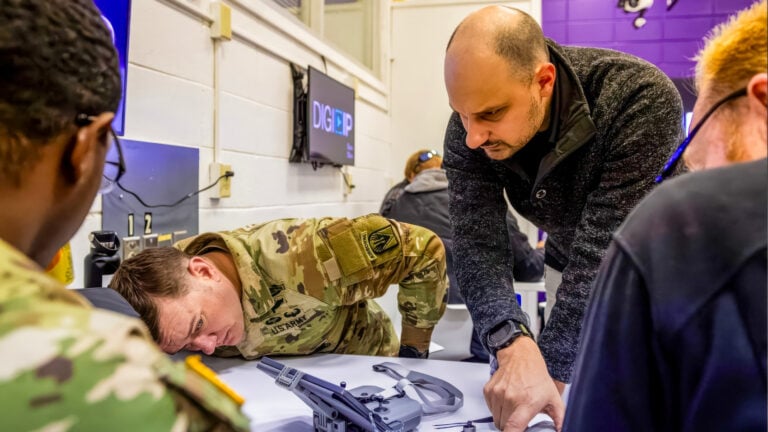
The Reno program is not a summer camp novelty. The Boys and Girls Club partnered with researchers from the Desert Research Institute to run multi-day drone certification training sessions for club employees. Staff members are flying obstacle courses, programming flight paths, and learning coding fundamentals before they ever introduce the material to students.
Mayrem Campos, the club’s college and career director, told KUNR that the kids she works with have no idea drone piloting is a real career. “They’re not aware that this is a life and workforce skill set that is needed in a lot of fields,” she said. “They don’t know that they can get their pilot’s license in drones at 16.”
Campos had never flown a drone before the training. Now she is learning to code them.
The workshops do not grant a commercial license. To fly professionally, pilots must pass the FAA’s Part 107 exam, which covers airspace classifications, weather patterns, safety procedures, and emergency protocols. But the goal here is exposure. Get these kids comfortable with the technology, let them see what is possible, and point them toward the certification path.
This approach mirrors programs we have seen at schools like Edison High School and Southwest High School in San Antonio, where students fly professional-grade equipment and prepare for the Part 107 exam before graduation. The Arvin High School JROTC team just competed at a drone competition in Reno last month. The pipeline is real, and it is growing.
The Mountain West runs on drones now
Across the western United States, drones have shifted from hobby gadgets to daily operational tools. In agriculture, they monitor crop health and irrigation. In mining and energy, they inspect pipelines, transmission lines, and remote facilities. Public safety agencies deploy them during disasters when sending a person would be too dangerous.
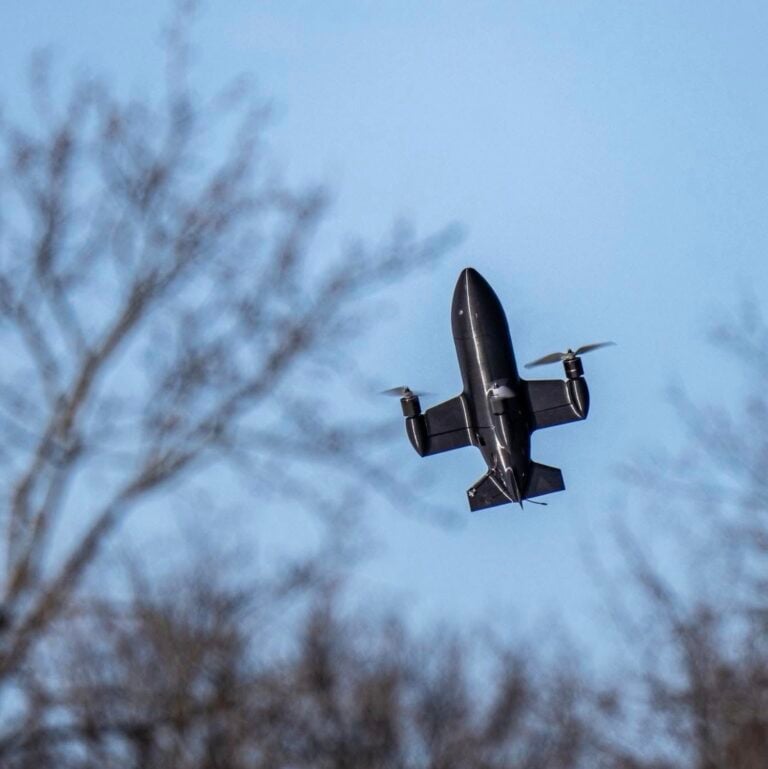
The U.S. Forest Service is one of the clearest examples. Dirk Giles, who manages the agency’s national unmanned aircraft systems program, told KUNR the Forest Service now operates more than 400 drones and logs over 10,000 drone flights annually. That number has climbed steadily as wildfire seasons have grown longer and more destructive.
“Drones are not going to replace piloted aviation,” Giles said. “It’s really just another tool in our toolbox.”
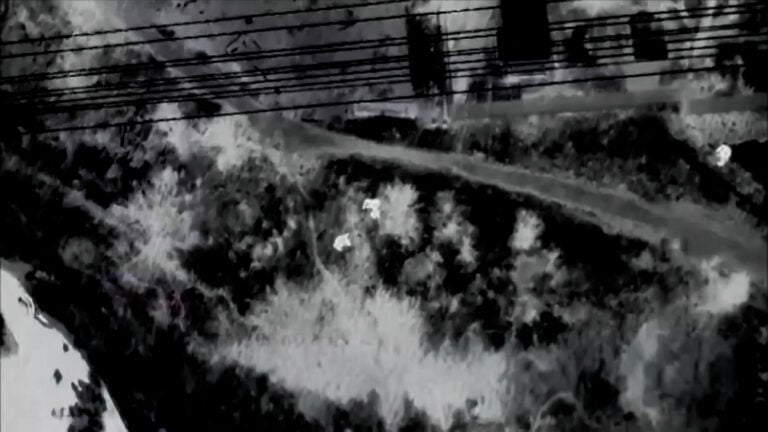
But drones can do things helicopters cannot. Especially at night. Giles described how a drone’s infrared camera can spot a fire the size of a quarter from a mile and a half away, giving ground crews visibility they simply do not have with traditional tools. For firefighters working in darkness and smoke, that is the difference between containment and catastrophe.
We have covered this shift extensively. From the XPrize Wildfire competition pushing autonomous detection and suppression, to San Bernardino County testing the FireSparrow water-dropping drone, to the University of Minnesota using drone swarms to map wildfire smoke in 3D, the pattern is clear. Drones are becoming standard firefighting equipment, not experimental curiosities.
Seneca’s autonomous firefighting drones are heading to Colorado and California this summer
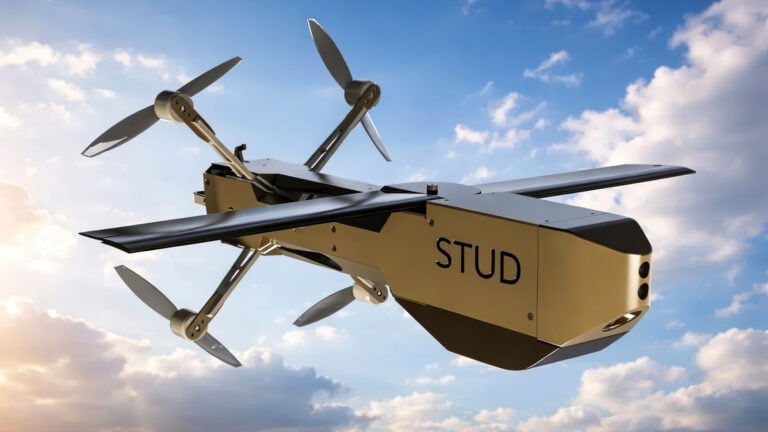
Seneca is a California-based startup developing 500-pound autonomous firefighting drones designed to deploy in coordinated swarms and drop fire-suppressing foam in the earliest moments of a blaze. The company recently secured a five-year deal with Colorado’s Aspen Fire Protection District, one of the first coordinated autonomous wildfire response systems adopted by a U.S. fire agency.
We reported on Seneca’s $60 million funding round back in October 2025 and covered the Aspen Fire Department deployment last month. Five autonomous drones are set to join the Aspen department this July, each carrying 20 gallons of water and 80 gallons of foam.
Founder and CEO Stuart Landesberg told KUNR that the company plans its first deployments this summer in California and Colorado. “Fire grows exponentially,” he said. “And so in the very early phases, even these huge fires were quite manageable if you caught them early enough.”
Seneca currently has nearly 50 employees and is scaling fast. Landesberg said the company expects to grow the team by 50% over the next six months. That is 25 new drone industry jobs at a single startup.
The workforce pipeline needs to start earlier
The drone industry’s growth is creating a real workforce gap. The FAA has registered hundreds of thousands of Part 107 pilots, but demand keeps accelerating. From Vets To Drones pushing 2,500 veterans through Part 107 certification since January 2025, to North Arkansas College joining the FAA’s UAS-CTI program, the training infrastructure is expanding. But it is not expanding fast enough.
Programs like the one in Reno matter because they catch kids before they lock into other paths. Campos told KUNR the training goes beyond aviation. “This teaches them how to work in teams,” she said. “It teaches communication skills. It teaches them to be okay with failing and improving, which are all skills that employers are looking for.”
That tracks. The drone industry does not just need pilots. It needs people who can code autonomous flight paths, interpret thermal data, manage fleet operations, and maintain complex aircraft systems. The technical stack grows deeper every year.
DroneXL’s Take
I have been covering drone workforce development stories for years, and the pattern is always the same. A school or community organization starts a program, the students light up, and then the conversation stalls at funding and follow-through. What makes the Reno program different is the structure. Training the staff first, then having them teach the kids, creates a sustainable loop that does not depend on a single instructor or a one-time grant.
The timing is right. With the Army planning to buy a million drones over the next two to three years, Seneca hiring aggressively for wildfire operations, and commercial drone services projected to reach $109 billion by 2030, the jobs are not theoretical. They exist now, and the Mountain West is where many of them are concentrated.
Here is my prediction: by the end of 2026, at least three more Boys and Girls Club locations in the western U.S. will launch similar drone training partnerships. The model is too clean, the demand is too obvious, and the cost is low compared to traditional STEM programs. When you can teach a kid to code and fly in the same afternoon, and the career path starts at 16, the value proposition sells itself.
The U.S. drone industry does not have a technology problem. It has a people problem. Programs like this one are the fix.
Editorial Note: AI tools were used to assist with research and archive retrieval for this article. All reporting, analysis, and editorial perspectives are by Haye Kesteloo.
Discover more from DroneXL.co
Subscribe to get the latest posts sent to your email.
Check out our Classic Line of T-Shirts, Polos, Hoodies and more in our new store today!

MAKE YOUR VOICE HEARD
Proposed legislation threatens your ability to use drones for fun, work, and safety. The Drone Advocacy Alliance is fighting to ensure your voice is heard in these critical policy discussions.Join us and tell your elected officials to protect your right to fly.

Get your Part 107 Certificate
Pass the Part 107 test and take to the skies with the Pilot Institute. We have helped thousands of people become airplane and commercial drone pilots. Our courses are designed by industry experts to help you pass FAA tests and achieve your dreams.

Copyright © DroneXL.co 2026. All rights reserved. The content, images, and intellectual property on this website are protected by copyright law. Reproduction or distribution of any material without prior written permission from DroneXL.co is strictly prohibited. For permissions and inquiries, please contact us first. DroneXL.co is a proud partner of the Drone Advocacy Alliance. Be sure to check out DroneXL's sister site, EVXL.co, for all the latest news on electric vehicles.
FTC: DroneXL.co is an Amazon Associate and uses affiliate links that can generate income from qualifying purchases. We do not sell, share, rent out, or spam your email.