Ukraine’s Sting Drone Is The Most Wanted Weapon In The Gulf. Ukraine Can’t Legally Sell It Yet.

Check out the Best Deals on Amazon for DJI Drones today!
The Wall Street Journal reported last week that Saudi Aramco was in talks with Wild Hornets to buy Sting interceptor drones for its oil infrastructure. Wild Hornets denied it the same day. Both statements are true — and the gap between them is the real story.
Ukraine’s export ban on weapons, in place since the 2022 invasion, means the Sting is not for sale regardless of who’s asking. As we reported when the Pentagon entered procurement talks earlier this month, the only path to a foreign sale runs through Kyiv’s government, not directly to the manufacturer. Wild Hornets can’t negotiate independently even if it wanted to. What’s happening instead is a scramble: 11 nations formally requesting help, three Ukrainian expert teams already in the Gulf, and Zelensky still waiting for White House sign-off on a drone production deal he proposed last August.
Here’s what the Sting actually is, why everyone wants it, and why getting it to the Gulf is more complicated than a purchase order.
The Sting Is The Combat-Proven Shahed Killer The Gulf Can’t Build Itself
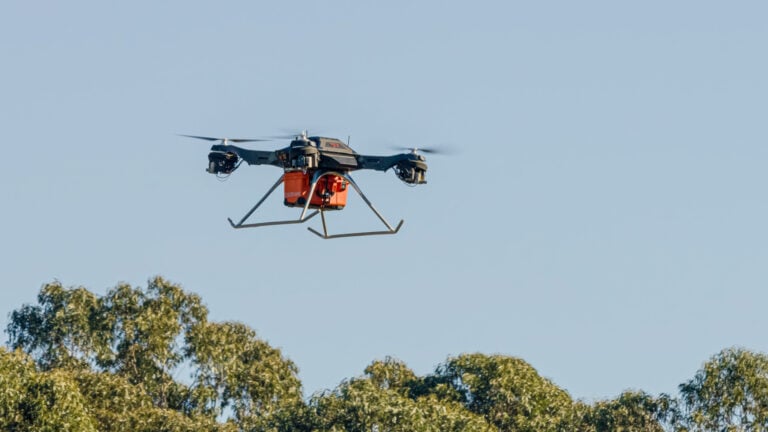
The Sting is a Ukrainian interceptor drone produced by the nonprofit organization Wild Hornets, designed specifically to destroy Shahed-type one-way attack drones mid-flight. Built on a 3D-printed bullet-shaped frame with four rotors, it reaches speeds of up to 213 mph, carries roughly 400 grams of explosive, and detonates within two meters of its target. At approximately $2,100–$2,500 per unit — versus over $13.5 million for a single Patriot PAC-3 interceptor missile — it is the only mass-produced, battle-tested answer to cheap drone swarms currently in existence.
The numbers behind that claim are not manufacturer marketing. In January 2026, Ukrainian forces downed a record 1,704 Shaheds — 70% of those kills by interceptor drones, not guns or missiles. Wild Hornets says the Sting has downed nearly 4,000 drones and other targets since May 2025, including the first confirmed kill of a Russian Geran-3 jet-powered variant and a Shahed carrying an air-to-air missile. No other system in any other military has that record.
Ukraine has absorbed more than 57,000 Shahed-type strikes since February 2022. The Gulf started absorbing the same weapon on March 1. Iran fired waves at Bahrain, Kuwait, and the UAE in a single night, and Gulf states burned through more than 800 Patriot missiles in three days — more than Ukraine received across four years of Western aid. The economics broke immediately. Ukraine solved that problem over two years. The Gulf has weeks.
Wild Hornets Denied The WSJ Report. The Demand Is Still Real.
On March 12, the Wall Street Journal cited anonymous sources saying Saudi Aramco was in direct talks with Wild Hornets and SkyFall to purchase interceptor drones for oil field protection. The next day, Wild Hornets posted a formal statement on X: it is not in export negotiations with any country or company from the Persian Gulf.
Both things are accurate. Wild Hornets says it receives inquiries from Gulf and European countries daily. Ukrainian law prohibits the organization from acting on those inquiries. Any sale goes through the Ukrainian government as part of bilateral security cooperation — and that process hasn’t produced an approved export framework yet. Spokesperson Alex Roslin put it clearly: “Our priority is Ukraine’s defense.” Every Sting built right now goes to Ukrainian forces, not foreign buyers.
The Ukrainian government is running its own track. Three teams — military personnel, engineers, and drone specialists — have deployed to Qatar, the UAE, and Saudi Arabia. A fourth team is supporting U.S. forces in Jordan. Zelensky confirmed this on March 11 and again on March 15, adding that more than 10 European and Middle Eastern governments have formally requested support. He also said Ukraine wants something concrete in return: technology transfers, funding, and access to Western systems Ukraine still lacks.
The Pilot Problem Is The Export Problem
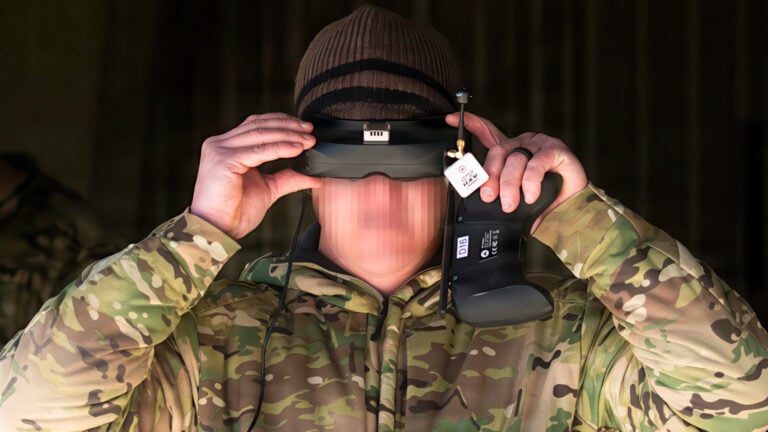
There’s a bottleneck that goes beyond the legal ban. The Sting works because Ukrainian pilots are very good at flying it under live combat conditions. El País reporting from the Chernihiv front this week included an interview with a 27-year-old Ukrainian pilot who has downed 320 Russian drones since July 2025 — his best single night was 24 intercepts. His unit operates out of modified civilian vans in open fields, deployed in three-to-five kilometer spacing with radar support, 12 to 15 people per platoon.
That’s not a system you transfer by shipping hardware. Gulf states lack trained interceptor drone pilots, and the radars and coordination protocols required for effective deployment are part of a layered air defense network Ukraine built under fire over two years. As we covered in October when NATO began absorbing Ukraine’s interceptor doctrine, the technology is straightforward. Deploying it effectively is not. Wild Hornets’ own Alex Roslin told CBS News: “We can train an experienced pilot on our drones in three days. But that does not mean that a Ukrainian or U.S. drone pilot can come and they are knocking down Shahed drones in three days. It is about building teams and creating an integrated network of air defense.” One Wild Hornets representative contacted by Gulf parties reportedly had only a single trained pilot available.
Ukraine can produce thousands of Stings per month. It cannot immediately produce hundreds of trained operators to go with them.
The August White House Meeting That Changed Nothing — Until Now
On August 18, 2025, Zelensky presented Trump’s team with a PowerPoint at the White House. It showed a map of the Middle East, flagged Iran’s evolving Shahed capabilities, and proposed a network of “drone combat hubs” in Turkey, Jordan, and Gulf states — with Ukraine providing interceptor technology and the U.S. providing funding and manufacturing capacity. According to Axios, which obtained the presentation, Trump asked his team to work on it. They did nothing.
“We figured it was Zelensky being Zelensky,” one U.S. official told Axios. “Somebody decided not to buy it.”
That was seven months before Iranian Shaheds killed six U.S. soldiers in Kuwait and hit the Fifth Fleet headquarters in Bahrain. Zelensky has since said publicly that Trump and U.S. military contractors expressed interest in the interceptor technology — “We did not sign the document with President Trump. I do not have an answer as to why. Perhaps it will happen later, but I am not sure,” he told reporters. Trump, however, told NBC News on March 13 that “the last person we need help from is Zelensky” and that the U.S. doesn’t need Ukraine’s assistance with drone defense. What Washington says publicly and what it’s doing operationally — with Ukrainian teams already deployed to Jordan at U.S. request — are two different things.
SkyFall, whose $1,000 P1-SUN interceptor sits below the Sting in price, has said its production capacity already exceeds Ukraine’s domestic needs — it could export 10,000 drones monthly without shortchanging Ukrainian forces. Wild Hornets has made the same production argument. The constraint isn’t factory output. It’s the legal framework and, underneath that, the political will in Washington to close a deal Kyiv has been offering for eight months.
DroneXL’s Take
I’ve been covering Wild Hornets since the Sting was a barely-documented prototype in October 2024. The trajectory from volunteer-built FPV to the subject of Pentagon procurement talks took roughly 16 months. That’s fast, and it would have been faster if the U.S. had said yes at that August White House meeting instead of dismissing the pitch.
What’s happening now is what I called weeks ago when we first covered the Pentagon talks: the Gulf crisis collapsed a two-year adoption timeline into weeks. The question was never whether the Sting would reach Gulf buyers. It was how long the denial would last.
The pilot training bottleneck is real and underreported. Shipping hardware without operators is how you get expensive drones sitting in warehouses. As I noted when the Gulf first started facing the Shahed threat, interceptor drones sidestep the friendly fire and debris problems of anti-aircraft artillery — but only when pilots know what they’re doing. Ukraine’s best operators have two years of live combat refinement behind them. The Gulf operators who need this capability have weeks to get there.
Trump’s public dismissal of Zelensky’s offer and the operational reality on the ground are already diverging. Ukrainian teams are at a U.S. base in Jordan right now. That gap between the rhetoric and the reality will widen, and at some point Washington will have to reconcile them publicly. Within 90 days, watch for either a formal U.S.-Ukraine production agreement or Kyiv announcing a bilateral deal with a Gulf state that goes around Washington entirely — which would force the issue in a way Trump won’t like.
There is one caveat worth tracking. As we reported earlier this month, the Sting handles propeller-driven Shaheds well. Russia’s jet-powered Geran-3, flying at over 550 km/h, can outrun every quadcopter-based interceptor currently in service. Iran and Russia share drone blueprints. If that speed upgrade migrates from the Russia-Ukraine theater to Gulf attacks, the current Sting-based doctrine needs a new answer. Ukraine is working on fixed-wing interceptors capable of exceeding 400 km/h. None has been publicly deployed. That gap is the next story.
Editorial Note: AI tools were used to assist with research and archive retrieval for this article. All reporting, analysis, and editorial perspectives are by Haye Kesteloo.
Discover more from DroneXL.co
Subscribe to get the latest posts sent to your email.
Check out our Classic Line of T-Shirts, Polos, Hoodies and more in our new store today!

MAKE YOUR VOICE HEARD
Proposed legislation threatens your ability to use drones for fun, work, and safety. The Drone Advocacy Alliance is fighting to ensure your voice is heard in these critical policy discussions.Join us and tell your elected officials to protect your right to fly.

Get your Part 107 Certificate
Pass the Part 107 test and take to the skies with the Pilot Institute. We have helped thousands of people become airplane and commercial drone pilots. Our courses are designed by industry experts to help you pass FAA tests and achieve your dreams.

Copyright © DroneXL.co 2026. All rights reserved. The content, images, and intellectual property on this website are protected by copyright law. Reproduction or distribution of any material without prior written permission from DroneXL.co is strictly prohibited. For permissions and inquiries, please contact us first. DroneXL.co is a proud partner of the Drone Advocacy Alliance. Be sure to check out DroneXL's sister site, EVXL.co, for all the latest news on electric vehicles.
FTC: DroneXL.co is an Amazon Associate and uses affiliate links that can generate income from qualifying purchases. We do not sell, share, rent out, or spam your email.