Seneca’s Aspen Firefighting Drones Face the Real Test: Can They Suppress a Fire Before Humans Arrive?
Check out the Best Deals on Amazon for DJI Drones today!
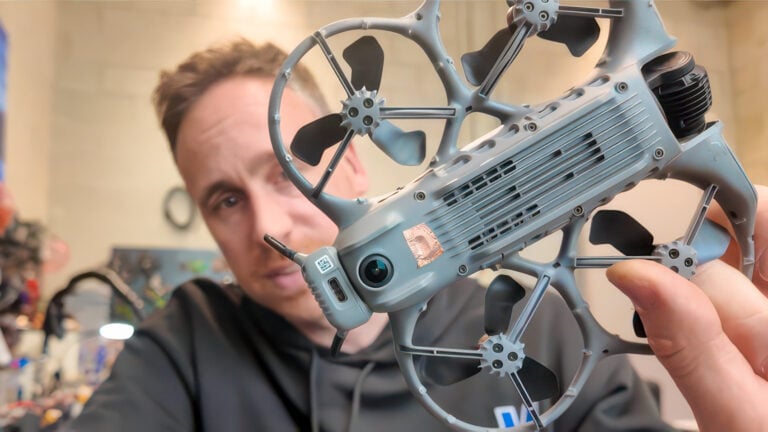
Seneca‘s autonomous firefighting drones are heading to Aspen, Colorado this fire season, and the question fire chiefs have been asking for years is finally getting a field answer: can drones actually suppress a blaze before a human crew reaches the scene? Ars Technica reported this week on the deployment, drawing out a harder truth that the hype around fire drones often skips: suppression, the act of actually putting out a fire, is still overwhelmingly a human-labor problem. Drones haven’t changed that yet. Seneca wants to be the company that does.
Aspen Fire Department Gets a Trailer Full of Drones
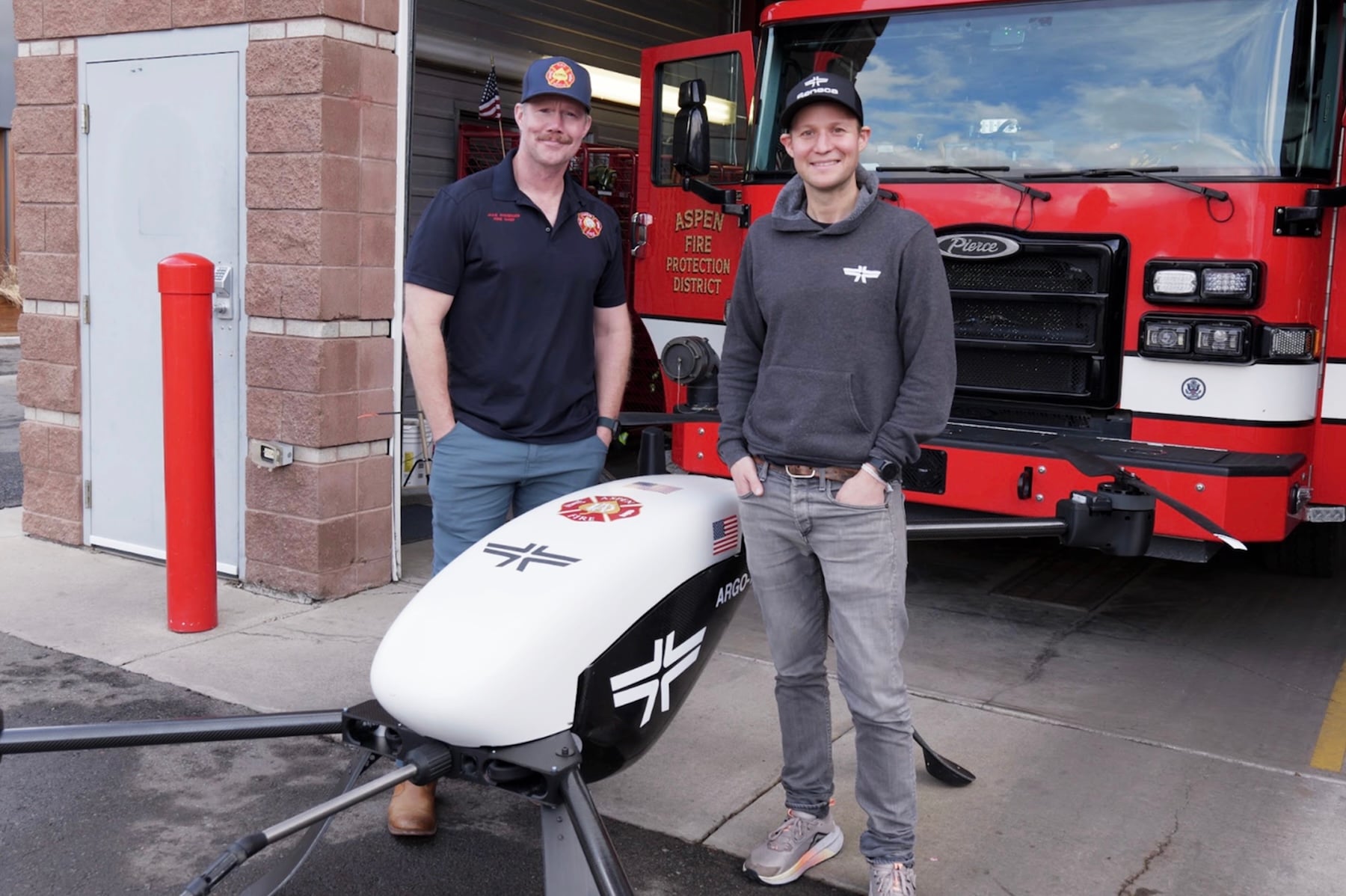
Aspen Fire Chief Jacob Andersen does not have his own fleet of aerial resources. When a fire breaks out in the mountains surrounding Aspen, calling in traditional aircraft from other agencies takes hours. What Seneca is delivering is a trailer carrying five autonomous drones. Andersen’s plan is direct: drive the trailer as close to the incident as possible, park, and set up a forward drone base. If the initial tests succeed, he wants permanent drone bases positioned around the region so that any detected ignition triggers an immediate aerial launch within minutes. We covered the original Aspen Fire Department deployment announcement back in February, when the contract was signed and the July arrival timeline was confirmed.
Seneca’s System Carries 100 Pounds of Suppressant at Over 100 PSI
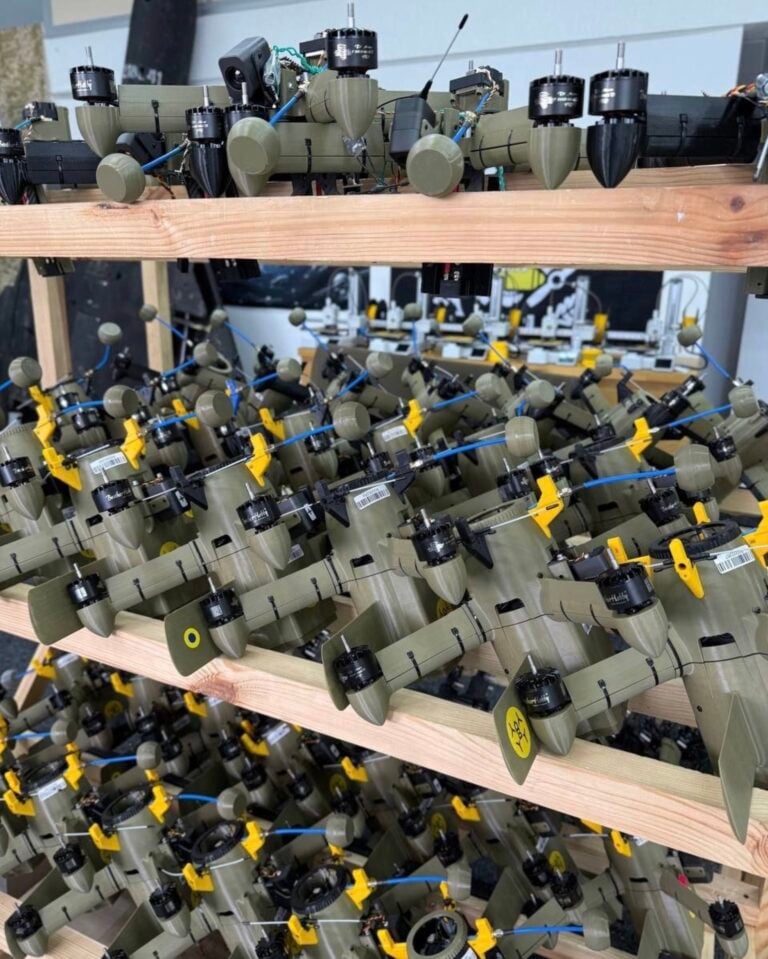
Each Seneca drone carries more than 100 pounds (45 kg) of fire suppressant and delivers it at pressures exceeding 100 PSI. Operating in strike teams of five, a full deployment lays down between 500 and 1,000 pounds of aerated Class A foam per mission. The company says a single mission can create a foam barrier 1,280 feet long and three feet wide. The drones use AI-driven navigation combined with infrared sensors to detect and target fires. They can operate autonomously or under manual control from a remote pilot, including, as demonstrated in Colorado, a remote operator based in California flying a drone on-site in real time.
Seneca founder Stuart Landesberg, who previously built sustainable consumer products company Grove Collaborative into a $1.5 billion public company before pivoting to wildfire defense, told Ars the goal is augmentation, not replacement. “The goal is: how do we supercharge what our firefighters are capable of?” he said. “We have this incredibly talented, incredibly devoted group of public servants. We want to give them the best technology in the world.” The company emerged from stealth in late 2025 with a $60 million funding round led by Caffeinated Capital and Convective Capital, believed to be the largest early-stage investment in wildfire defense technology on record.
Wildfire Suppression Has Not Changed Much in a Century
The Ars Technica piece contains a detail worth sitting with: the fundamentals of fighting wildfires have barely changed over the last hundred years. Suppression still comes down to how fast humans can starve a fire of oxygen, heat, or fuel by digging lines, removing fuel, and making aerial drops of water. Cameras, infrared sensors, and mapping tools have expanded across wildfire agencies in recent years, but those are detection aids, not suppression tools. Putting out a fire remains manual work at scale.
The Palisades and Eaton Fires in Los Angeles County were two of California’s six most destructive fires of the past decade, according to CAL FIRE. Both burned within the last 18 months. During the first 12 hours of each blaze, winds were so severe that no traditional firefighting aircraft could fly. That constraint applies to drones too. The same winds that grounded tankers and helicopters would have grounded Seneca’s aircraft. That is not a reason to dismiss the technology, but it is a hard ceiling on what autonomous suppression drones can be expected to do in the most extreme scenarios. We previously covered the airspace chaos over the Palisades Fire, where an unauthorized DJI Mini drone struck a Super Scooper firefighting aircraft, as a reminder of how messy aerial fire response gets even without extreme wind.
Seneca Is Not the Only Company Racing Toward Autonomous Suppression
The competitive field is building fast. San Bernardino County Fire is already testing the FireSparrow Mk10 from Ponderosa.ai, a California-built heavy-lift drone that carries up to 80 pounds of water or retardant — roughly 10 gallons — per flight, and maps hotspots as it flies. We covered San Bernardino County’s FireSparrow pilot program in February. Separately, Parallel Flight Technologies received FAA Section 44807 exemption clearance for its gas-hybrid Firefly drone, which the company says carries 100-pound payloads for 1.4 hours of flight and can be refueled in under five minutes — roughly ten times the endurance of a comparable all-electric drone. We detailed Parallel Flight’s FAA clearance and Firefly specs earlier this month.
Meanwhile, the U.S. Forest Service used a modified Freefly Alta X with Drone Amplified’s IGNIS system for prescribed burns at Wilson Ridge in Pisgah National Forest. That is a different application, using drones to light controlled fires rather than suppress them. Drone platforms are now entering every phase of fire management, not just suppression. We covered the Pisgah prescribed burn operation this month.
DroneXL’s Take
The Aspen deployment is the most honest test Seneca could design for itself. Aspen Fire has no existing aerial resources, so there’s no legacy infrastructure to fall back on and no temptation to treat the drones as a supplement that gets ignored when a helicopter shows up. If the drones perform, they are it. That is a high-pressure proving ground, and it’s the right one.
What I keep returning to is the wind problem. Both the Palisades and Eaton fires were unreachable by aircraft in their first twelve hours. Seneca’s drones would have been grounded too. The critical response window that Seneca is targeting, those first minutes after ignition before a fire crowns into treetops, is genuinely a gap worth closing. But that window only exists when conditions allow flight. The California fires that generated the most political pressure for wildfire tech investment were precisely the fires where no drone technology on Earth would have made a difference on day one.
That doesn’t make Seneca wrong. It makes their pitch more precise than the marketing materials suggest. These systems earn their value on moderate-wind days in mountainous terrain where a five-minute drone response genuinely beats a two-hour aircraft scramble. Those fires happen constantly and attract far fewer headlines. Winning those fights quietly is how you stop megafires from forming at all.
I’ve watched this space since covering Seneca’s $60 million raise in October 2025, and the direction of the whole sector, from FireSparrow in San Bernardino to Firefly’s FAA clearance to prescribed-burn drones in North Carolina, points toward one conclusion: autonomous suppression is entering operational status in 2026, not just demo status. Seneca will have real performance data from Aspen fire season by late summer. If the foam barriers hold and the response times check out, fire departments across the Mountain West will be ordering trailers before the end of the year.
DroneXL uses automated tools to support research and source retrieval. All reporting and editorial perspectives are by Haye Kesteloo.
Discover more from DroneXL.co
Subscribe to get the latest posts sent to your email.
Check out our Classic Line of T-Shirts, Polos, Hoodies and more in our new store today!

MAKE YOUR VOICE HEARD
Proposed legislation threatens your ability to use drones for fun, work, and safety. The Drone Advocacy Alliance is fighting to ensure your voice is heard in these critical policy discussions.Join us and tell your elected officials to protect your right to fly.

Get your Part 107 Certificate
Pass the Part 107 test and take to the skies with the Pilot Institute. We have helped thousands of people become airplane and commercial drone pilots. Our courses are designed by industry experts to help you pass FAA tests and achieve your dreams.

Copyright © DroneXL.co 2026. All rights reserved. The content, images, and intellectual property on this website are protected by copyright law. Reproduction or distribution of any material without prior written permission from DroneXL.co is strictly prohibited. For permissions and inquiries, please contact us first. DroneXL.co is a proud partner of the Drone Advocacy Alliance. Be sure to check out DroneXL's sister site, EVXL.co, for all the latest news on electric vehicles.
FTC: DroneXL.co is an Amazon Associate and uses affiliate links that can generate income from qualifying purchases. We do not sell, share, rent out, or spam your email.





![Review And Rewrite This Article For Publication. Do All Of The Following: 1. Fact-Check: Verify Dates, Locations, Quotes, Agency Names, And Acronyms. Mark Anything Uncertain With [Verify]. Did The Article Reference And Link To The Original Source? Flag If Missing. 2. Devil'S Advocate: In 3–4 Sentences, Assess Whether The Article Is Factually Sound, Well-Written, And Reads As Human. Be Blunt. 3. Humanize: Fix All Ai Patterns — Break Parallel Sentence Pairs, Remove Em-Dashes Used As Dramatic Pauses, Cut Redundant Consecutive Sentences, Remove Rhetorical Counting Devices. Strip These Words: Crucial, Vital, Key, Significant, Notably, Importantly, Essentially, Arguably, Landscape, Ecosystem, Trajectory, Transformative, Game-Changer, Groundbreaking, Unprecedented, Cutting-Edge, Robust, Seamless, Leverage (Verb), Utilize, Going Forward, In Conclusion, In Summary. Vary Sentence Length. Make The Take Section One Editor'S Sharp Opinion, Not A Summary. 4. Seo: Give 5 Alternative Title Ideas, A Permalink Slug, And A Meta Description (Under 155 Characters). Output Order: Devil'S Advocate Assessment → Revised Article With [Verify] Flags → Seo Block.](https://dronexl.co/wp-content/uploads/2025/02/DJI-Dock-3-and-Matrice-4D-and-4TD-Usher-in-Versatile-Drone-in-a-Box-Solution-for-Remote-Operations-0022.jpg.webp)