Skydio Gets FAA Approval for One Pilot to Fly Four Drones at Once, and 12 Police Departments Are Already In
Check out the Best Deals on Amazon for DJI Drones today!
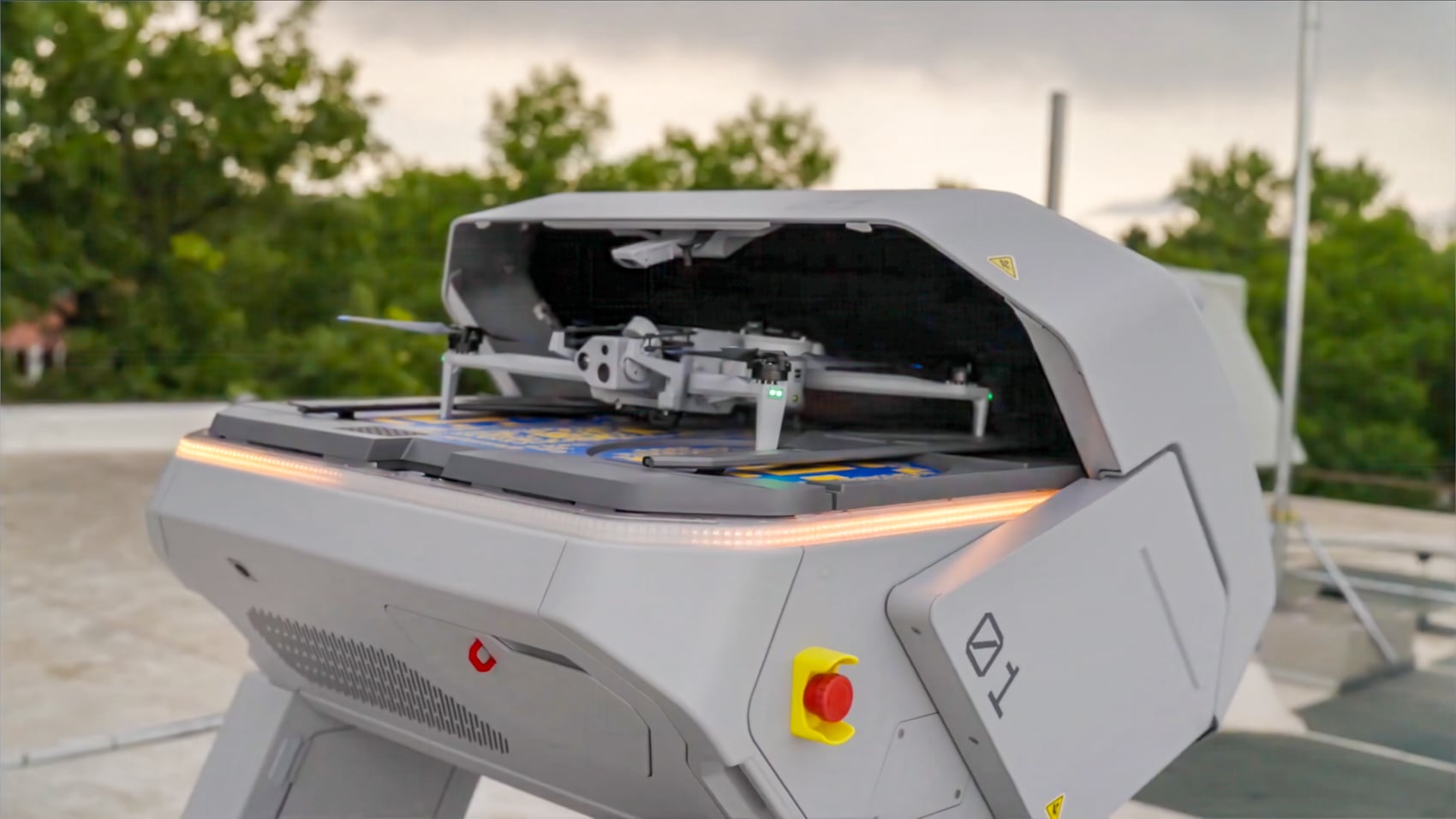
The FAA has opened a streamlined waiver pathway for multi-drone BVLOS (Beyond Visual Line of Sight) operations, and Skydio announced on March 26, 2026, that 12 public safety agencies have already received approval to let a single remote Pilot in Command (PIC) simultaneously operate up to four Skydio X10 drones. According to the announcement on Skydio’s blog, the agencies receiving approval include the New York City Police Department, the San Francisco Police Department, the Oklahoma City Police Department, and the Omaha Police Department, among others. This builds on approvals Skydio secured for the Las Vegas Metropolitan Police Department (LVMPD) in September 2025 and New York Power Authority in January 2026. The specific conditions of each waiver were not published alongside the announcement.
The staffing math is blunt. Historically, BVLOS waivers have operated on a one-pilot-per-drone basis. At fleet scale, that constraint kills the economics of any multi-dock program. Multi-drone approval breaks that ceiling without adding headcount.
One Pilot, Four Drones: How the FAA Got Comfortable With This
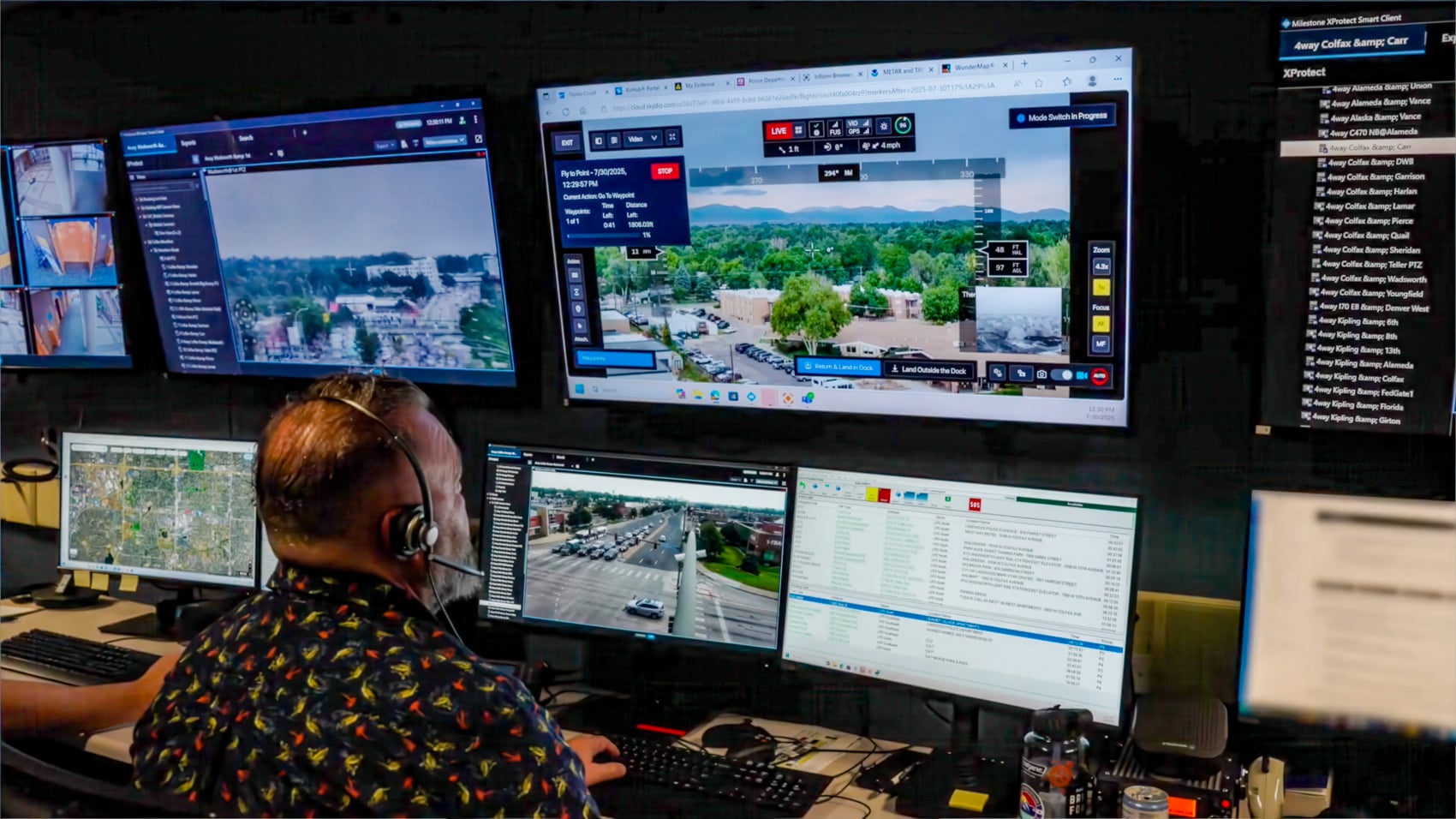
The central regulatory question was workload. The FAA needed an answer to how a single pilot can safely supervise multiple aircraft without degrading safety. Skydio’s answer is its AI-powered Skydio Autonomy stack, which the company describes as shifting the operator’s job from hands-on flight control to orchestration.
The multi-drone approvals sit on top of the existing shielded BVLOS framework: operations at or below 200 feet AGL (above ground level) or within 50 feet of a structure, where crewed aircraft rarely operate, combined with ADS-B In integration for traffic awareness. Over 1,100 public safety organizations have already secured Part 91 waivers under that framework. Multi-drone adds a new software layer on top, not a new airspace regime.
Three specific software features make the workload case to regulators. The new multi-drone user interface displays all aircraft on one map with live video feeds, telemetry, and ADS-B traffic for each drone simultaneously. A single click switches manual control to any individual aircraft. Fleet Commands let the pilot issue a simultaneous pause, descent, or return-to-land order to all drones at once if a low-flying crewed aircraft enters the area. Pathfinder handles routing automatically, adjusting for terrain, structures, and altitude restrictions without requiring the pilot to hand-fly each aircraft to its destination.
Contingency management has also been updated for the multi-aircraft context. Automatic return-to-land triggers for low battery or lost link, parachute deployment on loss of control, and designated safe landing zone routing all operate independently per aircraft. One drone’s emergency does not cascade into the pilot losing situational awareness of the others.

The 14 Agencies That Now Hold Multi-Drone Waivers
LVMPD and New York Power Authority were first. The 12 agencies receiving approvals this month are:
- New York City Police Department
- Brookhaven Police Department
- San Mateo Police Department
- Sunny Isles Beach Police Department
- Oklahoma City Police Department
- Omaha Police Department
- Redmond Police Department
- Lakewood Police Department
- San Francisco Police Department
- Jefferson Parish Sheriff’s Office
- Pasco County Sheriff’s Office
- Ontario Police Department (Skydio’s announcement does not specify state or province)
The geographic spread matters. This is not a California or Nevada story. Jefferson Parish is Louisiana. Pasco County is Florida. Omaha is the Midwest. The FAA’s streamlined process is built for scale from the start.

What One Pilot Operating Four Drones Actually Changes on Scene
The Drone as First Responder (DFR) use case is the most concrete. A drone responding to a long call will eventually run low on battery. Until now, that meant either ending overwatch or scrambling a second pilot. Under multi-drone approval, the original pilot dispatches a relief drone, lets Skydio Autonomy handle the transit and landing of the returning aircraft, and keeps eyes on scene without interruption.
Overlapping calls are the second scenario. If a new 911 dispatch comes in while a drone is still working the first call, the pilot can send a second aircraft immediately rather than waiting for the first mission to close. Autonomy handles the return and dock landing of the first drone without pulling the pilot’s attention away.
For asset inspection and site security, the efficiency gain is more straightforward. Pre-programmed missions can run on up to four aircraft simultaneously, at one or multiple locations. The pilot supervises progress rather than flying each route manually.
DroneXL has been tracking LVMPD’s Project Blue Sky since it expanded to 13 rooftop skyports in September 2025. That program logged over 10,000 flights in 2025, more than any other law enforcement agency in the United States. Maintaining a dedicated pilot for every dock at that volume is exactly the staffing wall multi-drone approval is designed to remove.

Skydio’s Arc of Autonomy Reaches Stage 4
In 2021, Skydio laid out what it calls the Arc of Autonomy: a staged progression from manual flight to fully autonomous, always-on drone infrastructure. Multi-drone approval marks Stage 4, the shift from “one pilot, one drone” to “one pilot, multiple drones.”
The milestones that got here are worth noting. In 2020, Skydio helped the Chula Vista Police Department secure the first Tactical BVLOS waiver for public safety. That approval model eventually spread to over 600 agencies before the FAA retired the Tactical BVLOS concept in 2024. In 2021, BNSF Railway became the first operator to receive a national remote operations approval for dock-based drones. In 2023 and 2024, Skydio unlocked remote operations without visual observers for enterprise customers and leading public safety agencies. Multi-drone is the next rung.
DroneXL’s Take
Skydio has built its entire market position on regulatory proximity. The company got the Chula Vista tactical waiver early, helped BNSF secure the first national remote ops approval, and landed LVMPD and NYPD as anchor customers before the multi-drone concept even existed as a formal regulatory category. Each approval becomes the reference point for the next one. The FAA’s decision to build a streamlined multi-drone pathway rather than adjudicate these case-by-case signals that the agency now treats this as a validated, repeatable operational model, not a novel experiment.
I’ve watched DFR programs expand from a handful of early adopters to over 1,100 agencies in roughly five years of coverage. The bottleneck in that expansion has never been technology or airspace. It’s always been staffing and cost. A department that cannot justify a dedicated drone pilot for every dock can now justify one pilot running four docks. That changes the ROI calculation for every mid-sized agency currently sitting on the fence.
The next milestone to watch is commercial and industrial. All 14 of these approvals are public safety or utility organizations. Skydio’s language about asset inspection and site security points squarely at enterprise customers, but the commercial BVLOS waiver process under Part 107 is a separate regulatory track from the Part 91 public safety pathway used here. If the FAA builds a parallel streamlined multi-drone process for commercial operators, the staffing argument that just transformed DFR programs will hit the inspection and infrastructure monitoring market simultaneously. Expect a commercial multi-drone waiver announcement before the end of 2026.
DroneXL uses automated tools to support research and source retrieval. All reporting and editorial perspectives are by Haye Kesteloo.
Discover more from DroneXL.co
Subscribe to get the latest posts sent to your email.
Check out our Classic Line of T-Shirts, Polos, Hoodies and more in our new store today!

MAKE YOUR VOICE HEARD
Proposed legislation threatens your ability to use drones for fun, work, and safety. The Drone Advocacy Alliance is fighting to ensure your voice is heard in these critical policy discussions.Join us and tell your elected officials to protect your right to fly.

Get your Part 107 Certificate
Pass the Part 107 test and take to the skies with the Pilot Institute. We have helped thousands of people become airplane and commercial drone pilots. Our courses are designed by industry experts to help you pass FAA tests and achieve your dreams.

Copyright © DroneXL.co 2026. All rights reserved. The content, images, and intellectual property on this website are protected by copyright law. Reproduction or distribution of any material without prior written permission from DroneXL.co is strictly prohibited. For permissions and inquiries, please contact us first. DroneXL.co is a proud partner of the Drone Advocacy Alliance. Be sure to check out DroneXL's sister site, EVXL.co, for all the latest news on electric vehicles.
FTC: DroneXL.co is an Amazon Associate and uses affiliate links that can generate income from qualifying purchases. We do not sell, share, rent out, or spam your email.