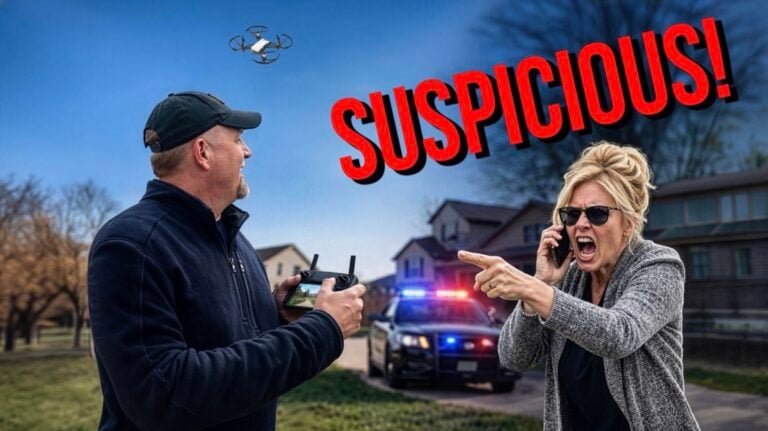
WSJ exposes Chinese parts inside America’s humanoid robots, and Congress is already running the DJI playbook
Check out the Best Deals on Amazon for DJI Drones today!
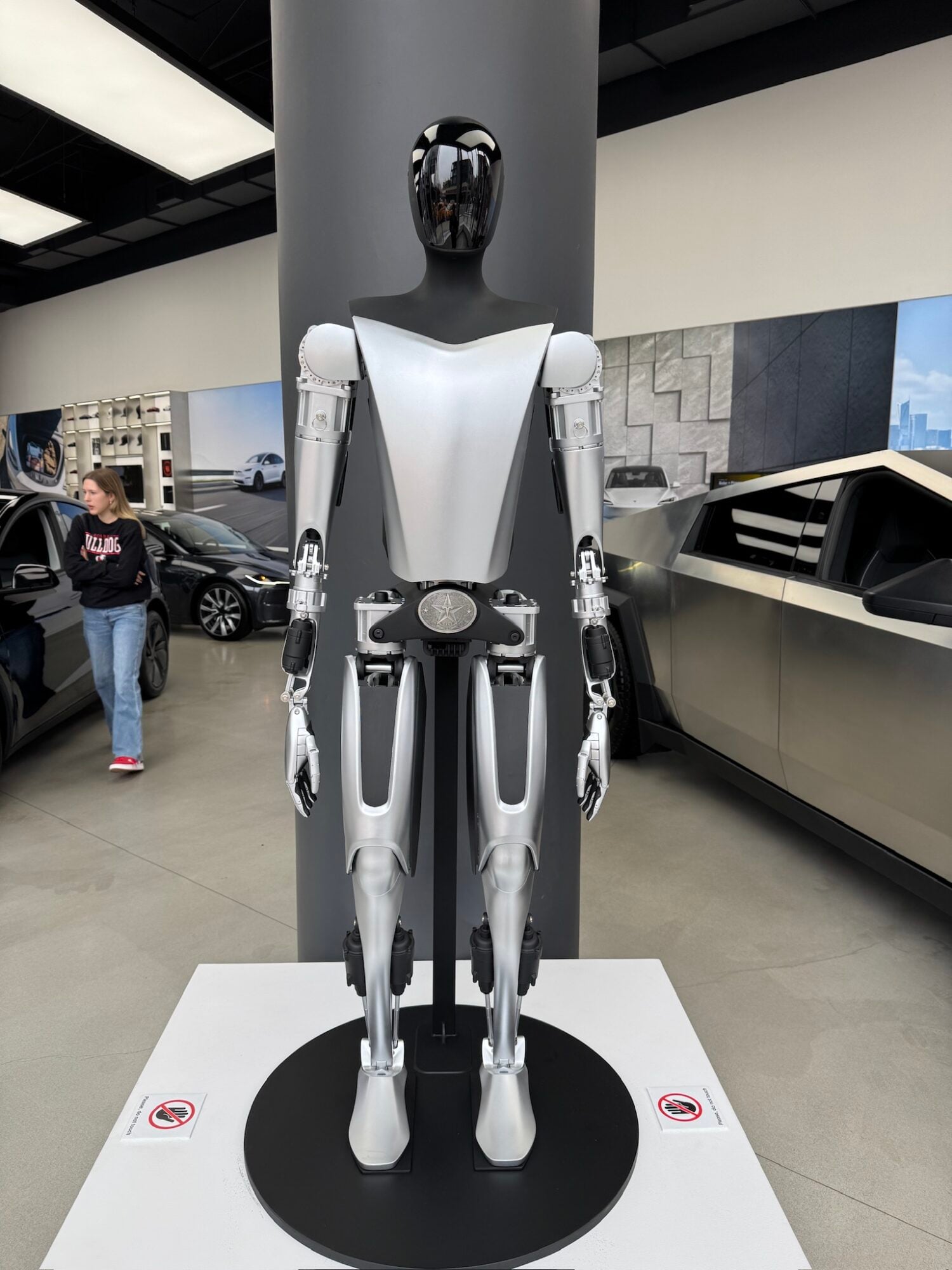
The Wall Street Journal published an investigation this week revealing that America’s most prominent humanoid robots, including Tesla’s Optimus and products from Figure AI, depend heavily on Chinese-manufactured components for their most basic physical functions. The WSJ report (paywall) by Raffaele Huang details how Chinese robot maker Unitree supplies the motors that power the neck and legs of Nvidia and Google’s robotic Olaf (the “Frozen” snowman character), according to a Disney research paper. Tesla is building a team in China to source sensors, coreless motors, and speed reducers for Optimus. Figure AI has used Chinese suppliers for joints, sensors, and motors in earlier models, according to HSBC analysts.
The timing matters. On March 26, Senators Tom Cotton (R-AR) and Chuck Schumer (D-NY) introduced the American Security Robotics Act, which would ban federal agencies from buying or operating humanoid robots and other ground-based robotic systems made by companies tied to foreign adversaries. That bill follows the Humanoid ROBOT Act introduced in November 2025 by Senators Bill Cassidy (R-LA) and Chris Coons (D-DE), and the National Commission on Robotics Act (H.R. 7334) introduced in February 2026. If this legislative pace feels familiar, it should. We’ve seen this movie before. It was called the DJI ban.
China controls the bodies while America builds the brains
The WSJ investigation lays out a clean division of labor. The U.S. leads in AI chips and software. China controls the physical supply chain: motors, gears, magnets, rare-earth materials, sensors, and the precision components that make a humanoid robot move. Morgan Stanley estimates China’s supply chain could cut the cost of building a humanoid robot by up to two-thirds. The motion-control components alone, including specialized motors and gears, account for roughly 55% of a robot’s total cost, according to research firm TrendForce.
Chinese companies released 28 humanoid models last year, nearly three times the number from American firms, per Morgan Stanley. Unitree shipped more than 5,500 humanoids in 2025 and is preparing a $610 million Shanghai IPO. Nearly 90% of all humanoid robots sold globally in 2025 were Chinese, according to Omdia. Figure AI, Agility Robotics, and Tesla each sold around 150 units. Tesla’s own dependence became visible when China tightened rare-earth magnet export restrictions last year, forcing changes to Optimus. Despite that warning, Tesla is now talking to Chinese suppliers about ordering components for thousands of Optimus units.
The drone ban playbook, applied to robots
DroneXL warned about this exact parallel last June. The pattern is the same. A Chinese manufacturer dominates an emerging technology category through lower costs and superior manufacturing scale. American companies depend on Chinese components even when they assemble domestically. Congress identifies a national security concern, passes legislation restricting Chinese products, and the domestic industry discovers it can’t actually fill the gap.
With drones, DJI captured roughly 70-80% of the U.S. market before the FCC added all foreign-made drones to its Covered List in December 2025. No federal agency completed the security audit that Congress mandated under Section 1709 of the FY25 NDAA. DJI was banned by bureaucratic default, not by evidence.
The robot bills follow the same structure. The Humanoid ROBOT Act would ban federal procurement of humanoid robots from “covered entities” tied to China, Russia, Iran, and North Korea. The American Security Robotics Act extends that to all unmanned ground vehicles used by federal agencies. The Foundation for Defense of Democracies has already recommended that the FCC consider adding Chinese robots that connect to the internet to the Covered List, the same mechanism used against DJI.
The supply chain problem nobody wants to solve first
The drone industry already proved that banning Chinese products without building domestic alternatives creates chaos. When China sanctioned Skydio in October 2024, cutting off its sole battery supplier, America’s flagship drone company was rationing batteries within weeks. The entire U.S. drone industry produces fewer than 100,000 units annually. Only 23 out of 300+ applicants made it through the Pentagon’s Blue UAS approval process.
Humanoid robots face the same upstream chokepoints. Brushless motors need rare-earth magnets. America imported 72% of its rare-earth compounds from China between 2019 and 2022, according to the U.S. Geological Survey. Processing and refining capacity remains concentrated in China even when raw materials come from elsewhere. A “domestic” robot supply chain can still be exposed at every level above final assembly.
The WSJ reports that some Chinese suppliers are already preparing manufacturing capacity in Thailand and other Southeast Asian countries for Tesla, partly to avoid U.S. tariffs. Sound familiar? DJI’s shell companies tried the same thing through Malaysia before the FCC’s component-level restrictions closed that door.
LinkedIn’s drone community sees the pattern too
The WSJ article sparked immediate debate among drone professionals on LinkedIn. UAV inspection pilot Robin Mueller called for a “US Robot Dominance Act” to ban all foreign robot components, warning Chinese parts could enable surveillance of military bases and infrastructure. Stan Khlevner, COO at Remote Optix, pushed back: “This is a made-up issue perpetuated by fear and not strength. If a proper manufacturing base is not setup in America (which none of the proposals actually helps with), this will simply silo America further from any kind of ‘dominate’ position.”
That exchange captures the same split that has defined the DJI debate for years.
DroneXL’s Take
I wrote about this coming collision in June 2025, months before the FCC banned foreign drones. The Bloomberg piece I covered at the time made the comparison explicit: DJI captured the drone market through government-subsidized pricing while American competitors couldn’t scale. The same dynamic is playing out with Unitree, Agibot, and UBTech today.
Congress is moving faster this time. Three robot-related bills in four months signals legislative intent that took nearly a decade to develop for drones. But moving fast on bans without moving fast on domestic manufacturing is exactly how we ended up with a drone industry that can’t supply its own military. The FCC has cleared exactly four non-Chinese drone systems from the Covered List in three months. Four.
Khlevner’s comment cuts to the core. Bans are easy. Building a domestic supply chain for precision motors, rare-earth magnets, and high-density batteries takes years and billions of dollars. None of the current robot bills include meaningful manufacturing investment.
By the end of 2027, expect at least one major U.S. humanoid robot manufacturer to face a Skydio-style supply chain crisis when China retaliates against robot-specific restrictions. The question isn’t whether it will happen. It’s whether Washington will have built any domestic alternatives by then.
DroneXL uses automated tools to support research and source retrieval. All reporting and editorial perspectives are by Haye Kesteloo.
Discover more from DroneXL.co
Subscribe to get the latest posts sent to your email.
Check out our Classic Line of T-Shirts, Polos, Hoodies and more in our new store today!

MAKE YOUR VOICE HEARD
Proposed legislation threatens your ability to use drones for fun, work, and safety. The Drone Advocacy Alliance is fighting to ensure your voice is heard in these critical policy discussions.Join us and tell your elected officials to protect your right to fly.

Get your Part 107 Certificate
Pass the Part 107 test and take to the skies with the Pilot Institute. We have helped thousands of people become airplane and commercial drone pilots. Our courses are designed by industry experts to help you pass FAA tests and achieve your dreams.

Copyright © DroneXL.co 2026. All rights reserved. The content, images, and intellectual property on this website are protected by copyright law. Reproduction or distribution of any material without prior written permission from DroneXL.co is strictly prohibited. For permissions and inquiries, please contact us first. DroneXL.co is a proud partner of the Drone Advocacy Alliance. Be sure to check out DroneXL's sister site, EVXL.co, for all the latest news on electric vehicles.
FTC: DroneXL.co is an Amazon Associate and uses affiliate links that can generate income from qualifying purchases. We do not sell, share, rent out, or spam your email.