FirePoint’s $2.5 Billion UAE Deal Rejected Before It Could Begin
Check out the Best Deals on Amazon for DJI Drones today!
Ukraine’s anti-monopoly committee sent back an application for a $760 million acquisition of a 30% stake in FirePoint, the country’s top long-range drone and missile maker, according to a written response the committee gave to Reuters on April 8, 2026. The committee confirmed that the counterparty was EDGE Group, the Abu Dhabi-based state defense conglomerate. The application, submitted on December 30, 2025, was never accepted for formal review because it failed to meet required criteria. The committee did not specify which rules the application fell short of, and FirePoint did not respond to Reuters’ request for comment.
FirePoint co-founder Denys Shtilerman told Reuters just days before the committee’s response that the deal was still under active review, with a decision deadline of around October. That account is now outdated. The deal is dead, at least in its current form.
The $760 Million Stake Would Have Valued FirePoint at $2.5 Billion
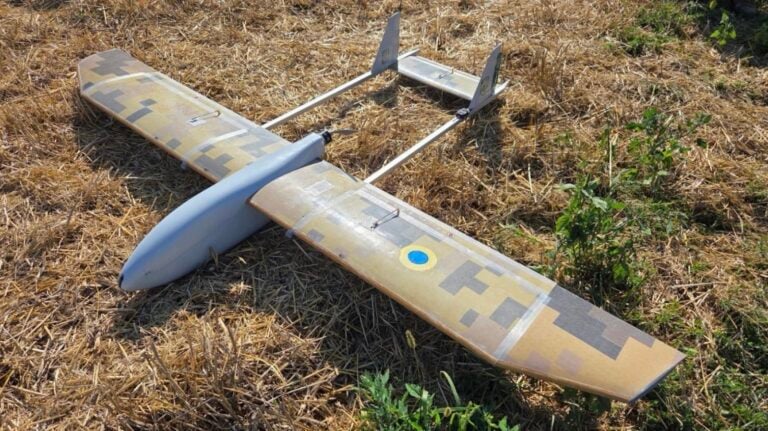
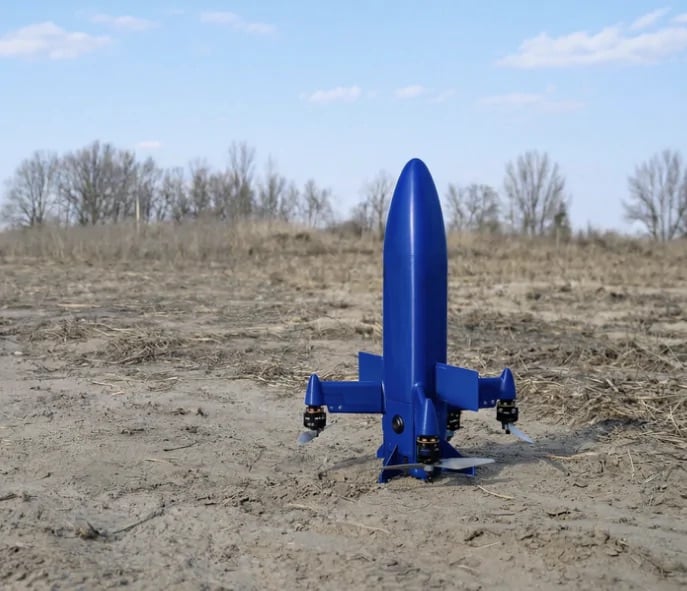
A 30% stake at $760 million implies a total company valuation of approximately $2.5 billion, a figure FirePoint has not independently confirmed. That number needs context. As we reported in March 2026, FirePoint now produces roughly 200 long-range strike drones per day across its FP-1 and FP-2 families, accounts for an estimated 60% of all Ukrainian drone strikes against Russian forces, and has developed seven generations of navigation systems since 2022, including a GPS-independent terrain-matching system that Russia’s electronic warfare cannot jam. The company also manufactures the Flamingo cruise missile, which carries a one-ton warhead up to 3,000 km.
At $2.5 billion, FirePoint would be valued higher than most European defense drone companies, including Quantum Systems, whose Morgan Stanley-managed financing round earlier this year was targeting €400–600 million ($470–710 million). For a company founded in November 2022 by a film location scout, an IT entrepreneur, and a concrete products business owner, the figure is extraordinary — and the subject of ongoing scrutiny in Ukraine.
EDGE Group’s Interest Raises Uncomfortable Questions
EDGE Group is not a passive investor. The Abu Dhabi conglomerate employs around 14,000 people across more than 25 entities, according to the company, develops autonomous weapons systems, and has been expanding aggressively into Western defense partnerships. In November 2025, we covered EDGE’s $200 million joint venture with Anduril Industries to co-produce the Omen hybrid-VTOL drone from an Abu Dhabi manufacturing facility. EDGE is not buying capabilities it doesn’t intend to use or replicate.
The interest in FirePoint follows a broader UAE pattern. As we reported in March 2026, Gulf states have been in direct talks with Ukraine about acquiring combat-proven drone interceptor technology, following Iranian Shahed attacks on targets including the U.S. Fifth Fleet’s operations center in Bahrain. President Zelenskyy confirmed he had spoken directly with the UAE president about Ukrainian anti-drone technology. The EDGE bid for FirePoint, if it had gone through, would have given Abu Dhabi not just a financial stake but access to the industrial backbone of Ukraine’s deep-strike program. That’s a different category of transaction than buying interceptor drones off a catalog.
Neither EDGE Group nor FirePoint responded to Reuters’ requests for comment on the rejection.
FirePoint’s Regulatory and Political Baggage Didn’t Go Away
The failed EDGE application lands against a backdrop of unresolved legal and political complications around FirePoint itself. In October 2025, we covered Ukraine’s National Anti-Corruption Bureau investigation into FirePoint, which was examining inflated pricing, alleged quality problems, and suspected ties between company ownership and a businessman connected to President Zelenskyy’s former television production network. FirePoint denied the allegations and said it was cooperating with investigators.
A government procurement audit found that the Defense Procurement Agency had awarded contracts at prices approximately $16.7 million higher than lower-cost alternatives without triggering the mandatory price negotiation that should have followed. Those findings have not been publicly resolved. No reporting has linked the anti-monopoly committee’s decision to the NABU investigation, and the committee’s written response cited only unspecified criteria failures without reference to any parallel proceeding.
The committee confirmed it had not received a new application from FirePoint at the time of its response to Reuters. That leaves the deal formally stalled, with no timeline for resubmission.
Ukraine’s Defense Drone Industry Is Now a High-Stakes Investment Target
The EDGE bid is the highest-profile foreign acquisition attempt yet on a Ukrainian defense drone company, but it won’t be the last. As we reported in April 2026, Ukraine has built one of the world’s most sophisticated military drone procurement systems, with online marketplaces where frontline commanders browse hundreds of drone models, pay with brigade credits, and receive delivery within days. That infrastructure makes the industry legible to outside investors in a way it wasn’t two years ago.
In March 2026, President Zelenskyy used his UK Parliament speech to position Ukraine as the world’s essential drone defense partner, explicitly inviting allied investment. A $2.5 billion implied FirePoint valuation — even sent back by the anti-monopoly committee in its current form — signals how seriously the global defense market has begun pricing Ukrainian drone manufacturing capacity.
DroneXL’s Take
I’ve been covering FirePoint since its corruption probe broke in October 2025, and I’ve watched the company accumulate contradictions faster than most firms accumulate revenue. Founded by people with no aerospace background, growing to 3,700 employees in under three years, producing drones that hit targets 1,600 km inside Russia — and simultaneously under investigation for pricing fraud and alleged political favoritism. All of it true at once.
The EDGE bid is a window into something the mainstream defense press hasn’t caught up to yet. Gulf states don’t want to just buy Ukrainian drones. They want access to the industrial method — the ability to produce at scale, iterate at speed, and manufacture systems hardened by real combat feedback. A 30% stake in FirePoint, for a state conglomerate like EDGE, is an apprenticeship as much as an investment. Ukraine’s anti-monopoly committee may have rejected the paperwork, but the strategic logic behind the bid doesn’t disappear.
What concerns me is the transparency gap. The committee declined to explain which criteria the application failed on. FirePoint declined to comment. EDGE declined to comment. A $760 million transaction involving one of the world’s most active weapons producers was submitted, rejected, and announced only because Reuters asked. That’s not how a maturing defense industry should operate, especially one asking Western allies to keep pouring money in.
FirePoint will restructure and resubmit before the end of 2026. The only open question is whether Ukraine’s regulatory framework will be transparent enough to explain why the first application failed.
DroneXL uses automated tools to support research and source retrieval. All reporting and editorial perspectives are by Haye Kesteloo.
Discover more from DroneXL.co
Subscribe to get the latest posts sent to your email.
Check out our Classic Line of T-Shirts, Polos, Hoodies and more in our new store today!

MAKE YOUR VOICE HEARD
Proposed legislation threatens your ability to use drones for fun, work, and safety. The Drone Advocacy Alliance is fighting to ensure your voice is heard in these critical policy discussions.Join us and tell your elected officials to protect your right to fly.

Get your Part 107 Certificate
Pass the Part 107 test and take to the skies with the Pilot Institute. We have helped thousands of people become airplane and commercial drone pilots. Our courses are designed by industry experts to help you pass FAA tests and achieve your dreams.

Copyright © DroneXL.co 2026. All rights reserved. The content, images, and intellectual property on this website are protected by copyright law. Reproduction or distribution of any material without prior written permission from DroneXL.co is strictly prohibited. For permissions and inquiries, please contact us first. DroneXL.co is a proud partner of the Drone Advocacy Alliance. Be sure to check out DroneXL's sister site, EVXL.co, for all the latest news on electric vehicles.
FTC: DroneXL.co is an Amazon Associate and uses affiliate links that can generate income from qualifying purchases. We do not sell, share, rent out, or spam your email.