JPMorgan Chase CEO Jamie Dimon Calls for US Drone Production, Backs $1.5 Trillion Security Initiative

Check out the Best Deals on Amazon for DJI Drones today!
Jamie Dimon, Chairman and Chief Executive Officer of JPMorgan Chase, used his annual letter to shareholders, released April 6, 2026, to call explicitly for the United States to rapidly develop and produce drones domestically, and to announce a $1.5 trillion, 10-year initiative that names drones as one of five priority investment areas. The full letter places Wall Street’s largest institution on record treating drone manufacturing as a national security industrial priority.
Dimon Names Drones Alongside Semiconductors as Essential US Capabilities
In the section titled “We have much to do to ensure we remain the world’s best military,” Dimon made the case that America has left itself dangerously exposed. He wrote that the US “has allowed itself to become too dependent on unreliable sources for items that are essential to our national security, such as critical minerals, semiconductors and advanced manufacturing output.” He followed that directly with this: “our military needs to be able to rapidly develop new and often cheaper weapons, like drones.”
That framing matters. Dimon is not treating drones as a line item inside a defense budget — he is placing them in the same sentence as semiconductors, the technology that triggered the CHIPS Act and reshaped US industrial policy. The argument: America is dependent on foreign production in a category it cannot afford to cede. That is the identical logic behind the ongoing effort to ban or restrict DJI from the US market. We covered the broader pattern of Chinese technology dependency concerns just days before this letter dropped.
JPMorgan’s Security and Resiliency Initiative Commits $10 Billion in Direct Investment
The Security and Resiliency Initiative (SRI) is a $1.5 trillion, 10-year plan to finance and invest in industries JPMorgan considers critical to national economic security. Within that umbrella, the bank will deploy $10 billion in direct equity and venture capital, targeting five areas. Drones appear under the heading “Defense and aerospace, including defense technology, autonomous systems, drones, next-generation connectivity and secure communications.”
The other four focus areas are supply chain and advanced manufacturing (including critical minerals, shipbuilding, and robotics), energy independence, frontier and strategic technologies (artificial intelligence, cybersecurity, quantum computing), and pharmaceuticals and health technologies. Drones share space with AI and quantum computing. That is not where drone investment conversations typically land.
Since launching the SRI, which Dimon describes as beginning in late 2025, JPMorgan has received more than 750 business opportunities from company leaders and government officials. The bank is assembling a dedicated 30-plus person SRI global banking and investment team and has formed an external advisory council that includes military generals, former secretaries of state and defense, and business executives.
Dimon Also Tells Europe to Build Drones
The drone argument appears twice in the letter. In a separate section on European defense, Dimon writes that European nations “should focus on the types of things they can build very effectively, like drones, tanks, armaments and others,” while relying on the US for advanced capabilities such as nuclear submarines, advanced aircraft, military intelligence, and satellites.
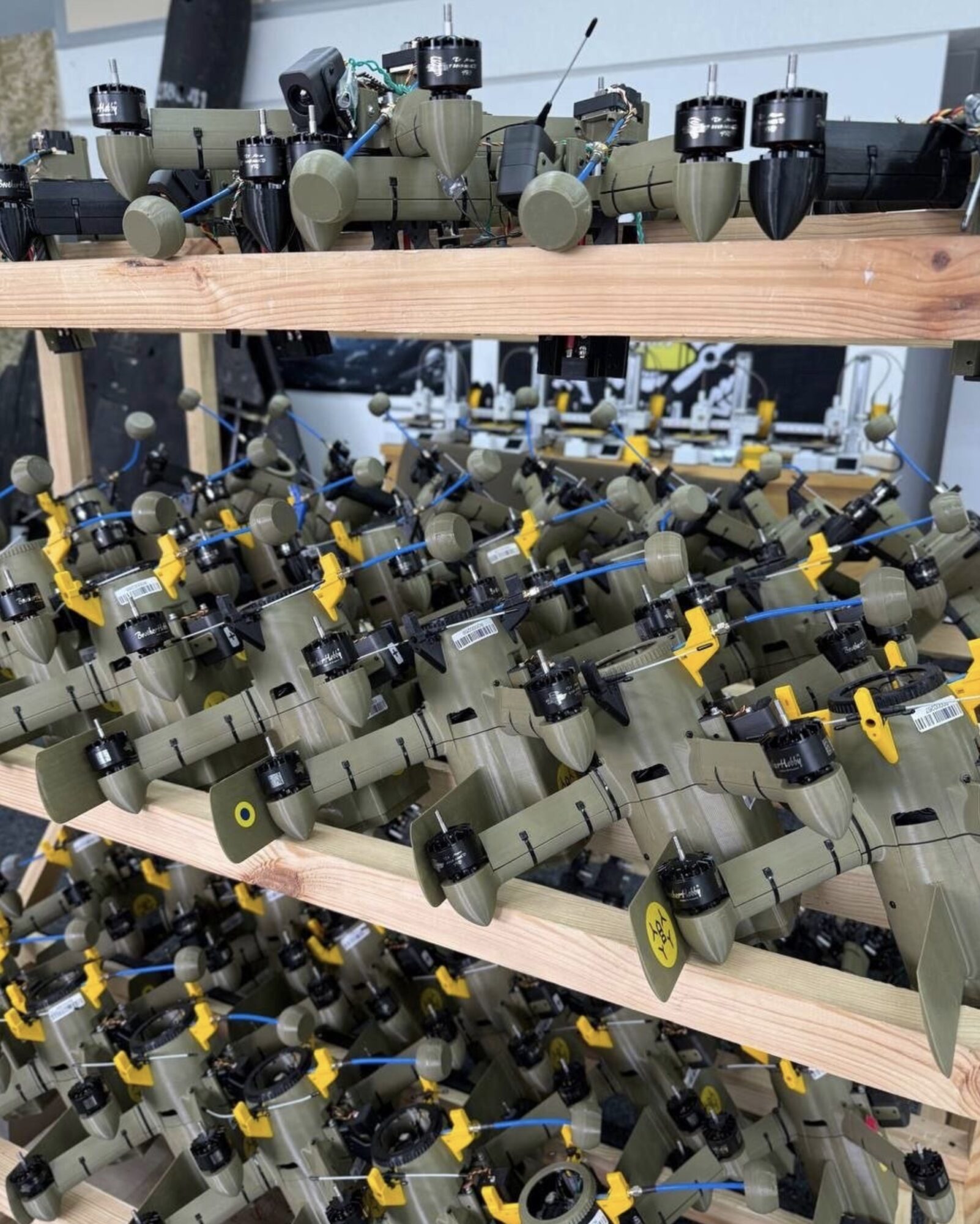
Read alongside the US-focused passage, Dimon’s position is consistent: drones are a manufactured commodity that democratic nations need to produce at scale, and nobody should be waiting on a single supplier — foreign or otherwise — to fill that gap. Ukraine has absorbed that lesson faster than almost any country on earth. Zelenskyy told Reuters on March 26 that Ukraine can produce 2,000 interceptor drones per day if the budget allows it. Europe is watching and responding. Canada committed CA$900 million to defense drone development earlier this year, and the Netherlands moved to embed drone and counter-drone units across every army combat formation, the first NATO nation to do so.
The US Drone Industry Is Already Moving, But Capital Has Lagged
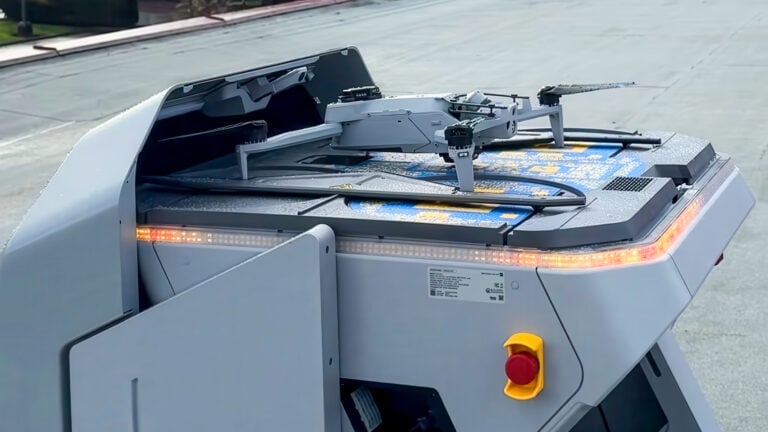
The structural push for domestic drone production is not new. Skydio secured a $52 million Army order for nearly 3,000 X10D drones in March, the largest single-vendor small Unmanned Aircraft System (sUAS) purchase in US military history. Howard Lutnick, Secretary of Commerce, visited Zipline’s South San Francisco facility to signal that the administration sees drone manufacturing as a pillar of the American economy. Private capital, though, has moved slowly compared to the urgency of the rhetoric.
That is what makes the SRI announcement different. Dimon is not offering encouragement from a conference stage. He is deploying a 30-person investment team, accepting applications from defense sector companies, and putting $10 billion in direct equity behind the thesis. When America’s largest bank by assets builds a dedicated team around drone and autonomous systems investment, it changes the cost of capital for every domestic manufacturer in the space.
DroneXL’s Take
I’ve been covering this industry long enough to know the difference between a policy document and a capital commitment. This letter is both, and that combination is rare. When Dimon puts drones in the same breath as semiconductors and critical minerals, he’s making a bet that drone production will follow the same political and investment arc as domestic chip manufacturing — from neglected to federally prioritized to heavily capitalized within a few years.
The timing lines up with what I’ve been watching at the company level. Powerus is trying to consolidate US drone manufacturers into a Nasdaq-listed company. Meanwhile, BRINC opened a Seattle factory this spring to scale Guardian drone output at the same time Skydio was filling its largest Army contract ever. The industrial base is fragmenting rather than consolidating, and fragmented industries need patient capital. JPMorgan’s SRI is precisely that kind of money.
The counter-argument worth naming: $10 billion in direct equity spread across five sectors, with drones as one sub-category inside “defense and aerospace,” still leaves domestic drone manufacturers competing for a thin slice of attention against AI, quantum computing, and shipbuilding. The 750 inbound business opportunities confirm the demand — though that figure comes from Dimon’s own letter and is unaudited. Whether the SRI team has the sector depth to back the right drone companies, and not just the best-connected ones, is what will determine whether this changes anything on the ground.
Within 18 months, at least one US drone manufacturer will close a JPMorgan-led equity round of $50 million or more. When that happens, Dimon’s letter will read less like a shareholder communication and more like the opening page of an industry realignment.
DroneXL uses automated tools to support research and source retrieval. All reporting and editorial perspectives are by Haye Kesteloo.
Discover more from DroneXL.co
Subscribe to get the latest posts sent to your email.
Check out our Classic Line of T-Shirts, Polos, Hoodies and more in our new store today!

MAKE YOUR VOICE HEARD
Proposed legislation threatens your ability to use drones for fun, work, and safety. The Drone Advocacy Alliance is fighting to ensure your voice is heard in these critical policy discussions.Join us and tell your elected officials to protect your right to fly.

Get your Part 107 Certificate
Pass the Part 107 test and take to the skies with the Pilot Institute. We have helped thousands of people become airplane and commercial drone pilots. Our courses are designed by industry experts to help you pass FAA tests and achieve your dreams.

Copyright © DroneXL.co 2026. All rights reserved. The content, images, and intellectual property on this website are protected by copyright law. Reproduction or distribution of any material without prior written permission from DroneXL.co is strictly prohibited. For permissions and inquiries, please contact us first. DroneXL.co is a proud partner of the Drone Advocacy Alliance. Be sure to check out DroneXL's sister site, EVXL.co, for all the latest news on electric vehicles.
FTC: DroneXL.co is an Amazon Associate and uses affiliate links that can generate income from qualifying purchases. We do not sell, share, rent out, or spam your email.