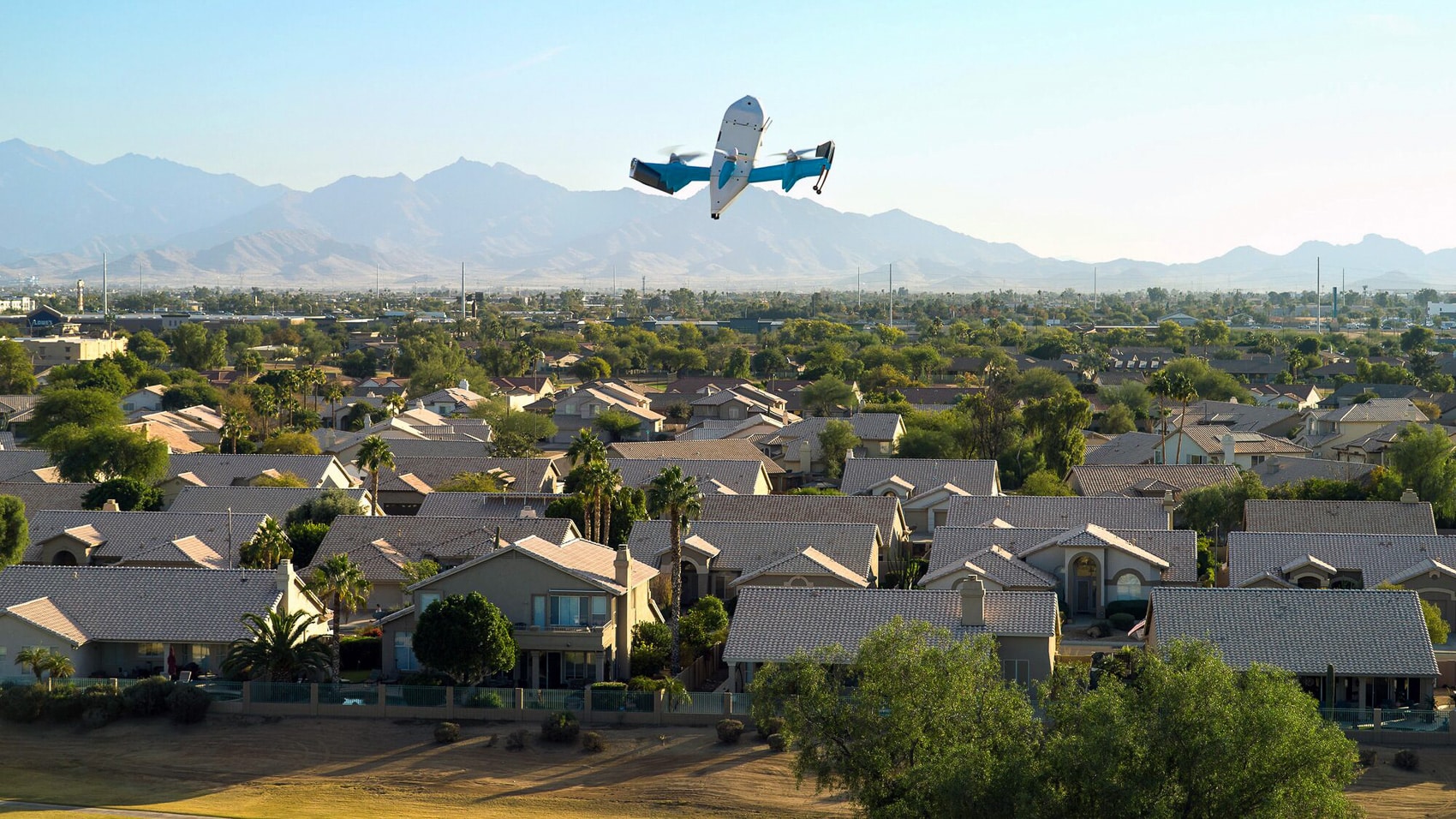
The New York Times went to the backyard pools of Richardson, Texas, and published the result Monday under the headline “It’s Raining Boxes.” One resident’s drone tracker logged 52 Amazon Prime Air drones overhead on Friday, three of them between 150 and 170 feet up, and she called it a slow day. Amazon told the paper that fewer than 1% of inquiries about the program this year concern noise.
DroneXL has covered Richardson’s Prime Air hub since an MK30 hit an apartment building there in February, through Amazon’s March altitude change and the city’s April conclusion that it has no legal handle on the flights. The Times account adds what those stories could not: named families, a pool, and a homeowners’ association president who says the Federal Aviation Administration has failed the city. The FAA answered the noise question for the whole country on July 28, and the answer was that it does not count as a “significant impact.”
Richardson Residents Are Counting The Drones Themselves
Stephanie Puri, a video game industry researcher in Richardson, set up a drone tracker and recorded 52 overflights on Friday, September 18, the Times reported. Amazon told the Richardson City Council in March the hub filled about 150 orders a day. Its FAA approval allows 1,000.
The hub sits less than a mile from the Anderson family’s pool, and every package it flies can go anywhere inside a 7.5-mile (12-kilometer) radius, so the neighborhoods closest to it sit under every departure. Residents there call the corridor a drone highway. Scott Bratcher, who runs the homeowners’ association in one of them, told the paper: “The government and the F.A.A. have failed us.” City rules allow deliveries from 7 a.m. to 8 p.m., and Nikki Anderson said she asked the city to trim the hours or the days and got nowhere.
Amazon has already pulled the one lever it controls. After residents complained in January, the company raised the average outbound altitude to 225 feet (69 meters) and rerouted some departures over commercial land, changes it presented to the council on March 9 and DroneXL laid out this month when Baton Rouge residents raised the same complaint. Kristi Graham told the Times that after she complained about drones over her backyard, Amazon moved the route to the front of her house.
This is not the first time Richardson has made the news for a Prime Air drone. An MK30 struck an apartment building on Routh Creek Parkway in February, two months after the hub opened, and smoked on the sidewalk until Amazon staff dismantled it.
Richardson Tells Residents The Drones Don’t Record. Amazon Says They Do
Richardson’s own drone delivery FAQ says the Amazon and Walmart drones overhead do not record video or capture images, and navigate with low-resolution sensors only. Amazon’s Prime Air operations page says people, pets, cars and objects near a delivery point may be recorded, and that the images improve Amazon’s services.
Amazon spokeswoman Lindsay Hamilton gave the Times the same account: the drones use multiple cameras and sensors, the images sit on encrypted drives that only authorized staff can access, and the data goes to safety and customer service. That is a defensible policy. It is not what the city is telling the people who ask.
Puri does not take Amazon’s word for it. “But, oh, Amazon can see you,” she told the paper, after saying that what people do in their own backyard is their business.
The FAA Answered The Noise Question Nationwide In July
The FAA signed a national Finding of No Significant Impact for Part 135 drone delivery on July 28. The condition is physical: a hub flying 1,150 deliveries a day must sit 600 feet (183 meters) from homes, a figure derived from the fleet’s loudest aircraft at 78 decibels en route.
That math works on annual day-night averages, which is how federal noise law measures airports. It says nothing about what a single pass sounds like from a pool float. The FAA’s own filing for Amazon’s Baton Rouge hub puts the delivery hover, 13 feet (4 meters) over the drop point, at 92.1 decibels measured from 25 feet, and offers a diesel truck at 50 feet as the comparison. Hamilton told the Times the drones are quieter than a passing car during delivery.
The July finding also ended the market-by-market environmental reviews that gave towns a 30-day comment window, a change DroneXL documented when it landed. Richardson’s FAQ now tells residents that cities cannot set altitude or create airspace limits and points them at their senators. The council dropped a rezoning threat in April on legal advice.
Richardson Is Now Writing To El Paso And Richmond
Richardson residents are emailing officials in El Paso and Richmond, Virginia, calling the drones “a disaster for the City of Richardson,” the Times reported. Both are on Amazon’s map: El Paso is among 22 sites in the FAA’s January Texas assessment, and Richmond’s approvals came through in August.
Amazon said on August 19 that Prime Air will reach nearly 500 US cities and towns by the end of the year, up from 11 hubs in seven states. The towns added after July 28 will not get the comment period Richardson’s neighbors used to have.
DroneXL’s Take
The Times did in an afternoon what the FAA’s national finding cannot: it measured the noise the way a person hears it, from the yard. A day-night average under the federal threshold and a 52-drone Friday can both be true. Richardson lives with the second one.
Richardson is a worst case, and Amazon has a point about that. The families in the story live under the departure corridor of a hub less than a mile away. A house at the far end of the 7.5-mile radius hears one drone drop one box, and most of the 500 towns Amazon is counting sit out there, not next to the pad.
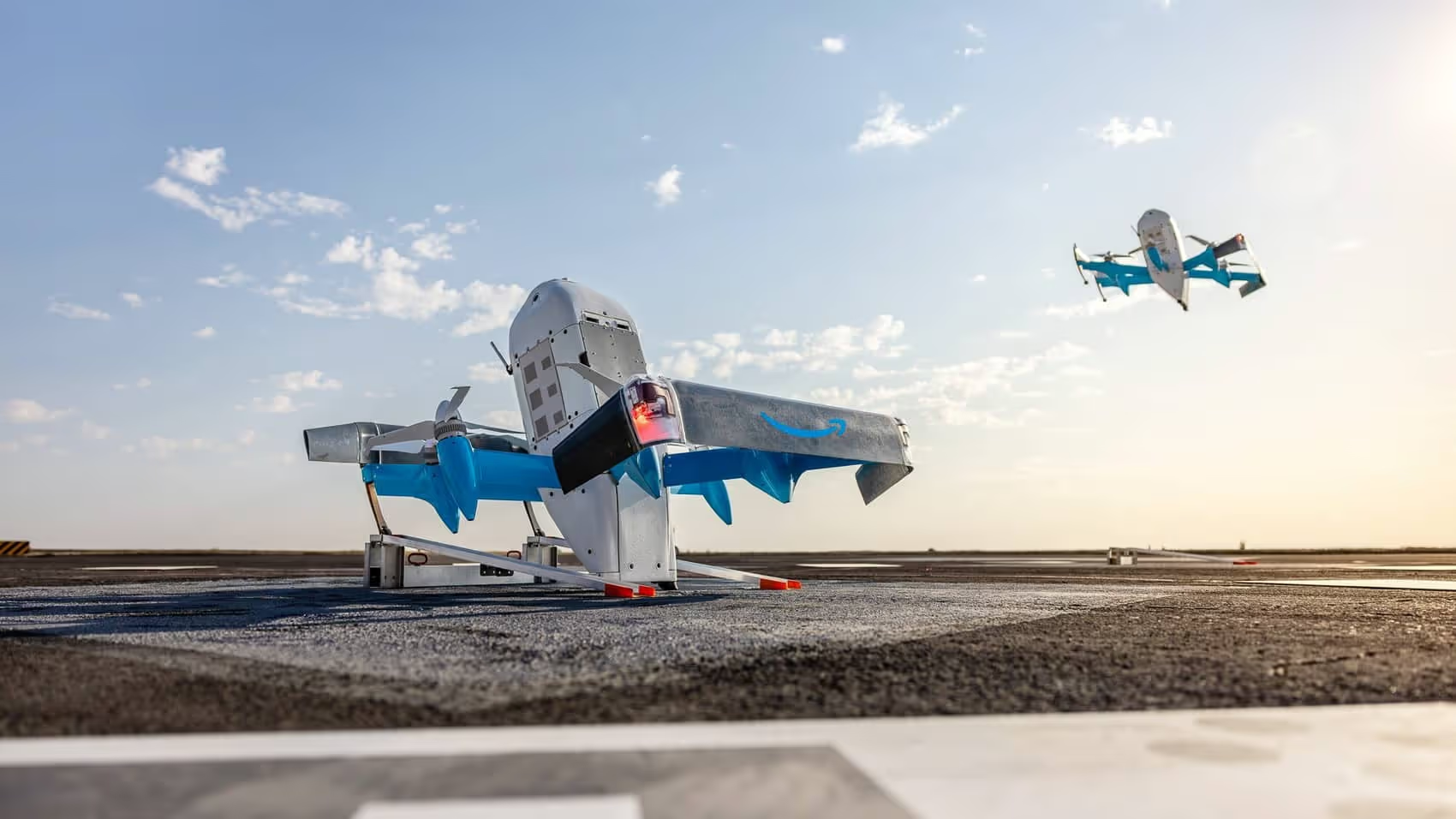
What Amazon does not have a point about is the aircraft. I stood next to an MK30 in Dusseldorf this spring, and it comes up to my shoulder: 83 pounds at takeoff to move a 5-pound box, where Zipline’s P2 carries 8 pounds at 55 and Wing’s aircraft carries 2.6 at about 12. Amazon has shown altitude is its lever, because it pulled it in Richardson. In Baton Rouge it told residents that altitude is the FAA’s call, and it has not answered a single one of DroneXL’s written safety questions, sound level included, on a list Zipline has already answered in part. The hover noise in the Baton Rouge filing is Amazon’s number for Amazon’s aircraft, and it follows the MK30 into every one of those 500 towns.
September 26 closes the window to challenge the national finding in court. El Paso already sits inside the FAA’s Texas assessment, so the emails from Richardson are reaching a city with one move left, the one Richardson made: push Amazon to fly a different profile inside the envelope it already has.
Sources: The New York Times, City of Richardson, Amazon Prime Air, FAA.
DroneXL uses automated tools to support research and source retrieval. All reporting and editorial perspectives are by Haye Kesteloo. Read our editorial standards.