
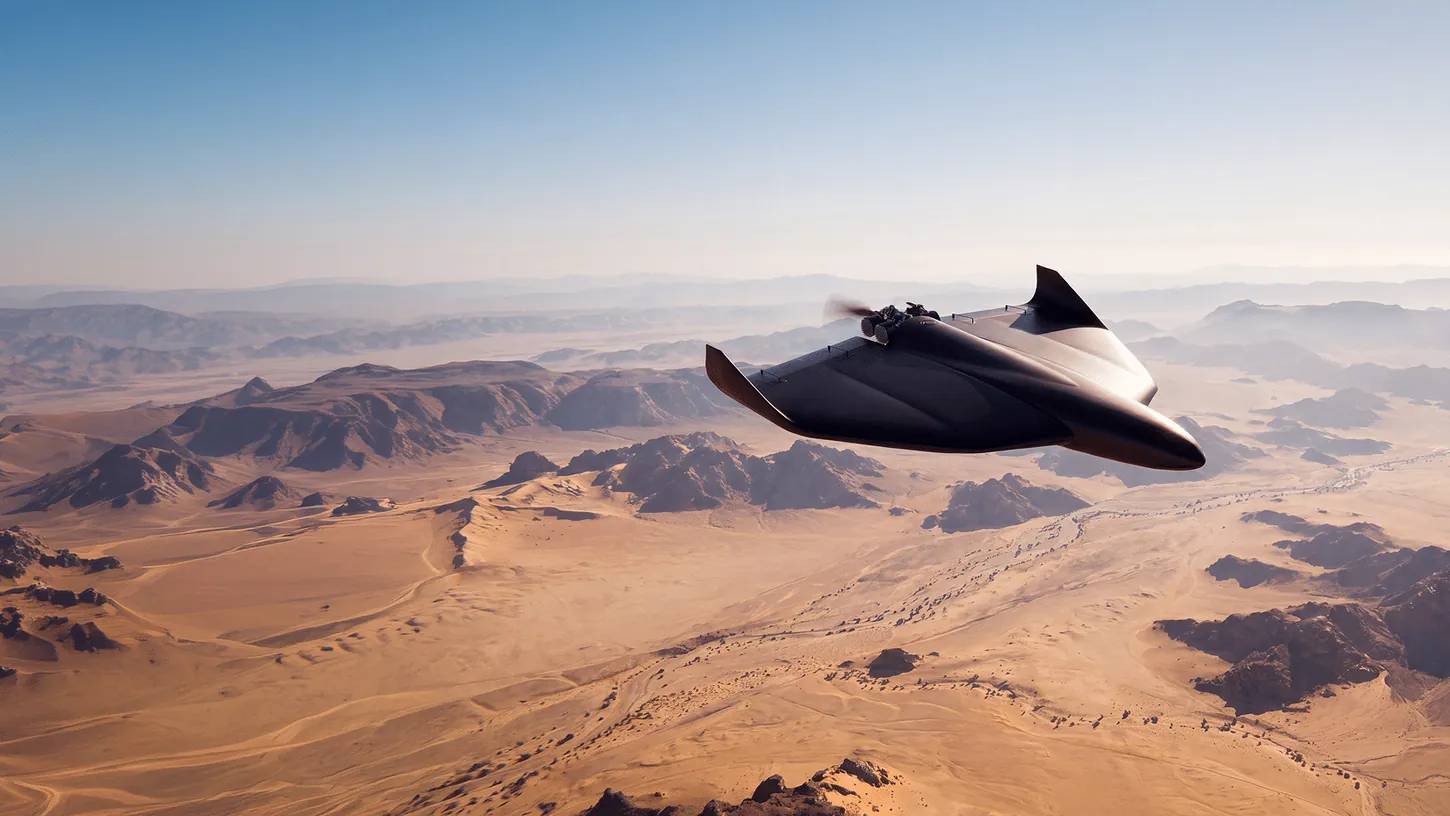
Harmattan AI, the Paris defense startup that Dassault Aviation backed with $200 million in January, unveiled IRIFI on October 6. It is a one-way attack drone the company says can hit targets up to 2,000 km (1,240 miles) away without relying on GPS and without a human flying it after launch.
The next day, at the Marrakech Air Show, Harmattan signed a letter of intent with the Kingdom of Morocco to develop IRIFI as a Moroccan system, with its critical components produced in the country. The first government publicly attached to the French drone is not France.
Harmattan’s spec sheet for IRIFI has three entries: range, a combustion engine, and a payload listed as “undisclosed.”
IRIFI Navigates Without GNSS and Uses Cameras for the Final Approach
Harmattan says IRIFI navigates with an onboard system that does not rely on GNSS satellite signals and switches to visual terminal guidance for the last stretch to the target. It launches from a mobile canister, and Harmattan calls it an attritable one-way effector: it does not come back.
The company also claims IRIFI can fly under radar and hit within meters. None of that has been shown in a public test. The IRIFI announcement and the product page give no speed, no unit cost, no warhead size and no flight-test footage. The pitch is about where IRIFI sits on price and precision. CEO Mouad M’Ghari called Iran’s Shahed “imprecise and easy to shoot down” and said Tomahawk and Storm Shadow cruise missiles are survivable but expensive and built in small numbers. IRIFI, he said, combines the two.
GNSS independence is the part of the pitch with the most behind it. Russian jamming has pushed Ukrainian builders toward the same answer for years, from drones that fly through jamming to fiber-optic FPV aircraft that carry no radio link at all.
One Commander Can Launch Dozens of IRIFI Strikes After Two Human Approvals
Harmattan describes a two-layer authorization process. Command level approves the targets, launch positions and mission parameters, and a final launch authorization follows at the point of release. From there IRIFI flies the entire mission with no human control, and Harmattan says the choice of target stays human.
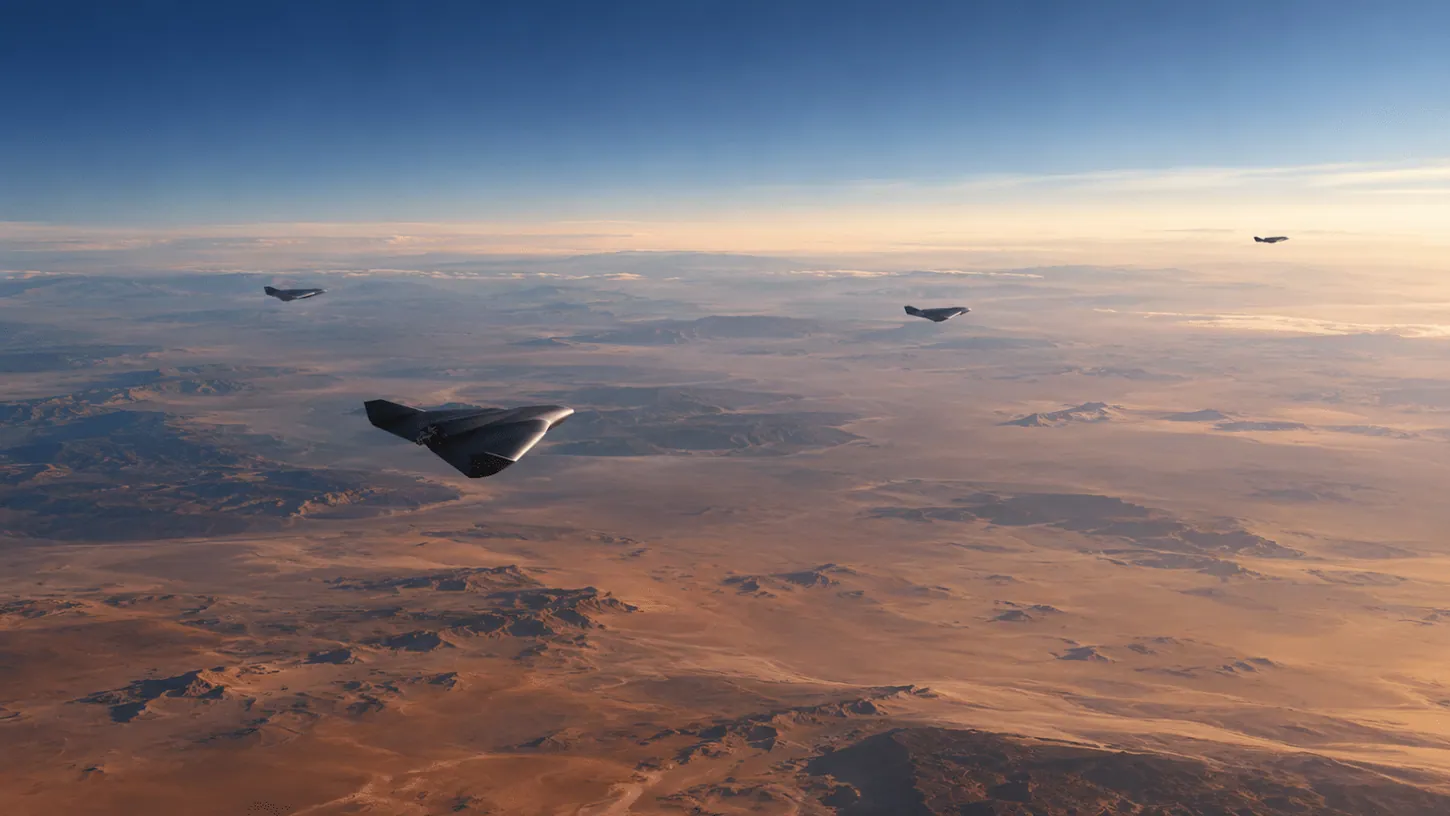
The volume claim is the bigger one. Harmattan says a single commander, informed by an AI system that processes large amounts of satellite imagery, can launch dozens of autonomous strikes at once. That is a saturation attack: enough simultaneous arrivals to overwhelm air defenses, the same logic Russia uses with Shahed waves against Ukraine.
Harmattan’s Shipped Products Are Short-Range Drones, Not Deep Strike
Harmattan’s best-documented deliveries are short-range reconnaissance drones: France’s DGA procurement agency ordered 1,000 Sonora ISR systems in June 2025, received them within six months, and ordered 5,000 more in June 2026. Its Paris-region plant, the company says, can build 10,000 units a month.
The UK Ministry of Defence signed for 3,000 systems in September 2025, as DroneXL reported when Harmattan was chasing a $1 billion valuation. Dassault’s January round then valued it at $1.4 billion. A 2,000 km strike weapon is a different class of aircraft from either program, and IRIFI is the company’s first announced product in it.
Morocco Signs to Develop IRIFI With Critical Parts Made at Home
The October 7 signing took place in front of Abdeltif Loudyi, minister delegate in charge of the National Defense Administration, and Gen. Mohammed Berrid, Inspector General of the Royal Moroccan Armed Forces. The release gives no contract value, no quantity and no delivery schedule.
Harmattan’s press release calls IRIFI “a sovereign Moroccan autonomous deep-strike system” and says critical components will be developed and produced in Morocco, mostly by Moroccan talent, through the local subsidiary Harmattan AI Morocco. It builds on a June 2026 partnership that aims to establish a Harmattan R&D center in Rabat.
Morocco has gone this route before. In 2024 it field-tested the SpyX loitering munition, made in Morocco with BlueBird, a subsidiary of Israel Aerospace Industries.
DroneXL’s Take
I think the letter of intent tells you more than the spec sheet does. Washington answered the Shahed by copying it: LUCAS, a $35,000 reverse-engineered Shahed-136 built by Arizona’s SpektreWorks, flew its first combat mission against Iran on February 28. The US builds that drone for its own forces. Harmattan is selling a different product to countries that want long-range strike without depending on someone else’s stockpile: a design they help develop and critical parts made in their own factories. Morocco wanted that badly enough to sign one day after the reveal, before Harmattan had published a single flight test. The question for France now is whether its own DGA buys the drone that Morocco has already put its name on.
Sources: Harmattan AI, Harmattan AI and Kingdom of Morocco press release (via Defense Arabia)
DroneXL uses automated tools to support research and source retrieval. All reporting and editorial perspectives are by Haye Kesteloo. Read our editorial standards.


