Amazon listed drones on the federal lobbying report it filed on October 20, the 52nd quarterly report in a row to do so. Its in-house lobbyists worked on drones and air cargo from July through September with the Federal Aviation Administration, the Department of Transportation, the TSA, the Executive Office of the President, the White House science office and both chambers of Congress. Amazon’s in-house report put its federal lobbying for the quarter at $4.49 million, a total that covers every issue it works on.
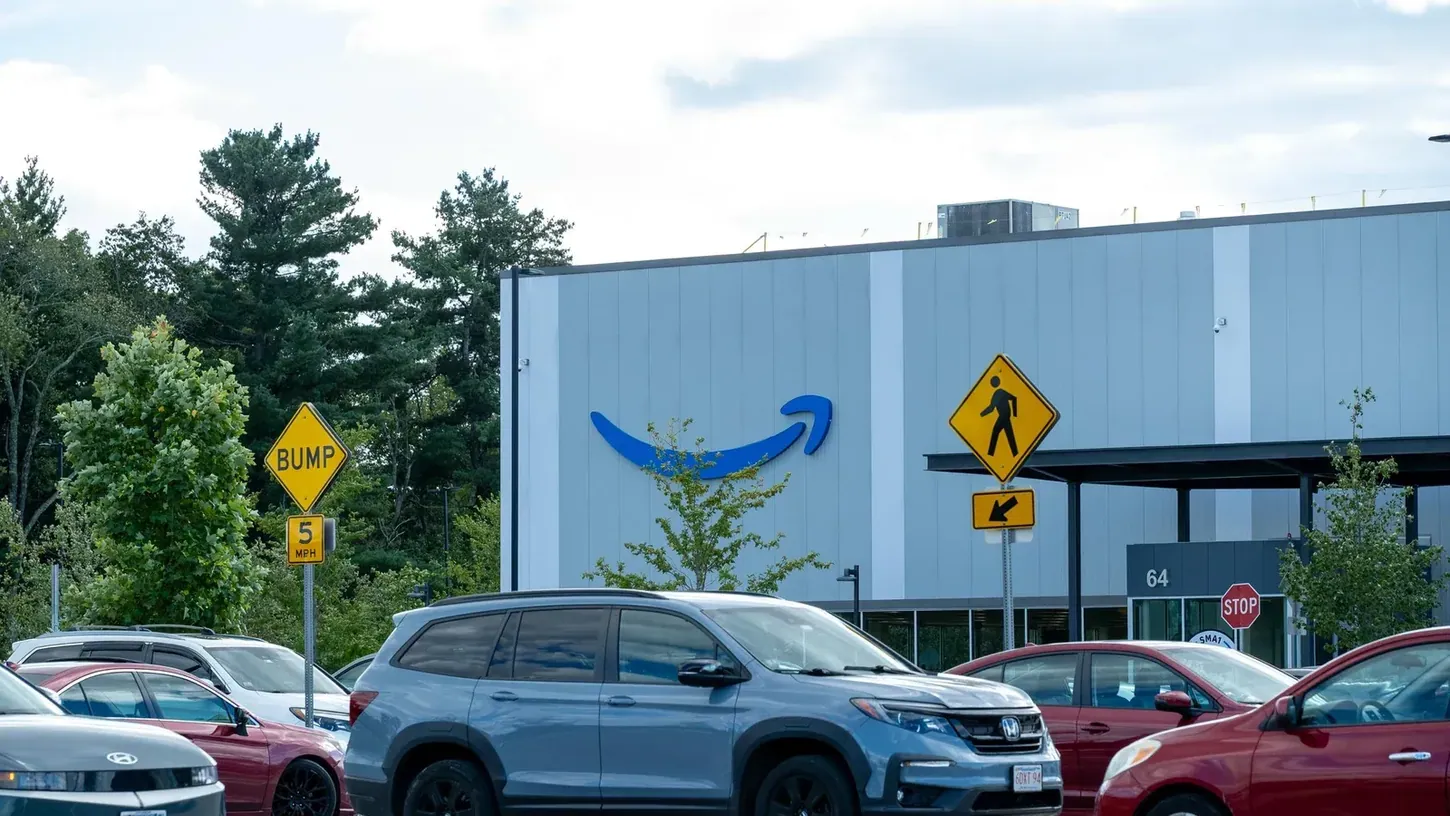
DroneXL went through every Amazon lobbying report filed since 2013 to count the run. It starts with the report covering the last three months of 2013, when Jeff Bezos unveiled Prime Air on CBS’s 60 Minutes. Thirteen years later Amazon says it plans to fly the MK30 in nearly 500 US cities and towns by the end of this year, and Westborough, Massachusetts, voted 510 to 13 on Monday for a bylaw banning commercial drone launch pads, aimed at Prime Air.
The FAA’s rule for routine flights beyond visual line of sight, Part 108, is due by December 7. Amazon’s 80-page comment on that rule backs the proposed 110-pound cap on delivery drones as a transitional baseline and asks for a way to exceed it. The word “parachute” appears neither there nor in Amazon’s follow-up comment in February.
Amazon Has Hired Outside Drone Lobbyists in Most Years Since 2014
TwinLogic Strategies listed drones for Amazon in early 2014. Akin Gump registered that June for a client it named Amazon Prime Air, reported $860,000 in fees through mid-2017, and described its work the same way on every report: federal advocacy on testing and operating drones in the United States.
Michael Drobac, Amanda Armistead and Gregory Walden were still on that account at the end, and the same three names appear on McGuireWoods Consulting’s Amazon registration, filed July 19, 2017, the day before Akin Gump’s termination report. Armistead is now on Amazon’s in-house roster for the drone issue in the October 20 report, alongside Brian Huseman and five other lobbyists.
Amazon’s current outside firm is Origin Advocacy, which registered in December 2023 and has listed drones on every report since. Origin has reported $570,000 in income from Amazon through September, a figure that also covers other issues, because the disclosure form does not split fees by issue. Origin’s lobbyist on the drone line every quarter is Sean McLean, whose disclosed former jobs include associate director in the Executive Office of the President and a post the filings list as legislative director/legislative assistant for Senator Ted Cruz. Cruz has chaired the Senate Commerce Committee, which oversees the FAA, since January 2025. McLean started on Amazon’s drone issue in December 2023, when Cruz was the committee’s ranking Republican, and the filings give no dates for his Cruz job. They list the Senate, and since 2025 the House, without naming offices, and in the last three months of 2025 Origin first listed the FAA. Halie Craig, whose disclosed former jobs include policy director at the Senate Commerce Committee, was on the drone line from early 2025 through March 2026.
The drone makers DroneXL has covered lobbying against DJI operate on a smaller scale. Skydio’s federal lobbying has stayed under $1 million a year since it began in 2019, counting its own reports and its outside firms’ fees without counting the same dollars twice, and BRINC’s outside firm, Mehlman Consulting, has reported $60,000 a quarter since 2023. Neither company’s reports name DJI. BRINC’s firm listed the Countering CCP Drones Act in 2024 and the 2025 defense authorization bill in 2025, and Skydio’s firms listed “drone national security issues” and the same defense bill, whose Section 1709 set the deadline that put DJI on the FCC’s Covered List. The reports do not say which provisions either company pushed.
Amazon’s Lobbyists Listed a Bill to Let Towns Limit Drones Below 200 Feet
The Drone Federalism Act of 2017, S. 1272, would have stopped the FAA from preempting reasonable state and local limits on drones flying below 200 feet or within 200 feet of a structure. McGuireWoods listed it on its 2017 Amazon reports. The filings do not say which side Amazon took.
The bill text lists the local interests it would have protected, including privacy, property rights, land use, and noise. Senators Dianne Feinstein, Mike Lee, Richard Blumenthal and Tom Cotton introduced it on May 25, 2017, and it went nowhere. When Lee tried to revive it in 2021, DroneXL urged readers to oppose it, arguing it would make flying an administrative nightmare for hobbyists and drone operators.
Without that law, towns are left with the ground. Westborough’s bylaw bans commercial drone launch pads, landing pads and drop zones, and it takes effect only after the Massachusetts attorney general approves it or lets 90 days pass, with MassDOT Aeronautics approval also required under the warrant. Residents in other towns facing the same question can start with DroneXL’s guide to what residents can do about Amazon drones. Amazon takes drone complaints at 1-888-280-4331 or through Amazon customer service chat, under “Something Else” and then “Amazon Drone Delivery.” Every Amazon site, approval and incident DroneXL has documented is on the Prime Air page of our drone delivery tracker.
Amazon Asked the FAA for a Way Past the 110-Pound Cap and Opposed Its Noise Rule
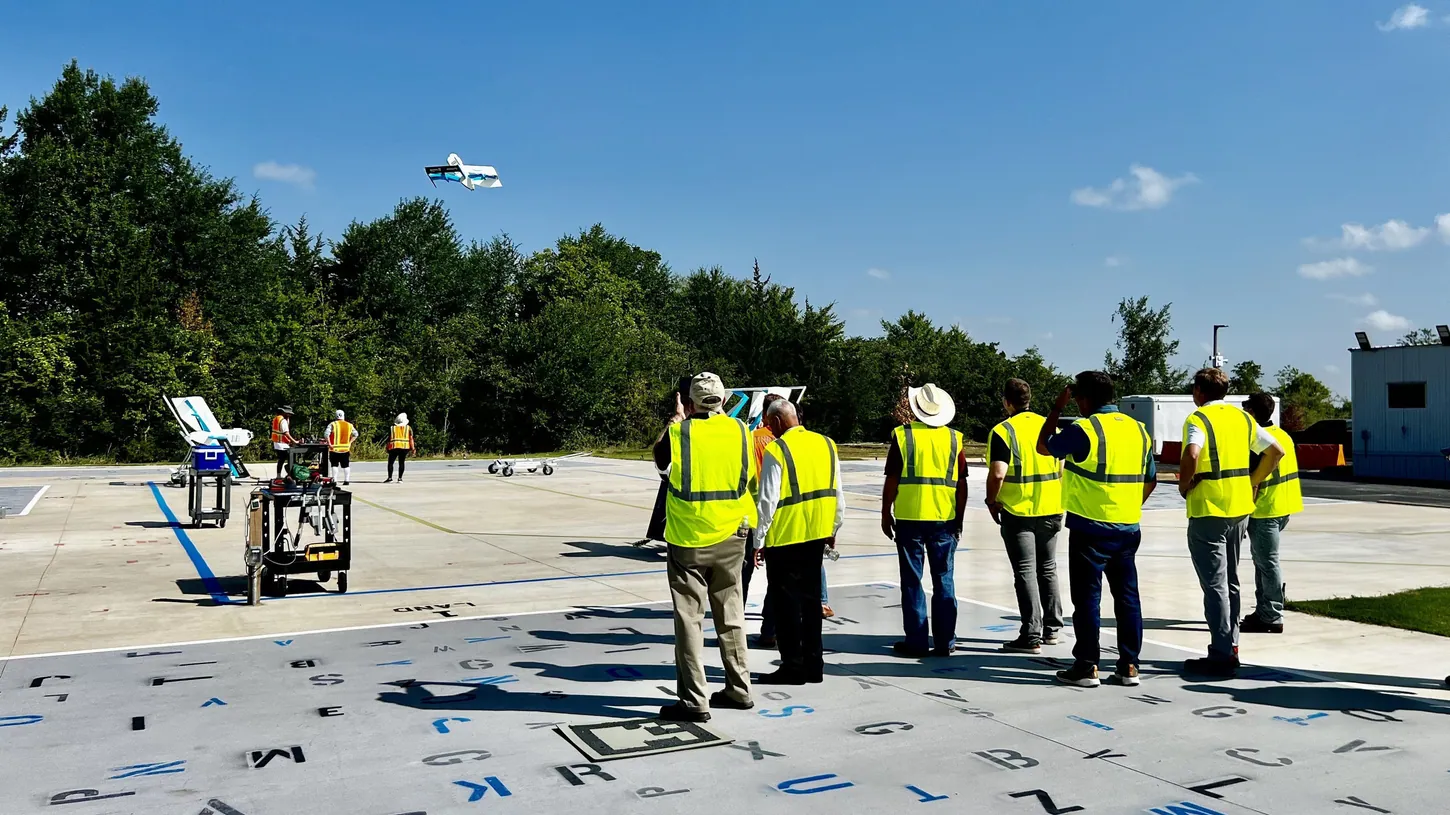
Amazon’s Part 108 comment, dated October 6, 2025, supports the proposed 110-pound limit on delivery drones as a transitional baseline but asks the FAA to let operators exceed it case by case by showing an equivalent level of safety. It also opposes the proposal’s noise requirements as written.
The comment, signed by Matt McCardle, Prime Air’s director of global regulatory, infrastructure and expansion, puts the weight argument plainly: “A fixed 110-pound cap is prescriptive, not risk-based.” It says safety in package delivery depends on design assurance, redundancy, reliability, and containment or termination, not on one weight threshold, and it notes that the proposal already contemplates drones up to 1,320 pounds under Part 108. The MK30 tops out at about 83 pounds, as DroneXL reported from Commercial UAV Expo in September, so the request would not change the aircraft Amazon flies today.
DroneXL searched the full text of the comment, and of Amazon’s eight-page February 11, 2026 follow-up, on October 21. The October comment mentions flight termination three times: as a function the FAA should set performance standards for, and as a safety measure for demonstration flights and for testing over more populated areas. Neither filing mentions a parachute. The FAA’s own proposal mentions parachutes once, as an example of a mitigation for flights carrying hazardous materials, and requires none. Amazon’s MK30 page, as of October 21, describes a monitoring system that can hand control to a backup controller and send the drone home, with no mention of a parachute. DroneXL asked Amazon in writing on September 3 why the MK30 has no parachute, and Amazon did not answer by the deadline.
Much of the comment asks for tighter rules. It wants every drone delivery company to hold an FAA certificate rather than the lighter permit the proposal created. It wants every crewed aircraft below 500 feet to broadcast its position, and it tells the FAA that others pushing for less rigorous standards without safety evidence may be doing so to avoid necessary costs. It also asks the TSA to withdraw from the rulemaking. Amazon left the Commercial Drone Alliance in March over whether detect-and-avoid should be mandatory.
The FAA Reauthorization Act of 2024, which Amazon’s reports have cited every quarter since it passed, first by bill number and then as public law, gave the FAA four months from its May 16, 2024 signing to propose the BVLOS rule, which meant September 16, 2024, and 16 months from publication to finish it. The FAA published the proposal on August 7, 2025, so the final rule is due by December 7, 2026. A Federal Register search on October 21 found no final rule. Amazon’s lobbying reports name the law, not the sections Amazon pressed on.
DroneXL’s Take
I don’t object to Amazon lobbying, which is legal and disclosed. My objection is to the gap in what it asks for. Much of its Part 108 filing argues for stricter rules, and I agree with some of it, but my read of 80 pages that treat the 110-pound cap as a transitional baseline, ask for a way past it, and never mention a parachute is that Amazon wants to keep open the option of flying heavier aircraft than the 83-pound MK30 over people’s homes. The comment does not say Amazon is building one. The FAA’s proposal requires no parachute either, so nothing in this rulemaking pushes Amazon toward one. Zipline’s P2 lowers its package on a tether and carries a parachute, and that is the standard I’d hold any heavy delivery drone to.
This is the second time I’ve watched lobbying shape this industry. By the count above, Skydio has never reported $1 million in federal lobbying in a year, BRINC’s firm reports $60,000 a quarter, and Amazon reported $4.49 million for this one quarter across every issue it works on. In my view, Skydio’s and BRINC’s years of lobbying on drone security, including the defense bill whose Section 1709 set the DJI deadline, helped get foreign drones onto the FCC’s Covered List last December. Amazon has been at this since 2013. Nothing in the filings shows McLean has lobbied Cruz’s office or that Cruz has acted on Amazon’s drone issues, and hiring former congressional staff is legal, disclosed and common in Washington.
In 2021 DroneXL opposed the Drone Federalism Act, and I’d oppose it again, because a patchwork of town rules below 200 feet would ground hobbyists and small operators long before it slowed Amazon. Federal preemption that protects a hobbyist’s Mini also protects an 83-pound MK30. But the federal deal should come with federal obligations sized to the aircraft. The final Part 108 rule is due December 7, and I’ll be reading it for two things: whether the 110-pound cap survives, and whether it asks anything of a heavy drone over a backyard.
Sources: Lobbying Disclosure Act filings for Amazon.com Services LLC, TwinLogic Strategies, Akin Gump Strauss Hauer & Feld, McGuireWoods Consulting, Origin Advocacy, Skydio, Brownstein Hyatt Farber Schreck, Holland & Knight and Mehlman Consulting (2013 to 2026), Amazon Prime Air comments in FAA Docket FAA-2025-1908, Federal Register, FAA Reauthorization Act of 2024 (P.L. 118-63), S. 1272 Drone Federalism Act of 2017, Senate Commerce Committee.
DroneXL uses automated tools to support research and source retrieval. All reporting and editorial perspectives are by Haye Kesteloo. Read our editorial standards.