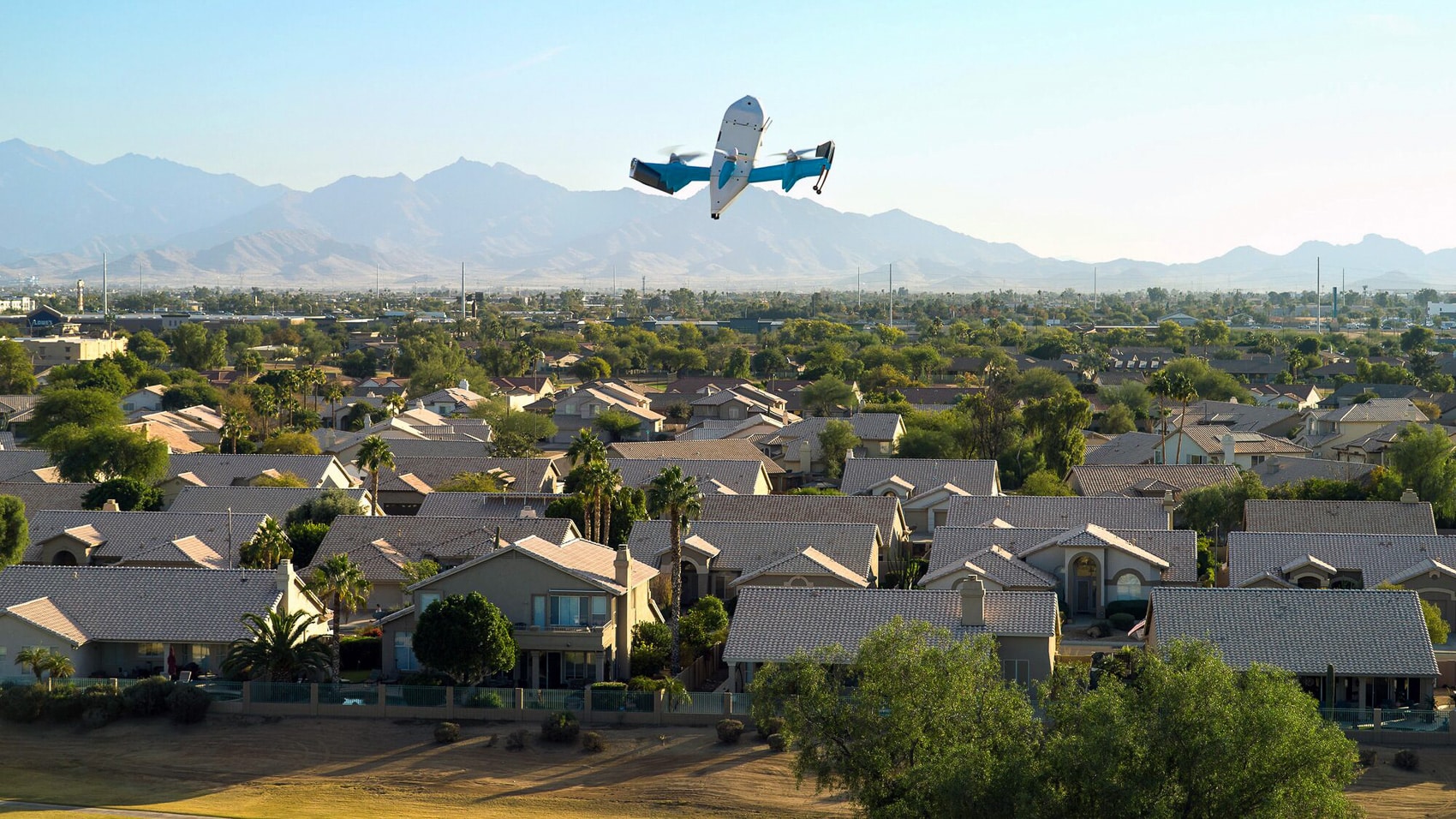
Fifteen states and Harris County, Texas sued the Federal Aviation Administration on Monday, September 28, asking the U.S. Court of Appeals for the Second Circuit to throw out the agency’s nationwide environmental clearance for drone package delivery. New York Attorney General Letitia James filed the petition on behalf of the coalition, which includes California, Illinois, Massachusetts, Michigan, Washington and Wisconsin. The target is the July 28 finding of no significant impact that lets the FAA approve new Part 135 delivery markets against one national study instead of a fresh environmental assessment for each one.
DroneXL covered that finding on July 31 under the headline “FAA Clears Drone Delivery’s Environmental Path Nationwide, Overriding 17 State Attorneys General.” Those seventeen had demanded a full environmental impact statement in January and lost.
The FAA’s decision document gave challengers 60 days from July 28. That window ran out on Saturday, September 26. The petition is dated Monday.

The Petition Names 16 Plaintiffs and Makes No Argument Yet
Fifteen states and Harris County, Texas petitioned the Second Circuit on September 28 to set aside the FAA’s July 28 nationwide environmental finding for drone package delivery. New York Attorney General Letitia James is counsel for all petitioners. The petition states jurisdiction and venue and makes no argument.
The petition, signed by Assistant Solicitor General Blair Greenwald under Solicitor General Barbara Underwood, names the FAA, Administrator Bryan Bedford, the Department of Transportation and Secretary Sean Duffy as respondents. The full list of petitioners: New York, Arizona, California, Colorado, Delaware, Illinois, Maine, Maryland, Massachusetts, Michigan, New Mexico, Oregon, Rhode Island, Washington, Wisconsin and Harris County. One early report named Travis County as the Texas plaintiff. The document says Harris.
A petition for review under Federal Rule of Appellate Procedure 15 is a notice, not a brief. The arguments arrive once the FAA files the administrative record and the court sets a schedule, and neither has happened. The substance so far comes from California Attorney General Rob Bonta’s press release, which says the assessment covers deliveries that will happen at unnamed future places and times with no information about the communities underneath and does not address the safety risks of a much larger rollout. Bonta’s line: the assessment “falls far short of properly analyzing the environmental impacts.” The FAA did not respond to Reuters’ request for comment.

The Filing Landed on Day 62 Because Day 60 Was a Saturday
The deadline was Saturday, September 26, and the petition is dated Monday because Federal Rule of Appellate Procedure 26(a) moves a deadline that falls on a weekend to the next business day. The coalition used every day allowed, sixty days after the FAA signed the finding on July 28.
The petition cites that rule by name, alongside 49 U.S.C. § 46110, the statute that routes challenges to FAA orders straight to a circuit court and skips the district courts. It also quotes the FAA back to itself: page F-18 of the final assessment declares the document “a final agency action and a final order” reviewable only in the courts of appeals. The agency wrote the sentence that opened the courthouse door.

Two January Signers Stayed Out and the Case Skipped the Ninth Circuit
Seventeen attorneys general signed the January 23 comment letter demanding a full environmental impact statement. Fifteen signed the petition. Connecticut and Vermont are the two that did not, and neither attorney general’s newsroom carried a word about the case on the night it was filed. The lead also moved: Illinois led the letter, New York leads the case.
The venue choice is the more interesting change. The January letter built its legal argument on Ninth Circuit precedent, the friendliest NEPA case law in the country, and four of the petitioners (California, Arizona, Oregon and Washington) could have filed there. They filed in New York’s home circuit instead. Nothing in the petition explains the choice.
Connecticut’s absence has a live edge. Amazon wants up to 1,000 delivery flights a day from North Haven, and the state’s own coastal review comment window on that hub closes October 1. Attorney General William Tong signed the January letter and skipped the suit.
Harris County’s signature changed hands too. The letter was signed for County Attorney Jonathan Fombonne. The petition lists Abbie Kamin.

Every Approval Since July 28 Rides on the Document Under Review
Every Part 135 delivery approval the FAA has issued since July 28 tiers to the document the states want set aside. No stay was requested, so approvals continue. A vacatur would send the agency back to per-market reviews it says took six to eight months each.
The FAA completed 23 of those one-off assessments between 2019 and July 2025, plus a statewide one for North Carolina. Amazon Prime Air needed separate sign-offs for Detroit and Florida this spring while it was already lining up Omaha and Baton Rouge, and DroneXL reported on September 27 that Amazon still won’t say when its Tracy, California drones fly. Bonta’s release names Tracy. Wing’s 270-store Walmart expansion and Zipline’s Seattle application run through the same finding.
Part 108 is untouched by the case. Package delivery stays under Part 135 until the delayed BVLOS rule is final, and the FAA’s own finding estimates Part 108 delivery one to two years after that. The Drone Delivery Tracker lists which hubs were approved before the July finding and which came after it.

The Battery Fire Gap Is the Claim the FAA Answered Least
The claim the FAA answered least is lithium-battery fire in an unmanned aircraft. The final assessment dismissed hazardous materials from detailed review on the expectation that operators follow transport and disposal rules, ten months after an Amazon MK30 battery ejected and burned near Tolleson, Arizona.
The January letter put the October 1, 2025 Tolleson collision at the center of its safety argument, along with the delivery drone that cut an internet cable in Waco. DroneXL added the February crash into a Richardson, Texas apartment building to that list. The letter’s other complaints, a noise baseline that counts only aviation noise and wildlife analysis built on hub locations the FAA admits it does not know, were argued at length and answered in the final document’s comment appendix. Battery fire was not analyzed at all. That distinction matters because of Seven County Infrastructure Coalition v. Eagle County, the Supreme Court’s unanimous May 2025 decision telling lower courts to defer to agencies on how much NEPA analysis is enough. A brief that says the FAA should have written more starts behind under that ruling. A brief that says the FAA wrote nothing on a documented hazard has a path.
DroneXL’s Take
The FAA earned this lawsuit on one page. It had the NTSB’s preliminary report on Tolleson in hand, it had Amazon’s own account of a battery burning on the ground, and it wrote that hazardous materials did not need detailed analysis because operators would follow the rules. That is the sentence the states will hang the case on, and my read is they’re right to.
None of that makes a vacatur the right outcome. I said in July that a conditional no-impact finding is a privilege the industry keeps only as long as it behaves like one, and the 600-foot setback and 1,150-delivery cap are real conditions, not paper ones. Send the FAA back to six-month reviews for every market and the people who pay are the operators who never crashed anything and the residents in Omaha and Baton Rouge whose hubs each needed a separate federal review for a service Texas already has. The remedy that fits the flaw is a supplemental battery analysis with enforceable mitigation, which is what the states asked for in January before they asked for everything.
Watch two things now that the case exists. Whether the coalition files a stay motion, which would freeze new approvals while the court decides, and the briefing schedule once the FAA lodges the record. Until then every hub the FAA signs off on carries a footnote that says a court may yet decide the signature was worth nothing.
Sources: Petition for Review, New York et al. v. FAA, California Attorney General, Federal Aviation Administration, Reuters.
DroneXL uses automated tools to support research and source retrieval. All reporting and editorial perspectives are by Haye Kesteloo. Read our editorial standards.