Zipline co-founder and CEO Keller Rinaudo Cliffton followed Thursday’s $1.5 billion raise at a $21.5 billion valuation with a thread on X about how the company got there. For its first ten years, he wrote, investors did not think the company was “investable,” and about two years ago it “almost died.”
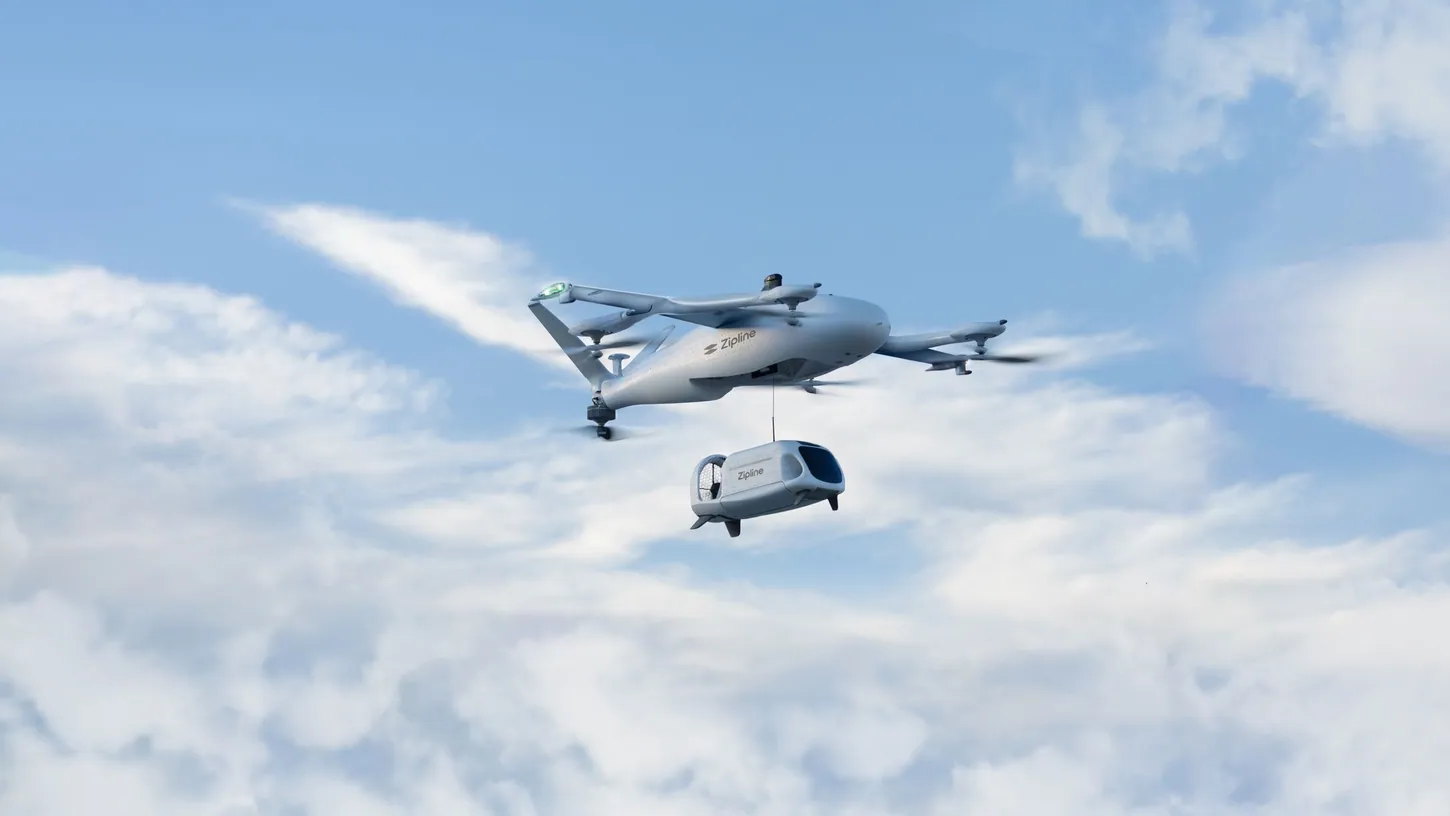
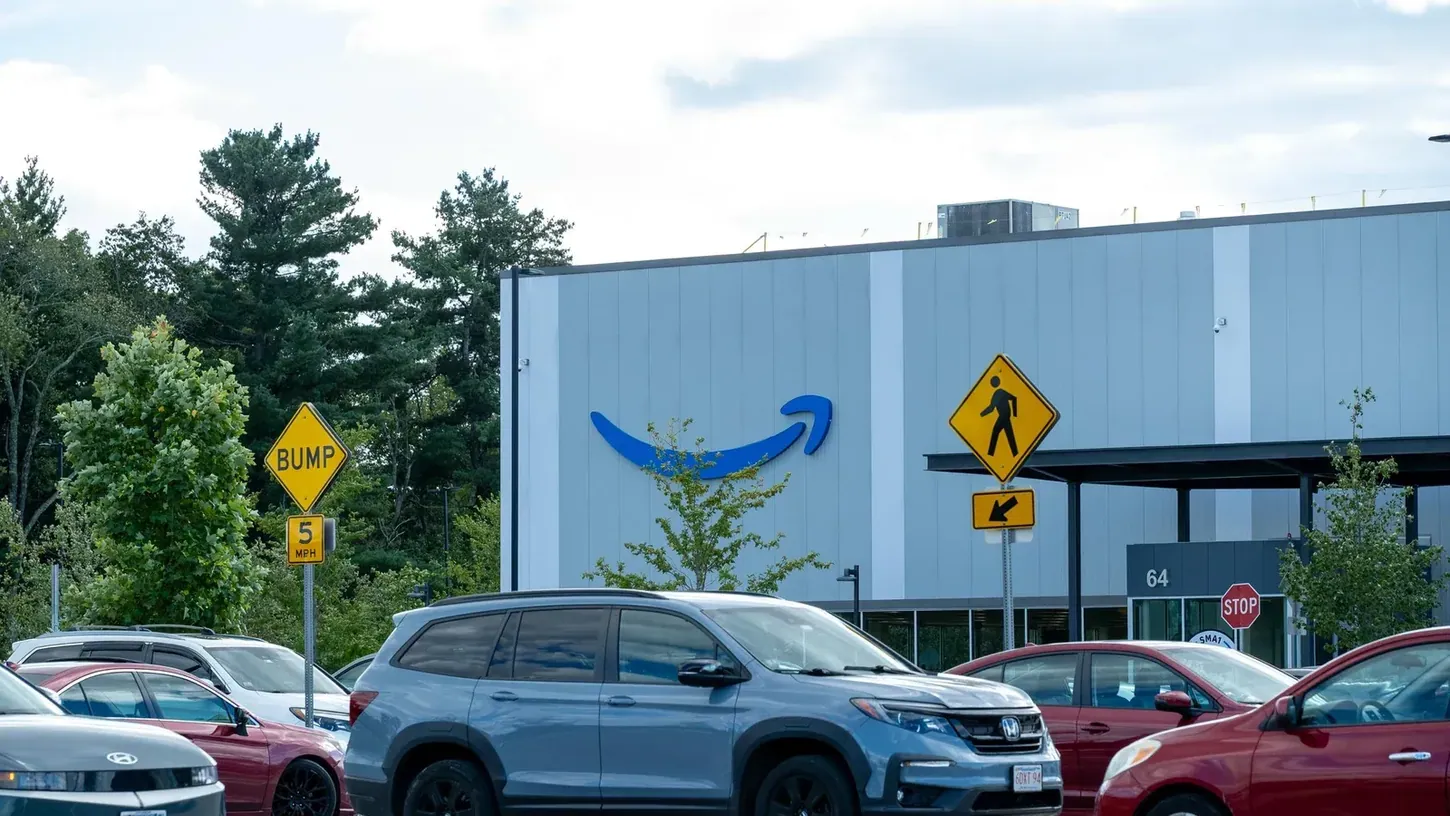
The thread also draws a line the press release did not. Zipline builds drone delivery “that is silent and safe,” Rinaudo Cliffton wrote, six times quieter than its closest competitor during delivery and with no safety incidents in more than 150 million autonomous miles. He named no competitor. DroneXL’s own reporting supplies the comparison: Amazon asked to withdraw a Prime Air pad application in Massachusetts on October 30, eleven days after a town voted against it, and its 83-pound MK30 flies without a parachute.
Zipline Began in Construction Trailers on a Cow Farm, Hard to Fund and Hard to Staff
Zipline started on a cow farm and worked out of run-down construction trailers to keep engineering, manufacturing and flight test in one place, Rinaudo Cliffton wrote on X. Flying autonomously in the United States was illegal then, so convincing investors was “really hard.” The company dates from 2014.
It began in Half Moon Bay, California, which is still one of its flight test sites. Hiring from companies like Google was hard, he wrote, because Zipline had no cafe and no laundry service. “Enough risk takers and rebels” signed on anyway and became the early team. Most people, by his account, did not think Zipline was an economic venture at all.
So Zipline launched in smaller countries and picked use cases where a late delivery could kill someone. It hired operators in Rwanda, Ghana, Côte d’Ivoire and other countries, and by his account spent eight years building out across Africa before it launched at scale in the United States last year. Its first US flights came earlier: medical deliveries in North Carolina in 2020, then its first commercial orders for Walmart in Pea Ridge, Arkansas, in November 2021.
Kagame Launched the First Zip After Two Weeks of a Bricked System
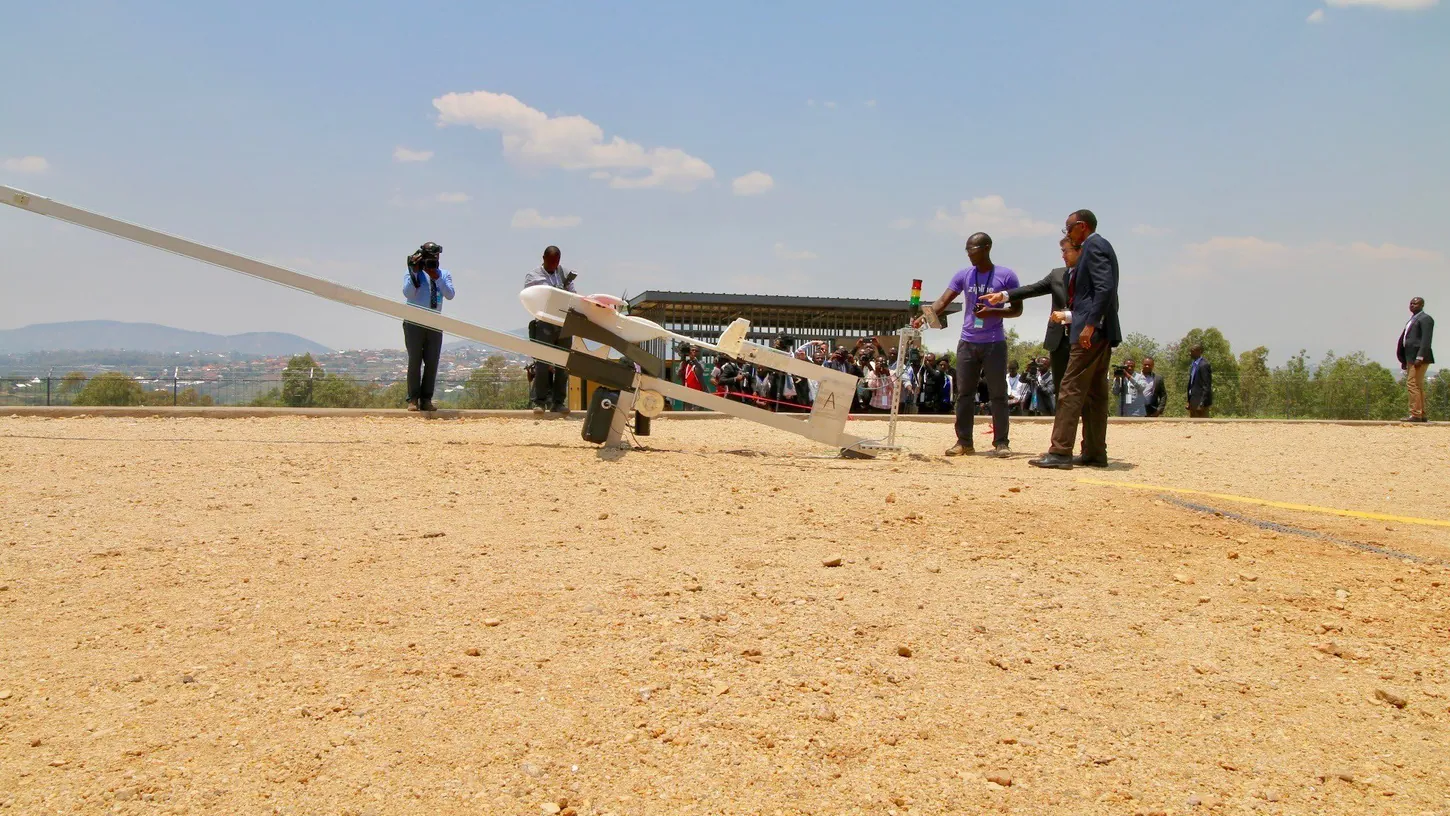
Rwanda’s President Paul Kagame launched Zipline’s first aircraft in October 2016 after two weeks in which the system had been “totally bricked,” Rinaudo Cliffton wrote. He watched the Zip fly over the horizon thinking it was the last anyone would see of it, and it landed 30 minutes later.
Gavi, which backed the launch with the UPS Foundation, dates the ceremony to October 14, 2016, in Muhanga District. Zipline started there with 15 fixed-wing Zips dropping blood by parachute to 21 clinics, as DroneXL reported when the company marked ten years in Rwanda last month.
Rinaudo Cliffton was living in a 400-square-foot apartment on the Stanford campus at the time. He got up at 2 a.m. with Israel Bimpe and a colleague from the Rwanda team to give Bono a digital tour of the distribution center, and Bono joined Zipline’s board. Bimpe, a pharmacist when Zipline hired him, is now CEO of Irembo, Rwanda’s e-government platform, reporting to Kagame.
The thread credits the Africa network with cutting maternal mortality 51%, saving more than 14,000 lives a year and running cash flow positive. The 51% comes from a peer-reviewed Wharton study that measured in-hospital deaths from postpartum hemorrhage at the hospitals Zipline served, which is narrower than maternal mortality as a whole. The other two figures are Zipline’s own.
Zipline Almost Died Building the P2, Then Grew US Flights 100 Times in 18 Months
The company “almost died about 2 years ago” while trying to launch its next-generation technology, Rinaudo Cliffton wrote. The system was ten times as complex as anything Zipline had built. It was not working, and the money was running out. The team spent night after night at the test site.
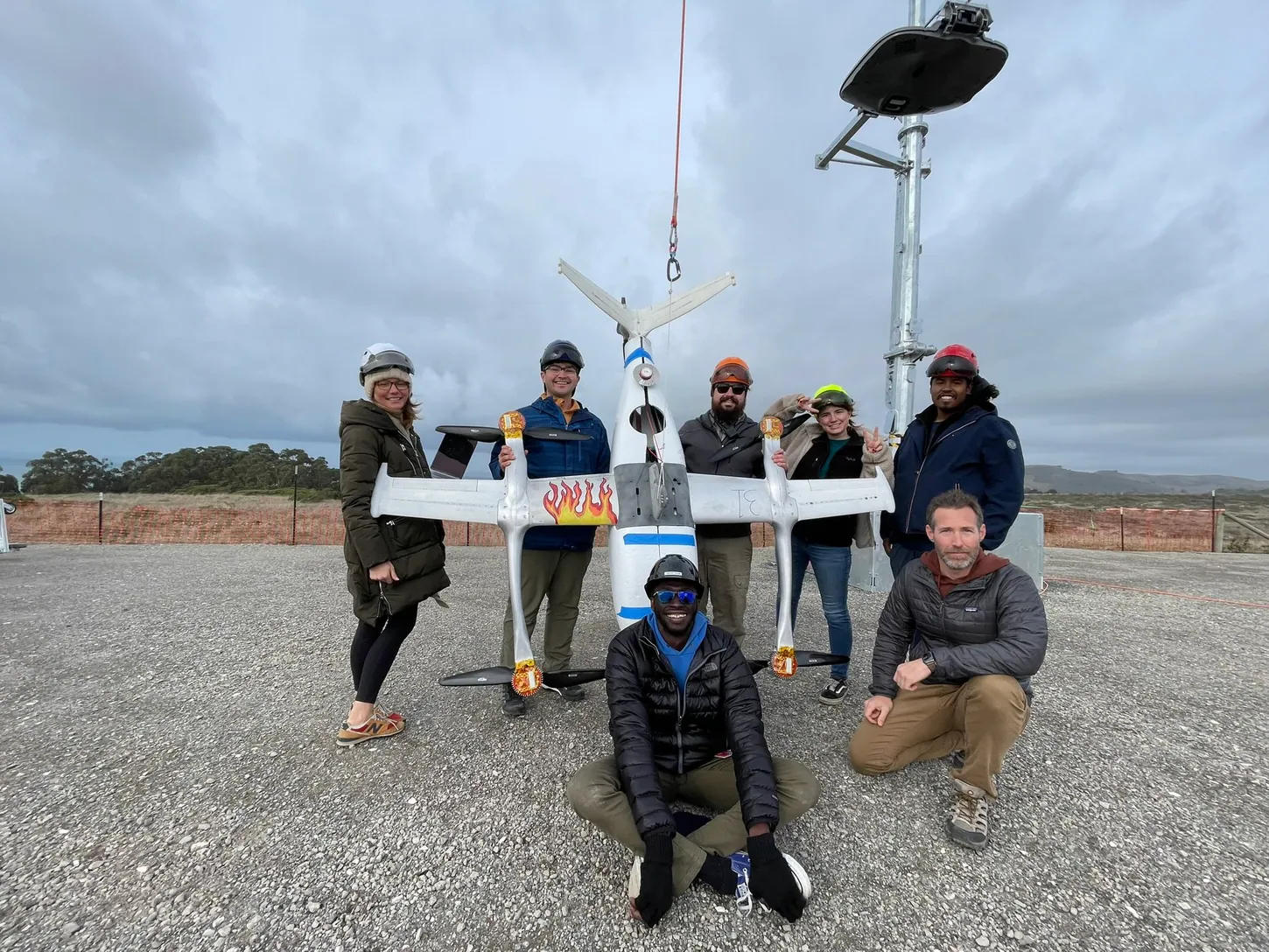
One photo in the thread shows the team at 2 a.m. on a Saturday, fixing software and hardware bugs as they found them. Rinaudo Cliffton’s second child was born in that stretch, and his wife, Steph Nevins, spent weekends at the test site that first month, breastfeeding the baby in a construction trailer conference room.
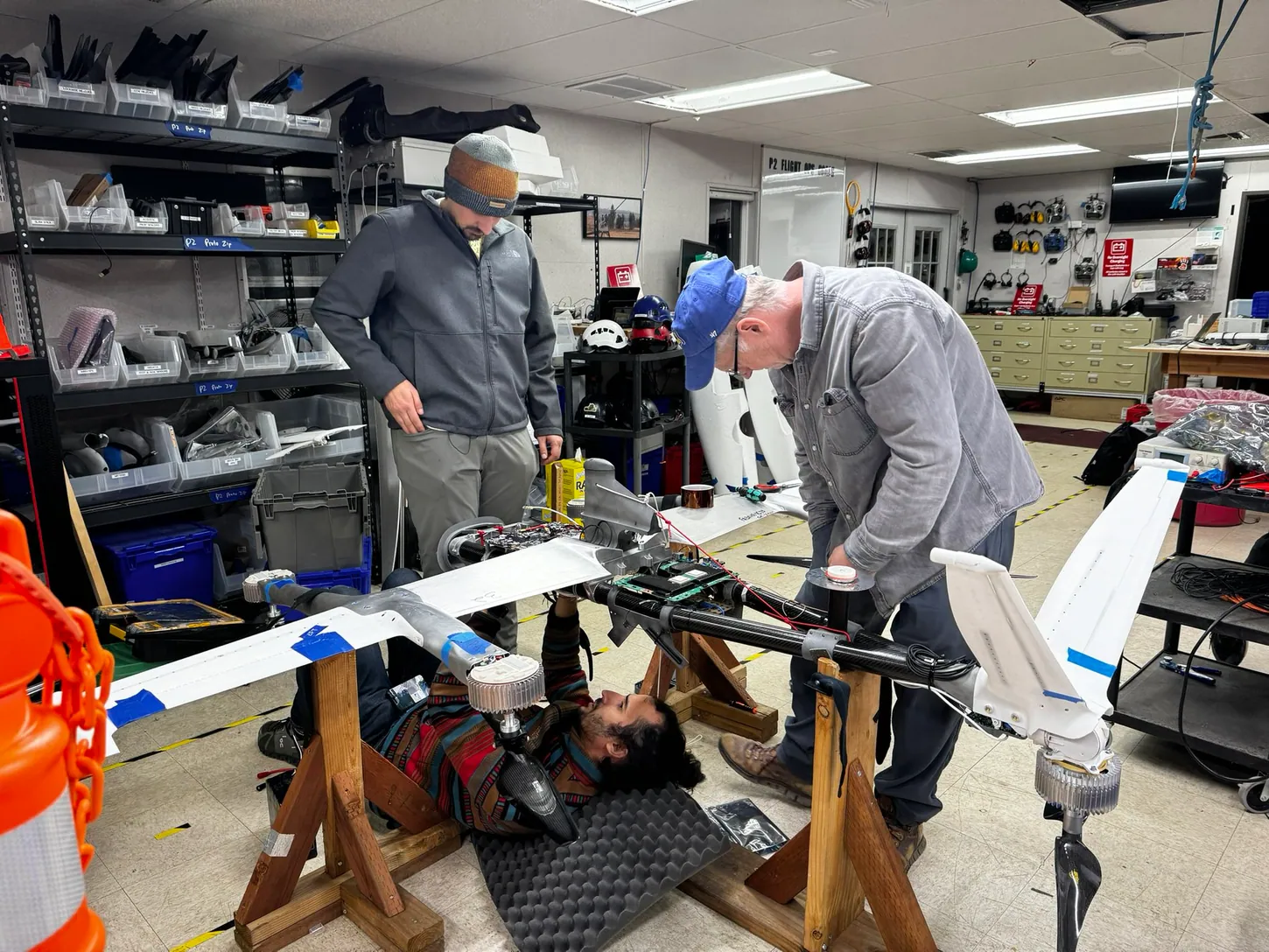
That aircraft, the Platform 2, made its first customer delivery in January 2025. By Rinaudo Cliffton’s count, Zipline has grown its flight volume about 100 times over the past 18 months and makes more than a million deliveries a year per metro. Thursday’s release put the Dallas-Fort Worth count alone above one million for 2026, and Walmart has signed for 300 more supercenters.
Zipline Says Silent and Safe. Amazon’s MK30 Weighs 83 Pounds and Flies Without a Parachute
Zipline delivers from 330 feet (100 meters) up, is six times quieter than its closest competitor during delivery, and has flown more than 150 million autonomous miles with no safety incidents, by its own count. “Neighborhoods should demand silent and safe delivery!” Rinaudo Cliffton wrote, without naming the competitor.
The six-times figure dates to a March 25 Zipline newsroom post, and the 68% cut in sound exposure Zipline announced in October rests on internal modeling, not a microphone. The no-incidents claim sits next to two Zipline aircraft that came down under parachute in Texas this summer, in Greenville on July 26 and near Houston in September, with nobody hurt. Zipline was also the only one of the three US delivery operators DroneXL questioned to answer DroneXL’s written safety questions in September, on the record, including what happens when its tether fails.

Amazon’s MK30 weighs about 83 pounds (38 kilograms) at takeoff and cruises at up to 73 mph (117 km/h). It has six motors and redundant flight controllers, Amazon says no single failure can cause loss of control, and nobody on the ground has been seriously hurt in any MK30 incident on record. It carries no parachute, and Amazon did not answer the eight written questions DroneXL sent on September 3, one of which asked why.
In Westborough, Massachusetts, Amazon asked to withdraw its site-plan application for a Prime Air pad on October 30, eleven days after Town Meeting voted 510 to 13 to ban commercial drone launch pads. On November 2 the town’s building commissioner vacated the zoning ruling the pad had relied on. Amazon says it will resubmit a revised project.
DroneXL’s Take
Rinaudo Cliffton’s thread is the best argument for stubbornness this industry has produced. A company that investors called uninvestable for a decade is now worth $21.5 billion with Walmart signed for 300 more stores, and it got there without a shortcut. No other drone delivery operator can tell that story, because none of them spent five years delivering blood before they tried a retail order.
I keep coming back to “silent and safe,” and I’ll say what he didn’t: Amazon can claim neither. Zipline’s six-times-quieter figure is its own, and its no-incidents claim sits next to two parachute landings in Texas that I covered. But both of those aircraft came down under a canopy, and Zipline wrote back when I asked how its drones fail. Amazon’s 83-pound MK30 has no parachute, and Amazon has not answered the eight questions I sent in September. In my opinion that aircraft is not safe enough to fly over backyards, and Amazon has given me nothing to change my mind.
Westborough shows what that costs. Amazon pulled its application after a 510 to 13 vote and now needs a new zoning ruling before it can try again, so it still has no pad in Massachusetts. In the same week Zipline raised $1.5 billion and signed Walmart for 300 more stores. Zipline spent a decade on quiet powertrains, and Amazon is now paying for arriving late to that work, one town hall at a time. Rinaudo Cliffton is right that neighborhoods should demand silent and safe, because the operator that cannot offer both will not take off at all.
Sources: Keller Rinaudo Cliffton on X, Zipline press release, Gavi, Knowledge at Wharton
DroneXL uses automated tools to support research and source retrieval. All reporting and editorial perspectives are by Haye Kesteloo. Read our editorial standards.