
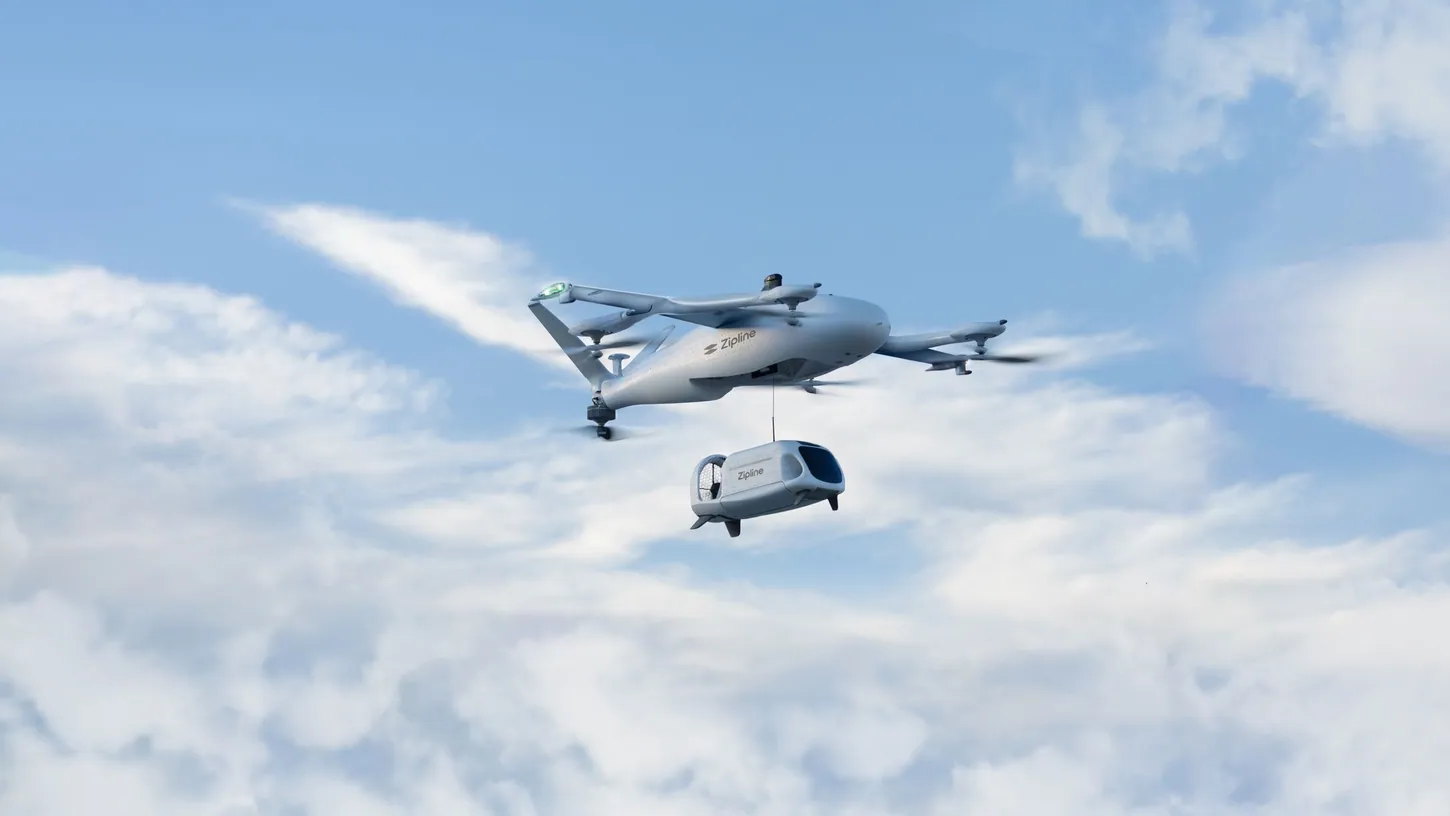
Zipline said Thursday it has raised $1.5 billion at a $21.5 billion post-money valuation, and that Walmart has signed a national multi-year agreement to launch 300 additional Zipline sites. Paradigm, WCM Investment Management and Layer Global led the round. Valor Equity Partners, Fidelity Management & Research Company, Uber, Tiger Global, J.P. Morgan, ARK Invest and Salesforce Ventures joined it.
The price is 2.8 times the $7.6 billion Zipline carried in January, and it beats the $20 billion figure Bloomberg reported when the talks surfaced in September. The money goes to US manufacturing and hiring for what Zipline calls a nationwide drone delivery network.
Walmart’s entire drone delivery program, across both Zipline and Wing, ran from 66 stores in four states when the retailer announced its millionth delivery in May.
Walmart’s 300 Sites Are More Than Four Times Its Drone Footprint of May
Walmart and Zipline will launch 300 additional sites under the new agreement, with what Zipline’s release calls potential to grow further. Measured against the 66 stores Walmart counted across both partners in May, the Zipline agreement alone is more than four times the retailer’s existing drone footprint.
Zipline’s Walmart business until now has been one metro and one Arkansas hub. The company counted the Denton Supercenter as its 20th Dallas-Fort Worth site in March, its FAA authorization there allows up to 75 sites, and it also flies from the Pea Ridge hub near Walmart’s headquarters in Arkansas. Wing, Walmart’s other partner, holds a contract for more than 270 locations by 2027.
The release names no states and no date for the first of the 300.
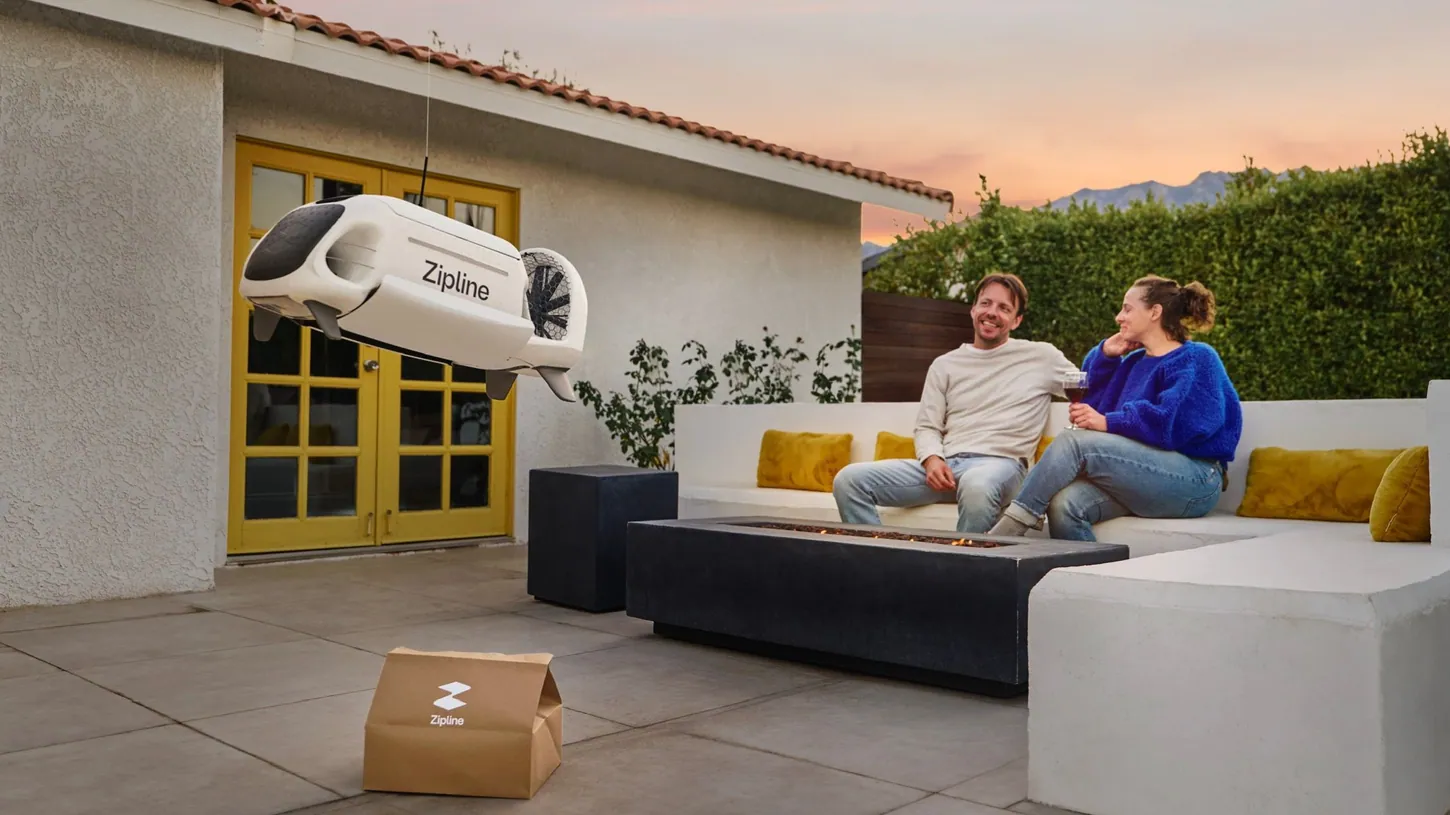
Zipline Has Raised About $2.3 Billion in 2026 Alone
Zipline opened the year with more than $600 million at a $7.6 billion valuation on January 20. It added a $200 million extension in March and now adds $1.5 billion. That is about $2.3 billion in ten months, against roughly $2 billion raised in total before this round.
Uber sits on both sides of the table. It is an investor in this round and the customer targeting one million Zipline deliveries a day by 2029 through Uber Eats. J.P. Morgan, ARK Invest, Salesforce Ventures, WCM and Layer Global are new names on Zipline’s cap table. Paradigm, Valor, Fidelity and Tiger Global were all in the January round or its extension.
“Zipline is now one of the largest autonomous robotics companies in the world,” said Matt Huang, co-founder and managing partner of Paradigm, in the release.
Zipline Puts Its Dallas-Fort Worth Count Past One Million Deliveries This Year
Zipline says it has made more than one million deliveries in the Dallas-Fort Worth metroplex in 2026, and that the median October order arrived 19 minutes after checkout. Its lifetime total stands at 150 million commercial autonomous miles, up from the 135 million it reported in July.
A cohort of Zipline’s longest-tenured restaurants saw the company’s share of their delivery revenue grow from 10.8% in March to 34.9% in October, with a 26% rise in delivery gross merchandise value, 80% of it from Zipline orders. Zipline says the orders were incremental and took nothing from other platforms. The cohort is Zipline’s own selection, and the release does not say how many restaurants are in it.
The release repeats that those miles were flown “without a safety incident.” Two Zipline drones came down under parachute in Texas this summer, in Greenville on July 26 and near Houston in September, with nobody hurt. Zipline described the Houston landing as the parachute deploying as designed, and it answered DroneXL’s written safety questions in September while Amazon and Wing did not.
The release also folds in October’s sound-optimized flight profile, which Zipline’s own modeling puts at 68% less sound exposure per flight, and says Zipline has introduced a next-generation aircraft that will fly higher and quieter with heavier orders over longer distances. The release gives no specifications or date for that aircraft, and Zipline’s newsroom carries no separate announcement of it.
Part 108 Is Still Pending at the White House, 118 Days In
The FAA’s Part 108 rule, which would make beyond visual line of sight (BVLOS) flight routine instead of waiver by waiver, was listed as pending review at the White House regulatory office on November 5. The final rule arrived there on July 10. Zipline flies today on Part 135 approvals.
In September the FAA’s Robert Reckert called the rule the “10-yard line” and said he hoped it would publish before the end of the year. Nothing has moved on the docket since. The Texas environmental assessment that would lift Zipline’s ceiling from 30,000 deliveries a day to 220,000 across five metros closed for public comment on October 11.
DroneXL’s Take
The Walmart agreement matters more than the money. Three hundred sites is a bigger commitment than any single customer has made to a drone delivery operator in the United States, and it comes from the retailer that has been quietly running the largest drone program in the country while Amazon fights town councils. In September I wrote that a $20 billion valuation was a policy bet wearing a hardware company’s clothes. At $21.5 billion, with Walmart signed for 300 sites, that bet is bigger, and Part 108 has not moved since.
Walmart has stopped choosing between its two partners. Wing has 270 locations under contract and Zipline now has 300, and under the rules that exist today every one of those sites needs an FAA sign-off of its own. Part 108 is the document that would change that, and it sat at the White House through the whole of this round’s negotiation.
I don’t think the money de-risks that. It raises the cost of every month the rule does not publish, because Zipline is now hiring and building factories for a network the FAA has not yet allowed. If Reckert’s end-of-year hope holds, the first of Walmart’s 300 sites can open in 2027 under a rule written for them. If it slips into next year, those 300 Walmart stores wait on the FAA, and $1.5 billion buys Zipline no way around that.
Sources: Zipline press release, Walmart, reginfo.gov, DroneXL Drone Delivery Tracker
DroneXL uses automated tools to support research and source retrieval. All reporting and editorial perspectives are by Haye Kesteloo. Read our editorial standards.


