
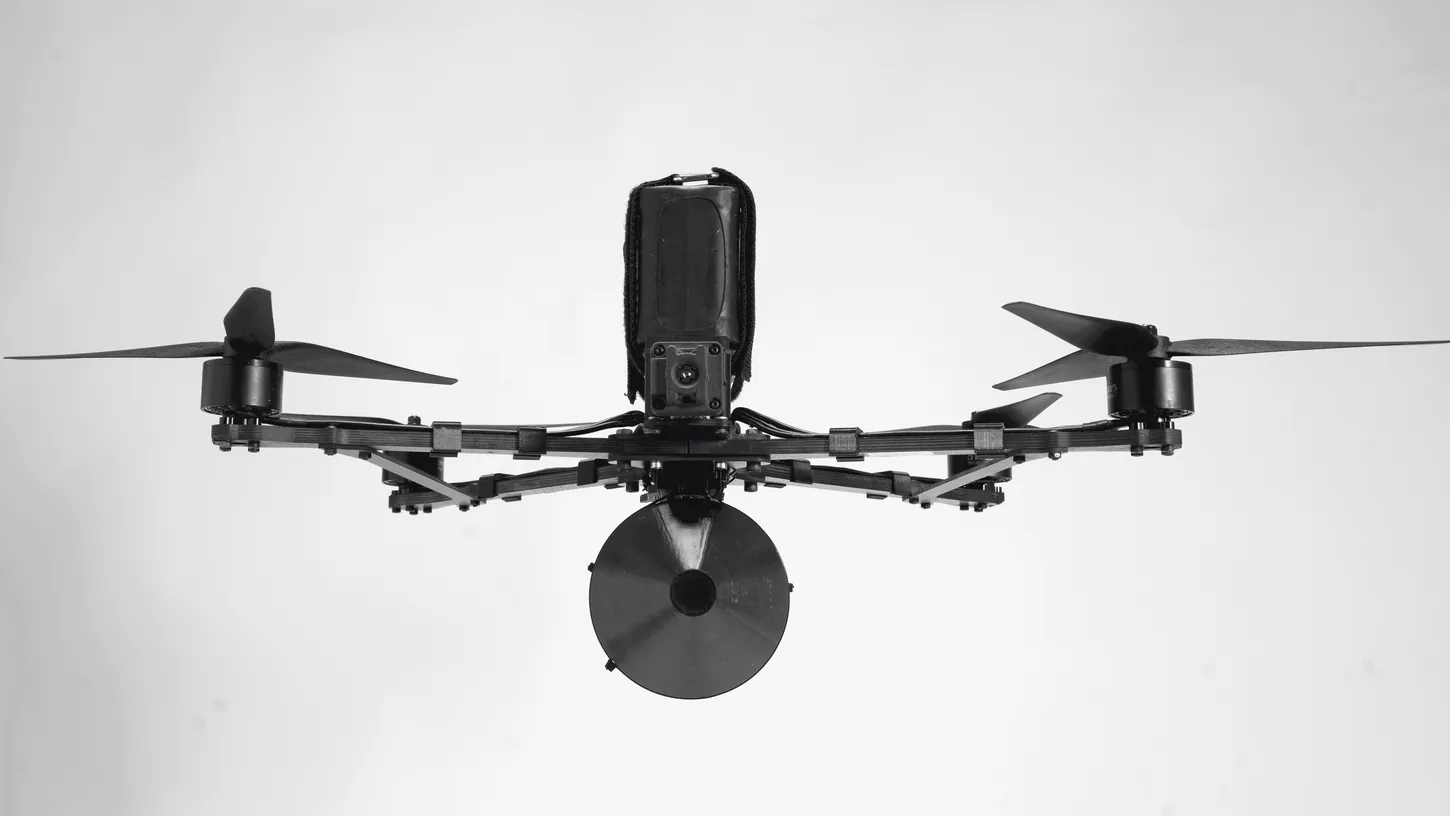
Ukrainian autonomy developer The Fourth Law says electronic warfare stops working as a defense once a drone navigates, finds and attacks its target on its own, and that both sides of the war are getting there fast. Maksym Savanevskyi, the company’s vice president of marketing and communications, told Ukrainian outlet LB.ua in an interview published October 7 that Ukraine learns of a new Russian autonomous system every two to three weeks, each one brought down or recovered after it fails to detonate. The company shared the interview on X on Monday with the line that autonomous drone use in Ukraine has grown tenfold in six months.
Savanevskyi also says Western defense companies took about two years to react to the drone war, lag Ukraine substantially today, and will fall further behind. The example he gave of a Western firm whose drones see real combat is Eric Schmidt’s, which LB.ua identifies as Swift Beat, maker of the Bumblebee drones DroneXL reported on in January and which Ukraine’s Khartia brigade said in March it flies.
Jamming Has Nothing to Cut Once the Drone Stops Needing a Pilot
Electronic warfare, as Savanevskyi frames it, exists to break the link between drone and operator, and an autonomous drone has no link to break. Once navigation, detection, tracking and the strike decision all run onboard, the aircraft never needs a radio signal and the jammer has nothing to cut.
“At that point, electronic warfare as a countermeasure loses its meaning,” he told LB.ua (quotes translated from Ukrainian). He calls electronic warfare one of the main challenges of the moment, and he says the answer that survives full autonomy is a physical one: interceptors that hit the drone itself. The Fourth Law sells the autonomy modules that make his point true, so it is also the company’s pitch. Ukraine and Russia are both building interceptors. Ukraine’s defense ministry said on September 25 that interceptors were the most-ordered category among the 590,000 drones that units ordered through the Brave1 Market this year. In tests Brave1 reported on September 8, six of seven companies passed a fully autonomous strike on a moving ground target locked from more than 1,640 feet (500 meters) away, pilot’s hands off the sticks, with two hits in three attempts the pass mark.
Brave1’s count is where the tenfold figure comes from. Its September statement says Ukrainian strikes using AI guidance have grown tenfold since the start of 2026, which is a longer window than the six months in The Fourth Law’s post. Neither party has published the base number.
He breaks autonomy into pieces rather than treating it as a switch: autonomous navigation to a point, detection, identification, tracking a moving target, the decision to attack, and the attack itself. Different drones carry different pieces today. The Fourth Law’s own TFL-1 module handles the last stretch of a strike run on drones like the Kolibri 10 Advance, and the company’s roadmap runs through TFL-5, which it describes as full autonomy. Asked whether its earlier forecast of full autonomy by the end of 2026 still holds, Savanevskyi said he could not comment, only that the pace is high on both sides.
Russia Trains Its Drones to Hit Anything That Moves, and Decoys Only Go So Far
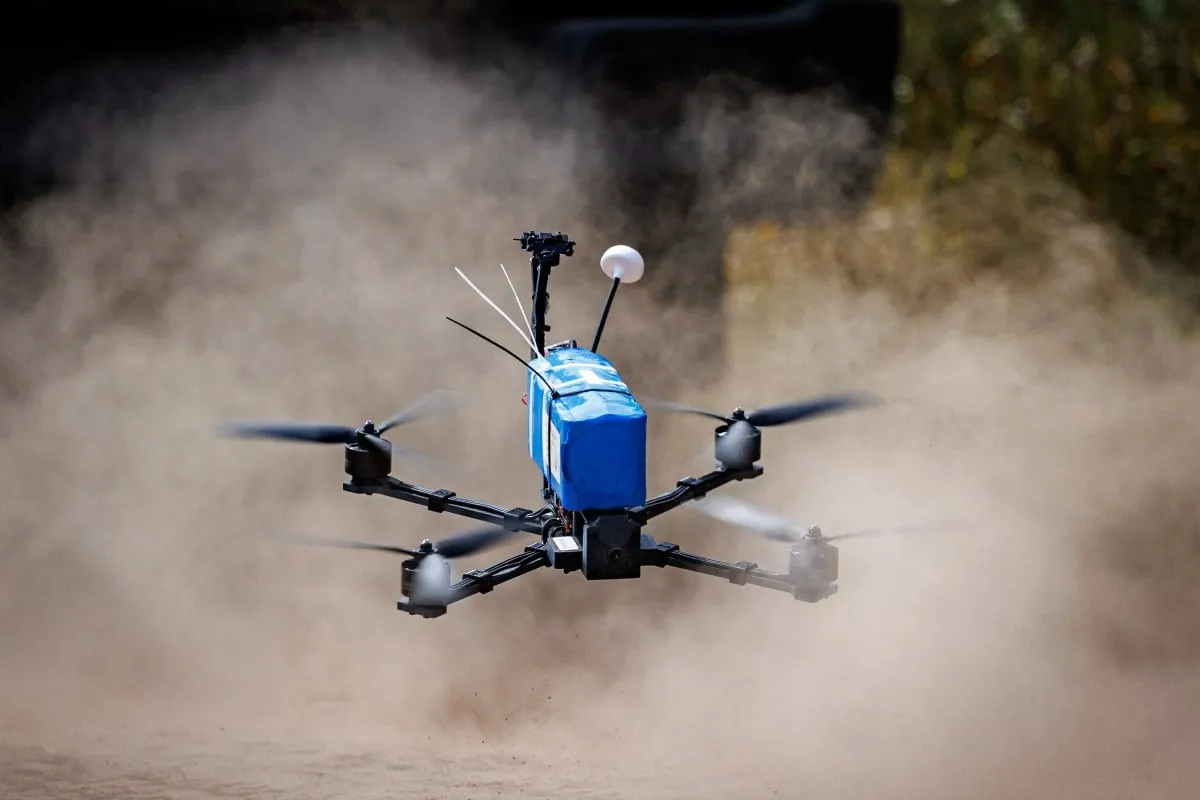
Russia is testing autonomy across several drone types at once, Savanevskyi says. He does not claim a full picture of what Russia has deployed, and calling it mass use today would be a stretch. He expects fast scaling once a design is stable, because scaling is what Russia does well.
The case he reached for is the Molniya that hit a Zaporizhzhia gas station on July 6 and killed three people. Its Nvidia Jetson Orin module carried terrain imagery and code telling the drone which objects to attack, and DroneXL covered that forensic finding in August. Asked whether Russian strikes on civilians reflect an immature system, he said no. The model is trained to hit a moving object, any moving object, and the operators do not care whether it is military.
LB.ua asked whether decoys could fool AI terminal guidance, with look-alike objects placed near a real target or the target’s appearance changed periodically. Savanevskyi called that a normal tactic with limits. Ten vehicles with one real and nine fake pose the same problem whether a pilot or a model is choosing, he says, so autonomy changes nothing about how the strike is delivered. Good detection systems already out-recognize a person, a model can be retrained on a new decoy quickly, and the attacker scouts the area first. For civilians, he says, an autonomous drone is no more and no less dangerous than a piloted one, and the advice is unchanged: go to the shelter when the sirens sound.
Western Firms Took Two Years to React and Savanevskyi Expects the Gap to Grow
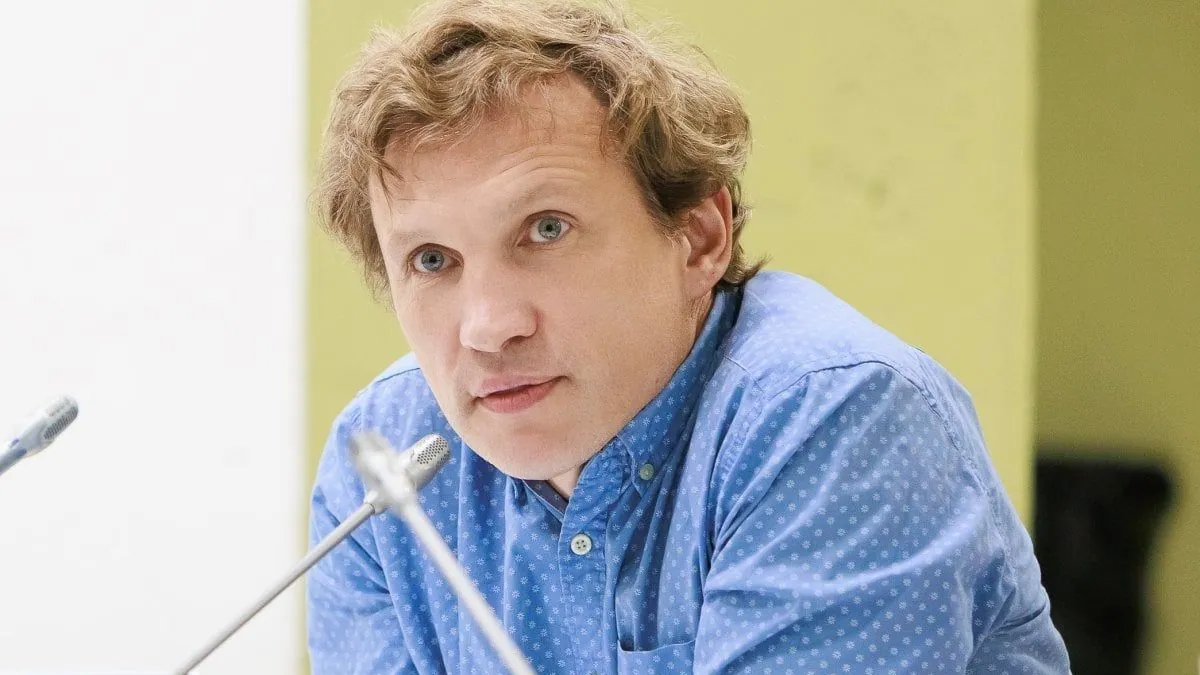
Most Western defense companies took about two years to move from watching the drone war to building for it, Savanevskyi says, and the leaders still sit well behind Ukraine. He blames business models: a $400 to $1,000 drone killing a multimillion-dollar tank breaks procurement systems built over decades.
He does not see those companies as competitors. He calls them outside observers trying to work out which way to move, and he expects partnerships with Ukrainian firms in specific slices of autonomy, some already under way.
Schmidt’s company is his example of a Western maker with drones in real combat use, and he says almost no other foreign producer has results at the scale that counts, thousands or tens of thousands of sorties rather than a unit shipped once for a test. The Fourth Law itself says its modules fly with more than 50 Ukrainian units and more than 20 drone makers, figures from its own website.
On the policy fight, his position is that stopping autonomy is no longer possible because the advantage is too large for whoever gets it first. He calls autonomy the Manhattan Project of the 21st century and a deterrent in the same way nuclear weapons were. The Fourth Law backs a human making the final strike decision, he says, and Russia does not care about such agreements. LB.ua framed the question around the United States and Russia moving to drop human confirmation of AI-chosen targets. Reuters reported on September 4 that both countries proposed late changes and deletions to the draft text at the UN’s Geneva talks on autonomous weapons. Savanevskyi’s reading is that Washington and Moscow are writing down where the world is going anyway.
DroneXL’s Take
I think Savanevskyi’s jamming point is the part American buyers should read twice. The counter-drone kit I see pitched to US police departments and stadium operators is built around detecting and breaking a radio link, and much of what the Pentagon buys works the same way. The Molniya that killed three people in Zaporizhzhia carried no radio antennas at all, and six of seven companies just passed Brave1’s hands-off strike test on a moving target, even if the pass mark was two hits in three. A jammer bought today is buying against last year’s drone.
Jamming still works against most of what flies right now, so nobody should rip it out. But the next dollars belong to the layer that physically stops an aircraft, and Ukraine is already ordering interceptors ahead of everything else on its own marketplace. Hegseth’s new four-star drone command has an October 2027 target date and was announced without a budget line. Savanevskyi says the gap with the West is growing, and the first purchase against it should be the interceptor, not the jammer.
Sources: LB.ua, The Fourth Law on X, Brave1, Ukraine Ministry of Defense, Reuters via Defense News.
DroneXL uses automated tools to support research and source retrieval. All reporting and editorial perspectives are by Haye Kesteloo. Read our editorial standards.


