
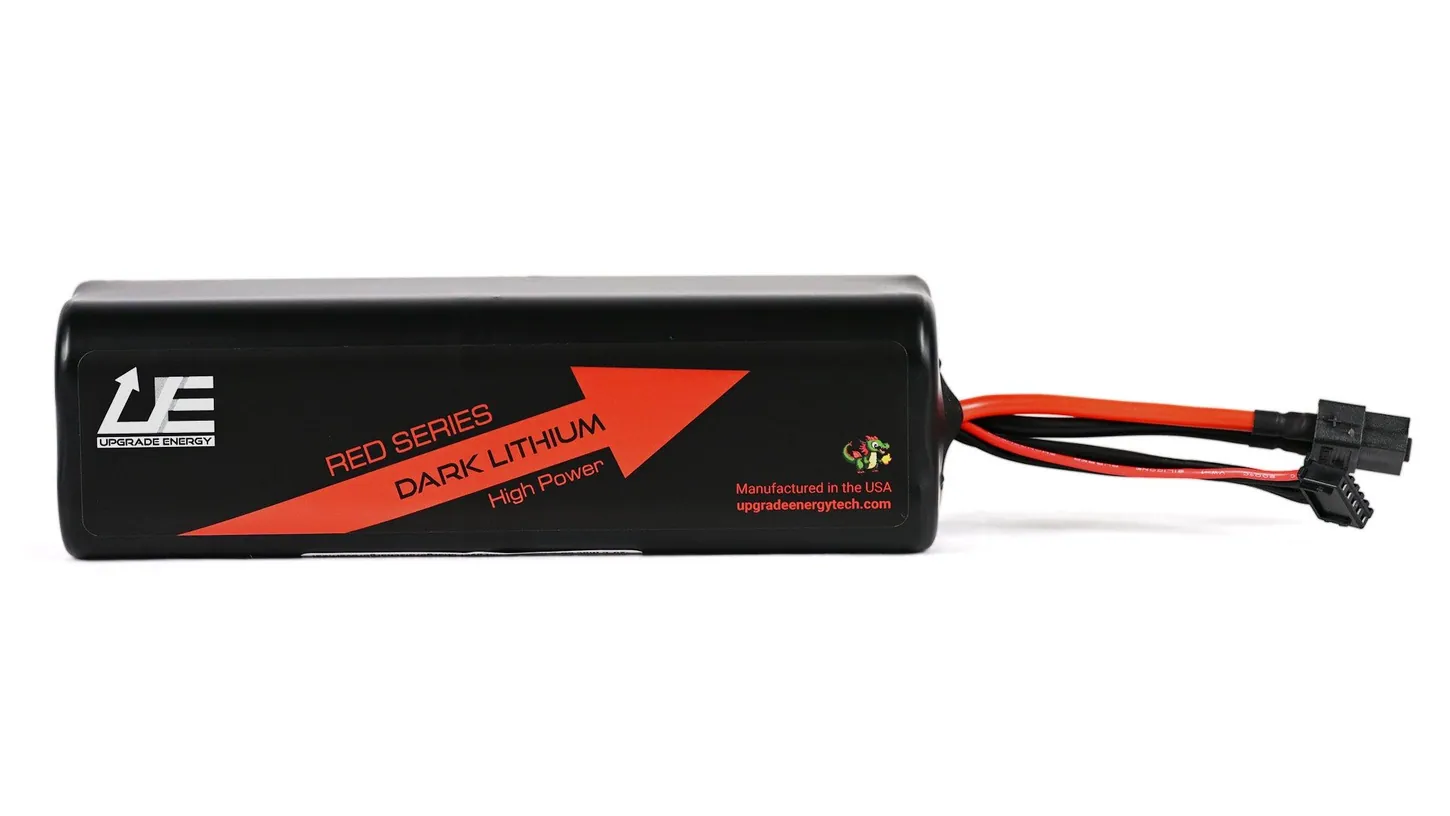
Unusual Machines closed its acquisition of Upgrade Energy, a drone battery pack maker in Torrance, California, on October 19, in a deal worth up to $52 million. Upgrade’s online store says its RED V4 high-power packs may be built with Amprius, Tenpower or Reliance cells, “depending on availability at the time of production.” Tenpower is a battery maker headquartered in China.
Unusual Machines bills itself as a provider of NDAA-compliant drone components. In the merger agreement, Upgrade promised that no battery it supplies for government drones would make the aircraft a covered system, and that it collects country-of-origin attestations from its cell suppliers. Prepared Senate testimony said the second phase of the Pentagon’s Drone Dominance program would ban systems with batteries from covered countries. The store listings don’t say which cell ends up in which customer’s pack.
Upgrade’s RED V4 Line Is The Only One With A Tenpower Option
Eight RED V4 listings on Upgrade’s store name three possible cells: the Amprius SA124, Tenpower 50XG and Reliance RS50. Tenpower is Jiangsu Tenpower Lithium, a cylindrical cell maker headquartered in Zhangjiagang, China, with a second plant in Malaysia. The listings don’t say where Upgrade’s 50XG cells are made.
The other 31 packs in the store each name a single cell. The GOLD and GREEN lines use Amprius silicon-anode cells (SA08, SA10 and SA03), and the RED V3 packs use Molicel P30B and P50B cells from Taiwan’s E-One Moli Energy. The RED V4 listings went up on May 28, 17 days after Unusual Machines announced the deal and nearly five months before it owned Upgrade. They were still listed on October 26.
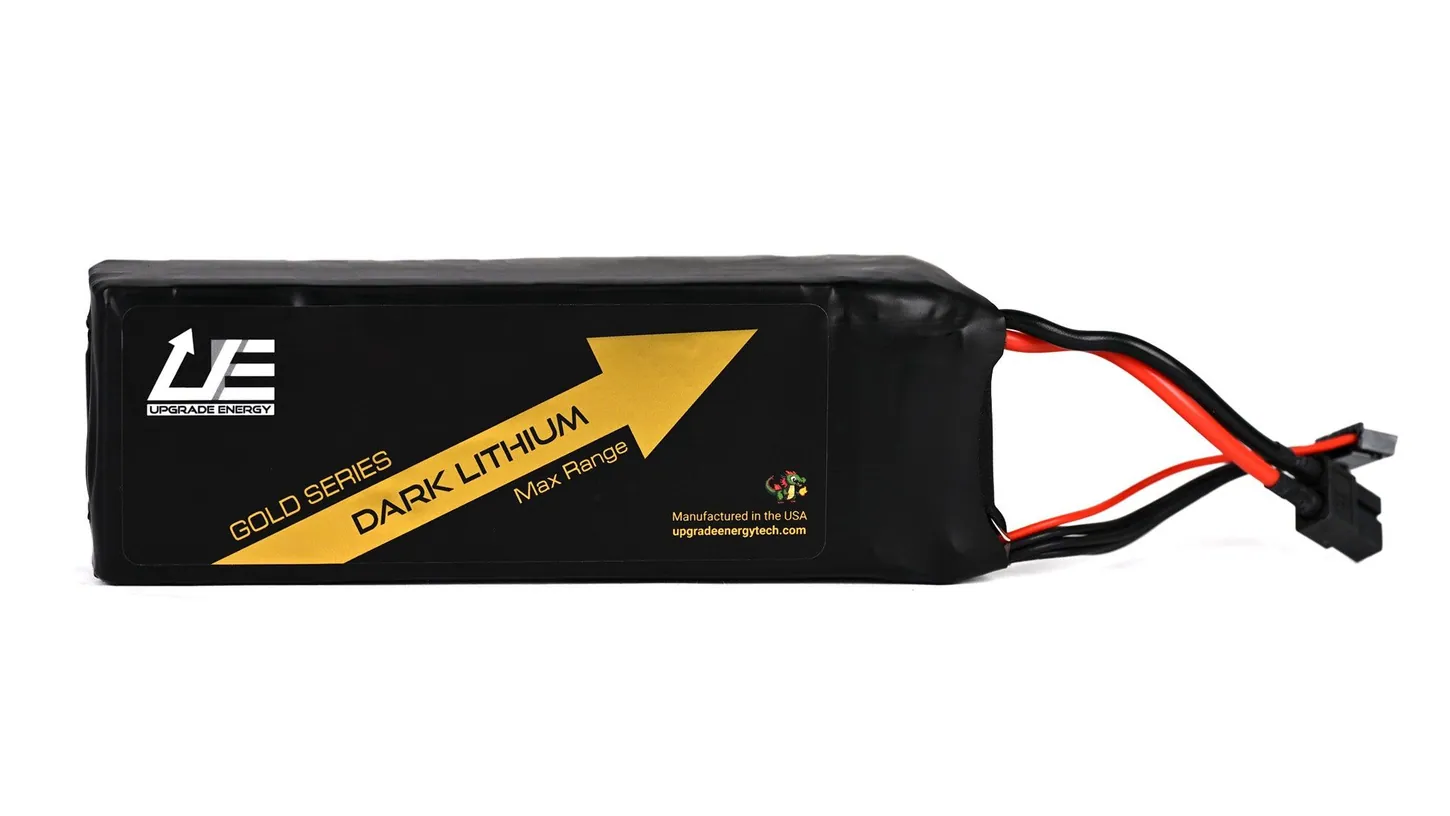
None of the 50 product listings on Upgrade’s store on October 26 mentions the NDAA or where a cell was made. The homepage says the packs are “Assembled in the US” and tells program buyers to contact the company for configuration-specific compliance documents. The pack labels in its product photos read “Manufactured in the USA,” and an undated Upgrade profile in Commercial UAV News’ supplier directory calls the packs fully NDAA-compliant.
An Amprius cell isn’t automatically an American cell either. Amprius CEO Tom Stepien told CNBC in September that the company still has cells made in China. It builds through a South Korean contract manufacturer and a U.S. partner, Nanotech Energy, for cylindrical cells like the 21700-format SA124, as I reported when Amprius won a grant of up to $75 million.
Upgrade Promised Its Government-Bound Batteries Won’t Make A Covered Drone
The merger agreement has Upgrade represent that no battery or component it supplies for drones bought by the Department of War or other federal agencies would make the aircraft a Covered UAS. Upgrade also said it keeps bills of materials and supplier attestations to back that up.
Another section says Upgrade collects country-of-origin and component provenance attestations from suppliers of battery cells and other critical parts. The exceptions to those promises sit in Schedule 3.27, which isn’t public. A separate schedule lists Upgrade’s “written remediation and transition plan” and supplier attestations for battery products likely to end up in government drones. The agreement doesn’t describe what the plan remediates.
Sales To Unusual Machines Count Toward Barnard’s $26 Million Earn-Out
Founder Matthew Barnard got 1,792,012 Unusual Machines shares, valued at about $25 million at $13.95 a share, and $1 million in cash at closing, the company’s October 23 filing shows, and he collects up to $26 million more if Upgrade’s revenue tops $10 million in a 12-month window.
The agreement counts Upgrade’s sales to Unusual Machines and its affiliates as revenue for the earn-out. The first window opened on the signing date, May 7, 2026, and runs to early May 2027, while the earn-out statements count revenue from the October 19 closing, about 200 days. If Upgrade misses in year one, year two pays pro rata, and the agreement’s own example puts $9 million of revenue at a $23.4 million payout. Barnard now runs Upgrade on a two-year employment agreement at a $300,000 base salary. Upgrade had about 30 engineering and production staff when the deal was announced in May.
Unusual Machines announced a $16.9 million Powerus order for motors, batteries, cameras and video transmitters on October 22, three days after closing. The release doesn’t say whether Upgrade builds those batteries. Unusual Machines disclosed a $30 million equity investment in Powerus in June, the drone roll-up Donald Trump Jr. and Eric Trump backed in March. Trump Jr. joined Unusual Machines’ advisory board in November 2024, as DroneXL reported. Unusual Machines’ largest customer, unnamed in its Q2 shareholder letter, accounted for about 42% of $16.7 million in second-quarter revenue.
DroneXL’s Take
I’d argue a battery pack is only as American as the cells inside it. When Beijing ordered Dongguan Poweramp to stop supplying Skydio in 2024, America’s largest drone maker had to ration batteries and expected no new supplier until spring 2025.
A commercial FPV pack with a Tenpower cell breaks no law, and 31 of Upgrade’s 39 packs name a single Molicel or Amprius cell. My problem is the RED V4 listing. A buyer can’t tell from it which of three cells they’ll get, while the label on the photo reads “Manufactured in the USA” and Upgrade’s directory profile calls the packs fully NDAA-compliant. I think that’s the wrong default for a battery maker whose new parent sells NDAA compliance.
The merger agreement shows Upgrade already tracks cell origin for products bound for government buyers, so putting it on the public listing costs little. Unusual Machines reports third-quarter results on November 5, and that call is the first chance to hear CEO Allan Evans say which cells go into the packs it sells to defense customers.
Sources: Unusual Machines 8-K, October 23, 2026, Merger agreement, May 2026, Upgrade Energy, Unusual Machines Q2 2026 shareholder letter, Powerus order announcement, Battery-Tech.net, Commercial UAV News.
DroneXL uses automated tools to support research and source retrieval. All reporting and editorial perspectives are by Haye Kesteloo. Read our editorial standards.


