

The Transportation Security Administration posted the word “drone” 46 times in a row on X on Thursday afternoon, and by the evening the post had 736,000 views, 2,700 likes and nearly 300 replies. The agency’s follow-up explained the joke: “Droning on about it… because flying a drone in a no drone zone near an airport could quite literally cost you hundreds of thousands of dollars.” It pointed readers to the Federal Aviation Administration’s “Where can I fly?” page.
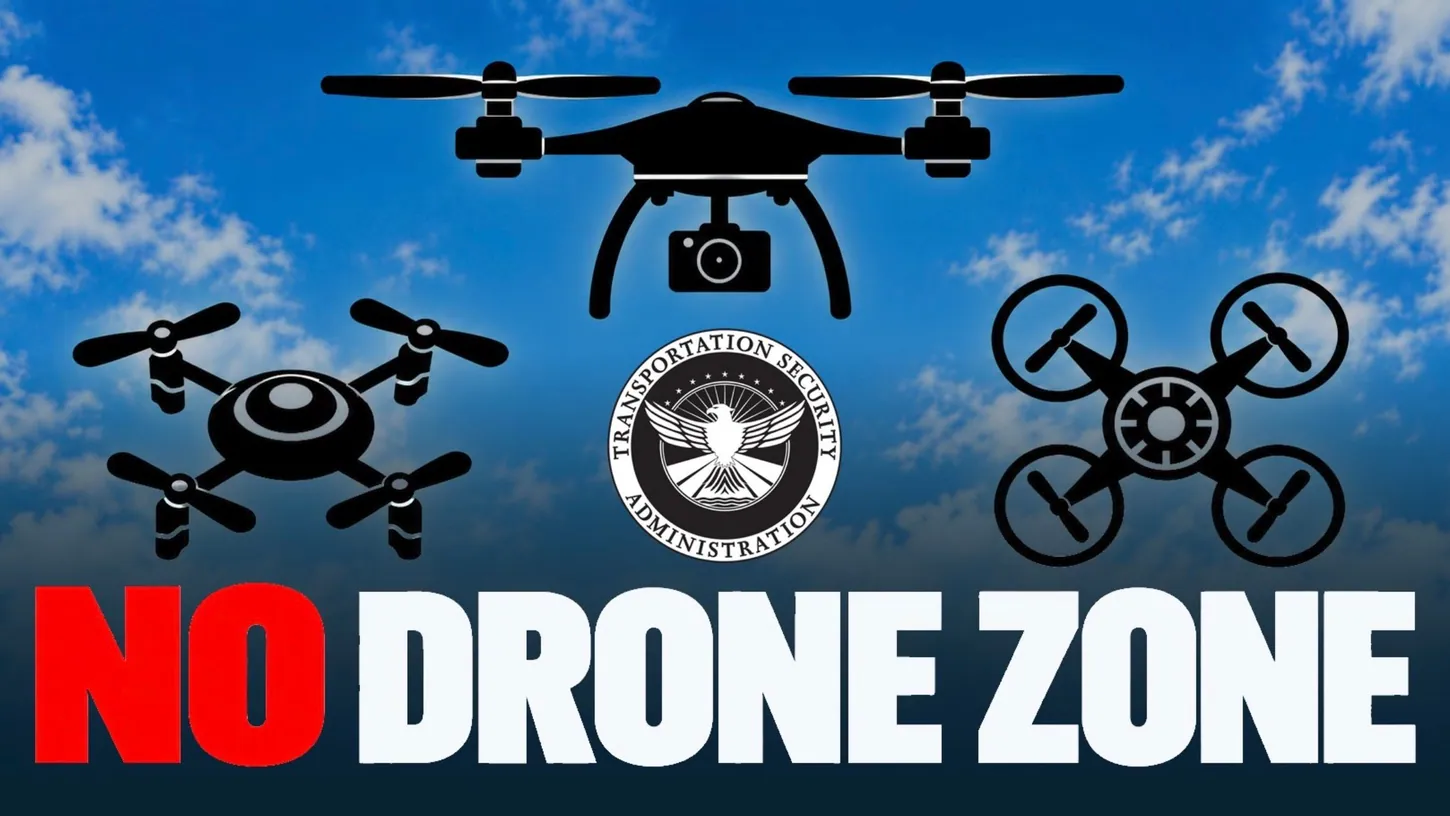
The post went up at 2:57 p.m. Eastern on November 5 from the TSA’s main account, which has 297,000 followers. Twenty-four of the 46 words are spelled “dr0ne” with a zero, and the follow-up carried a “No Drone Zone” graphic with the TSA seal between three drone silhouettes.
The FAA has proposed a six-figure drone penalty four times on the public record, and the two against individual pilots were built from months of repeated flights. The pilots charged over one or two flights at Charlotte Douglas and Dallas Love Field this year are not looking at an FAA bill. They are looking at federal prison time.
TSA Reran A World Cup Gag That Drew 260,000 Views In July
The TSA first posted “drone drone drone” on July 2, 2026, during the FIFA World Cup, while its Federal Air Marshals were seizing drones around stadiums. That version ran 24 words and drew 260,000 views and 799 likes. Thursday’s rerun nearly doubled the words and almost tripled the views.
The World Cup is the reason the TSA has a drone message at all. The agency does not write drone rules, the FAA does, but its air marshals worked the counter-drone details at the tournament, and by July 5 the FBI and its partners had seized more than 600 drones at World Cup venues. Thursday’s follow-up links to the FAA’s airspace page instead of making any claim of its own about where pilots can fly.
The FAA Reached Six Figures Four Times, Never For One Airport Flight
The largest drone penalty the FAA has proposed against an individual is $270,000, sought in 2024 from a Pueblo, Colorado developer who flew over unhoused people: 232 alleged violations across 16 months. The $182,004 proposed against Philadelphia YouTuber Michael DiCiurcio in 2020 covered 26 flights over nine months.
Both men flew on camera, for months, and the FAA counted every flight. DiCiurcio’s case closed in January 2025 with a consent judgment that bans him from flying drones in the United States for life. The other two six-figure cases were against companies: the FAA settled with SkyPan for $200,000 over its commercial photo flights, and this August it proposed $289,215 against Gorge Drones.
The fines the FAA hands individual pilots for a single bad flight run far lower. Its $341,413 announcement in August 2024 was the total across 27 operators over 20 months, and the biggest share was $32,700, for a night flight that nearly hit a sheriff’s helicopter in Florida. The February 2026 batch topped out at $36,770, for flying near a wildfire response aircraft. Since the FAA Reauthorization Act of 2024 the civil ceiling is $75,000 per violation, and one flight can stack several: no authorization, no registration, no Remote ID, over people, at night without lighting. On paper, the TSA’s number is reachable from one afternoon at the fence. In the record, it has taken months.
Airport Cases Now Go To Federal Court, Where The Price Is Measured In Years
The two airport cases DroneXL covered this fall skipped the FAA fine letter. A Charlotte pilot pleaded guilty on September 22 to one federal count of unsafe drone operation for flying between two active runways at Charlotte Douglas. He faces up to a year in prison and a $100,000 fine.
In Dallas, a 24-year-old was indicted on four counts over flights into Love Field and DFW airspace on consecutive nights in June 2025, and faces up to eight years. Those are criminal statutes, enforced by U.S. Attorneys with FBI agents doing the seizing. The FAA, for its part, launched the DETER program on April 16 to speed up its civil side: first-time violators can take a reduced fine within 10 days if they admit liability and give up their right to appeal.
DroneXL’s Take
I like the post. A federal agency with 297,000 followers found a way to get three quarters of a million people to read the words “no drone zone near an airport,” and the reply pointed at the FAA’s own airspace page rather than inventing a rule. That is better outreach than most of what the FAA itself publishes. The dollar figure is the weak part, because it describes the wrong pilot. The FAA’s six-figure cases went to people who flew for months on video and racked up more than a hundred violations each, and the operator who makes one dumb flight at the airport fence gets a letter in the low five figures. I’d rather the TSA had said what the Charlotte and Dallas dockets say: fly into a runway exclusion zone and you are dealing with a U.S. Attorney, and the number to look at is the one with “years” after it. A pilot who checks B4UFLY before every flight never meets either number, and that check takes less time than reading the post did.
Sources: TSA on X, FAA airspace page
DroneXL uses automated tools to support research and source retrieval. All reporting and editorial perspectives are by Haye Kesteloo. Read our editorial standards.


