Three large newspapers covered Amazon’s Prime Air delivery drones in five days. On November 18 the New York Times told the story of the Massachusetts town that has so far held off an Amazon drone hub. The Wall Street Journal’s Future of Everything newsletter followed on November 20, and The Times of London published a report from Darlington, England, on November 22.
I spoke with the New York Times reporter about that story, and the conversation led to the opinion piece I published on Sunday, which argued that a bottle of shampoo doesn’t justify an 83-pound drone.
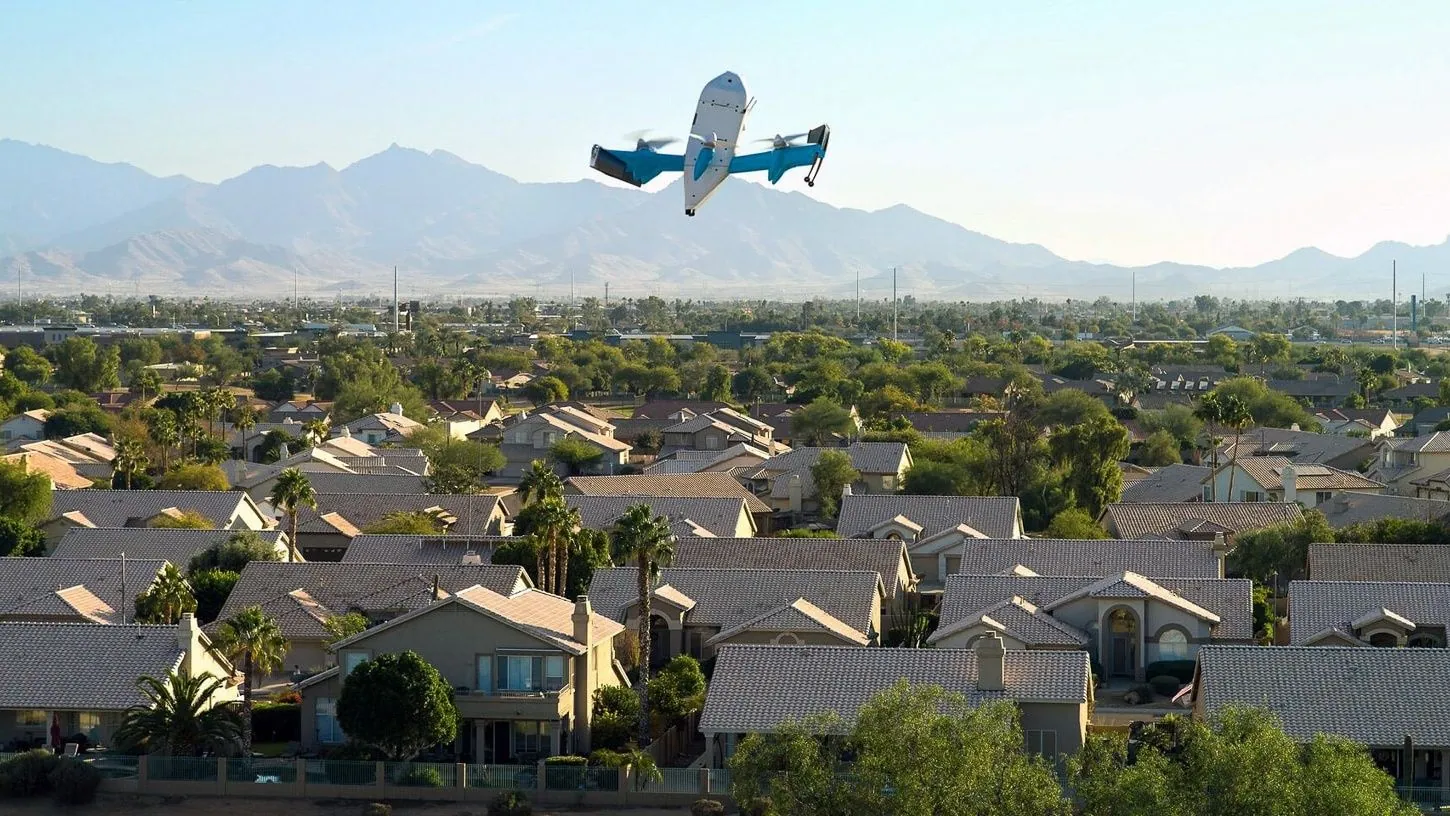
The two new pieces describe very different operations. Amazon told the Journal that about 30 drones an hour leave its Baton Rouge hub, and that in the communities where it operates delivery slots fill almost as soon as they open. The Times reporter tried to order a toothbrush to a farm five miles (8 kilometers) from Amazon’s Darlington warehouse and was never offered drone delivery.
The Journal Told Its Readers Prime Air Flies 80-Pound Drones Out of Sight
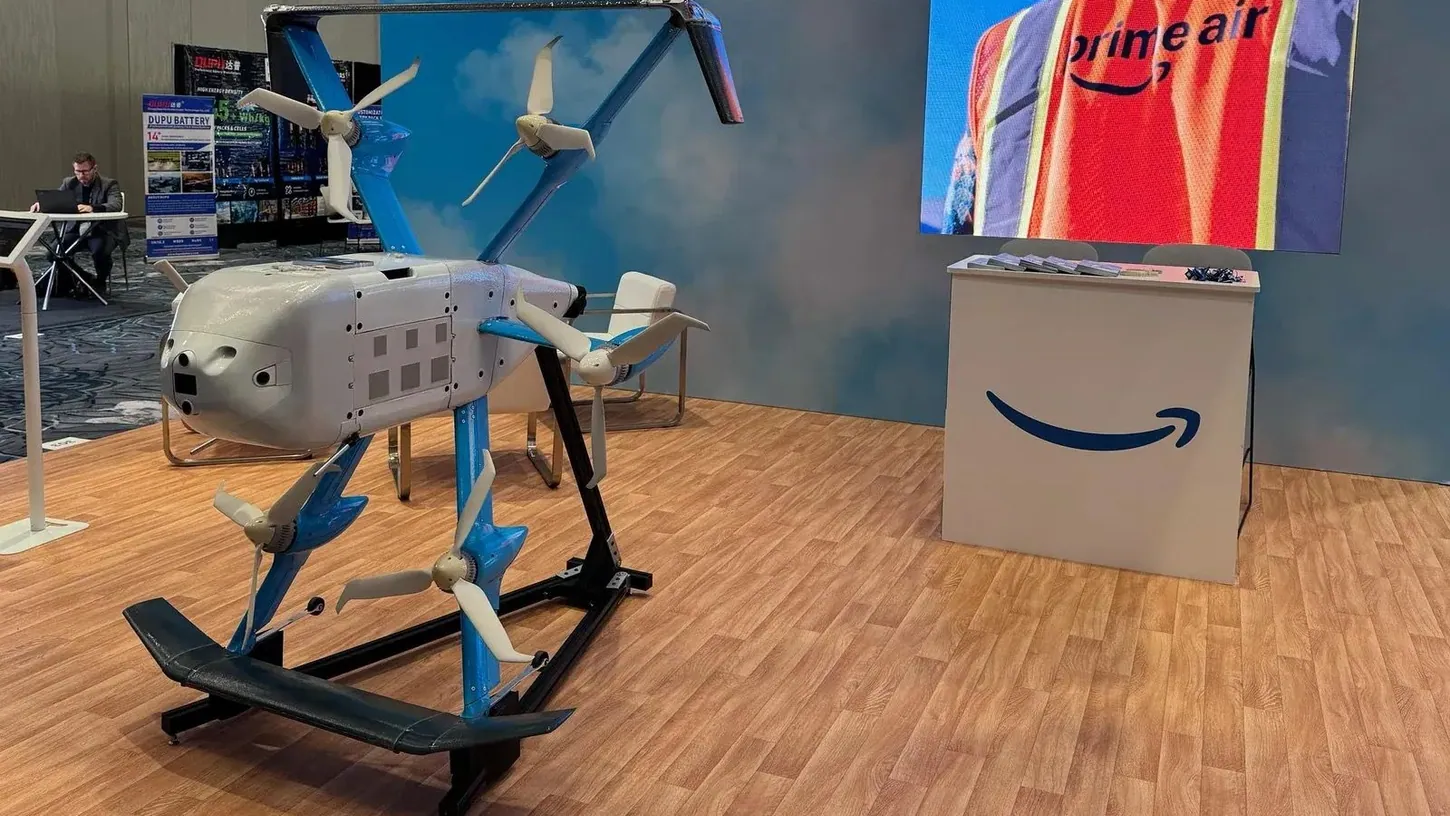
The Wall Street Journal’s Future of Everything newsletter of November 20 told readers that Prime Air flies 80-pound (36-kilogram) drones with packages of up to 5 pounds (2.3 kilograms) to homes within 7.5 miles (12 kilometers), and that a regulatory exemption lets Amazon send them far past human sight.
The newsletter, written by Anne Steele, draws on Kris Maher’s reporting from Baton Rouge, which DroneXL covered on November 15. It sets what neighbors say about noise and privacy next to what Amazon says in reply. Amazon told the paper it is working on propeller design to cut the sound. It said employees don’t watch live feeds of deliveries, and that the drones don’t use facial recognition or record audio. Spokeswoman Lindsay Hamilton said customers in suburban and semirural areas “should have access to fast delivery.”
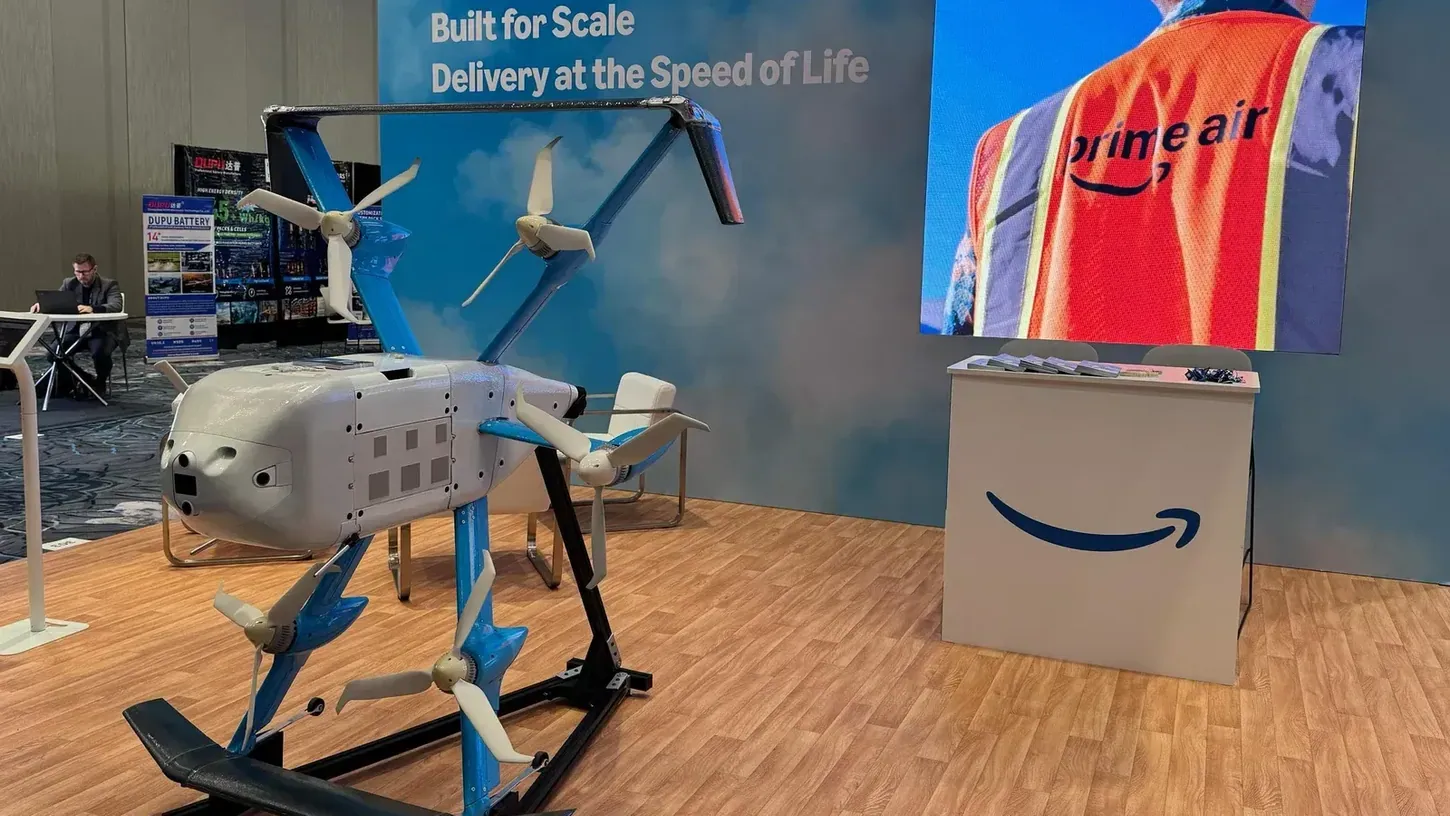
The Journal rounds the aircraft’s weight down. The Federal Aviation Administration’s (FAA) draft environmental assessment for the Baton Rouge hub lists the MK30’s maximum takeoff weight at 83.2 pounds (37.7 kilograms).
Steele also gives the wider numbers. The Journal reports that commercial aircraft are now more than half of the 900,000 drones registered in the United States, and that the FAA projects 3.5 million registered drones by the end of the decade. Walmart and police departments are expanding their fleets too. She ends by asking her readers whether there are better ways to deliver packages.
The Times Went to Darlington and Could Not Get a Toothbrush by Drone
Callum Martin of The Times traveled to Darlington, where about 8,000 households can order by Prime Air, and saw no drone take off. Most residents he met had never seen one, and he writes that none had used it. He was told of operational difficulties and advised to return.
The Times had help from a customer. Katie Trotman, who lent Amazon her farm’s guesthouse for its first UK test flights and uses the service regularly, let Martin order to High House Farm. He picked a toothbrush, which is well under the 5-pound limit, and then several other items from Amazon. The drone option never appeared at checkout. At the warehouse he counted half a dozen drones sitting in their harnesses on a mild day. An Amazon spokesman told the paper that Prime Air is a real, working service and that drone delivery can be temporarily unavailable, for example because of weather or routine operational checks.
The residents Martin quotes are split. A florist who lives near the warehouse sees the drones daily and likes the idea, as long as people keep their jobs. Another resident worried about cameras and bedroom windows, and Amazon says the cameras are there for navigation. Spencer Gregory, 81, told the paper: “Everything’s good until it goes wrong.”
DroneXL’s reporting fits what Martin saw. The UK Civil Aviation Authority’s approval, which Amazon announced on November 10, lifted the eligible households from about 600 to roughly 8,000, Amazon says. Through September the company had reported more than 500 flights and deliveries in Darlington since February, which by DroneXL’s arithmetic is about three a weekday. An MK30 came down in a Darlington garden on July 29. Nobody was hurt, and Amazon said the aircraft responded as designed.
In the United States, residents with a question or a complaint can call Amazon at 1-888-280-4331, or open the customer service chat and pick “Something Else” and then “Amazon Drone Delivery.” DroneXL’s guide for residents lists what a town can still do, and the Amazon Prime Air tracker page lists the hubs and incidents DroneXL has on record.
DroneXL’s Take
I’m glad these three papers are writing about drone delivery. DroneXL’s readers already follow drones, and the New York Times, the Journal and The Times reach far more people than a drone publication does. Some of those people live in the towns where the aircraft fly. They can only decide whether they want delivery drones overhead if somebody tells them what is flying, what it weighs and what it carries.
My own view hasn’t changed. A donor kidney or a defibrillator is valuable and urgent, and I think a drone flight for one of them is easy to justify and often the smart choice. A bottle of shampoo or a toothbrush is neither, and it can come by van. These three articles don’t make that argument. They report what residents say and what Amazon says, and I think that is the right job for them. The public needs an open discussion about whether everyday products are worth these flights, and it should happen before the drones arrive in a town.
Sources: The Wall Street Journal, The Times, The New York Times, FAA Draft Environmental Assessment, Amazon Prime Air, Baton Rouge, Appendix E
DroneXL uses automated tools to support research and source retrieval. All reporting and editorial perspectives are by Haye Kesteloo. Read our editorial standards.
Advertise with DroneXLYour company hereReach 200,000+ drone readers a month with a sponsored article, a banner on your beat, or a partnership.See the options →