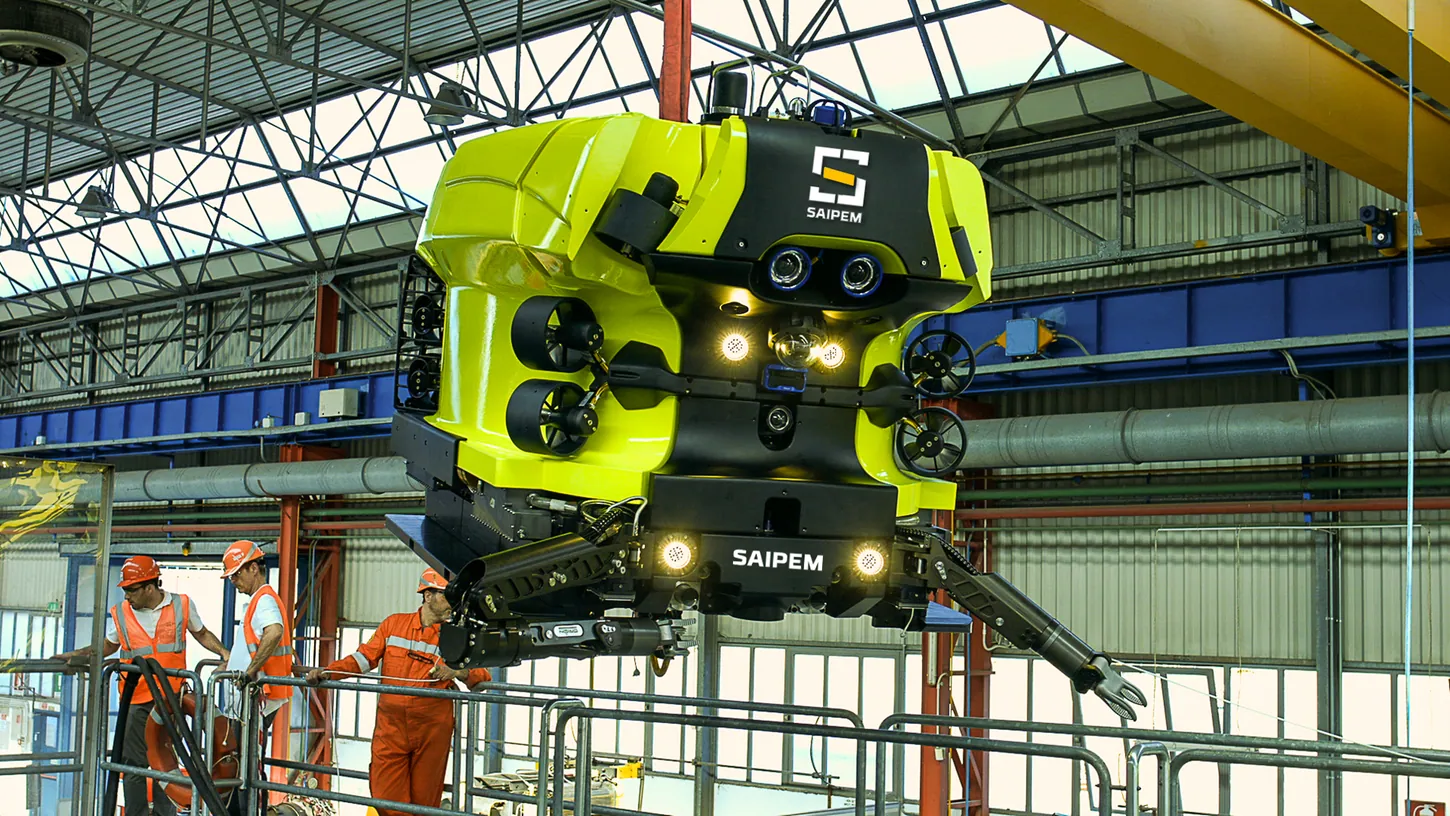
Saipem will keep Hydrone-R, its seabed-resident underwater drone, working at Equinor’s Njord field offshore Norway through the end of 2034. The Italian contractor announced the contract extension on Tuesday, November 24. The drone handles subsea inspection and intervention at Njord alongside a work-class remotely operated vehicle (WROV). Saipem did not disclose what the extension is worth.
Hydrone-R has spent about 800 days on the seabed at Njord so far, including one stretch of 240 days in a row, and it does that work with no ship stationed above it.
Stavanger Pilots Run Hydrone-R From Shore With No Support Ship
Saipem’s control center in Stavanger runs both Hydrone-R and the WROV over a communication link to the Njord platform. Pilots either drive the vehicles live or upload a complex mission, which the drone then carries out on its own, with no dedicated support vessel on site.
That makes it the underwater version of a drone in a box. The 2019 contract award from Equinor describes Equinor’s proprietary docking station below Njord, which handles data transfer and charges the drone by induction, so the vehicle does not surface to recharge.
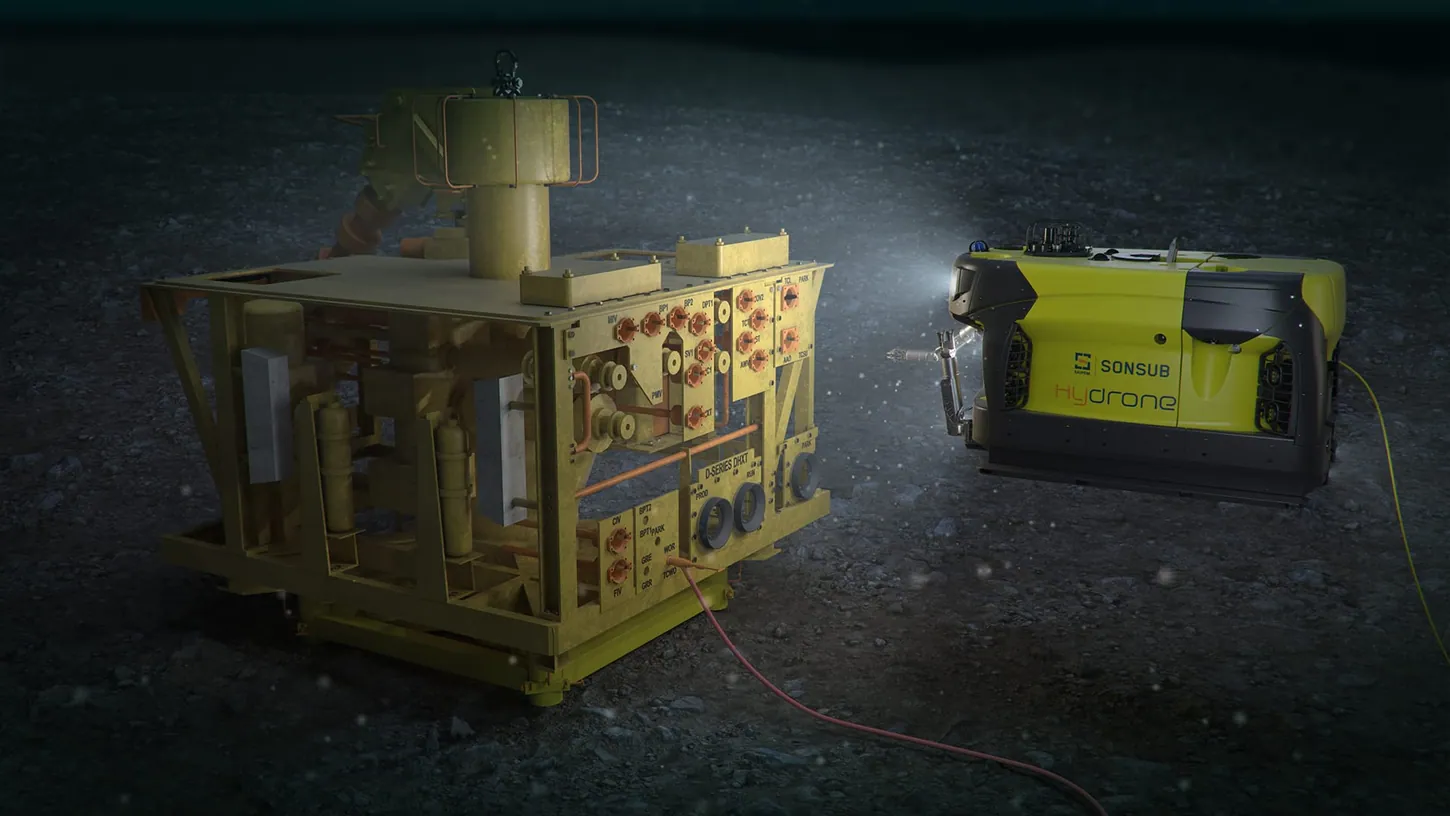
Hydrone-R belongs to Saipem’s Hydrone program of seabed-resident drones. In its announcement of the extension, Saipem says those drones run AI-powered inspection and intervention missions at depths of up to 9,843 feet (3,000 meters) and can stay on the seabed for up to 12 months.
Equinor Signed the First Wireless Subsea Drone Contract in 2019
Equinor awarded Saipem the Njord drone contract in October 2019, a ten-year deal with five two-year extension options and a fixed part valued at about €40 million. Equinor called it “the first contract signed for the use of advanced wireless drone services.”
The 2019 Equinor announcement gave Hydrone-R a “janitor role”: stay on the seabed and respond fast when something goes wrong. Mobilizing people offshore for that kind of unplanned job had taken two to three days, Equinor said. The drone can also travel to the neighboring Hyme installation, about 12 miles (20 km) away.
Saipem’s announcement does not say whether the extension uses those options or is a new agreement.
DroneXL’s Take
We usually write about docks for aerial drones, and offshore energy keeps getting there first. In 2025 we covered Aker BP’s DJI Dock on the Edvard Grieg platform, flown by pilots sitting in Stavanger, and last month Airspection skipped the boat by flying a shore-launched drone to a UK wind farm. Hydrone-R takes the same idea 800 days deep: the robot lives where the work is, and the pilot on shore never gets on a helicopter. Anyone who still thinks drone-in-a-box is a demo should look at those 240 days of continuous operation. The aerial version has to handle weather and airspace rules, so it is harder in some ways. But Equinor has now committed to a seabed robot through 2034, and to me that is the strongest case for the drone-in-a-box model I have seen this year.
Sources: Saipem, Equinor, World Oil
DroneXL uses automated tools to support research and source retrieval. All reporting and editorial perspectives are by Haye Kesteloo. Read our editorial standards.
Advertise with DroneXLYour company hereReach 200,000+ drone readers a month with a sponsored article, a banner on your beat, or a partnership.See the options →