A Silicon Valley Founder Exposed Why U.S. Drone Manufacturing Won’t Scale Anytime Soon

Check out the Best Deals on Amazon for DJI Drones today!
I’ve been reading a lot of optimistic press releases about American drone independence lately. The Pentagon wants a million drones. Executive orders promise to unleash domestic production. Politicians declare that we’re breaking free from Chinese supply chains. Then a defense-tech founder in Silicon Valley writes a Forbes column that quietly demolishes the entire narrative with uncomfortable math.
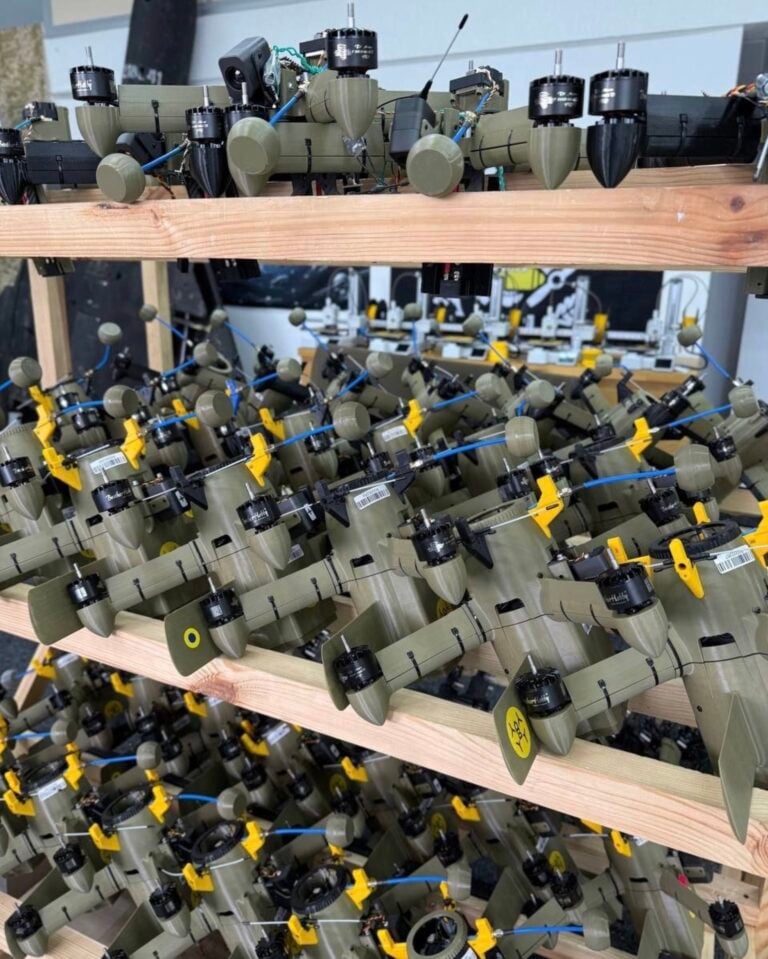
The U.S. drone industry has roughly 500 companies. Combined annual output? Under 100,000 units. Meanwhile, Ukraine produces 2 million FPV drones annually through decentralized workshops. The gap isn’t ambition or engineering talent. It’s industrial infrastructure that simply doesn’t exist yet on American soil.
The Blue UAS Bloodbath Proves The Point
The piece cites venture capitalist Natan Linder’s analysis of the Blue UAS program’s brutal reality: over 300 companies applied to the approved list, but only 23 made the cut. For most, failure came down to a single imported part.
This matches what we’ve been documenting. In March 2025, eight vendors were dropped from the Blue UAS list in a single week, creating chaos for agencies that had standardized on those platforms. The component supply chain for NDAA-compliant drones remains fragmented and expensive. Compliance isn’t a checkbox. It’s an industrial capability that most American companies don’t possess.
The Forbes author, who is building a defense-tech startup focused on autonomy, learned quickly that software and aerodynamics weren’t the limiting factors. Motors, magnets, batteries, and the factories behind them are the actual choke points.
Tooling: The Unsexy Bottleneck Nobody Talks About
There’s a paragraph in this piece that should be required reading for every drone policy advocate in Washington:
“The U.S. lacks the tooling, dies, molds and automated lines needed to jump from thousands of units to true mass production. Tooling is the part many people skip. Designing and building specialized tooling can take months and cost tens to hundreds of thousands of dollars.”
This is the inconvenient truth behind the “million drone” ambitions we’ve been covering. Neros Technologies raised $121 million to build America’s FPV war machine, and the Army wants a million drones in 2-3 years. But you can’t will tooling into existence with executive orders. Real scale requires tools to be funded, built, and coordinated well before demand peaks. That’s a multi-year industrial program, not a procurement sprint.
The Motor Problem Nobody Has Solved
Brushless electric motors sit at the heart of every drone. The author cites DefenseScoop reporting that even within “trusted” drone programs, Chinese-origin motors are still permitted under current regulations. This creates a vulnerability that experts acknowledge but haven’t addressed.
His practical takeaway for founders is blunt: “If you don’t have a credible motor plan, you don’t have a credible scale plan, because every other subsystem depends on it.”
We’ve documented this dependency before. U.S. drone makers are heavily dependent on Chinese components, and motors are often the hardest to source domestically. The Blue UAS list verification process catches some of this, but as the 300-to-23 applicant attrition shows, most companies discover too late that their “American-made” drone has Chinese motors deep in the supply chain.
Rare Earths: The Upstream Dependency That Makes “Domestic” A Lie
Brushless motors depend on high-strength magnets. Magnets depend on rare-earth supply chains. According to the U.S. Geological Survey data cited in the piece, America imported 72% of its rare-earth compounds and metals from China between 2019 and 2022.
The dependency isn’t just mining. Processing and refining capacity for critical minerals remains heavily concentrated in China, creating choke points for downstream manufacturing. In practical terms, this means a “domestic” drone supply chain can still be exposed upstream through magnets, materials, and refining, even if final assembly happens in the United States.
This upstream reality makes current NDAA compliance somewhat theatrical. You can assemble a drone in Ohio with motors wound in Texas, but if the magnets inside those motors come from Chinese-refined rare earths, how “American” is that supply chain really?
Batteries: The Same Pattern Repeats
The Forbes piece cites research from the Foundation for Defense of Democracies showing that China controls the vast majority of the lithium-ion battery supply chain, including dominant shares of cathode and anode manufacturing and processing for key materials like lithium, cobalt, and graphite.
Policy is tightening. The NDAA for fiscal year 2024 includes a prohibition on procuring batteries from certain specified entities beginning October 1, 2027. Section 301 tariffs are hitting battery-related imports. But policy pressure without manufacturing capacity just creates shortages, not independence.
The June 2025 executive orders shifted focus from data security concerns to supply chain vulnerabilities. That was a smart policy pivot, acknowledging that the real risk isn’t just DJI’s software but the entire industrial base. But acknowledging the problem and solving it are very different things.
A Founder’s Five-Point Reality Check
The most valuable part of this Forbes piece is the practical advice for founders and investors. The author suggests treating drone manufacturing as a 3-5 year industrial program, not a product launch:
Year one: Lock suppliers and fund tooling. Years two and three: Qualify standardized components across multiple configurations. Years three to five: Ramp volume once motors, magnets, and batteries are no longer single points of failure.
He advises auditing bills of materials “like a compliance program, not a spreadsheet,” and warns against assuming “NDAA-aligned” equals “China-free.” This matches what we’ve seen play out with Blue UAS vendors who discovered compliance gaps only after investing heavily in product development.
DroneXL’s Take
This Forbes piece is the most honest assessment of U.S. drone manufacturing I’ve read from someone actually building in the space. Most industry commentary falls into two camps: optimistic press releases from companies seeking investment, or policy advocacy from lobbyists seeking bans on foreign competition. Neither tells you what it actually takes to manufacture drones at scale in America.
The uncomfortable reality is that the U.S. cannot manufacture its way out of Chinese supply chain dependency in the next 2-3 years. The Pentagon’s million-drone ambitions, the lobbying push to ban DJI, the executive orders promising drone dominance, all of these assume manufacturing capacity that doesn’t exist and can’t be willed into existence by policy alone.
My prediction: we’ll see more Blue UAS program failures before we see success. More vendors will be dropped as compliance audits get more rigorous. Component shortages will delay deliveries. And China will continue retaliating against U.S. drone companies, making the rare-earth and battery supply chains even more precarious.
The companies that will eventually succeed are the ones following this founder’s advice: treating supply chain as a multi-year industrial program, not a compliance checkbox. But that means the “drone independence” timeline isn’t 2026 or 2027. It’s probably closer to 2030, if everything goes well.
Do you agree that U.S. drone manufacturing ambitions are running ahead of industrial reality? Or do you think the industry can scale faster than this analysis suggests?
Editorial Note: AI tools were used to assist with research and archive retrieval for this article. All reporting, analysis, and editorial perspectives are by Haye Kesteloo.
Discover more from DroneXL.co
Subscribe to get the latest posts sent to your email.
Check out our Classic Line of T-Shirts, Polos, Hoodies and more in our new store today!

MAKE YOUR VOICE HEARD
Proposed legislation threatens your ability to use drones for fun, work, and safety. The Drone Advocacy Alliance is fighting to ensure your voice is heard in these critical policy discussions.Join us and tell your elected officials to protect your right to fly.

Get your Part 107 Certificate
Pass the Part 107 test and take to the skies with the Pilot Institute. We have helped thousands of people become airplane and commercial drone pilots. Our courses are designed by industry experts to help you pass FAA tests and achieve your dreams.

Copyright © DroneXL.co 2026. All rights reserved. The content, images, and intellectual property on this website are protected by copyright law. Reproduction or distribution of any material without prior written permission from DroneXL.co is strictly prohibited. For permissions and inquiries, please contact us first. DroneXL.co is a proud partner of the Drone Advocacy Alliance. Be sure to check out DroneXL's sister site, EVXL.co, for all the latest news on electric vehicles.
FTC: DroneXL.co is an Amazon Associate and uses affiliate links that can generate income from qualifying purchases. We do not sell, share, rent out, or spam your email.