UK Ministry of Defence invests £240,000 in drone degree as Army confronts artillery’s decline

Check out the Best Deals on Amazon for DJI Drones today!
When I first covered the NMITE drone degree announcement last month, the funding details were conspicuously absent. Now we have numbers. The Ministry of Defence has committed £240,000 to what officials are calling the UK’s first “drone degree,” with enrollment capped at 15 civilian students and up to five soldiers annually.
That’s 20 graduates per year. To put that in perspective, Ukraine burns through 9,000 drones daily.
The investment, reported by The Independent on January 21, 2026, formalizes the financial commitment behind the New Model Institute for Technology and Engineering partnership we first reported in December. The undergraduate course launches in September 2026 at the Hereford-based institute.
Here’s what’s new:
- The Funding: £240,000 direct MoD investment to support the program’s launch.
- The Enrollment: 15 civilian students and up to five soldiers trained annually as drone technology specialists.
- The Context: Minister for the Armed Forces Al Carns confirmed that drones now cause more casualties than artillery in Ukraine.
Ukraine’s battlefield lessons drive UK academic investment
The NMITE drone degree responds directly to lessons learned from Ukraine’s three-year defense against Russian forces, where unmanned systems have fundamentally altered combat dynamics and rendered traditional artillery doctrine increasingly obsolete. The undergraduate program awards a Master of Engineering (MEng) in three years rather than the traditional four, using project-based learning instead of conventional lectures and exams.
Minister for the Armed Forces Al Carns was blunt. “In Ukraine, drones are causing more casualties than artillery,” he stated. “That’s the reality of modern warfare.”
The enrollment structure splits intake between civilian and military students. Graduates will work across defense and commercial applications, though the military pipeline is the obvious priority.
Carns expanded on the program’s purpose: “This degree gives young engineers a fast track to careers at the cutting edge, protecting Britain and powering growth in places like Hereford. These graduates will strengthen our Armed Forces and help push forward advances in civilian and commercial drone technology, developing homegrown talent, building British capabilities, from battlefield to business.”
Project Octopus creates immediate demand for drone engineers
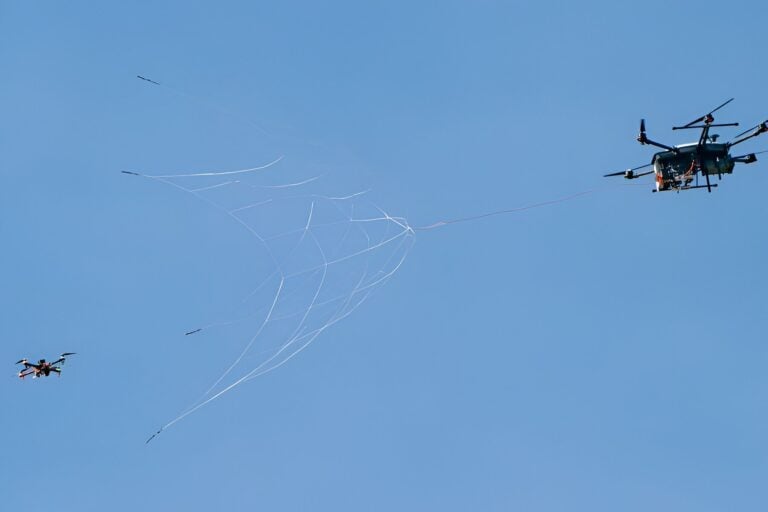
The degree announcement arrives as Britain scales up its drone manufacturing commitments, creating precisely the kind of engineering positions these graduates will fill upon completion in 2029. Defence Secretary John Healey earlier this month announced production would begin on a new interceptor drone for Ukraine called the Octopus, designed to destroy Russian attack drones targeting civilian infrastructure.
Under Project Octopus, Britain plans to manufacture approximately 2,000 interceptor drones monthly. Each unit costs around $2,500 while destroying Russian Shahed drones worth an estimated $35,000. That 14:1 cost ratio is why NATO is suddenly very interested in Ukrainian drone designs.
Britain needs engineers who can build these systems at scale. The NMITE degree creates that pipeline.
Hereford’s location near SAS headquarters carries strategic weight
The program sits in Hereford for reasons that extend well beyond academic convenience, with the county serving as home to the 22nd Special Air Service Regiment (SAS), Britain’s elite special forces unit that has increasingly integrated drone operations into reconnaissance and strike missions. Placing a drone warfare degree in SAS territory signals the UK’s intent to merge drone expertise with its most advanced military capabilities.
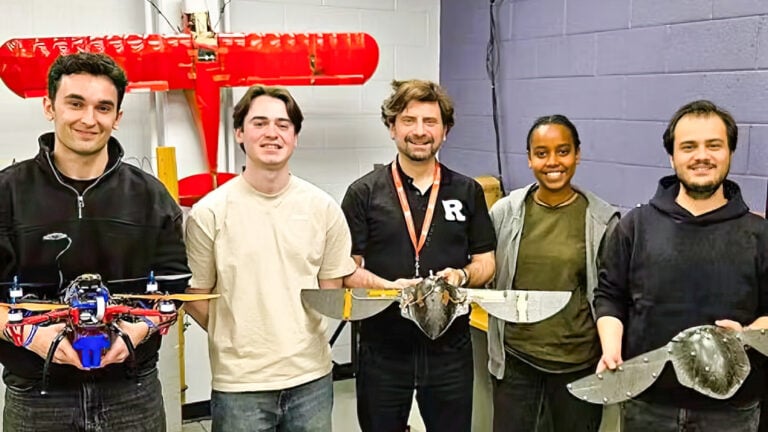
Professor Alexandru Stancu leads the program as Academic Lead. He brings over 25 years of international experience in robotics, AI, and autonomous systems, including founding Manchester Robotics and leading the Robotics and Autonomous Systems Research Group at the University of Manchester.
The curriculum covers engineering fundamentals alongside specialized study in the construction and operation of uncrewed systems. NMITE has emphasized dual-use applications, framing drones as tools for infrastructure inspection, delivery, and emergency response alongside defense work.
The £240,000 sits within a $6.5 billion drone investment framework
The academic funding, while modest in absolute terms, connects to a much larger financial commitment that positions Britain as Europe’s most aggressive investor in military drone technology over the next decade. The UK government announced $6.5 billion (£5 billion) in military drones and laser technology in June 2025, with Defence Secretary Healey calling it the most significant advance in UK defense technology in decades.
That funding allocates $5.2 billion for drones and autonomous systems. The remaining $1.3 billion goes to directed energy weapons. A new “drone centre” will accelerate deployment across all three branches of the armed forces.
Britain has also committed to delivering 100,000 drones to Ukraine by April 2026 as part of a £350 million ($446 million) package, while the UK-led Drone Capability Coalition has pledged to deliver 30,000 FPV drones to Ukrainian forces.
DroneXL’s Take
I’ve been covering drone education initiatives for years now. The pattern is always the same: big announcements, modest enrollments, unclear job pipelines. What makes NMITE different is the explicit military backing and the timing.
The £240,000 figure might seem small against multi-billion-pound drone commitments. It’s not. Academic degrees create something training programs can’t: institutional permanence. Alumni networks. Self-sustaining infrastructure that outlasts any single government’s defense priorities. Once NMITE graduates its first cohort in 2029, the program becomes very difficult to kill.
This follows a pattern we’ve documented throughout 2025. Ukraine has become NATO’s drone warfare teacher, and Western allies are scrambling to absorb those lessons. Denmark, the Netherlands, and Norway have all signed production partnerships with Ukrainian drone manufacturers. The NMITE degree extends that knowledge transfer into academia.
Here’s what surprised me: the enrollment cap. Twenty students per year. That’s it. China trains thousands annually through military-backed university competitions. The US debates banning DJI while producing no comparable academic pipeline. Britain’s response to the same Ukrainian battlefield footage is a single program producing 20 graduates.
Al Carns’ statement that drones now kill more people than artillery should focus every defense planner’s attention. Within five years, NMITE will have produced 100 engineers who understand autonomous systems at a fundamental level. Within a decade, they’ll be designing platforms. But Ukraine deploys approximately 9,000 drones daily. Britain’s industrial base will need far more than this.
Expect other NATO allies to announce similar academic partnerships within the next 12 months. The UK just demonstrated the model. Whether 20 graduates per year is sufficient for the warfare Al Carns describes is another question entirely.
Editorial Note: AI tools were used to assist with research and archive retrieval for this article. All reporting, analysis, and editorial perspectives are by Haye Kesteloo.
Discover more from DroneXL.co
Subscribe to get the latest posts sent to your email.
Check out our Classic Line of T-Shirts, Polos, Hoodies and more in our new store today!

MAKE YOUR VOICE HEARD
Proposed legislation threatens your ability to use drones for fun, work, and safety. The Drone Advocacy Alliance is fighting to ensure your voice is heard in these critical policy discussions.Join us and tell your elected officials to protect your right to fly.

Get your Part 107 Certificate
Pass the Part 107 test and take to the skies with the Pilot Institute. We have helped thousands of people become airplane and commercial drone pilots. Our courses are designed by industry experts to help you pass FAA tests and achieve your dreams.

Copyright © DroneXL.co 2026. All rights reserved. The content, images, and intellectual property on this website are protected by copyright law. Reproduction or distribution of any material without prior written permission from DroneXL.co is strictly prohibited. For permissions and inquiries, please contact us first. DroneXL.co is a proud partner of the Drone Advocacy Alliance. Be sure to check out DroneXL's sister site, EVXL.co, for all the latest news on electric vehicles.
FTC: DroneXL.co is an Amazon Associate and uses affiliate links that can generate income from qualifying purchases. We do not sell, share, rent out, or spam your email.