
EU Commission’s New Drone Action Plan Hides a Bombshell: 100-Gram Registration Threshold Coming to Europe

Check out the Best Deals on Amazon for DJI Drones today!
The European Commission published a sweeping new action plan on Wednesday aimed at fixing Europe’s embarrassing inability to detect and stop hostile drones. The headline is about counter-drone detection. The real story is buried in the details: Brussels wants to extend mandatory registration and identification requirements to all drones weighing more than 100 grams, matching the UK’s controversial threshold and covering virtually every consumer drone on the market.
The action plan at a glance
The EU Action Plan on Drone and Counter-Drone Security is the Commission’s response to a year of humiliating airspace violations that exposed how unprepared Europe was for even basic drone threats. It covers detection, tracking, identification, and neutralization of hostile drones, and it calls for member states to cooperate instead of scrambling independently every time an unidentified aircraft shows up near a runway.
“This malicious or irresponsible use of drones affects the protection of critical infrastructure, also our external borders, ports, transport hubs and public spaces,” European Commission Executive Vice President Henna Virkkunen told reporters. She added that Europe must adapt its rules so drones can be identified and tracked.
The plan’s key components include a new EU Counter-Drone Centre of Excellence in Geel, Belgium, for testing counter-drone technologies in real operational environments. It also proposes an “EU Trusted Drone” label to identify secure equipment on the market, annual EU-wide counter-drone exercises involving both civilian and military responders, and a call for interested countries to team up on joint procurement of counter-drone systems.
The 100-gram registration threshold changes everything for pilots
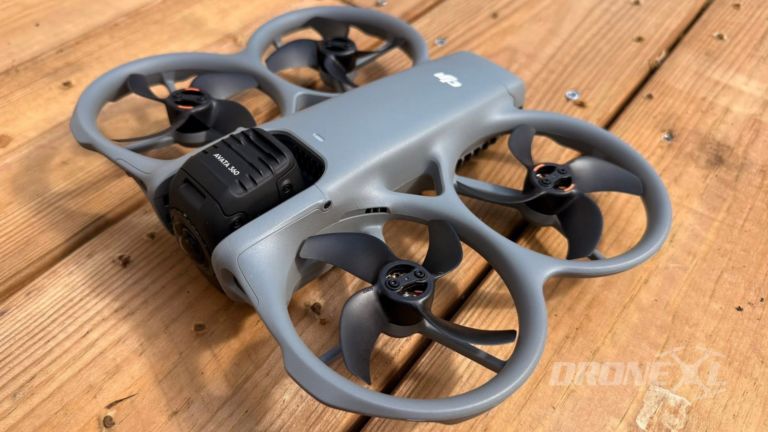
The proposed Drone Security Package, which the Commission wants ready for approval by Q3 2026, would extend registration and identification requirements to all drones above 100 grams. The current EU threshold sits at 250 grams for most operations. Dropping it to 100 grams would pull in nearly every camera drone ever made, including lightweight models like the HoverAir X1 (125 grams) and most FPV racing builds.
This mirrors the UK’s decision to slash its registration threshold to 100 grams starting January 2026. When we covered that move back in October, we noted that only Japan and the UK required registration at such a low weight. If the EU follows through, the 250-gram design standard that manufacturers like DJI have built entire product lines around becomes irrelevant from a registration standpoint.
The package also calls for more active implementation of U-space services, Europe’s digital airspace management system for drones, and supply chain risk assessments for both drone and counter-drone technologies.
Europe’s 5G networks become drone detection tools
One of the more technically interesting proposals involves turning Europe’s existing 5G cellular networks into drone detection infrastructure.
Virkkunen said that “malicious drones connected to our 5G network should be quickly identified, tracked and disrupted.” But she went further: “Not connected drones can be detected with cellular sensing.”
The concept uses 5G cell towers as passive radar sensors, detecting flying objects by the way they reflect cellular signals. Connected drones would be flagged through unusual SIM card identities or suspicious data transmission patterns. The Commission wants to launch a call for member states and industry to deploy live 5G-based detection tests. In theory, this turns every cell tower into part of a distributed detection network. In practice, distinguishing a DJI Mini from a pigeon at range remains an engineering challenge nobody has fully solved.
The action plan arrives after five months of chaos
This plan did not emerge from a vacuum. Starting in September 2025, a wave of drone incidents paralyzed European airports and military installations across the continent. Copenhagen and Oslo airports shut down for hours after unidentified drones appeared in controlled airspace. Munich Airport closed twice in two days after a classified German security report confirmed the aircraft were military reconnaissance platforms. Brussels Airport and Liege Airport faced repeated shutdowns in November, with over 50 flights cancelled in a single evening.
The incidents exposed a painful reality: Europe had no coordinated ability to detect, identify, or neutralize hostile drones over its own airports. Belgium had to call Germany for emergency counter-drone assistance. Belgian Defense Minister Theo Francken admitted his country was “four years behind” on anti-drone systems. Poland launched its own independent counter-drone program rather than wait for Brussels to act.
The EU’s “drone wall” initiative expanded from an eastern-border concept to 360-degree coverage after southern EU members argued the threat was not limited to Russia’s frontier. But France and Germany blocked progress over disputes about who would control the system and how it would be funded.
It is worth noting that Danish authorities quietly confirmed that several high-profile “drone” sightings that triggered massive international responses were actually conventional aircraft, echoing the 2024 New Jersey drone panic where thousands of reports turned out to be misidentified planes, helicopters, and stars. Better detection technology would help solve this problem too, by giving authorities actual data instead of eyewitness reports that can’t tell a training aircraft from a military drone.
DroneXL’s Take
We have been covering Europe’s counter-drone crisis since the first Copenhagen airport shutdown in September, and this action plan is both overdue and incomplete. The detection and cooperation measures make sense. Europe clearly needs a coordinated response instead of individual countries calling neighbors for emergency help every time a drone appears over an airport.
But the 100-gram registration threshold deserves much more scrutiny than it is getting. Security concerns are being used to justify a regulatory expansion that affects every recreational and commercial drone pilot in Europe. Registration does not stop hostile actors. No state-sponsored drone operator launching military reconnaissance platforms from a Russian shadow fleet is going to register with a national aviation authority first. What registration does is create a database of legitimate operators, making it easier for authorities to identify “who is not in the system.” Whether that trade-off justifies the compliance burden on millions of hobbyists flying sub-250g drones is a question Brussels has not adequately answered.
The 5G cellular sensing concept is worth watching. If it works at scale, it could provide the kind of always-on, distributed detection network that point solutions like radar and RF sensors cannot match. But “if” is doing a lot of work in that sentence. Expect the first real-world 5G detection trials to generate more questions than answers.
My prediction: the Drone Security Package will face resistance from EASA and national aviation authorities who spent years building the current 250-gram framework. The 100-gram threshold will be watered down or delayed past the Q3 2026 target. Meanwhile, the counter-drone testing center and joint procurement initiatives will move forward because those have defense industry money behind them.
Editorial Note: AI tools were used to assist with research and archive retrieval for this article. All reporting, analysis, and editorial perspectives are by Haye Kesteloo.
Discover more from DroneXL.co
Subscribe to get the latest posts sent to your email.
Check out our Classic Line of T-Shirts, Polos, Hoodies and more in our new store today!

MAKE YOUR VOICE HEARD
Proposed legislation threatens your ability to use drones for fun, work, and safety. The Drone Advocacy Alliance is fighting to ensure your voice is heard in these critical policy discussions.Join us and tell your elected officials to protect your right to fly.

Get your Part 107 Certificate
Pass the Part 107 test and take to the skies with the Pilot Institute. We have helped thousands of people become airplane and commercial drone pilots. Our courses are designed by industry experts to help you pass FAA tests and achieve your dreams.

Copyright © DroneXL.co 2026. All rights reserved. The content, images, and intellectual property on this website are protected by copyright law. Reproduction or distribution of any material without prior written permission from DroneXL.co is strictly prohibited. For permissions and inquiries, please contact us first. DroneXL.co is a proud partner of the Drone Advocacy Alliance. Be sure to check out DroneXL's sister site, EVXL.co, for all the latest news on electric vehicles.
FTC: DroneXL.co is an Amazon Associate and uses affiliate links that can generate income from qualifying purchases. We do not sell, share, rent out, or spam your email.













Of course Europe was gonna follow the UK regulations. EU is completely useless without United States or UK.