Algorithm Warfare Is Here: How $500 Commercial Drones Are Beating $5 Million Tanks and What the Pentagon Must Do Next

Check out the Best Deals on Amazon for DJI Drones today!
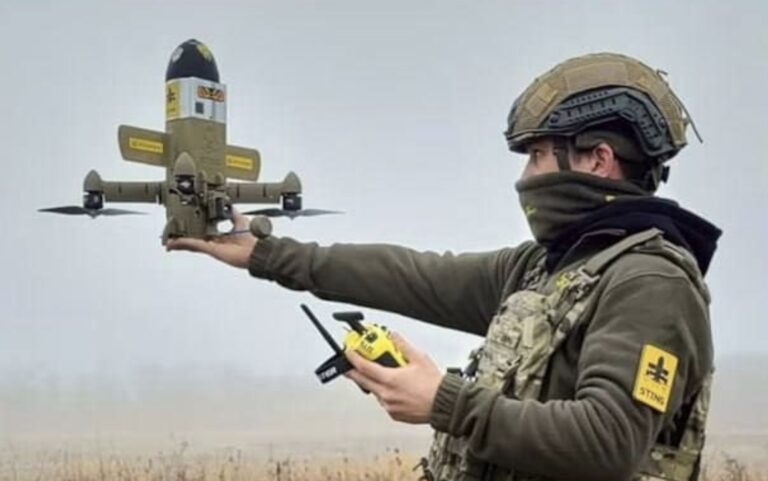
A soldier in a trench, wearing a $300 pair of FPV goggles and holding a hobbyist controller, can guide a commercial drone carrying a $500 payload into a $5 million tank. The math is brutal and it only moves in one direction.
A new analysis from the Council on Foreign Relations — Algorithm Warfare: How Commercial Technology Is Transforming Military Power — puts a sharp framework around something DroneXL has been tracking from the front lines of this technology shift for years: commercial drone technology has broken the traditional military procurement cycle, and most legacy defense structures aren’t ready for what comes next.
- The Development: A CFR analysis of modern “algorithm warfare” shows how cheap commercial drones, hobbyist radio gear, and consumer electronics have permanently inverted the cost balance between attacking and defending on the battlefield.
- The “So What?”: The same technologies that Part 107 pilots use every day — FPV drones, commercial radio hardware, satellite connectivity — are now decisive weapons, and the doctrines governing their spread are struggling to keep up.
- The Stakes: When a $200 drone forces the launch of a $400,000-plus interceptor missile, the defender bleeds out economically long before the attacker runs out of hardware.
- The Response: Lasers, high-power microwaves, modular software-first ship designs, and AI-driven supply chain auditing are the proposed antidotes — all racing against an adversary that iterates faster than any procurement office can approve.
The Cost Inversion That Changed Everything
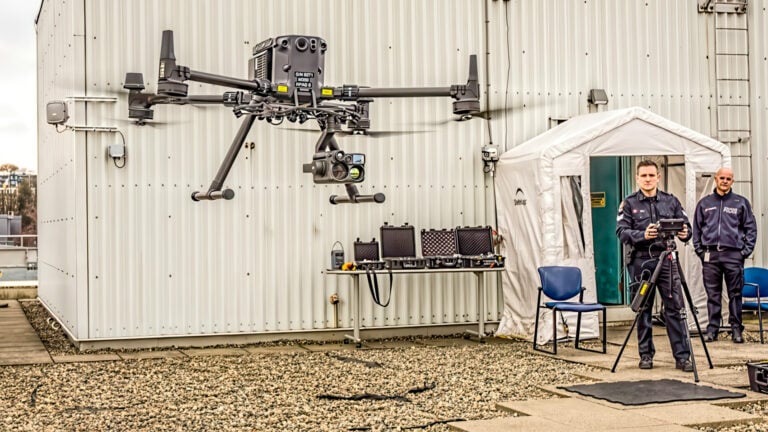
The defining feature of modern drone warfare is not the drone itself. It is the price gap between attacker and defender. Ukrainian sea drones costing hundreds of thousands of dollars have sunk Russian warships worth tens of millions. Commercial FPV drones carrying grenades have destroyed armored vehicles and performed missions previously reserved for advanced military helicopters. That gap is now a strategic weapon in itself.
The numbers are specific and damning. In 2017, an undisclosed US ally reportedly fired a Patriot missile — a system whose PAC-3 variant DroneXL’s own reporting puts at $4.2 million per shot — to destroy a hobbyist drone worth roughly $200. During Houthi attacks in the Red Sea, the US Navy used interceptor missiles costing hundreds of thousands of dollars against cheap commercial drones. When Russian Gerbera drones crossed into Polish airspace, NATO scrambled jets and fired AIM-120 AMRAAMs — a missile that costs between $400,000 and $1.8 million depending on the variant — to take them down. We examined this exact economic problem in depth when we looked at the Pentagon’s urgent push for affordable counter-drone systems.
This is the economic logic behind drone swarming doctrine. Send enough cheap, coordinated drones at a sophisticated defense system and the defender simply cannot afford to stop them all. It becomes economically unsustainable before it becomes physically impossible.
Commercial Technology as a Force Multiplier
Drones are the most visible commercial technology reshaping warfare, but the CFR analysis makes clear they are far from the only one. HackRF software-defined radio devices — hardware any hobbyist can buy online — have lowered the barrier to entry for electronic warfare considerably. Commercial satellite imagery from Planet Labs and Maxar now gives analysts near real-time battlefield views once exclusive to superpower intelligence agencies. Starlink, built by SpaceX, kept Ukraine’s military communications alive after a Russian cyberattack targeted its networks.
The speed advantage this creates is what military strategists call a faster OODA loop — the cycle of observe, orient, decide, and act. A distributed network of cheap sensors feeding cheap shooters cycles through that loop far faster than a legacy military force built around expensive centralized systems. Traditional procurement takes decades. Drone manufacturers on the front lines of Ukraine iterate designs in weeks, based on direct operator feedback. We saw this dynamic clearly when former Army Vice Chief of Staff General James Mingus documented, writing at West Point’s Modern War Institute, how Russian troops surrendered to machines rather than humans. The Financial Times confirmed Ukraine’s front line has become a drone-dominated kill zone stretching 15 kilometers deep.
Add 3D printing and the manufacturing calculus shifts again. Production facilities can be rebuilt and relocated quickly. A design change that takes a traditional defense contractor 18 months to process can be pushed to a field printer overnight.
The Pentagon’s Response: Hundreds of Thousands of Drones by 2027
US Defense Secretary Pete Hegseth has set a specific target: hundreds of thousands of weaponized, one-way attack drones ready for combat by 2027. That goal is consistent with what DroneXL has tracked across multiple Pentagon initiatives this year. The Pentagon’s $150 million “Gauntlet” competition selected 25 drone vendors to compete for production contracts at Fort Benning. The Defense Innovation Unit published a solicitation for containerized drone launchers that can store, launch, and recover swarms on command. Michigan was designated a National All Domain Warfighting Center to test exactly these kinds of systems at scale.
The Pentagon’s current defense strategy addresses the cost problem directly. Rather than relying solely on systems like the Patriot, the approach calls for a layered response that includes low-cost interceptors and short-range kinetic drones priced to match the attacker. The logic is blunt: if a $200 threat is incoming, the response shouldn’t cost $4 million.
Lasers and Microwaves Are the Cost Correctors
Israel achieved operational readiness on its Iron Beam solid-state laser platform in October 2024, designed specifically to counter drone swarms. We covered Iron Beam’s deployment in detail when Israel confirmed it had used the system to neutralize Hezbollah drones. The appeal is straightforward: once the laser is built, the cost per shot drops to nearly nothing compared to a missile intercept.
The UK has gone the same direction with DragonFire. We reported that the UK ordered DragonFire at roughly $13 per shot and that it destroyed drones traveling at 404 mph during live trials. Ukraine has gone further still, building the Sunray laser system, compact enough to fit in a car trunk, at a fraction of what Western programs cost. High-power microwave weapons, like the UK’s RapidDestroyer, add another layer — they can disable multiple drones simultaneously without the thermal dwell time a laser requires.
In February 2026, the Pentagon tested a high-energy laser near Fort Bliss, Texas, targeting cartel-operated drones crossing the Mexican border. The system downed several objects including mylar balloons and reportedly at least one cartel drone. That is a meaningful operational milestone: a directed-energy counter-drone weapon used domestically against non-state actors, outside a declared combat zone.
Supply Chain Integrity Is Now a Battlefield Problem
The CFR analysis homes in on a problem DroneXL has covered repeatedly: Western components keep showing up inside adversary weapons. Russia’s Geran-5 jet drone uses American and European microchips despite heavy sanctions. We tracked both the initial discovery of the Geran-5 and the confirmation that chips from Texas Instruments, CTS Corporation, Monolithic Power Systems, and Germany’s Infineon power it. The dual-use nature of commercial drone components — the same parts relevant to a DJI Mavic matter to a military FPV build — makes export controls very hard to enforce cleanly.
The CFR analysis argues the response needs to shift from geography-based export controls toward intelligence-driven tracking: AI systems that flag suspicious supplier networks, geofencing that monitors where critical components travel, and blockchain-based know-your-customer tools that make end-user certificates harder to falsify. All of these are proposals, not current standard practice. The gap between proposal and implementation is exactly where adversaries operate.
China’s posture here is particularly telling. As we reported, Chinese component suppliers have been scheduling factory visits to ensure Ukrainian and Russian buyers never meet in the same building — a dual-track strategy that keeps Beijing commercially positioned on both sides of the conflict.
DroneXL’s Take
I’ve been covering drone technology since before the Ukrainian conflict made these arguments undeniable, and what strikes me most about this CFR analysis isn’t the scary numbers — those have been in circulation for a while. It’s the argument about software speed as the actual deciding variable.
The side that can update its drone’s behavior, its jamming signature response, or its targeting logic faster than the adversary wins the OODA loop contest. That’s not a hardware problem. That’s a software culture problem, and traditional defense primes are structurally bad at it. The right answer is building for change rather than permanence — modular architectures where the software layer can be updated independently of the platform. Some newer autonomous surface vessel programs are starting to work this way. Most legacy programs still aren’t.
China’s PLA demonstration of 200 fixed-wing drones controlled by a single operator should be the benchmark every Western procurement office has on the wall. And the Blue UAS architects who predicted a drone attack on US soil in 2026 may be right on schedule.
My prediction: within 12 months, the UK will publicly announce that DragonFire is replacing short-range missile-based counter-drone coverage on at least one Type 45 destroyer, citing per-shot cost as the primary driver. The numbers already justify it. The political will and procurement paperwork are the only things running behind.
Editorial Note: AI tools were used to assist with research and archive retrieval for this article. All reporting, analysis, and editorial perspectives are by Haye Kesteloo.
Discover more from DroneXL.co
Subscribe to get the latest posts sent to your email.
Check out our Classic Line of T-Shirts, Polos, Hoodies and more in our new store today!

MAKE YOUR VOICE HEARD
Proposed legislation threatens your ability to use drones for fun, work, and safety. The Drone Advocacy Alliance is fighting to ensure your voice is heard in these critical policy discussions.Join us and tell your elected officials to protect your right to fly.

Get your Part 107 Certificate
Pass the Part 107 test and take to the skies with the Pilot Institute. We have helped thousands of people become airplane and commercial drone pilots. Our courses are designed by industry experts to help you pass FAA tests and achieve your dreams.

Copyright © DroneXL.co 2026. All rights reserved. The content, images, and intellectual property on this website are protected by copyright law. Reproduction or distribution of any material without prior written permission from DroneXL.co is strictly prohibited. For permissions and inquiries, please contact us first. DroneXL.co is a proud partner of the Drone Advocacy Alliance. Be sure to check out DroneXL's sister site, EVXL.co, for all the latest news on electric vehicles.
FTC: DroneXL.co is an Amazon Associate and uses affiliate links that can generate income from qualifying purchases. We do not sell, share, rent out, or spam your email.