US Commerce Department Streamlines Drone Export Controls: A Strategic Push Toward Allied Supply Chains

Check out the Best Deals on Amazon for DJI Drones today!
The policy change is narrow on paper. The implications are not. On January 21, the Department of Commerce’s Bureau of Industry and Security (BIS) published an interim final rule that removes licensing requirements for certain commercial UAVs exported to most Wassenaar Arrangement member states and expands the License Exception STA pathway for select MT-controlled drone categories. For US drone manufacturers stuck watching allied partners source from Turkish, Israeli, and Chinese suppliers because American paperwork took too long, this rule matters.
- The Rule: BIS’s interim final rule, published January 21 and effective January 20, 2026, allows commercial UAVs in ECCN 9A012.a.1 with less than one hour of endurance to be exported without a license to Country Group A:1 nations — most Wassenaar Arrangement partners.
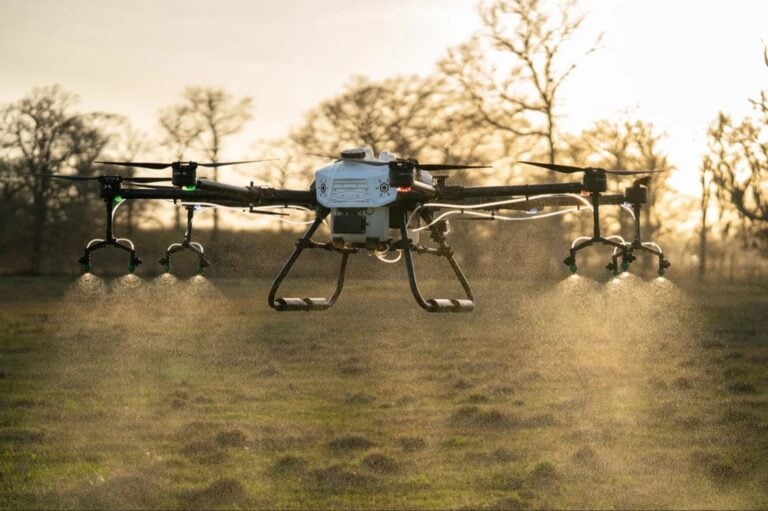
- The Second Change: BIS expands License Exception STA eligibility for certain MT-controlled UAVs in ECCN 9A012 and 9A120, covering specific long-range cargo and agricultural spraying systems sold to Country Group A:5 partners.
- The So What: US companies can now sell a broader category of commercial drones to allied nations faster and without case-by-case licensing — directly competing with suppliers who face no such friction.
BIS Made Two Targeted Changes in the January 2026 Rule
BIS’s interim final rule makes two targeted adjustments to US drone export architecture: it removes the license requirement for short-endurance commercial UAVs destined for Wassenaar allies, and it opens a faster STA pathway for certain longer-range systems already available in global markets, while keeping tighter controls on higher-consequence platforms.
The first change covers UAVs in ECCN 9A012.a.1 — systems with a maximum endurance under one hour, reports The National Interest. BIS’s rationale is straightforward: these drones are broadly available from non-US suppliers. Requiring a license to sell them to Germany or Japan imposed friction that didn’t slow proliferation. It just moved sales to other suppliers. Eliminating that friction for Country Group A:1 nations is as much industrial policy as it is export control reform.
The second change is more technically specific. By expanding License Exception STA to cover certain MT-controlled UAVs in ECCN 9A012 and 9A120 — notably long-range agricultural sprayers and cargo delivery systems — BIS is acknowledging that the Missile Technology Control Regime (MTCR)‘s 300 km/500 kg threshold was not designed with a 25-liter spraying drone in mind. The STA pathway requires end-use notification and reporting. It’s a faster lane with checkpoints, not a free pass.
BIS published the rule January 21, made it effective January 20, and solicited public comments through February 19. That compressed comment window signals Commerce treated this as urgent — not a routine regulatory update.
The MTCR Framework Was Built for Missiles, Not Mass-Produced Drones
The MTCR’s core restriction — a strong presumption of denial for systems capable of carrying a 500 kg payload at least 300 km — was designed in 1987 to constrain ballistic missile proliferation. That foundational threshold has not meaningfully changed since. The drone sector has.
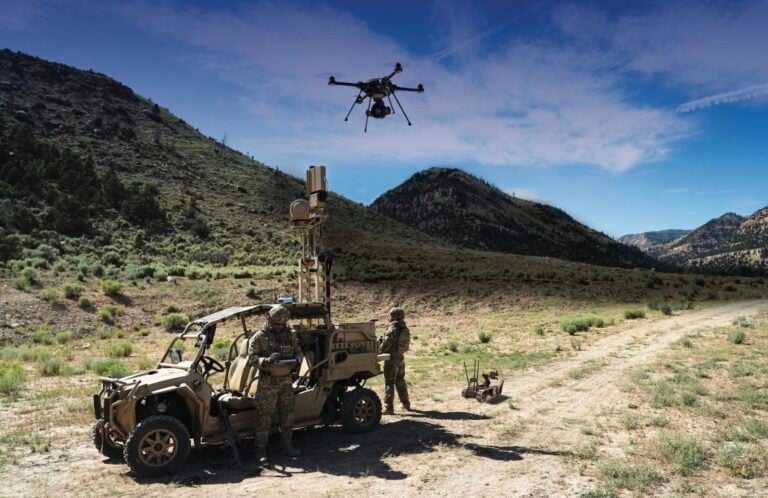
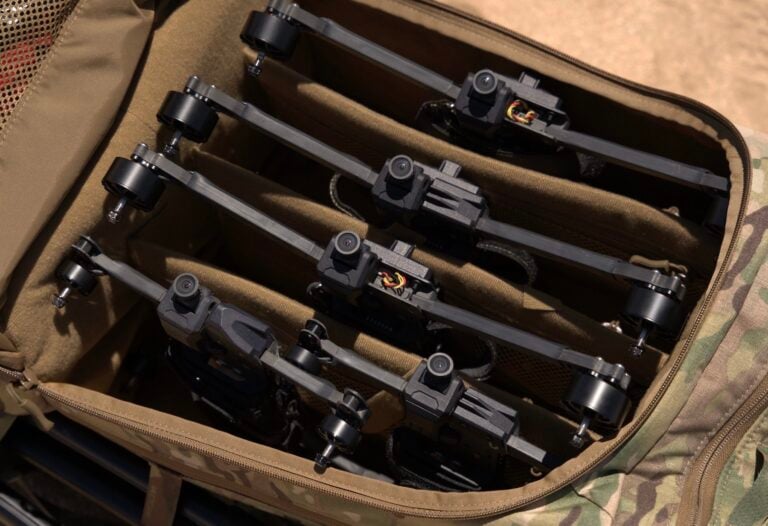
Today’s battlefield drones aren’t the strategic delivery vehicles the MTCR was written to control. As we’ve covered in depth, a $500 commercial drone guided by a soldier with $300 goggles can destroy a $5 million tank. The advantage doesn’t come from exotic airframe specs — it comes from manufacturing volume, software updates, and the speed at which a production line can adapt to changing tactics. The MTCR’s payload-range logic captures none of that.
Washington has been patching around this problem incrementally. The 2020 Revised UAS Export Policy reclassified a subset of MTCR Category I systems with airspeed under 800 km/h as Category II for licensing review. A September 2025 reinterpretation went further, treating certain large military drones more like manned aircraft for export review purposes — a move that opened the door to Reaper-class sales to third-country partners. BIS’s January 2026 rule continues that arc at the commercial end of the market.
Ukraine’s Drone War Rewrote the Strategic Calculus
If there’s one conflict that made this BIS rule feel overdue, it’s Ukraine. According to figures cited by the Kyiv School of Economics, drones now account for roughly 80 to 85 percent of frontline strikes in Ukraine, with reported domestic production capacity approaching 10 million units annually. That’s not a drone program. That’s an industrial base.
Russia’s trajectory is similar. Russia’s Shahed production has been scaling aggressively, with Commander-in-Chief Oleksandr Syrskyi warning of capacity reaching 1,000 units per day by 2026. Ukraine has been scrambling to build interceptor capacity fast enough to keep pace. Meanwhile, Ukrainian manufacturers are setting up factories in the UK to sustain production outside the warzone.
The lesson BIS appears to have absorbed: in a conflict defined by production scale, software iteration, and supply-chain resilience, export controls that slow the flow of commercial drones to allied nations don’t prevent adversaries from fielding similar systems. They just reduce US market share and allied interoperability.
The Houthi campaign in the Red Sea reinforces the same point in a different theater. Unmanned systems combined with maritime domain awareness have imposed real costs on global trade. Ongoing documentation of component supply chains from that conflict shows commercial-grade parts are essentially inseparable from military-grade effects at this level of warfare.
US Exporters Were Losing Ground to Allied Competitors
The competitive subtext of this rule is explicit in the BIS framing. US officials have acknowledged that rigid licensing requirements ceded market space to Israeli, Turkish, and Chinese suppliers — particularly for allied nations that needed capable systems on predictable delivery timelines and couldn’t wait months for a US export license determination.
Beijing’s dual-track strategy — supplying components to both sides of the Ukraine conflict while maintaining plausible separation — shows the supply-chain reality BIS is trying to push back against. Chinese drone specialists have been working with sanctioned Russian arms manufacturers. If the alternative to US drone exports is that allied nations source from suppliers with zero commitment to nonproliferation norms, the case for tighter US controls becomes harder to defend.
By moving to a trusted-network model — license-free exports to Wassenaar allies, STA pathways for select MT-controlled systems — BIS is betting that supply-chain trust and allied export control compliance can substitute for individual license review in segments where the US wants market share, not just a veto.
Autonomy Will Outpace Airframe Controls
The BIS rule is calibrated for the current moment. The harder problem is coming. As autonomous systems mature, the most strategically meaningful differentiators will shift away from airframe specs and toward software: autonomy under electronic warfare, navigation resilience in GPS-denied environments, secure datalinks, and edge processing for target recognition.
China’s PLA has already demonstrated a single operator directing 200 fixed-wing drones simultaneously. German-Ukrainian joint ventures are working on autonomous strike systems designed for mass production. The next generation of export control debates will center on software, data, and autonomy stacks — not wingspan and maximum altitude.
The MTCR’s range-payload threshold was a workable proxy for strategic consequence in the missile era. It’s a weaker proxy when the consequential capability lives in a firmware update, not a longer wingspan. BIS’s January rule doesn’t solve that problem. It does acknowledge the direction.
DroneXL’s Take
I’ve been covering the collision between US export control architecture and drone market reality for long enough to recognize when Washington is catching up rather than leading. This BIS rule is catch-up. Welcome, necessary catch-up — but catch-up nonetheless.
The MTCR framework is a relic. It was designed for a world where the strategic threat was a ballistic missile delivering a nuclear warhead, not a $400 airframe running open-source autopilot software. The fact that agricultural spraying drones spent years caught in MTCR Category I controls because they technically flew far enough tells you how badly the regime needed this kind of targeted workaround.
What I find most significant here isn’t the specific ECCNs affected — it’s the procedural posture. BIS made this rule effective before the comment period closed. That’s unusual. It says Commerce decided the competitive cost of waiting was higher than the political cost of moving fast. Given that US drone exporters have been watching allies buy Turkish Bayraktars and Israeli Herons because the licensing queue was too unpredictable, that calculus is right.
The harder problem is the one the rule doesn’t touch: software-defined autonomy. The algorithm warfare reality we’ve documented means the next control debate won’t be about how far a drone can fly. It’ll be about what it can decide on its own when the datalink goes dark. Current export control architecture has essentially no answer for that. By mid-2027, expect BIS to be back at the table with a new rulemaking specifically targeting autonomous behaviors — or facing pointed questions from Congress about why it didn’t.
This rule is a start. The US drone sector needed it. Allied partners needed it. But the window where airframe-based controls were the right lever for drone proliferation risk has already closed.
Editorial Note: AI tools were used to assist with research and archive retrieval for this article. All reporting, analysis, and editorial perspectives are by Haye Kesteloo.
Discover more from DroneXL.co
Subscribe to get the latest posts sent to your email.
Check out our Classic Line of T-Shirts, Polos, Hoodies and more in our new store today!

MAKE YOUR VOICE HEARD
Proposed legislation threatens your ability to use drones for fun, work, and safety. The Drone Advocacy Alliance is fighting to ensure your voice is heard in these critical policy discussions.Join us and tell your elected officials to protect your right to fly.

Get your Part 107 Certificate
Pass the Part 107 test and take to the skies with the Pilot Institute. We have helped thousands of people become airplane and commercial drone pilots. Our courses are designed by industry experts to help you pass FAA tests and achieve your dreams.

Copyright © DroneXL.co 2026. All rights reserved. The content, images, and intellectual property on this website are protected by copyright law. Reproduction or distribution of any material without prior written permission from DroneXL.co is strictly prohibited. For permissions and inquiries, please contact us first. DroneXL.co is a proud partner of the Drone Advocacy Alliance. Be sure to check out DroneXL's sister site, EVXL.co, for all the latest news on electric vehicles.
FTC: DroneXL.co is an Amazon Associate and uses affiliate links that can generate income from qualifying purchases. We do not sell, share, rent out, or spam your email.