Harvard Students Build Fixed-Wing VTOL Drone to Track Sperm Whales in Dominica
Check out the Best Deals on Amazon for DJI Drones today!
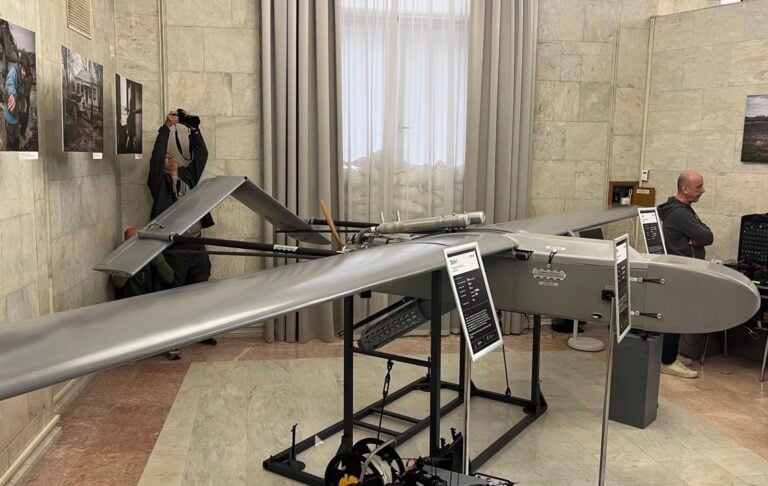
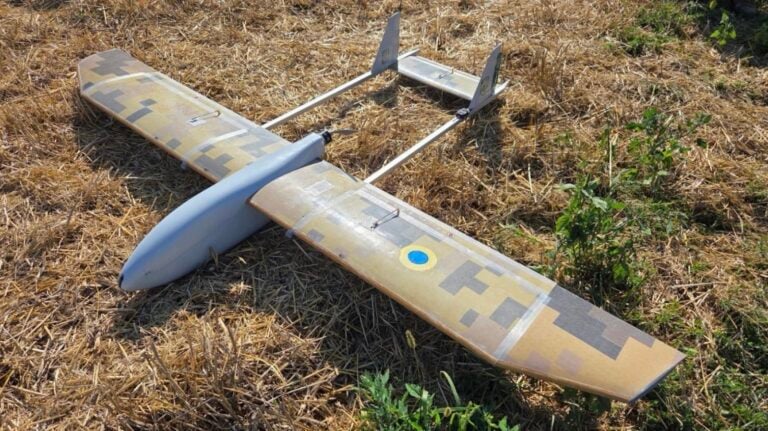
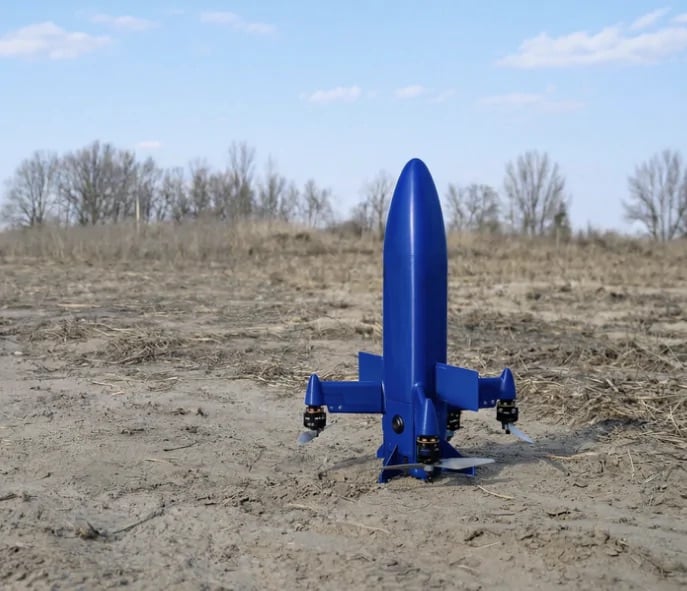
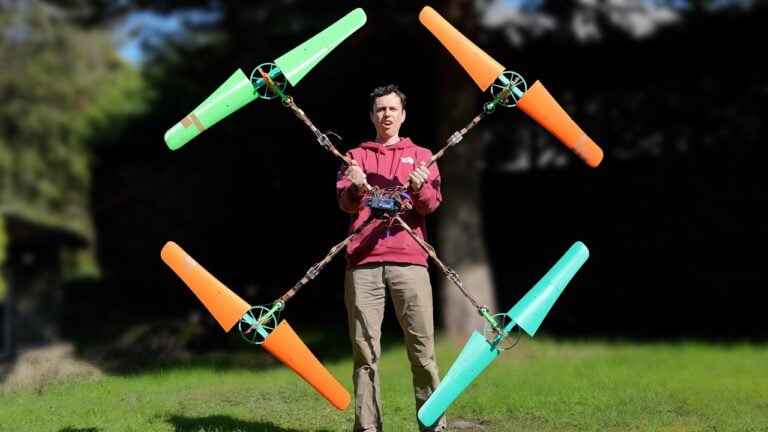
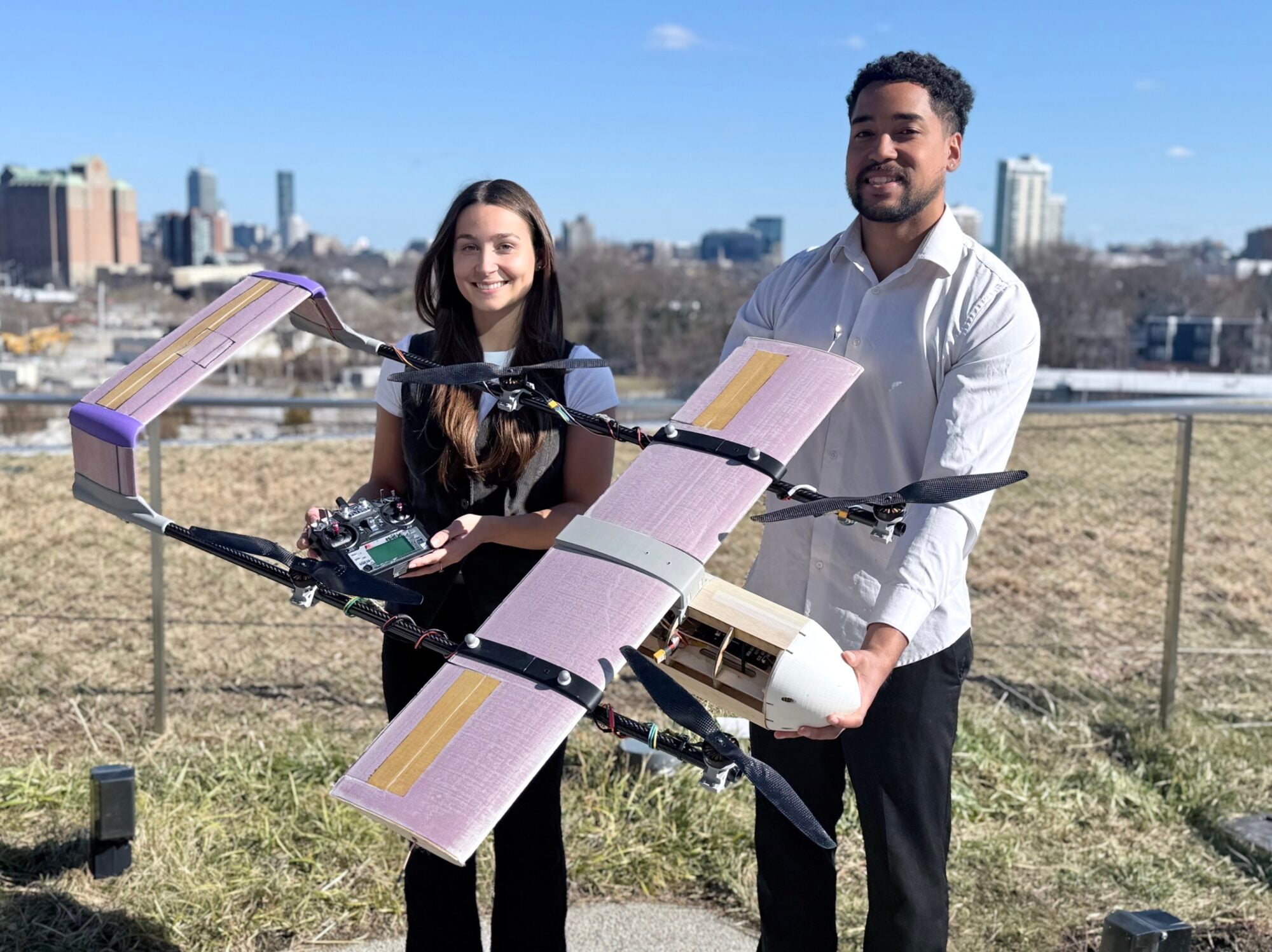
Two Harvard mechanical engineering seniors have built a fixed-wing VTOL (vertical takeoff and landing) drone from scratch to help marine biologists locate sperm whales tagged with VHF (very high frequency) transmitters off the coast of Dominica, according to a project profile published by Harvard’s John A. Paulson School of Engineering and Applied Sciences. Kuma McCraw and Mikaya Parente, both Class of 2026 mechanical engineering students, designed, fabricated, and flight-tested the aircraft as their capstone project in Engineering Design Projects (ES 100). The drone launches vertically from a small research vessel, transitions to fixed-wing flight, and collects VHF signal strength data at multiple positions to triangulate whale locations in open ocean.
The Problem With Quadcopters for Ocean Research
Current sperm whale tracking fieldwork in Dominica relies on quadcopter drones, which carry a hard ceiling on usefulness at sea. VHF tags on the whales transmit signal strength only — no GPS coordinates — so researchers need to fly to several separate positions and log signal readings at each point before they can triangulate a whale’s location. Quadcopters burn through battery too fast to cover the distances involved, fly too low for optimal antenna separation, and lack the energy efficiency to stay aloft long enough to gather meaningful data across a wide search area. The fixed-wing platform McCraw and Parente built addresses all three of those gaps by switching to efficient forward flight once airborne, while still launching and recovering vertically from a vessel deck with no runway required.
We’ve covered the growing role drones play in marine mammal research before. The New England Aquarium now uses drones to assess whale health without the noise and stress of close-approach boats, and Mississippi State University has been using thermal drones to study dolphins. What’s different here is the mission profile: this isn’t passive observation. The drone has to actively navigate to waypoints, collect signal data, and help compute a position fix for an animal that can be anywhere in a wide stretch of open water.
Design, Materials, and a Seven-Month Build
McCraw and Parente spent roughly one month on problem definition and component selection, then five months fabricating the fuselage, main wing, and empennage. To keep costs manageable without sacrificing structural integrity, they combined 3D printing, hot-wire foam cutting, and carbon fiber strips and tubes throughout the airframe. Wing and tail surfaces were finished with fiberglass and Kevlar reinforcements set in epoxy — a process the students describe as the most technically demanding part of the build, requiring precise surface preparation, careful layup sequencing, and accurate epoxy mixing ratios to avoid voids or delamination.
The final month covered flight testing, data collection, and CFD (computational fluid dynamics) simulation work to characterize the aircraft’s aerodynamic performance in fixed-wing mode. They also applied FEA (finite element analysis) to structural components during the build. The full project name is “Modular VHF Signal Sensing Fixed-Wing Drone Platform for Autonomous Sperm Whale Rendezvous Tracking and Validation,” and it was completed under the supervision of Professor Stephanie Gil, whose REACT Lab operates in collaboration with Project CETI, a global research initiative using machine learning and robotics to study sperm whale bioacoustics.
Project CETI Connects the Mission
Project CETI’s goal is to build a large-scale acoustic and behavioral dataset to train machine learning systems to interpret sperm whale communication. That work depends on researchers actually knowing where the whales are. A drone that can spend more time in the air, cover more ocean, and collect cleaner VHF signal data from greater antenna separation distances directly supports CETI’s ability to get instruments near the right animals at the right time.
The Harvard VTOL platform is a proof-of-concept built on a student budget. It has not yet been deployed in Dominica or validated in open-ocean conditions. That’s the next step. But it points toward the kind of purpose-built, field-deployable tool that marine research teams clearly need and currently lack.
The idea came out of a separate build: McCraw and Parente first constructed a 3D-printed quadcopter for MakeHarvard 2025, which got them interested in UAV design. That early experience led them to Gil’s lab and, ultimately, to a drone tailored for a specific gap in open-ocean fieldwork. DJI drones recently captured harbour porpoise mating behaviour off Shetland in similarly focused marine research, but those missions used a DJI Mini 3 Pro straight out of the box. Building custom around a specific sensor payload and deployment constraint is a different challenge entirely.
DroneXL’s Take
What stands out about this project isn’t the drone. It’s the reasoning behind it. McCraw and Parente didn’t reach for a commercial platform and adapt it. They identified a specific sensor geometry problem (antenna separation for VHF triangulation), a specific deployment constraint (vertical launch from a small vessel), and a specific endurance gap (quadcopters can’t cover the survey area), then built an aircraft around those three requirements from the ground up. That’s the engineering instinct that produces hardware which actually works in the field.
I’ve watched wildlife drone research accelerate over the past two years. The thermal drone surveys revealing nocturnal wildlife behaviour in Victoria, Australia showed what off-the-shelf hardware can do when pointed at the right problem. The University of Minnesota’s drone swarm program for mapping wildfire smoke in 3D showed what happens when a team builds for a constraint no commercial product addresses. The Harvard project sits firmly in that second category. Drone footage of a tailless humpback off Washington state made the case for drones as wildlife documentation tools. This project makes the case for drones as active research instruments, designed around a measurement problem rather than a camera angle.
I expect Project CETI to iterate on this design for actual field deployment within 18 months. The VHF triangulation method is the piece worth watching. If the antenna separation geometry works reliably at altitude, it could replace the current multi-vessel coordination approach that makes fieldwork in Dominica expensive and logistically complicated. A single fixed-wing VTOL doing the positioning work of two or three boats is a real operational gain.
DroneXL uses automated tools to support research and source retrieval. All reporting and editorial perspectives are by Haye Kesteloo.
Discover more from DroneXL.co
Subscribe to get the latest posts sent to your email.
Check out our Classic Line of T-Shirts, Polos, Hoodies and more in our new store today!

MAKE YOUR VOICE HEARD
Proposed legislation threatens your ability to use drones for fun, work, and safety. The Drone Advocacy Alliance is fighting to ensure your voice is heard in these critical policy discussions.Join us and tell your elected officials to protect your right to fly.

Get your Part 107 Certificate
Pass the Part 107 test and take to the skies with the Pilot Institute. We have helped thousands of people become airplane and commercial drone pilots. Our courses are designed by industry experts to help you pass FAA tests and achieve your dreams.

Copyright © DroneXL.co 2026. All rights reserved. The content, images, and intellectual property on this website are protected by copyright law. Reproduction or distribution of any material without prior written permission from DroneXL.co is strictly prohibited. For permissions and inquiries, please contact us first. DroneXL.co is a proud partner of the Drone Advocacy Alliance. Be sure to check out DroneXL's sister site, EVXL.co, for all the latest news on electric vehicles.
FTC: DroneXL.co is an Amazon Associate and uses affiliate links that can generate income from qualifying purchases. We do not sell, share, rent out, or spam your email.