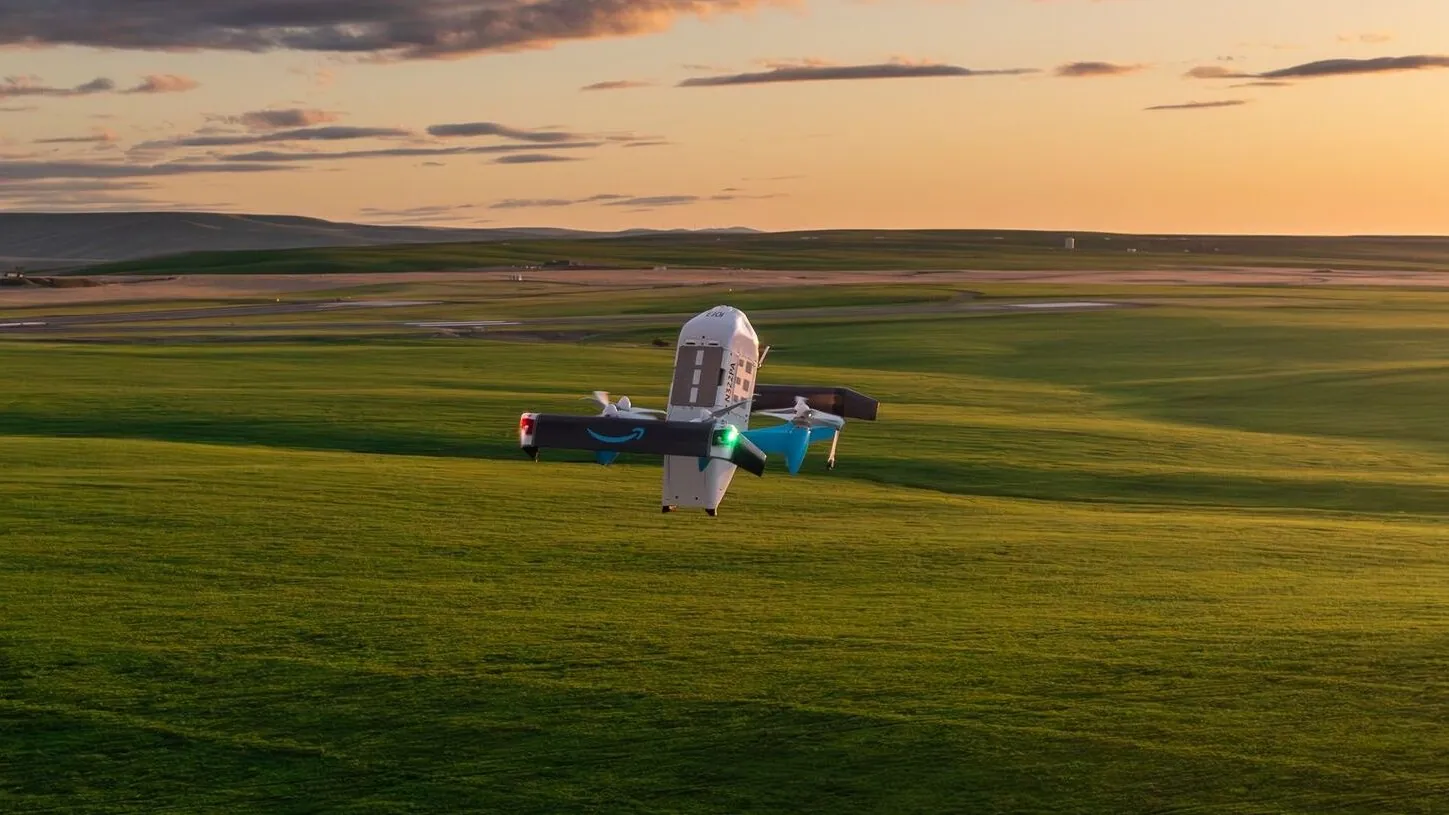
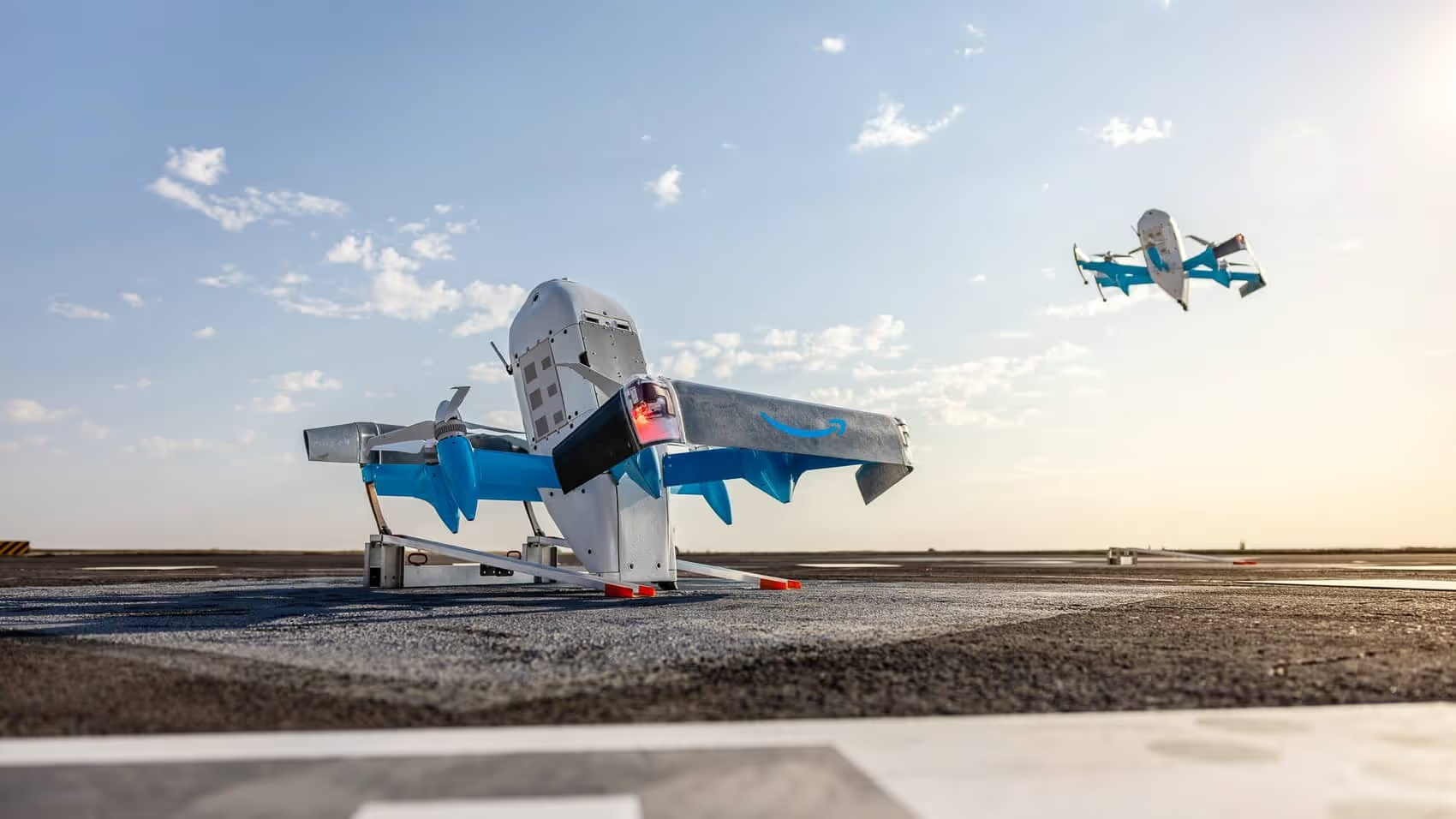
Amazon switched on Prime Air drone deliveries in the Omaha metro on Wednesday, flying packages out of its Highway 370 fulfillment center in Papillion, Nebraska. It is the 11th Prime Air market in the United States and the first in Nebraska, landing four weeks after DroneXL reported the company was staffing up the site. Prime members pay $2.99 per drone delivery. Everyone else pays $4.99.
The Service Covers 7.5 Miles And 5 Pounds
Customers within 7.5 miles (12 km) of the Papillion fulfillment center can now order items weighing 5 pounds (2.3 kg) or less and have a drone drop them at home in under two hours, with Amazon saying some deliveries land in as little as 20 minutes. Prime members get free drone delivery on orders over $50, according to WOWT, the Omaha station that covered the launch.
The operation starts with 12 drones and is expected to grow to 30. Amazon says the site adds about 30 jobs and that no driver positions get cut. When DroneXL covered the Omaha plan on July 3, the clearest signal was the job board: ground-handler roles posted at $20 to $40 an hour. Four weeks later, the drones are flying. Companies really do staff up when a site is about to go live.
The size rules stay tight: besides the 5-pound cap, the package has to fit inside a shoebox. That covers phone chargers, medications, and batteries, and rules out most of what actually fills a shopping cart.
“Prime Air is all about getting customers what they need, when they need it,” said Taylor Candage, Prime Air operations coordinator, at the launch.
Papillion isn’t a cold start for Amazon either. The company already runs same-day delivery across the Omaha and Council Bluffs metro and operates a delivery station in the city, so the drone site bolts onto a logistics footprint that was already on the ground.
The MK30 Arrives With A Noise Reputation
The aircraft doing the work over Papillion is the MK30, an 83-pound (38 kg) multirotor that flies itself under FAA authorization, scans for obstacles with onboard cameras, and deletes its footage after every flight. Amazon built it to be quieter than the earlier MK27 and capable of flying in light rain.

Quieter did not mean quiet enough everywhere. Amazon shut down its original College Station, Texas operation on August 31, 2025, after sustained noise complaints pushed the mayor to formally ask the FAA to delay expansion. The city’s residents filed roughly 150 negative comments on Amazon’s environmental assessment. DroneXL covered that showdown as it built through 2025.
This is the police drone debate wearing a delivery vest. People say patrol drones spy on them, and then the same aircraft finds a missing kid. Here the accusation is a hum over your roof, and the machine’s answer is handing you the thing you needed within the hour. The complaint is real. So is the service.
Papillion now becomes the newest place where that trade gets tested. Every market Amazon has opened since College Station carries the same quiet question: does the neighborhood tolerate the sound of its own convenience?
Walmart Got There First And Brought A Map
The bigger fight is not between Amazon and its critics. It’s between Amazon and Walmart, and DroneXL laid out the scoreboard just yesterday: Walmart already owns the drone network Amazon wants. About 90 percent of Americans live within 10 miles (16 km) of a Walmart store, and Walmart’s partner Wing is under contract to fly from more than 270 of those stores by 2027.
Amazon’s counterpunch is scale of ambition. The company says it wants Prime Air reaching 30 million customers by the end of 2026 and flying 500 million packages a year by 2030. Eleven markets into that plan, each launch looks like this one: a warehouse, a dozen drones, a 7.5-mile circle.
That’s the structural difference in one sentence. Walmart bolts drones onto thousands of stores that already sit next to everyone’s house. Amazon has to draw each circle around a fulfillment center and hope enough customers live inside it.
DroneXL’s Take
Nebraska is a smart pick precisely because it’s boring. Papillion is flat, suburban, and far from the reporters who camped out on College Station’s noise story. If the MK30 can operate here without a city council meeting turning hostile, Amazon banks another data point that the noise problem was a Texas problem, not a drone problem. If complaints show up anyway, the pattern gets harder to argue with.
The scoreboard still favors the retailer with the shorter circles. Wing’s Walmart contract puts drone pads next to parking lots people already drive to. Amazon is betting that two-hour delivery from a warehouse beats 20-minute delivery from a supercenter, and 11 markets in, that bet is still open.
Me? I would love my orders arriving by air. My problem is volume. I buy so much for my household every month that Amazon would have to skip the MK30 and send a DJI FlyCart 100 for my grocery run, all 220 pounds (100 kg) of payload, straight from the Everest garbage route to my front yard.
Watch the fee, not the fleet. The day $2.99 drops to zero for every Prime member, Amazon will have decided drone delivery is infrastructure instead of an experiment. It hasn’t yet.
Sources: WOWT, 3 News Now, The Grand Island Independent
DroneXL uses automated tools to support research and source retrieval. All reporting and editorial perspectives are by Rafael Suárez.