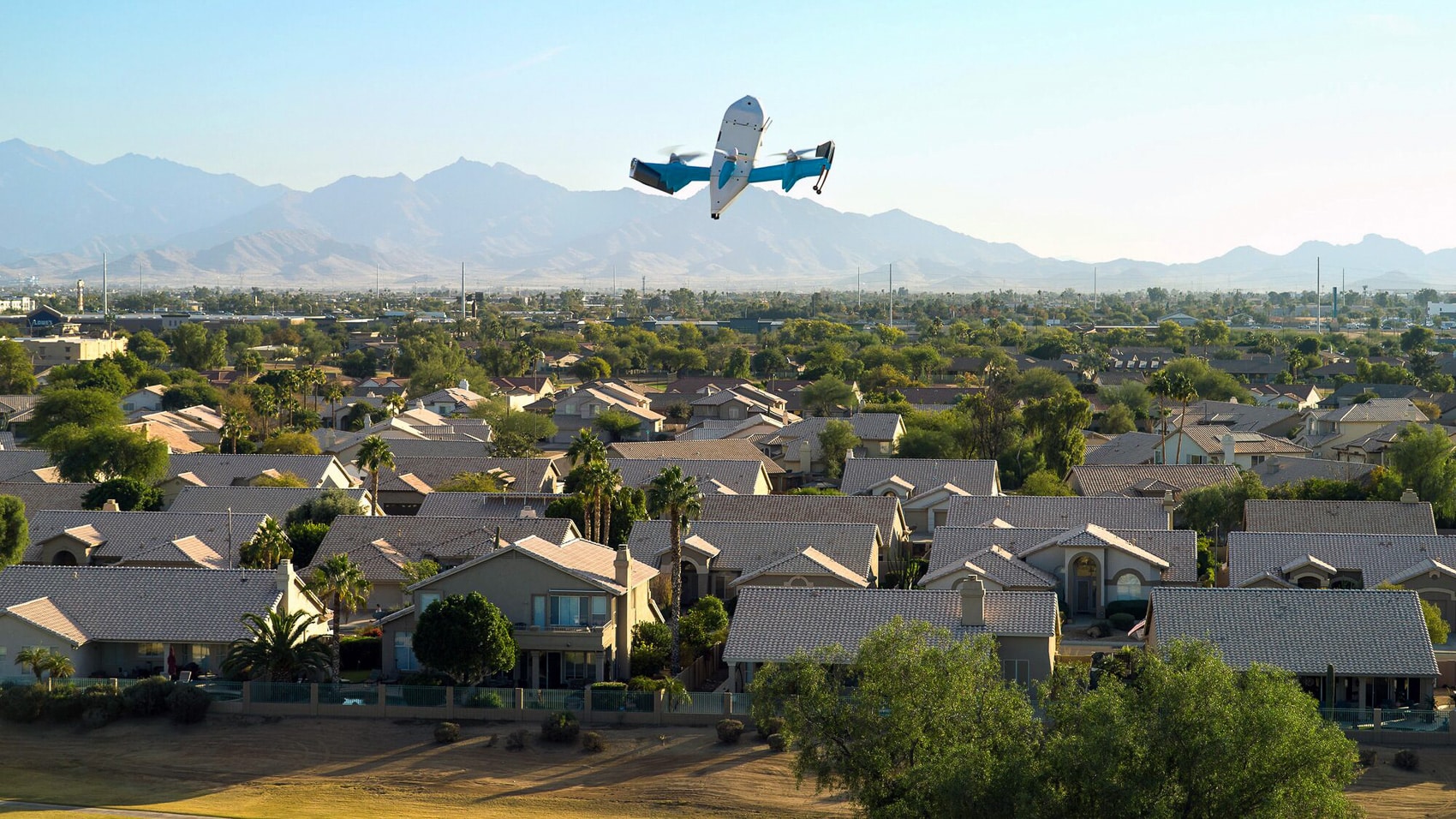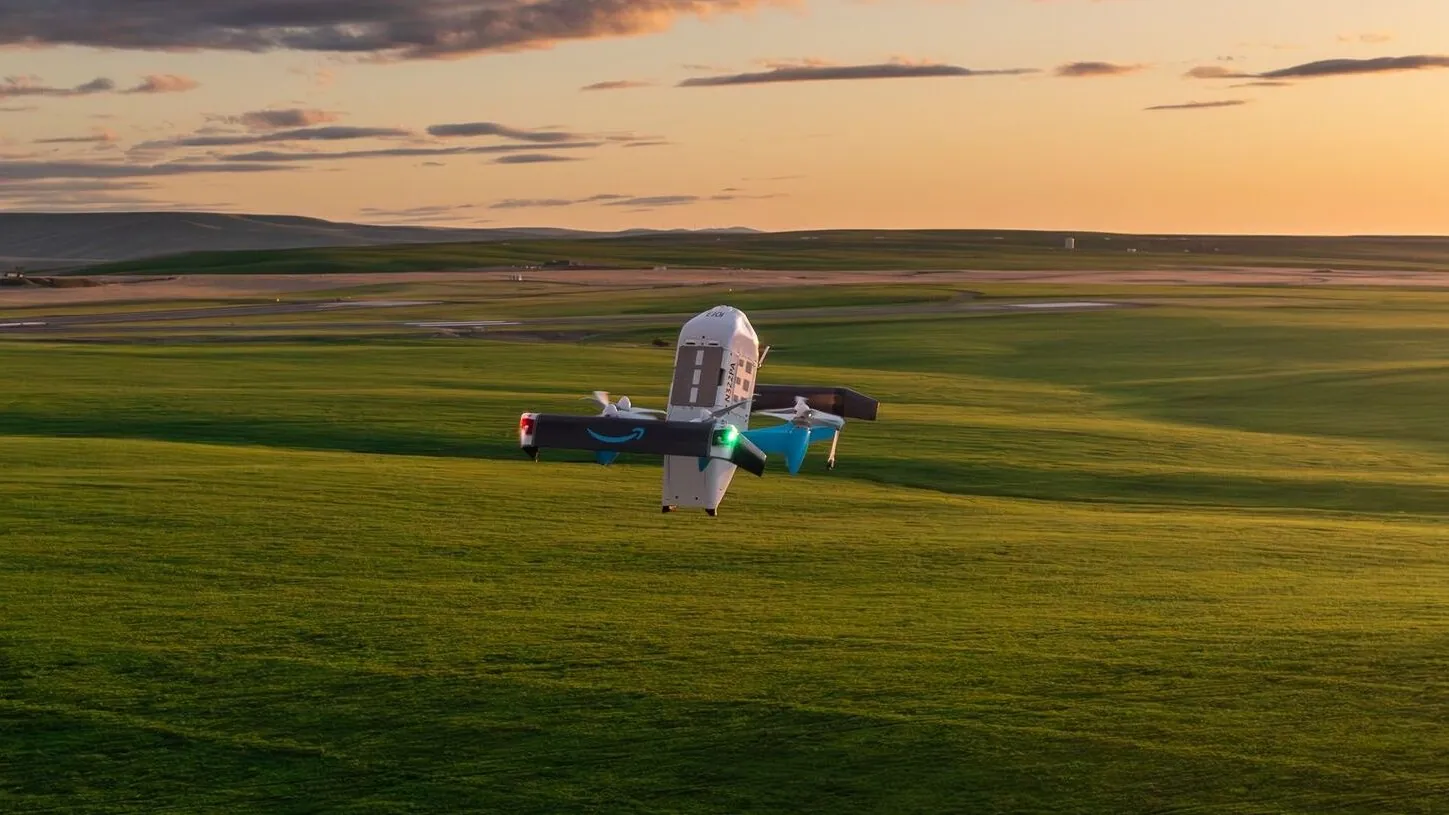
The Federal Aviation Administration’s final environmental assessment for Amazon Prime Air’s Omaha hub expects MK30 drones to cruise between 205 and 370 feet, up from the 180-to-377-foot band in the June draft. The noise report attached to it still models the draft’s numbers, with a typical outbound cruise of 200 feet.
FAA branch manager Joseph Hemler Jr. signed the decision on September 9, 2026, nearly six weeks after MK30 drones began delivering from Papillion on July 30. It was missing from the FAA’s list at the September 11 update cited in our report on the eagle buffer and noise complaints, and it was posted by the September 24 update. Neither the decision nor the FAA’s answers to 21 public comments explains the altitude change.
The FAA’s Final Omaha Assessment Expects Outbound Drones at 205 to 250 Feet
The June draft expected outbound MK30 flights between 180 and 279 feet and inbound flights between 279 and 377 feet. The final assessment expects 205 to 250 feet outbound and 325 to 370 inbound, and says its noise analysis assumes a 205-foot outbound cruise.
The noise report it cites says something else. Appendix E, consultant ESA’s technical report still dated September 2025, models a typical outbound cruise of 200 feet within a 180-to-279-foot range and an inbound cruise of 345 feet within 279 to 377. Its results are the draft’s results: en route noise of up to DNL 46.0 decibels at any location, under the FAA’s 65-decibel threshold, and 92.1 decibels SEL at 25 feet for a single delivery, from Amazon’s October 2024 tests at Pendleton, Oregon. Amazon’s Baton Rouge operations manager told a Rotary Club in September that the drones are quieter than an idling delivery truck.
DroneXL read the final assessment, the decision and the FAA’s answers to all 21 comment submissions on October 6, and none explains the change. Two commenters quoted the draft’s 180-to-377-foot band, and the FAA’s general reply describes the new 205-to-370 band without saying anything moved. Amazon has raised MK30 altitudes after complaints elsewhere: in Richardson, Texas, it lifted its average outbound altitude to 225 feet.
The FAA Answers 21 Omaha Comments With Its 65-Decibel Threshold
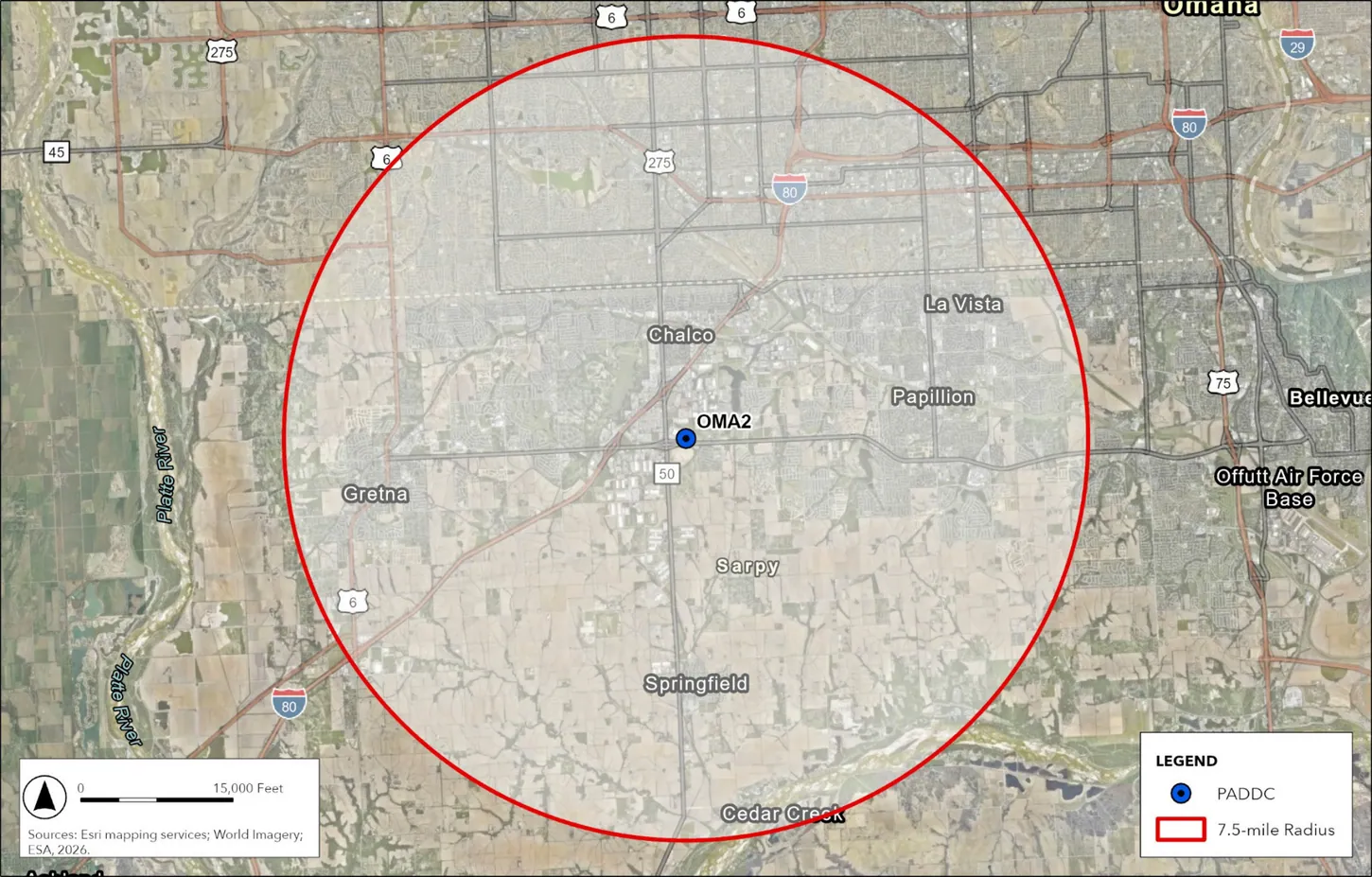
The FAA logged 21 comment submissions during the June 23 to July 22 window and noted general support in one reply. Commenters raised noise, privacy, wildlife at Chalco Hills, and low-flying traffic from Offutt Air Force Base and Millard Airport, and the noise replies rest on the 65-decibel threshold.
One reply goes further and says there will be no “ongoing noise monitoring of drone operations” once flights begin, because monitoring falls outside the environmental review. On local control, the FAA’s stock answer is that it does not choose where commercial drone operators fly from and that zoning is typically a state and local matter. On eagles, the final text keeps the draft’s conditional promise of 1,000 feet (305 meters) of separation from any nest Amazon identifies. Amanda Grint of the Papio-Missouri River Natural Resources District said in September that Amazon had agreed with federal officials in August to keep that distance from the nests at Chalco Hills.
Residents with a complaint can call Amazon at 1-888-280-4331 or use Amazon’s customer-service chat, choosing “Something Else” and then “Amazon Drone Delivery.” DroneXL’s guide for residents covers what else works, and the Amazon page on our drone delivery tracker now shows Omaha as operating with a September 9 decision.
Omaha’s Decision Opens Its Own Federal Appeal Window
The decision is a final FAA order open to challenge in a federal appeals court within 60 days of its issue, under 49 U.S.C. § 46110. Its “Issued on” line is blank. Sixty days from the September 9 signature is Sunday, November 8. That rolls to Monday, November 9.
Counted from the FAA’s September 22 notice of availability, the window would run to November 23, and the FAA has not said which date governs. Either way it is separate from the lawsuit 15 states filed in the Second Circuit on September 28 against the FAA’s national drone delivery finding, and Nebraska is not one of the petitioners.
The final assessment still describes Amazon as seeking authorizations “needed to integrate the MK30 drone and commence commercial drone package delivery operations,” language carried over from the June draft, and it does not mention the July 30 start. Neither that document nor the FAA’s review page, checked October 6, says which authorization covered the Papillion flights from July 30 to September 9. The national finding, which lets the FAA approve new delivery markets against one national study, was signed July 28, two days before launch.
DroneXL’s Take
If Amazon flies the new band, I think 25 more feet helps the people under the outbound routes, and I’d like to know who asked for it. The FAA wrote the higher numbers into its assessment and left the noise model on the old ones, so the document can’t tell a Papillion resident what the change does to the sound in their yard. By the time the decision was signed, the drones had been flying for nearly six weeks under an authorization nobody has named.
My position on the aircraft hasn’t changed. Drone delivery earns its noise when it carries medication or a defibrillator, and Zipline’s P2 is the reference, with a lighter airframe and a parachute. The MK30 has an 83-pound maximum takeoff weight, carries up to five pounds, and no parachute appears in any of its FAA filings. In Omaha it is delivering retail orders from a fulfillment center.
Sources: FAA Final Environmental Assessment and FONSI/ROD, Amazon Prime Air, Omaha, Nebraska, September 2026, FAA Appendix E, technical noise report, FAA Appendix F, public comments and responses, FAA Draft Environmental Assessment, Omaha, June 2026, FAA Public Involvement and Environmental Review for Drone Operations
DroneXL uses automated tools to support research and source retrieval. All reporting and editorial perspectives are by Haye Kesteloo. Read our editorial standards.