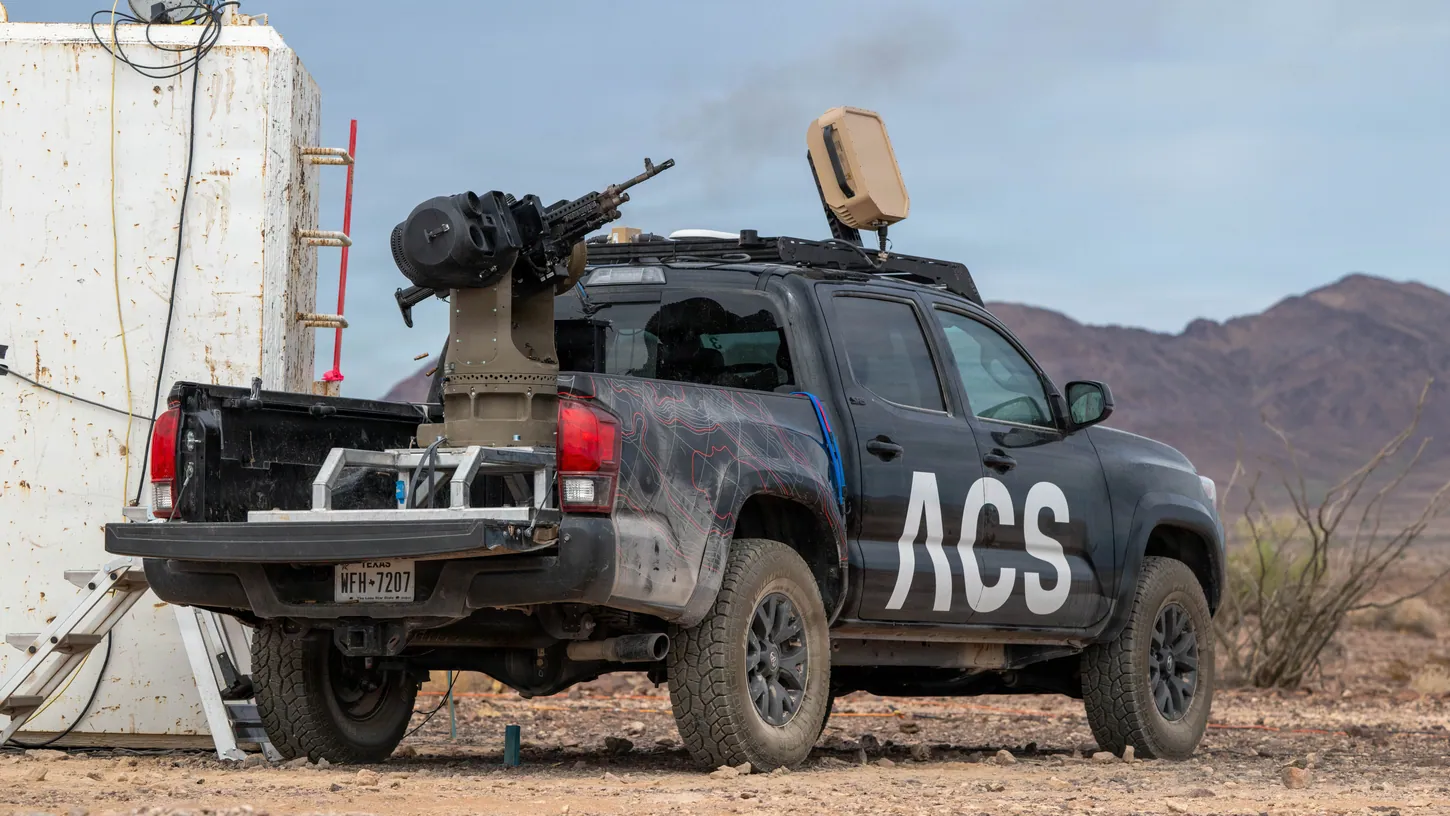
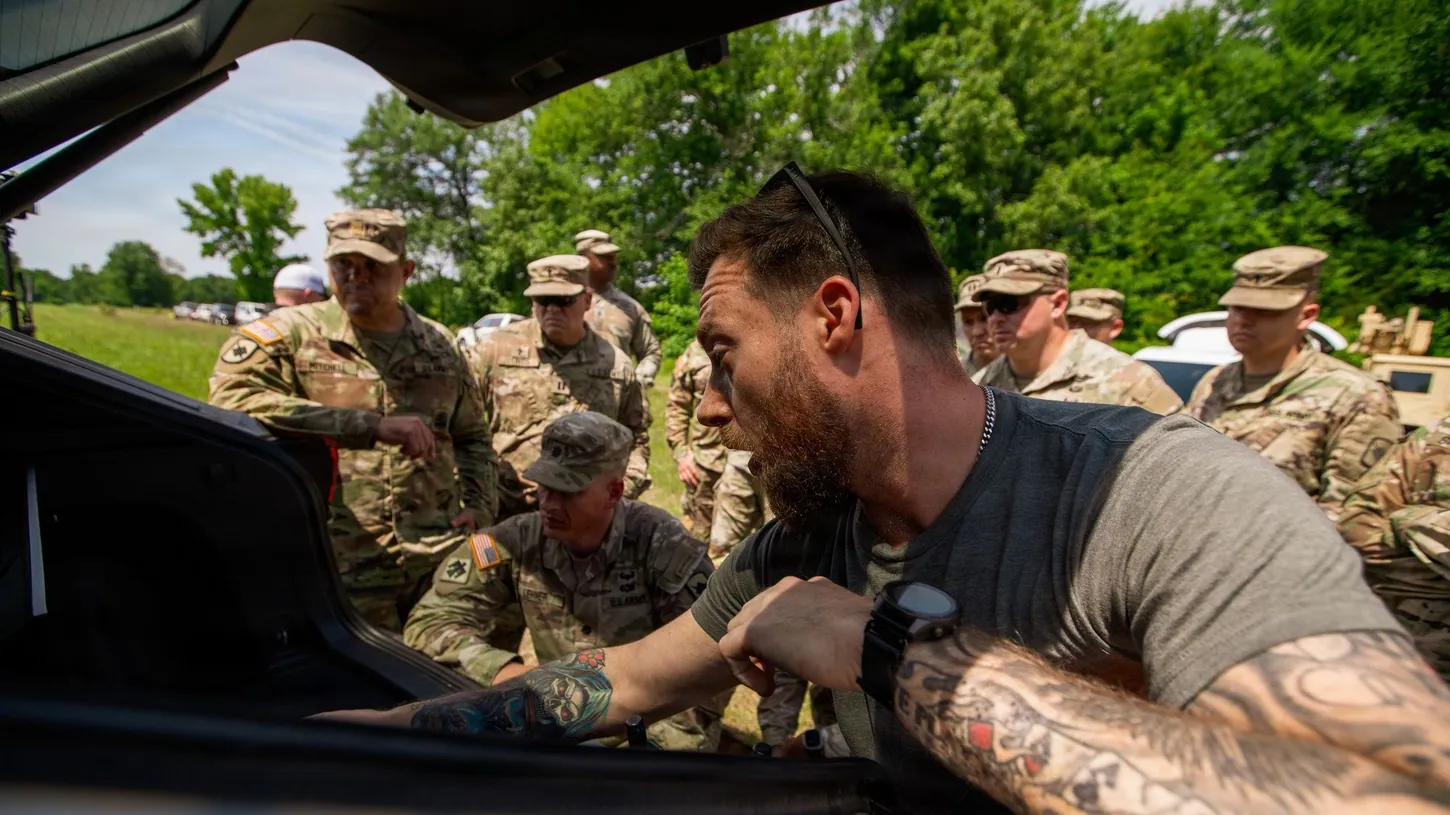
The Washington National Guard is fielding an Anduril counter-drone system built around a problem that sounds trivial and is anything but: telling a drone from a bird. The 10th Civil Support Team and the Guard’s Counterdrug Program completed two weeks of training on the system, which combines the WISP sensor, a Long Range Camera Tower, the Pulsar frequency sensor, and Lattice software. The units plan to deploy it at large public events, with World Cup security preparation driving the acquisition. Four days ago DroneXL reported on AT&T turning its 5G towers into a drone radar. This is the other half of that story: detection is getting easy. Classification is the fight.
WISP Stacks Three Sensors To Kill False Positives
WISP earns its place by fusing electro-optical imaging, passive radio frequency sensing, and software analytics into a single classification engine. Each layer covers the others’ blind spots. A bird and a small quadcopter can look similar to a camera at distance, but the bird emits no radio signal. A drone flying with its radio link silent can hide from RF sensing, but not from the camera and the analytics reading how it moves through the air.

The stack detects, classifies, and continuously tracks aircraft while filtering out birds and environmental clutter, and it can pinpoint operator locations. That last capability changes the response: finding the pilot ends an incident faster than anything done to the aircraft.

The false positive problem this attacks is the quiet tax on every counter-drone program. A sensor that cries drone at every gull generates alerts nobody trusts, and an alert nobody trusts is worse than no sensor at all. Operators start ignoring the screen. The one real track of the month scrolls past unread.
There is a cost side too. Spinning up a counter-drone response against a flock of geese wastes an interceptor cycle, ties up an operator, and in a jamming scenario can disrupt legitimate spectrum users for nothing. Classification before response is what keeps the whole chain affordable.
The 10th CST Trains For The Worst Payload
The unit fielding this system is not a typical security detail. The 10th Civil Support Team specializes in responding to biological and chemical attacks, and its interest in drones is specific: the aircraft as a delivery mechanism for hazardous material.
Lt. Col. Wes Watson said CSTs have been exploring ways to defeat that delivery mechanism for years, and that the system would be critical in responding to a downed drone suspected of carrying a weapon of mass destruction. Maj. Gen. Gent Welsh pointed to the harder half of the mission: working through the law, policy, and domestic employment questions that come with pointing military counter-drone sensors at American skies.

The training continues with the FBI and the Department of Homeland Security. The stated deployment target is large-scale public events, and the World Cup context explains the urgency: DroneXL has already covered hundreds of drones confiscated around tournament venues this summer.
Classification Is Where Counter-Drone Gets Decided
Put this week’s news next to the AT&T demonstration and the shape of the market gets clear. Cellular networks can now see small aircraft at 300 to 400 feet using towers that already exist, and Germany is building a national drone shield on the same cellular logic. Raw detection is being commoditized by infrastructure that was never built for it.
What the cheap layers cannot yet do reliably is say what they are looking at. A network that senses everything moving through the air senses every bird in the county. That is where a fused sensor stack like WISP lives: not as a replacement for the wide net, but as the layer that decides which contacts matter.
DroneXL’s Take
The most expensive mistake in counter-drone is not missing a drone. It is responding to a bird. Every false positive burns money, adrenaline, and credibility, and enough of them will get a program quietly shelved by the same officials who funded it. So a sensor suite whose headline feature is restraint, knowing when NOT to trigger, is a more serious piece of news than another jammer with a bigger dish.
The scenario that makes classification urgent is the one nobody wants to say out loud. If your sensors cannot separate a drone from a flock, then a flock is camouflage. Whether anyone has operationally flown an attack drone inside a bird flock is not something I can document, and I won’t pretend otherwise. But the physics of the gap is obvious to anyone who reads sensor spec sheets, and closing it before someone exploits it is exactly the right order of operations.
There is also a division of labor forming that the industry hasn’t fully named. The cell towers and passive networks become the tripwire: cheap, everywhere, always on. The fused stacks like WISP become the judge: expensive, focused, deployed where the stakes are highest. The Guard putting the judge at stadium gates while AT&T wires the tripwire into the national fabric is the two-tier architecture taking shape in public, one contract at a time.
Watch where this system actually shows up. The 10th CST trains for weapons of mass destruction, and its planners just decided drone classification is part of that mission. When the WMD response teams start buying bird filters, the threat assessment behind the purchase has already been written.
Sources: Forbes, Washington State Military Department, U.S. Army
DroneXL uses automated tools to support research and source retrieval. All reporting and editorial perspectives are by Rafael Suárez.