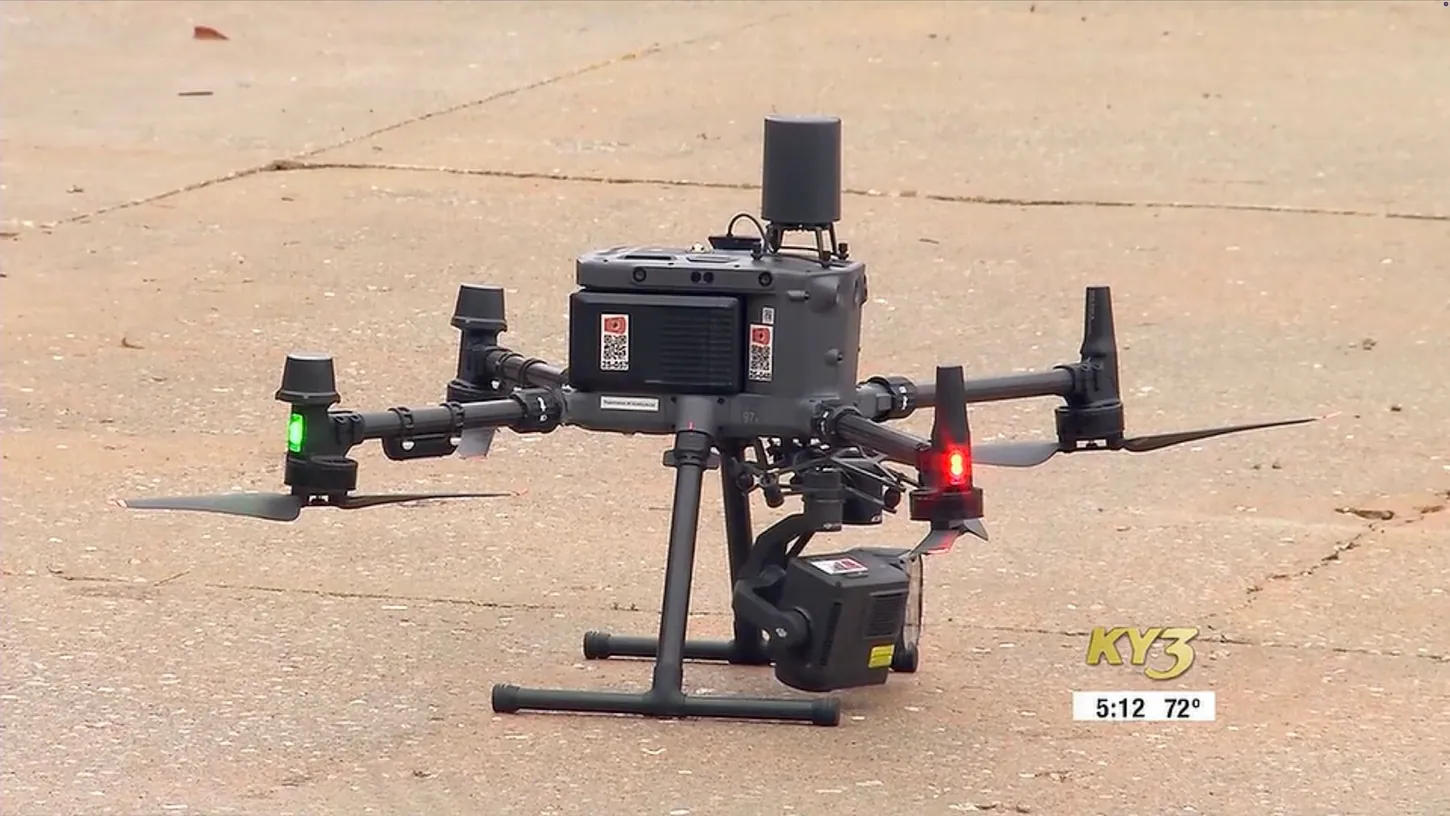
The International Association of Fire Fighters has started training its HazMat instructors to fly drones, a five year push to put an aircraft into contaminated scenes before a single firefighter walks downrange. The first session ran in July in Statesville, North Carolina, with instructors from departments across the United States and Canada. DroneXL has covered fire departments adopting drones one city at a time, from Seattle’s rescue-focused program to FDNY’s robotics training. This is different. This is the union building the curriculum itself.
Instructors Learn First, Then Their Departments
The IAFF model trains the trainers. The Statesville session certified instructor-pilots who will go home and build drone curricula inside their own departments, instead of sending every firefighter through a single national pipeline. Remote Tactical Solutions Group ran the hands-on portion, covering FAA regulations, drone operation, air monitoring, and downrange reconnaissance.
The program also prepares participants for the FAA’s remote pilot certification exam. That detail matters more than it sounds. A fire department drone program without certificated pilots is a liability, and plenty of departments have learned that the hard way.
Josh Smith, Assistant to the General President for Training, Education, and Grants, and James Burgess, Director of Training and Grants Administration, lead the effort. The instructors in the first class came from locals across the map, including Sheldon George of New York’s Local 94 and Brandon Leonard of Milwaukee’s Local 215.
An $8 Million Grant Pays For The Next Five Years
Federal money makes the program possible. The National Institute of Environmental Health Sciences awarded the IAFF more than $8 million for HazMat response training, the largest grant in the union’s history, according to the IAFF. The funding supports training an additional 6,500 firefighters over the next five years, with the drone initiative as a new pillar inside that effort.
Sharon D. Beard, director of the NIEHS Worker Training Program, attended the Statesville session in person. When the person who signs the grant shows up to watch the first class fly, the program has attention at the top.
The aircraft in the curriculum is the Parrot ANAFI UKR. Sensor miniaturization drove the timing. Air monitoring equipment that used to be too bulky to lift now mounts on a small drone, which turns the aircraft into a flying gas meter with a thermal camera.
The Drone Takes The Readings So Lungs Don’t
The operational case is simple to state. At a hazmat scene, the first task is figuring out what leaked, how much, and where it’s drifting. Today that job often means a firefighter in an encapsulated suit walking into the plume with a handheld monitor. The IAFF wants the drone to make that walk instead.
A drone can enter a contaminated area first, pull air quality readings, identify the hazard, and stream video and thermal imagery back to the incident commander. The humans then go downrange with answers instead of questions. Fewer minutes of exposure, fewer suits through decon, fewer names added years later to the occupational illness registries that the fire service knows too well.
Seattle Fire made the same argument in July for its own program: a drone reads a leaking tank from a standoff distance no human should take. The IAFF program takes that logic and scales it across two countries through the people who already teach hazmat response.
The union angle changes the incentive structure too. When a city buys drones, the program serves the department’s budget and the chief’s priorities. When the union that fought for cancer presumption laws builds the training, the program serves the member’s lungs first. Both can be true at once, but the second one tends to outlast a budget cycle.
DroneXL’s Take
A new tool without a trained operator is worthless, and the fire service is exactly where that truth bites hardest. Hand a firefighter a supercharged Matrice 400, teach him to fly it one way, then put him on a Matrice 30 a year later. The two aircraft fly the same on paper. In the air, payload, mass, and speed change how each one behaves, and the scene is the wrong place to discover the difference.
Fire adds physics on top. A thermal column over a working fire will grab a drone and throw it. Hot air rising off a structure can rob rotors of lift exactly when the pilot pushes in for a closer look. Reading a thermal camera is its own skill: knowing where to look, what a hot spot means through smoke, and what the sensor hides. None of that comes with the box. All of it has ended flights for pilots who learned on calm mornings over open fields.
That’s what makes this program the right shape. It doesn’t hand firefighters a drone and wish them luck. It trains the people who train everyone else, on the specific ways a hazmat scene tries to take an aircraft down. The drone stops being a gadget on the truck and becomes what it should be, an eye in the air that keeps lungs out of the plume.
The five year window and the $8 million are real numbers with real accountability attached. Watch the second cohort, and watch whether the instructor-pilots from Statesville actually stand up department-level curricula over the next year. That, not the press release, is where this succeeds or stalls. Whether the model spreads beyond North America is an open question, and an important one. Firefighters breathe the same smoke in every country. The ones outside this grant deserve the same eye in the sky.
Sources: IAFF, Fire and Safety Journal Americas, International Fire and Safety Journal
DroneXL uses automated tools to support research and source retrieval. All reporting and editorial perspectives are by Rafael Suárez.