

Sky Elements flew 2,977 drones over New York Harbor on Wednesday night, one light for every person killed on September 11, 2001, and held them in the shape of the Twin Towers at full architectural scale. The free public show ran two days before the 25th anniversary of the attacks.
The installation is called “2,977 Lights Over New York Harbor,” a sponsored project of the New York Foundation for the Arts. Creative director Addison Mehr produced it with Sky Elements, the Texas operator DroneXL has been covering since its Guinness World Records run in December 2023. A collective of 9/11 family members and first responders shaped the design, among them FDNY responder Tim Brown and Terry Strada of 9/11 Families United. The score included John Adams’s “On the Transmigration of Souls,” written for the victims.
The drone towers stood beside the Tribute in Light, the xenon beams that mark the anniversary each year. The producers say the piece was designed in dialogue with it.
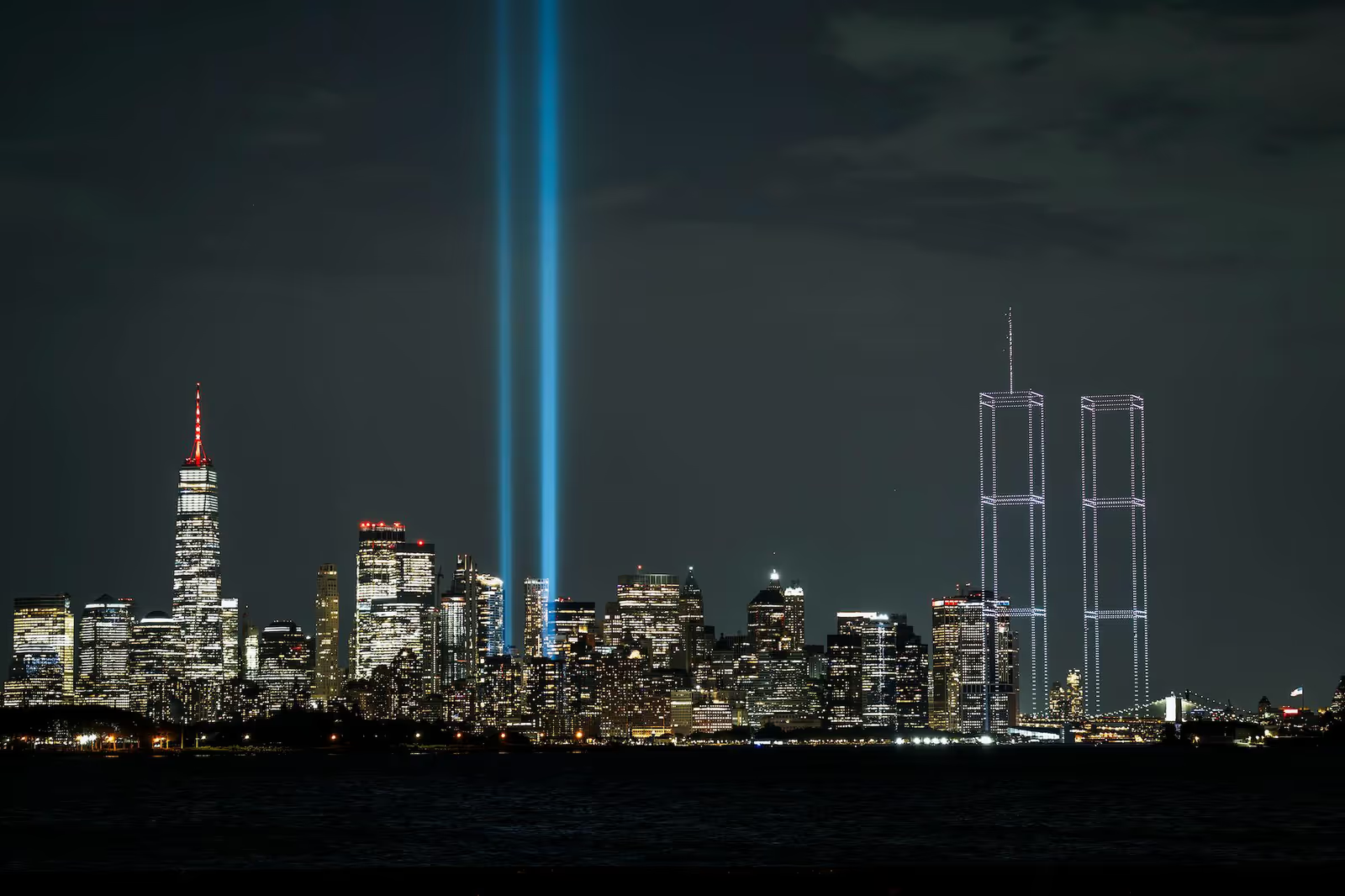
Sky Elements Has Flown Bigger Shows Than This One
Sky Elements has flown nearly 5,000 drones at once and holds at least 17 Guinness World Records. Wednesday’s count was deliberately smaller. The design fixed the fleet at 2,977, the confirmed death toll from the 2001 attacks, so the number itself carried the meaning.
Bigger is normally the headline. The company’s 4,979-drone Vecna formation over Las Vegas last December existed to break a record, and it did. Here the ceiling came from a casualty list.
Tim Brown, who responded to the World Trade Center in 1993 and again in 2001, named three firefighters he lost. “Three of the 2,977 lights are theirs,” he said.
The Helix Traced a Tower New York Never Built
Before the towers assembled, the drones gathered into a rising helix. The producers say that shape points at the THINK team’s World Cultural Center, the unbuilt proposal for the rebuilt World Trade Center, a pair of open lattice towers meant to rise around the original footprints without touching them.
A strange, specific thing to encode in a drone show: a building New York decided not to build, put up where nobody has to approve a floor plan. Then the batteries run down and it is gone.
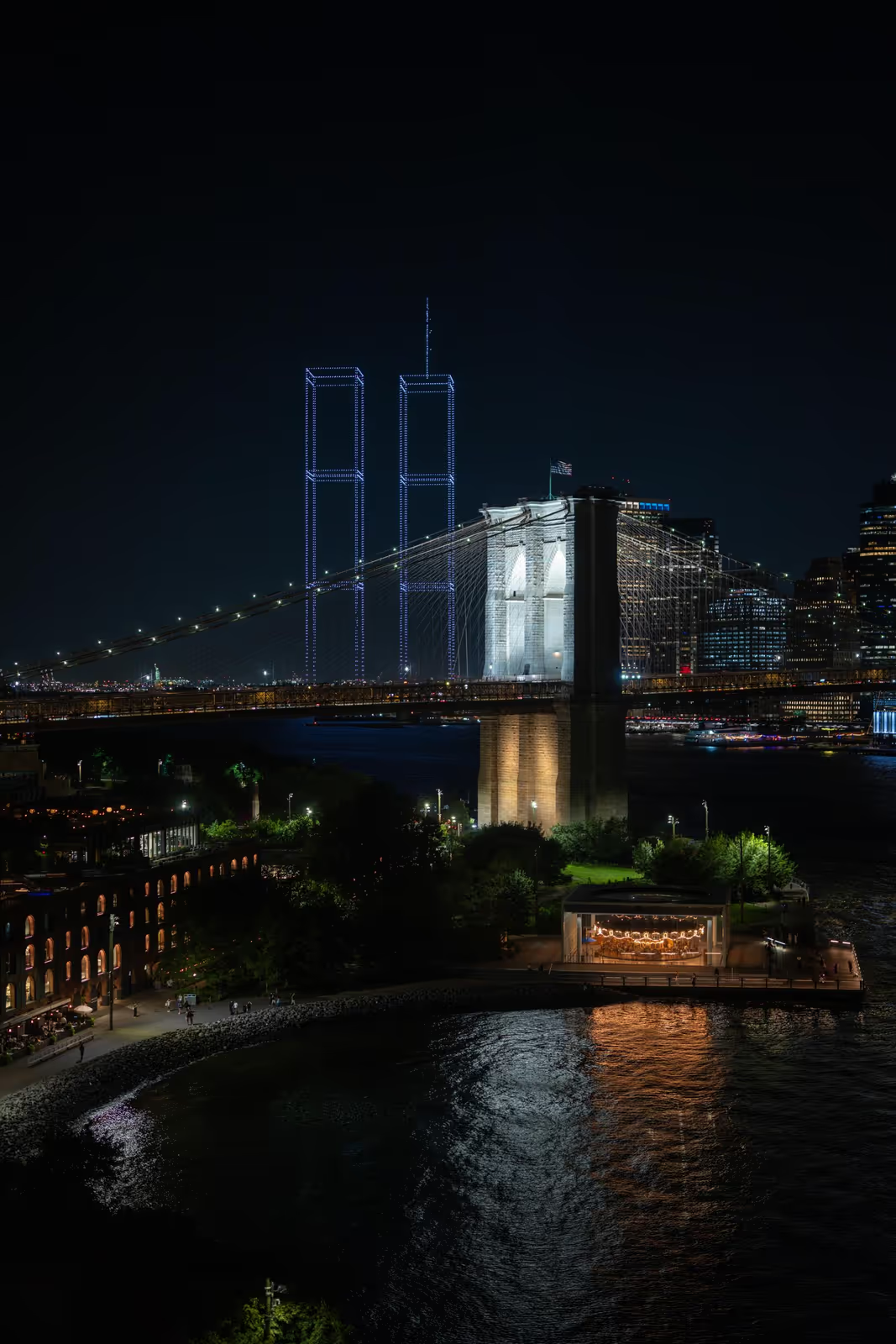
Studio Drift Traced This Back to Notre Dame
The Amsterdam collective Studio Drift is credited as an artistic advisor on the piece. Co-founder Ralph Nauta told NOS the idea began two years ago, on a walk through New York. Drift has drawn vanished architecture in drone light since 2020. The Colosseum and the Sagrada Familia came first.
Nauta and Lonneke Gordijn founded the studio in 2007, and the architectural work started with a fire. After Notre Dame burned in 2019 they began working out how to put a lost building back with light instead of stone. Rome’s Colosseum went up whole. Gaudi’s basilica got the towers it still does not have. DroneXL covered Drift’s Central Park show in October 2023.
Pointing that method at the Twin Towers changes what it is. Those other buildings were lost to fire, to time, or to an architect who ran out of years. The Twin Towers were destroyed in an attack that killed 2,977 people, and that is why the fleet size here is a death toll rather than a production decision.
Nauta could not get to New York and watched remotely. He told NOS that wind is the one factor nobody controls, and that this time it held. The piece put 2,977 aircraft at the towers’ original height, each holding an assigned point in the sky, and a strong enough breeze either blurs the outline or keeps the whole fleet on the ground. Nauta said the silhouette came out sharp over the harbor.
New York Cleared Airspace It Spent $6.5 Million to Defend
IDEKO led federal and city permitting for the flight, plus safety and security operations. New York Harbor sits inside some of the most controlled airspace in the country. The clearance came under four months after the NYPD stood up a unit built to knock drones out of that same sky.
The city would not take it on the eve of the anniversary. Nauta told NOS that permission for September 10 was refused on security grounds, and the flight was cleared for the 9th instead. The date on this artwork was set by a risk assessment.
Commissioner Jessica Tisch announced $6.5 million in mitigation equipment on May 21, a capability reserved until recently for a handful of federal agencies. The same city signed off on 2,977 aircraft over the water sixteen weeks later.
No public money was involved. Private philanthropy and in-kind gifts covered production, with major support from the Cantor Fitzgerald Relief Fund and 9/11 family members. “Everything in the sky over New York is for them,” Sky Elements CEO Rick Boss said.

DroneXL’s Take
The loudest drone story in America this year has been about stopping drones: bans on Chinese airframes, mitigation funding, wider authority to shoot things down. Then 2,977 American-made drones went up over the harbor and rebuilt the towers, on the night the city was willing to grant rather than the one the artists asked for.
Yes, the case against flying thousands of aircraft near crowds is real, and it is Sky Elements’ own case to answer. Its December 2024 Orlando show dropped drones into a crowd of roughly 25,000, and a 7-year-old boy needed emergency heart surgery. The FAA suspended the company’s Part 107 waiver on December 29, the authority that let it fly at night and over people.
It does not change my read. This is the strongest argument for the medium anyone in the United States has made, and it came from the company that had to earn back the right to fly it. The industry went from under 30 shows a year five years ago to roughly 1,500 booked for 2026, most a sponsor logo over a ballpark. This one was 2,977 people, counted one at a time.
Sources: 2,977 Lights Over New York Harbor via PR Newswire, NOS
DroneXL uses automated tools to support research and source retrieval. All reporting and editorial perspectives are by Haye Kesteloo.


