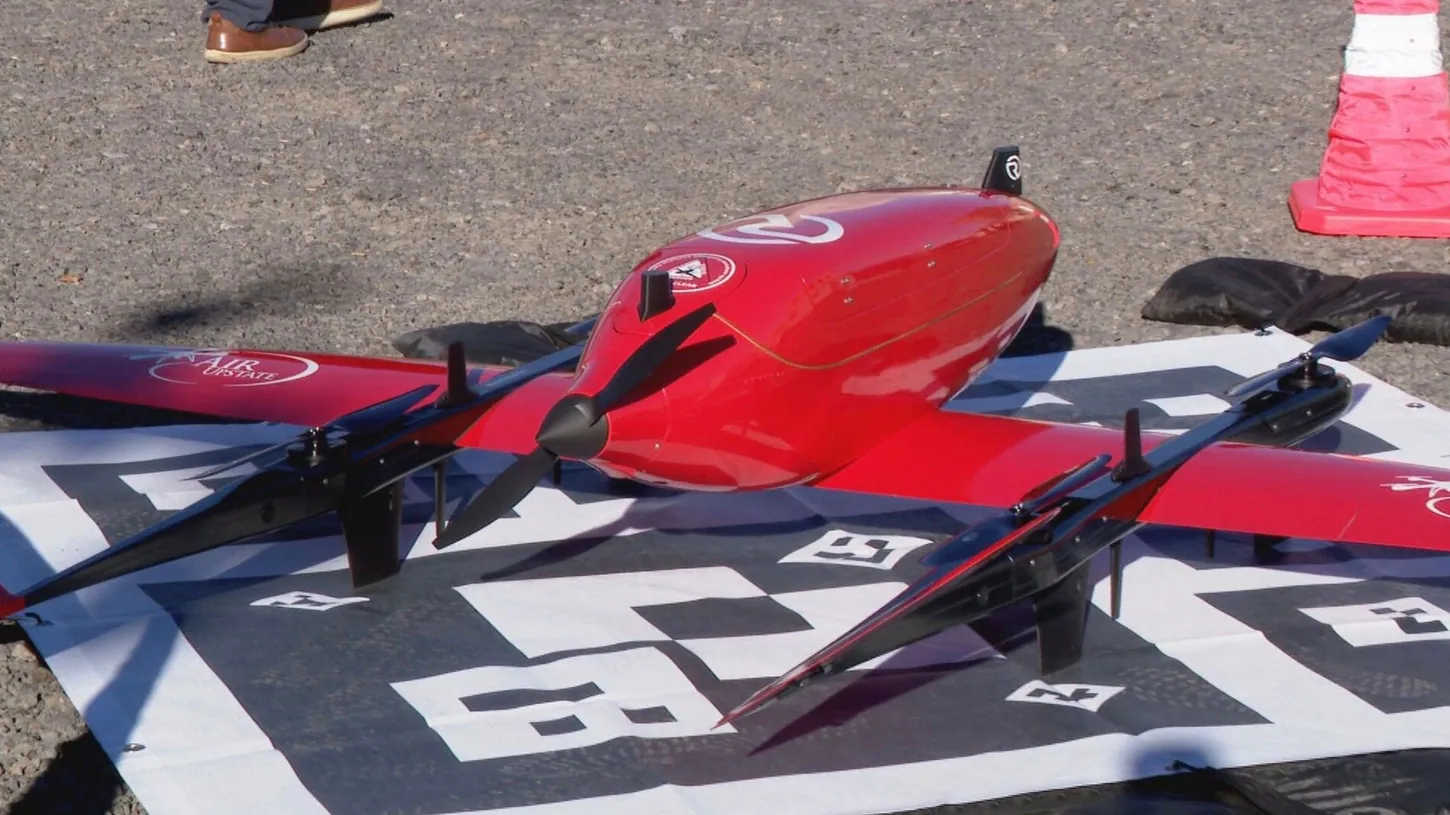
Upstate Medical University has appointed Cliff Sweatte as director of unmanned aircraft systems operations, handing its hospital drone program to the former Federal Aviation Administration official who managed the agency’s first commercial beyond-visual-line-of-sight approvals.
Seven months earlier, the FAA granted Upstate a Certificate of Waiver covering a corridor of roughly 50 miles (80 kilometers), from its downtown Syracuse campus out to Utica, with authorization to fly over people, over moving vehicles and at night. The waiver runs through June 2029. Sweatte now owns it.
Air Upstate, the university’s drone unit, has logged more than 7,200 prescription deliveries since 2023, plus lab specimen runs between the Upstate Transplant Center and a pathology lab several blocks away. Running that service across two counties is a different problem, and the hire says which part of it Upstate finds hardest.
Sweatte Ran The FAA Programs That Opened BVLOS Flying
Sweatte served as an FAA aviation safety inspector for air carrier operations and as program manager for the Arctic UAS and Pathfinder 3 programs. Those efforts produced the first commercial beyond-visual-line-of-sight operations and the first type-certified UAS operations in the country, according to the appointment announcement.
He spent two years after that at the International Civil Aviation Organization writing remotely piloted aircraft standards, then served as aviation officer for the United Nations World Food Programme in Rome. He joined Akin Gump as a senior policy adviser in 2019 and later took the same role at aerospace consultancy Crown Innovations. He started out as an Alaska Part 135 pilot in command and flew the Airbus A320 as a captain for USA 3000 Airlines.
The air carrier background is the part hospital administrators tend to undervalue. BVLOS approvals at this scale go to organizations that can build a safety case the way a certificate holder builds one. The aircraft are the commodity.
Upstate’s Waiver Covers 50 Miles And Runs To June 2029
The February waiver, announced by Upstate in April, links the Community Campus, the Downtown Campus, the Pathology Institute and the Upstate Cancer Center in Verona, out to Utica and the locations between. Upstate calls it one of the largest approved BVLOS areas for a regional health system.
Upstate University Hospital CEO Robert Corona put the scale of it plainly: “Approvals of this scale are very uncommon.” The FAA granted the full scope of what the hospital asked for, which is rarer still.
The buildout is already going up. The Upstate Pathology Institute under construction in East Syracuse includes a drone bay for recharging and maintaining the transport aircraft, so a specimen arriving by air lands at the lab instead of at a courier desk. Most hospital drone programs never get that far. Tampa General is working the same idea from the emergency side, flying whole blood to trauma scenes, and NASA, UNOS and LifeNet Health moved human kidneys by BVLOS drone in June.
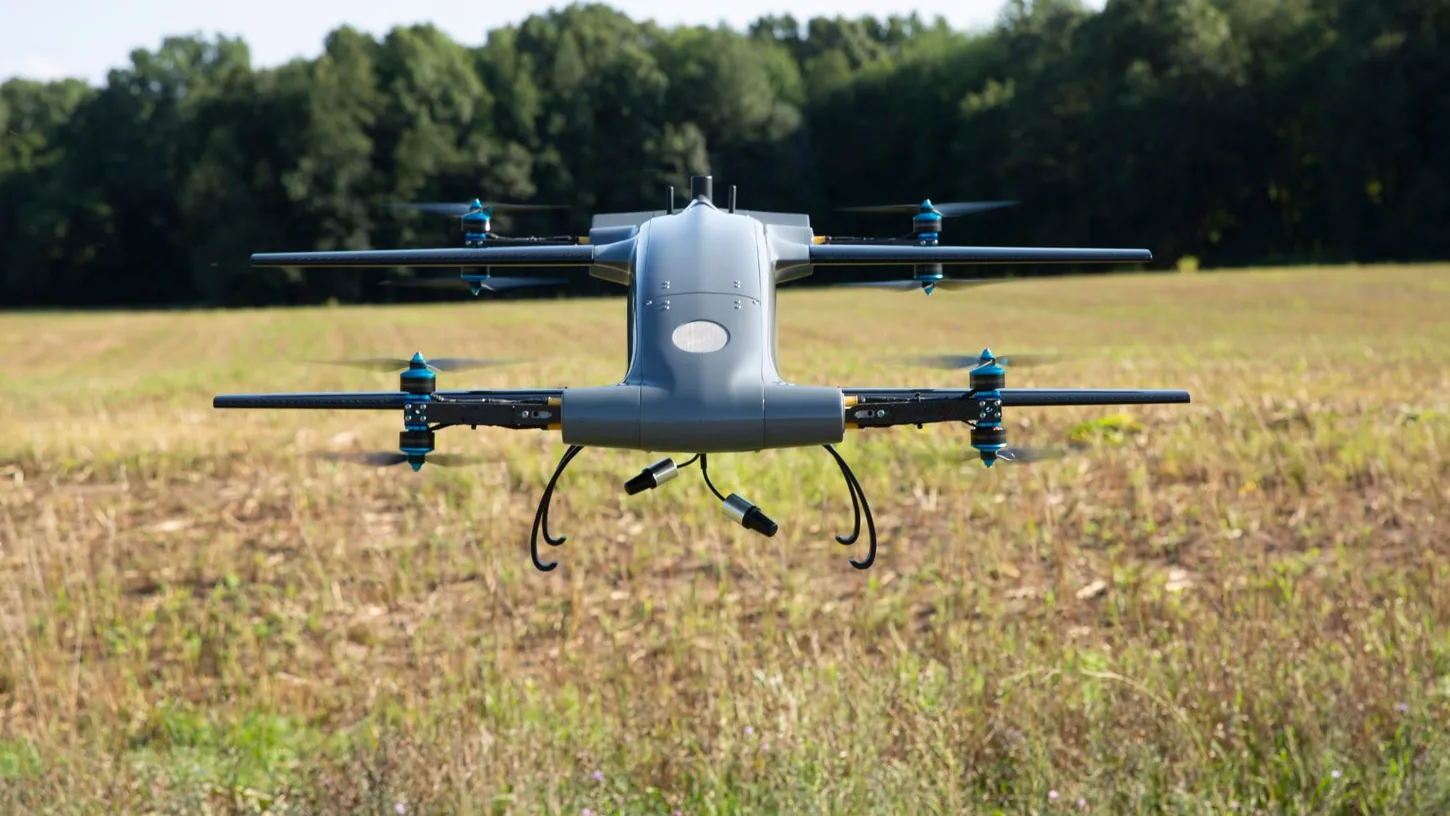
Air Upstate’s first BVLOS flight ran on May 22, 2024, from the Oneida County test site at Griffiss International Airport in Rome to the state’s Homeland Security Training Center in Oriskany. The 18.6-mile (30-kilometer) round trip took 18 minutes and 20 seconds on a RigiTech Eiger, the Swiss fixed-wing VTOL rated for about 62 miles (100 kilometers) per mission.
Upstate Hired The Consultant Who Helped Build Its Program
Sweatte is not arriving cold. Crown Consulting, since rebranded as Crown Innovations, appears in Upstate’s own 2024 announcement as a partner on that first BVLOS flight, alongside AX Enterprize, the Oneida County UAS Test Site, Causey Aviation Unmanned and RigiTech. Sweatte was Crown’s senior policy adviser throughout that period.
Moving an outside regulatory adviser onto staff says where a program thinks its risk sits: in the waiver renewals and the FAA relationship rather than in the hardware, which RigiTech and its competitors already build to spec.
Upstate’s public releases leave one thing unexplained. In 2023 the university described Causey Aviation Unmanned as its drone operator, the fifth US company to hold a Part 135 certificate for healthcare delivery. The April 2026 release describes Air Upstate itself as the operator, with no mention of what changed. Whether certificate responsibility moved in-house decides how far this program can scale, and Sweatte’s résumé points directly at that work.
Waivers Still Decide Who Flies BVLOS While Part 108 Waits
Every US operator flying past visual line of sight does it on a waiver, negotiated case by case. Part 108, the rule meant to replace that with a standing framework, was proposed in August 2025 and has sat unsigned at the White House regulatory office since July 10.
Until the rule lands, BVLOS access is distributed by regulatory competence. An organization that can hire the person who ran the FAA side of these approvals gets a 50-mile corridor through June 2029. An organization that cannot gets a demo flight and a press release.
DroneXL’s Take
This is what a serious drone program looks like. Upstate did not buy its way to a 50-mile BVLOS corridor with better aircraft. It bought regulatory fluency, first as consulting and now as a salaried director, and the FAA signed off on the full scope of the request.
The system rewarding that is still the wrong system. Waiver-by-waiver access means BVLOS belongs to whoever can staff a regulatory affairs function: a large health system, a venture-backed delivery company, or a county sitting on a state grant. The rural clinic that would gain most from a blood product arriving by air instead of by car has neither that staff nor a realistic path to the same approval. Part 108 was written to fix that. A presidential order set a February deadline for the rule, and September is ending with no signature on it.
Upstate’s waiver came through on merit, and the FAA deserves credit for granting the whole ask instead of half of it. It also took an FAA-designated test site, five named partners on the first long flight, two years of BVLOS operations and, in the end, hiring the FAA’s own BVLOS alumnus. My read is that Upstate cleared a bar the rule was supposed to lower.
Watch the Pathology Institute in East Syracuse. Whether the aircraft flying into that drone bay operate under a renewed Certificate of Waiver or under Part 108 will show what the delay cost. Watch the city too, where lawmakers have repeatedly grounded the police drone-as-first-responder program while the hospital across town assembled one of the region’s most permissive medical BVLOS approvals. Same airspace, opposite receptions. Deliveries that save a patient an afternoon get waivers. Cameras get hearings.
Source: syracuse.com, “From FAA inspector to drone director: Cliff Sweatte brings 2 decades of aviation expertise to Upstate Medical,” by B. Duncan, Sept. 18, 2026; SUNY Upstate Medical University; Crown Innovations; Akin Gump
DroneXL uses automated tools to support research and source retrieval. All reporting and editorial perspectives are by Haye Kesteloo. Read our editorial standards.