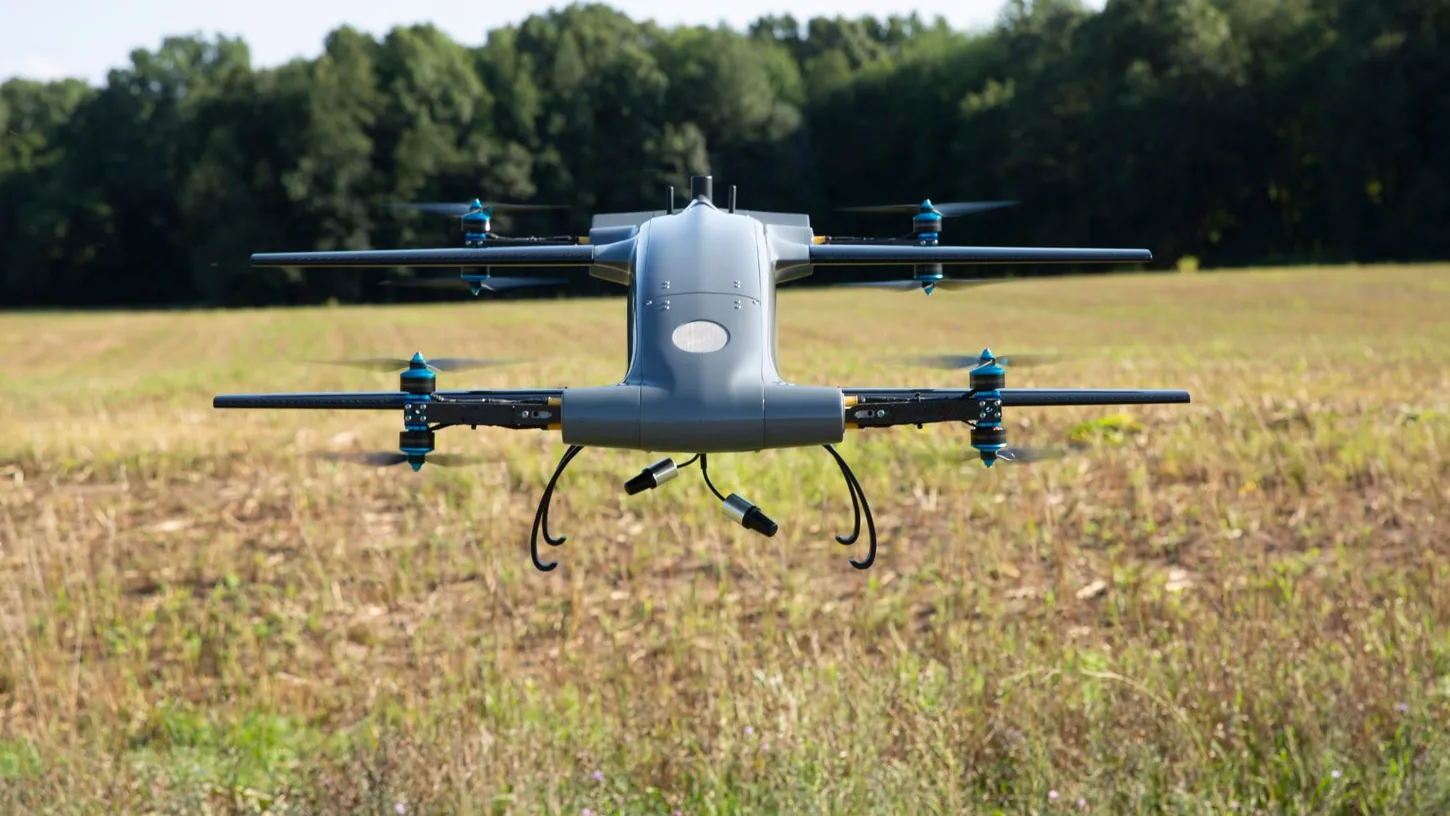
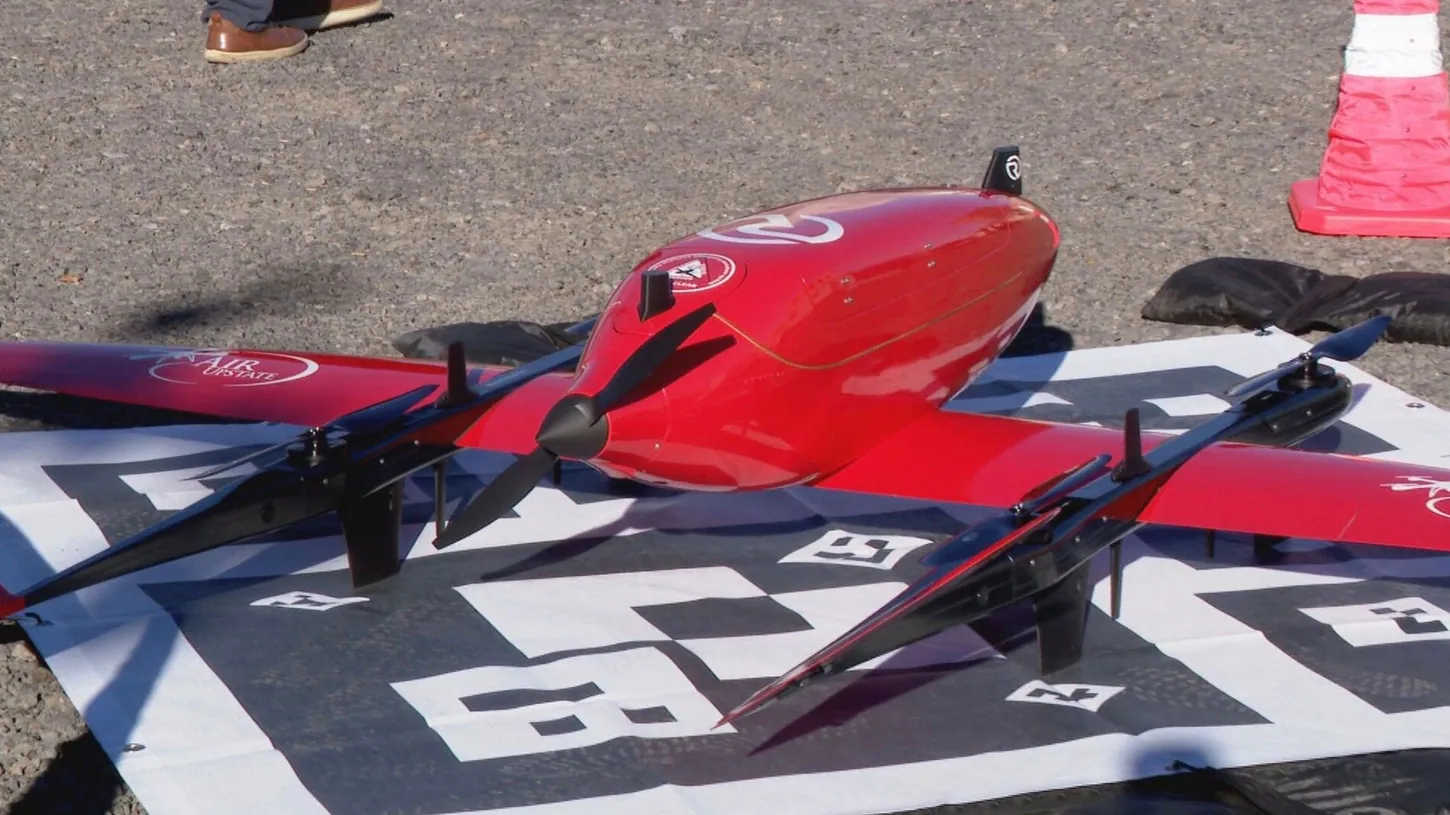
Zipline will build nine more drone distribution hubs across Côte d’Ivoire, the country Americans know as Ivory Coast, taking a single centre in Daloa to a network of 10 under an eight-year public-private partnership the Ivorian government has approved. Once the buildout is done, the company says the network will serve more than 2,200 health facilities and over 12 million people, roughly a third of the country, carrying blood products, vaccines and essential medicines to clinics that road transport reaches slowly or not at all.
Behind it is American money. The US State Department’s $150 million pay-for-performance award to Zipline, announced last November and covered here when it landed, is what pays to put the hubs in the ground.
Zipline and Ivorian officials put the return to the state at about 300%. Neither the company nor the communiqué the Council of Ministers issued on September 9 says what the state is spending to get it.
Washington Buys The Buildings, Abidjan Buys The Flying
The US grant covers construction of the distribution centres. The Ivorian state covers the service contract: pharmacy-grade warehousing, cold chain, digital tracking and the deliveries themselves, for the full eight years. That split is the whole design of the American award, not a detail of this deal.
The State Department announced the award on November 25, 2025: up to $150 million to Zipline International Inc. to reach as many as 15,000 health facilities across Côte d’Ivoire, Ghana, Kenya, Nigeria and Rwanda, through what the department described as milestone-based payments and co-financing commitments with partner governments. Zipline’s own announcement was more specific. Funding would be released only when governments signed expansion contracts and committed to paying for ongoing logistics services, and the five countries would pay up to $400 million in fees for using the service. That is what DroneXL reported at the time: a structure that spends American money to create African customers.
Côte d’Ivoire is one of those customers now. “Côte d’Ivoire is demonstrating what commercial diplomacy can achieve in practice,” said Caitlin Burton, CEO for Zipline Africa, in the company’s September 21 announcement. Nigeria is the bigger prize on the same terms, where Zipline is adding a dozen hubs by 2028 and aiming at half the country’s 220 million people, and Rwanda went nationwide in February.
The Contract Was Signed In December, Nine Months Before Anyone Announced It
The public-private partnership between the Republic of Côte d’Ivoire and Zipline SARL was signed in December 2025, within weeks of the State Department award that pays for it. The Council of Ministers took formal note of it on September 9, 2026, and Zipline announced it on September 21.
That sequence is on the Ivorian record rather than the company’s. Government spokesman Amadou Coulibaly set out the terms after the September 9 council meeting, reported by the Agence Ivoirienne de Presse: 10 storage and distribution centres, built in two phases. The first phase runs 27 months and covers the existing Daloa pilot plus new sites at Biankouma, San Pedro and Kouto. The second adds six centres in the Autonomous District of Abidjan and the Indénié-Djuablin, Gbêkê, Kabadougou, Bélier and Gontougo regions. The goal, Coulibaly said, is “regular and secure supply” to facilities in hard-to-reach areas.
What the communiqué does not carry is a figure. It describes the American grant and the Ivorian operating commitment in words and attaches no number to either, and Zipline declined to tell Semafor how much it will receive. So the 300% return has been published by both parties and the investment it is calculated against has been published by neither.
Daloa’s Three Years Are The Case The Other Nine Hubs Rest On
Zipline has flown from Daloa since 2023, and its record there is the argument for the other nine sites. The company reports more than 3.55 million medical products delivered to more than 220 health facilities across five regions, including 20,500 units of blood products and 2,058 equivalent lives saved.
About 2 million of those products were vaccine doses. Those are Zipline’s own figures, from Zipline’s announcement. The Ivorian health ministry’s account of the same three years is qualitative: “stronger support for our health facilities,” said Pierre N’Gou Dimba, Minister of Health, Public Hygiene and Universal Health Coverage, who is leading the expansion.
The expansion sits inside Côte d’Ivoire’s Vision 2030 universal health coverage agenda, and Zipline is selling it as industrial policy as much as logistics, with Ivorian staff trained across pharmacy, aviation operations, maintenance and data management. “It is building an autonomous logistics backbone operated by Ivorian talent,” said Xavier Greusard, the company’s vice president for Africa go-to-market. It is also what a company seeking a $20 billion valuation says while African health budgets underwrite its operating revenue.
DroneXL’s Take
I want this deal to work, and the Daloa numbers are the reason. A health ministry buying autonomous logistics instead of another fleet of Land Cruisers is the version of drone delivery DroneXL has argued for since the beginning: unglamorous, measurable, and aimed at people whose roads wash out every rainy season. Three years and 3.55 million deliveries is not a pilot any more.
But a 300% return is a fraction with the bottom half missing. You cannot check a return on investment without the investment, and right now the only party who knows what Côte d’Ivoire is paying is Côte d’Ivoire, which has not said. That is not a technicality when the whole American model here is to fund the buildings once and hand the recurring bill to the health ministry.
Why that matters has a DroneXL dateline on it. In August 2025 we reported that Zipline’s Kaduna State operation was paused after a change in administration, having delivered more than 225,000 medical items from Pambegua, including 154,000 COVID-19 vaccine doses. The technology did not fail. The budget line did. Kaduna was a state-level review rather than a verdict on drones, and Côte d’Ivoire’s arrangement is national, contractual and eight years long, which is exactly the structural fix for what happened in Nigeria. A contract is still only as durable as the appropriation behind it.
So watch the Ivorian finance ministry rather than the launch photos. The first phase runs 27 months from the point Daloa’s expanded operation and the Biankouma, San Pedro and Kouto sites are commissioned, and somewhere in the budget that covers those months there is a line for aerial logistics services. When that line is published, the 300% claim becomes checkable. Until then it is a sales figure with a US grant standing behind it.
Sources: Zipline, US Department of State, Agence Ivoirienne de Presse, Présidence de la République de Côte d’Ivoire, Semafor.
DroneXL uses automated tools to support research and source retrieval. All reporting and editorial perspectives are by Haye Kesteloo. Read our editorial standards.