Lakeland, Florida is getting police drones that launch before an officer arrives. On October 5 the city commission voted 7-0 for a ten-year, $21,983,139.93 Master Services and Purchasing Agreement with Axon Enterprise that replaces the police department’s 2021 contract and adds Axon Air, the company’s Drone as First Responder package, to a bundle of body cameras, TASER 10 devices, in-car video and Axon’s AI Era Plan software.
The Lakeland Police Department has flown patrol-led drones, carried in cruisers, since it restarted its program in 2025, after Florida’s ban on Chinese-made aircraft grounded its fleet from 2022 until February 2025. The new agreement is more than double the roughly $9.4 million deal the city signed with Axon in December 2021, when Assistant Chief Hans Lehman said Lakeland “isn’t getting any of Axon’s drone technology, but that could be added later,” LkldNow reported.
The city’s own agenda memo says a $3,972,962.18 grant will be applied toward the first two years, money from the Florida Department of Law Enforcement’s State Board of Immigration Enforcement, a program that exists to fund cooperation with federal agencies “to enforce federal immigration laws.” Lakeland’s grant application, approved by the board on May 28, names body cameras and in-car video for that money. It does not mention a drone.
Lakeland’s drones move from the cruiser trunk to a dock
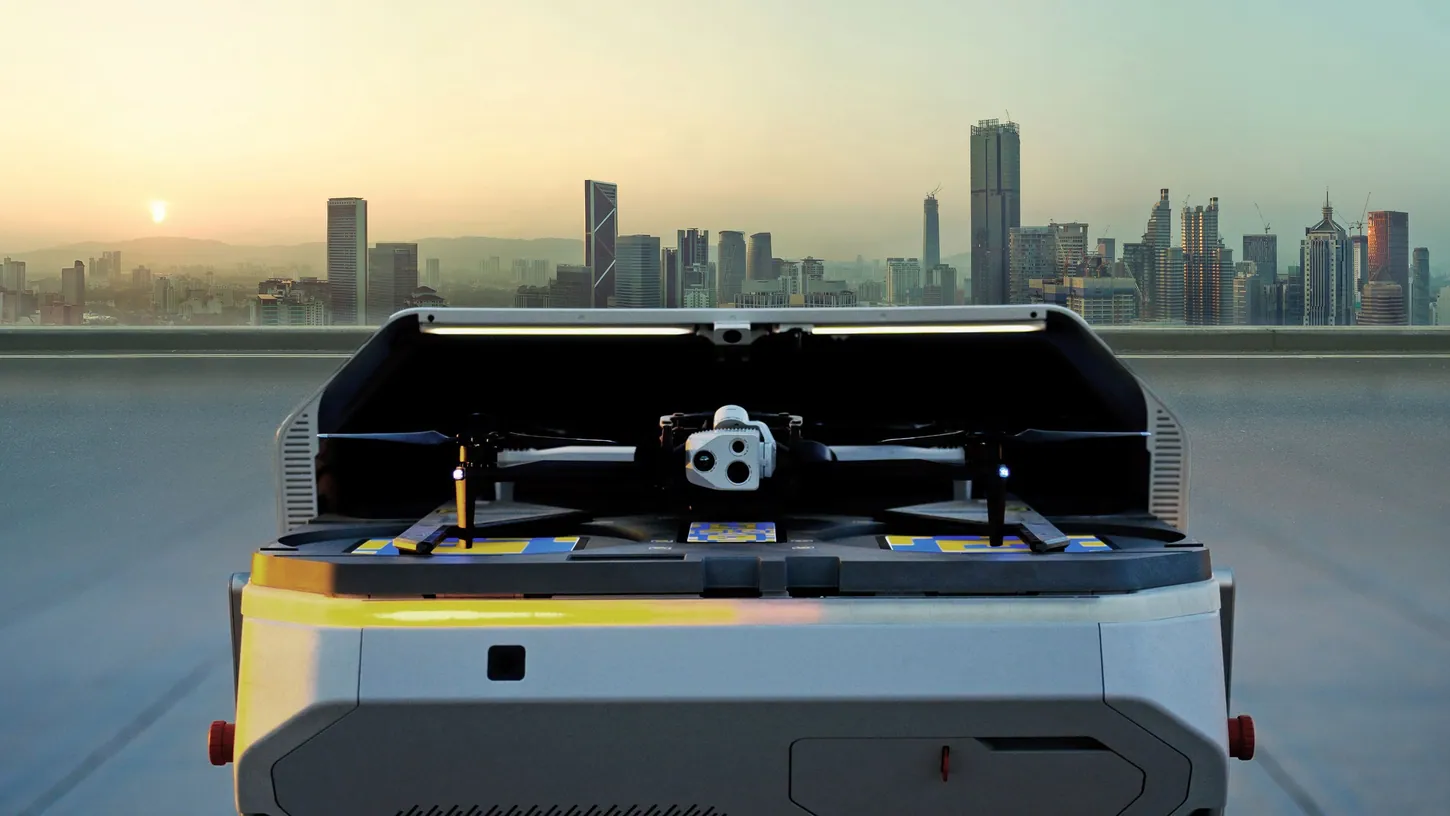
Lakeland police fly four patrol-led drones today, LkldNow reported in June. The proposal Lehman presented at the April 23 strategic planning workshop adds three Drone as First Responder aircraft that launch from docks the moment a 911 call comes in, remotely piloted and flying straight to the scene.
Today, two officers per squad check out two drones each at the start of a shift and keep them in the cruisers, Lehman said, per The Ledger. The drone only flies once that officer is on scene and watching it. The DFR aircraft instead give responders “real-time aerial information during emergency calls,” the city attorney’s agenda memo and 70-page agreement packet say, and the system logs pilots, flights and activity “to support operational oversight and FAA requirements.”
Lehman described the DFR mission in April as a drone that “goes straight to the call, assesses, and then returns to base,” with the aircraft stationed on rooftops across the city. His workshop slide listed the intended calls: crashes and fires, missing persons by thermal search, trespass in closed parks, blocked driveways and abandoned vehicles, and damage assessment after a hurricane. The agenda memo does not restate the count. The April proposal listed three docked drones. A Ledger photo caption in its Apple News edition says two, stationed around the city. The Axon quote that itemizes the deal, Q-705064-45999JG, is referenced in the agreement but was not attached to the agenda packet.
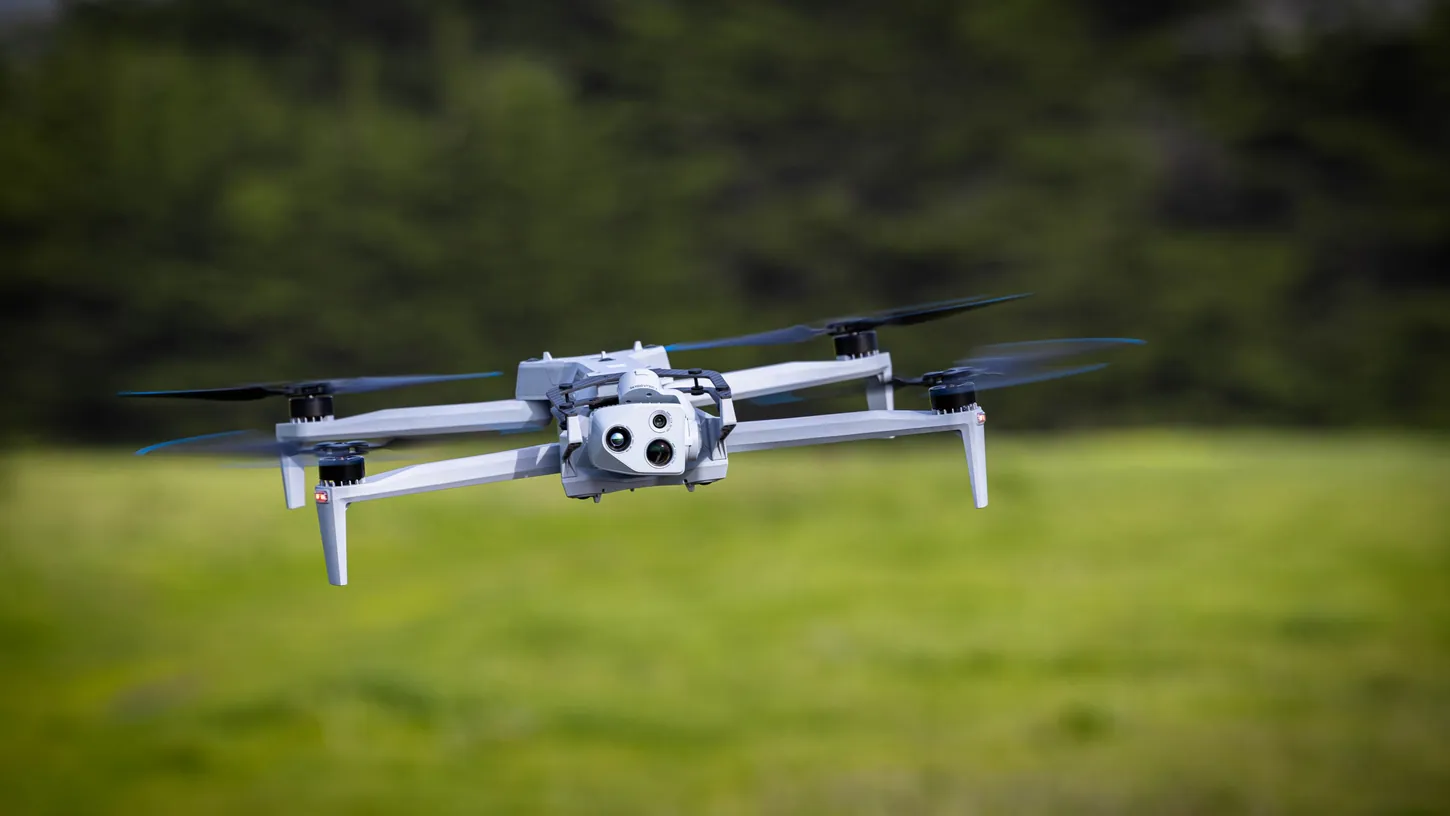
The memo does not name the aircraft. Axon’s own Axon Air product page lists two Skydio aircraft, the Skydio X10 and the indoor R10, and one launch station, the Dock for X10. The X10 is the docked DFR aircraft, and it is the one in the Axon packages Orlando and Boynton Beach took up this year.
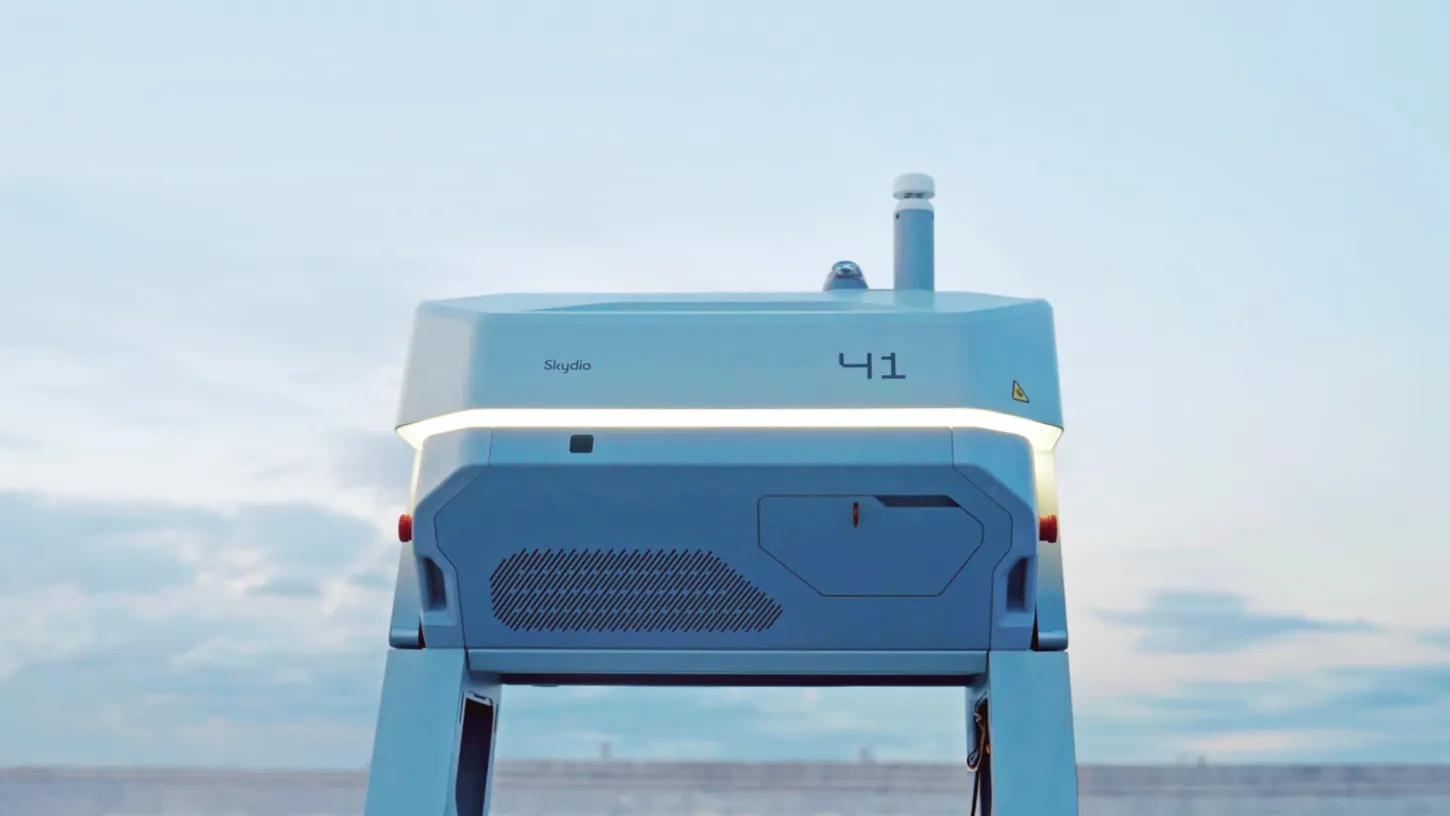
Lakeland does not appear among the Florida agencies on the FAA’s Drone as First Responder waiver list that DroneXL published in August, which covers approvals through February 2026. Orlando, Boynton Beach and Clearwater are on it. The agenda packet does not say whether the department has applied for the beyond-visual-line-of-sight waiver, under Part 107.31 or a Part 91 certificate of authorization, that docked programs like Orlando’s and Clearwater’s hold.
Florida’s Chinese drone ban put Lakeland’s drones on the Axon-Skydio path
Lakeland’s drone program sat grounded from 2022 until February 2025. Its five aircraft were Chinese-made, and Florida law barred agencies from flying them. The restart cost $162,095 for four Skydio drones through Axon on a three-year deal and one BRINC aircraft, with FDLE’s Drone Replacement Grant offering $125,000 toward it.
The February 2025 staff memo spelled out why the department had one choice: “Skydio Drones is the sole drone provider that is compliant with Florida statutes that is aligned with Axon and will integrate with our current Axon platform and evidence.com.” That memo also said the restart would let the department “explore future usage” of Drones as First Response technology.
By October 2026 the city’s purchasing division had approved Axon as the sole-source provider for everything in the new agreement, cameras to drones. DroneXL reported in November that the ban grounded roughly $200 million worth of drones, by state Senator Tom Wright’s estimate, and that the University of South Florida security analysis of the confiscated drones, promised for 2024, was never published. Lakeland’s $162,095 restart and its $22 million follow-on are what replacing that capability looks like in one city.
The immigration grant buys Lakeland’s cameras and AI tools, not its drones
Lakeland’s $3,972,962.18 comes from Florida’s $250 million Local Law Enforcement Immigration Grant Program under Section 908.1033 of the Florida Statutes. The board approved the award, IG115, on May 28. Every dollar sits under one category: “equipment, hardware, and software essential to 287(g) task force activities and/or enforcing immigration laws.”
The application, published in the State Board of Immigration Enforcement’s June 9 board packet, asks for “approximately 277 body-worn camera systems, 165 Fleet 3 in-car video systems and associated peripherals for two (2)-years.” The equipment list runs to Tasers, “AI reporting and real-time translation tools,” Fusus integration, license plate recognition and AI-assisted 911 dispatch. The word drone does not appear in it. The same award carries a further $439,000 for Peregrine data analytics software, which does not appear in the Axon agreement packet.
The justification the department filed says the equipment “will support immigration enforcement operations conducted in coordination with federal partners, including activities under 287(g) and related enforcement efforts,” and that joint operations “frequently involve collaboration with the Polk County Sheriff’s Office, federal partners, and state and municipal agencies.”
The approved price is about $683,000 above the $21.3 million proposal LkldNow reported in June, and officials did not explain the increase at the meeting, LkldNow reported. Mayor Sara Roberts McCarley praised the grant hunt: “These grant pursuits are really, really important.”
Lakeland’s chief sold the AI report writer hardest
Chief Sam Taylor told commissioners at the October 2 agenda study that report writing eats more officer time than anything else after a call. Axon’s AI Era Plan drafts the report from body-camera audio, separating voices, and the department estimates it will cut writing time by 30% to 50%.
“It saves time drafting up to 70% of the report,” Taylor said, per The Ledger. Officers still have to review every report before submitting it. The same plan adds translation for more than 50 languages, evidence transcription and search, case summaries and investigative aids. Lehman had earlier called the package a “game changer for productivity, efficiency, safety and community trust,” The Ledger noted.
DroneXL’s Take
I’m for drones that get overhead in the first two minutes of a call, and Lakeland’s own numbers make the case: the aircraft that sits in a cruiser trunk is useless until the officer is already there. But look at how this city got here. Five working drones were grounded by a state law whose promised security analysis was never published. The replacement had to be Skydio, the city’s own memo says, because Skydio was the only aircraft both legal in Florida and integrated with the Axon platform Lakeland already paid for. Now the drones arrive inside a ten-year, sole-source, $22 million bundle, delivered with the body cameras. I read it as Florida’s ban doing what protectionism does: it removed the competition, and Axon is the vendor left standing.
Somebody on the commission should have asked where the grant money comes from. Lakeland took $3.97 million from a program that exists to fund immigration enforcement, and in its application it told the state that the new body cameras, the AI report writer and the translation tools would support 287(g) operations with federal partners. When the chief pitched those same tools to the commission, they were about cutting paperwork and talking to residents in 50 languages. The drones aren’t in the application, so the money doesn’t touch them. The agenda memo names the State Board of Immigration as the source in one clause and says nothing about what that program is for, LkldNow calls it an FDLE grant, and The Ledger says “several grants.” In everything I read on this deal, nobody has said the word immigration to Lakeland’s residents, and somebody should.
Sources: The Ledger, LkldNow, City of Lakeland agenda memo and Axon agreement (October 5, 2026), City of Lakeland staff memo (February 3, 2025), Florida State Board of Immigration Enforcement June 9, 2026 board packet, FDLE, Axon.
DroneXL uses automated tools to support research and source retrieval. All reporting and editorial perspectives are by Haye Kesteloo. Read our editorial standards.