Asked at a defense symposium in Huntsville on Thursday, August 13, whether he could defend the United States against a drone swarm launched from inside its own borders, the deputy commander of U.S. Northern Command answered in one word. No.
Army Lt. Gen. Joseph Jarrard, who also serves as vice commander of the U.S. element of NORAD, did not soften it afterward. He said the command lacks the sensors to see a swarm forming and, depending on where it went, may lack anything to shoot back with.
I have been reporting the American counter-drone buildout piece by piece since the fiscal 2026 defense bill passed in December: the police mitigation authority, the FEMA money, the FBI schoolhouse in Alabama, the fly-away kits. Jarrard’s answer is what all of that adds up to nine months later.
Jarrard Named Detection As The Constraint, Not Authority Or Money
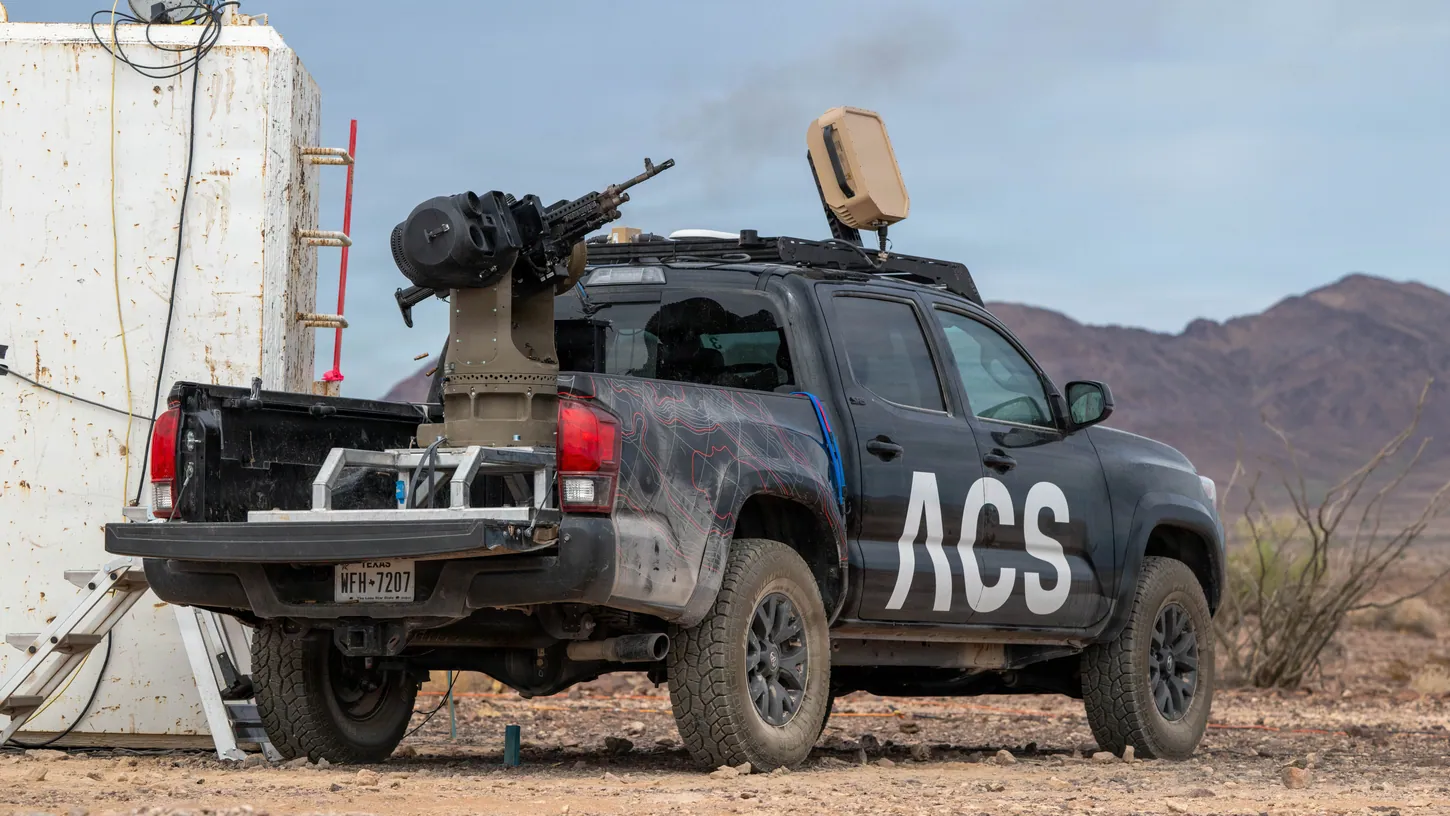
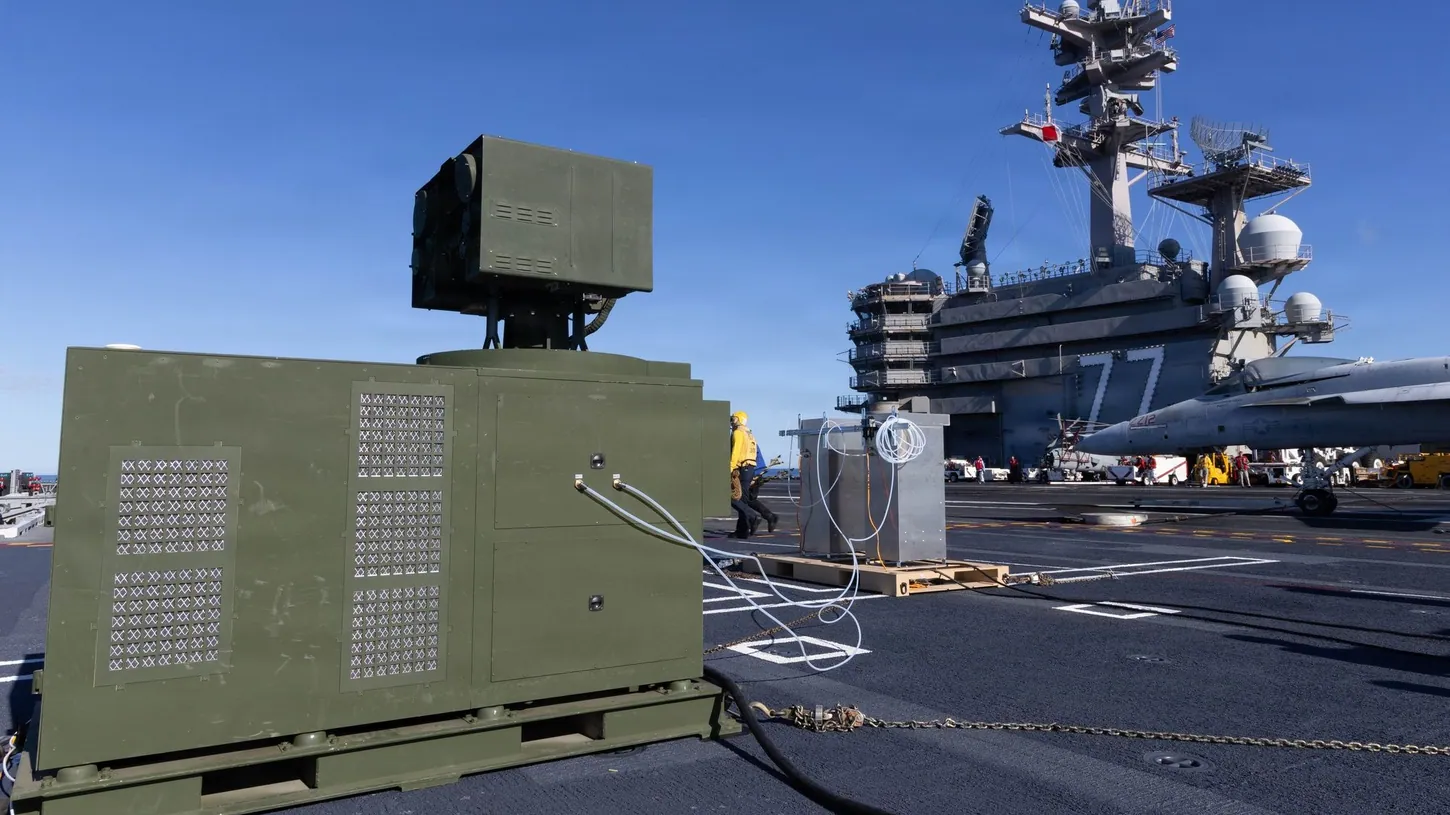
Jarrard told the Space and Missile Defense Symposium that Northern Command lacks both the sensors to find a swarm and the effectors to stop one. Detection is the harder half. His command is now trying to tie military radars into systems local police already operate.
“We are ill-equipped right now to handle something like that,” he said, in remarks first reported by The War Zone, which attended the symposium. He pointed to Operation Noble Eagle, the post-9/11 air defense posture, as the doctrinal template his command is now adapting for counter-drone work, and to the World Cup as the working model for federal coordination with local law enforcement.
That framing matters more than it sounds. Northern Command was designated the Pentagon’s lead synchronizer for homeland counter-drone operations in November 2024. Twenty-one months later its deputy commander is describing interoperability with municipal police radars as the path forward, which is an admission about how thin the military-only picture is. DefenseScoop reported that Jarrard is the second Northcom general in four months to say a version of this out loud.
Barksdale Showed The Gap Is Wider Than Sensors
Security forces at Barksdale Air Force Base counted multiple waves of 12 to 15 drones over the Louisiana flight line between March 9 and 15. The sensors worked well enough to count them. Five months on, no one has publicly identified who was flying.
A confidential March 15 briefing document obtained by ABC News described aircraft with non-commercial signal characteristics, long-range control links, and resistance to jamming. DroneXL reported that campaign in March, over a base that hosts B-52 bombers and nuclear weapons storage. The investigation is still open.
The detection story is genuinely improving. Gen. Gregory Guillot told Congress in March that Northcom now defeats about a quarter of the drones it detects over installations, against almost none a year earlier. He also disclosed that the command had exactly one deployable counter-drone fly-away kit at the time, crewed by 11 soldiers. A twenty-five percent defeat rate against a single mobile kit is not a defense. It is a pilot program with a good press release.
The Offense Crossed Its Own Line Nine Days Before Jarrard Spoke
Nine days before Jarrard spoke, Bloomberg watched five quadcopters lift off a Maryland cornfield and attack a Cold War-era tank without a pilot flying any of them. The software running that swarm came from Auterion, and it already ships to Ukraine by the tens of thousands.
Katrina Manson’s August 14 account for Bloomberg describes an operator touching a controller once on August 4, after which the drones organized themselves into formation and ran the engagement. Cut their link to the operator and they keep talking to each other and finish on preloaded targeting.
None of this is a prototype. Auterion’s Nemyx engine ran the first multi-manufacturer kill chain in December, and a single operator destroyed three separate targets with it at Camp Blanding, Florida on January 8 under the Pentagon’s own Swarm Forge program. The hardware is deliberately interchangeable. Any aircraft running the company’s stack joins a swarm through a software update.
Meanwhile the rules governing that software are being rewritten on a clock. NSPM-11, signed June 5, gives the Secretary of War 90 days to issue an updated DoD Directive 3000.09 on autonomy in weapon systems. That lands on or about September 3.
The Pentagon Is Buying Faster Than It Can Cover Ground
The fiscal 2027 request seeks $14.4 billion for counter-drone defenses at more than 250 sites. The Defense Department tracks 824 installations. Congressional Budget Office analysts put comprehensive layered defense of a single benchmark base at roughly $74 million, plus $5 million a year to run.
Run the CBO arithmetic and 100 protected sites cost about $7.4 billion up front, as The Center Square reported from the budget documents and the agency’s July analysis. The contracts are moving regardless. Joint Interagency Task Force 401 signed CACI to a $500 million SkyValor deal in July, AeroVironment took a separate $500 million award, and the Marine Corps put $11 million into Epirus this month for a vehicle-mounted high-power microwave system built off the Leonidas that fried a 49-drone swarm in Indiana last summer.
Assistant Secretary of Defense for Critical Technologies Michael Dodd put the department’s appetite plainly on August 12. “Bring us your best. Not slideware,” he wrote, asking industry for lighter airborne directed energy weapons. Directed energy is also where the domestic program has already gone wrong once: a laser fired near the border without proper coordination shut down El Paso airspace in February, and the FAA did not clear military anti-drone lasers for U.S. airspace until April.
DroneXL’s Take
Jarrard deserves credit before he gets criticism. When drones flew over Langley for 17 straight days in December 2023, the answer from the Pentagon was silence and then euphemism. This time a three-star said “no” into a microphone in front of the defense industry. That is a better failure mode than the one we had.
The problem is what the “no” is actually about. Read the coverage and you come away thinking the United States needs more sensors. Barksdale says otherwise. The sensors there worked. Somebody counted the drones, wave by wave, logged their signal characteristics, noted that they resisted jamming, and wrote it into a classified briefing five days in. What did not happen was attribution, and what did not happen was interdiction. Detection was never the binding constraint at the one incident we have the best documentation for.
My read is that $14.4 billion buys hardware for a problem the department can define and skips the one it cannot. Sensors and effectors are procurable. Knowing who launched from a farm road eight miles outside the fence, and having the legal posture to do something in the ninety seconds before impact, is not a line item. The FY2027 request covers 250-plus sites out of 824 and nobody has explained which 574 are acceptable losses. That is the question I would put to Jarrard, and it is not the one he was asked.
I made the domestic-policy half of this argument yesterday, about Texas, so I will keep it to one line here: every cycle like this one ends with new rules, and new rules get enforced against the pilots who broadcast Remote ID rather than the ones who do not.
The date to watch is on or about September 3, when the 3000.09 rewrite NSPM-11 ordered comes due. The demonstration in Maryland put the lethal decision in a software layer that the current directive still defines through the aircraft carrying it. If the update leaves that definition alone, the United States will spend the next budget cycle buying microwaves to shoot down machines its own policy no longer knows how to classify.
Sources: The War Zone, DefenseScoop, Bloomberg, National Defense Magazine, The Center Square, Air & Space Forces Magazine, White House NSPM-11.
DroneXL uses automated tools to support research and source retrieval. All reporting and editorial perspectives are by Haye Kesteloo.