
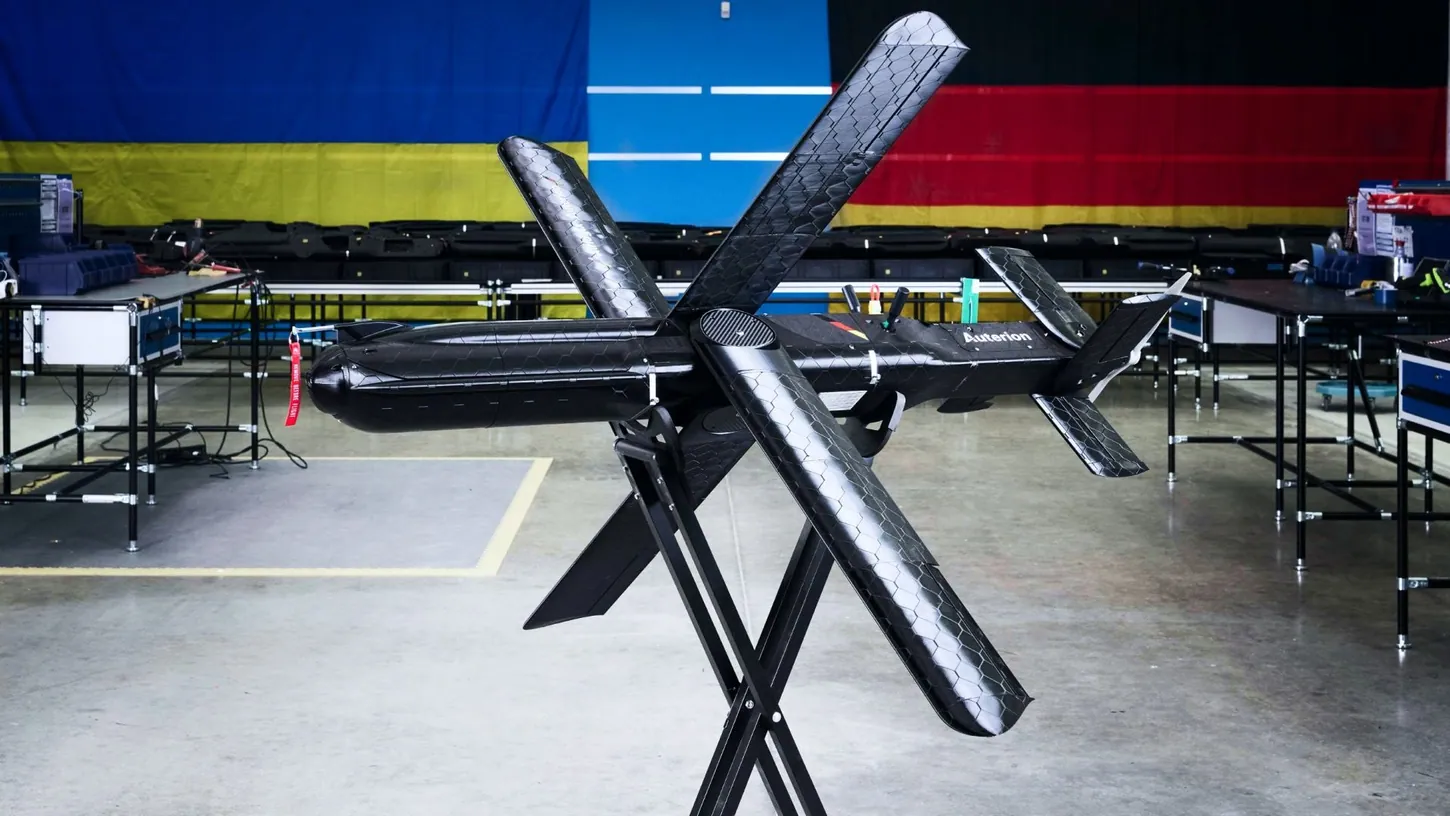
Airlogix, the Kyiv drone maker whose strike aircraft are now built in Germany, is in talks to raise $100 million at a valuation above $2 billion, Forbes reported on October 9, citing two sources familiar with the deal. If it closes, Airlogix becomes the most valuable company to come out of the defense industry Ukraine built after Russia’s 2022 invasion.
Vitalii Kolesnichenko founded Airlogix in 2020 to build cargo drones. The war turned it into a maker of the GOR reconnaissance drone, a catapult-launched aircraft that loiters over a target for up to four hours, and this year into a strike drone supplier under a German government contract for more than 5,000 aircraft. Airlogix declined to comment on the fundraising.
Russian strikes have destroyed Airlogix production sites more than once, Kolesnichenko told the Resilience Conference in London on October 5. The drones behind the $2 billion price are being built in Germany.
Russian strikes pushed Airlogix’s factories into Germany, Canada and the UK
Airlogix spread its manufacturing across several countries after Russian strikes destroyed production sites in Ukraine. Its joint venture with Auterion started serial production of the Seth X and Anubis strike drones in Germany on September 21. A Canadian venture with Hamilton-based Sentinel followed a late May signing in Ottawa.
“We basically were forced to break down our manufacturing cycles [into] many, many small pieces,” Kolesnichenko said in London, according to Forbes. He said he is working on similar production deals in Finland, Denmark, the Netherlands and the United States. Resilience Media reported the next day that Airlogix has also opened production in the United Kingdom, a move disclosed at the same conference by Oleksandr Kamyshin, Ukraine’s former strategic industries minister.
Auterion and Airlogix formed the joint venture at the Munich Security Conference in February, and Germany signed the cooperation agreement that unlocked its first contract on April 14, with Chancellor Friedrich Merz and President Volodymyr Zelenskyy standing beside an Airlogix airframe at the ceremony. Auterion’s September release puts the order at more than 5,000 mid-range and heavy strike systems, delivered to Ukraine’s armed forces, and its April announcement said production in Germany runs under Ukrainian export permissions. Handelsblatt has put the contract at about 300 million euros ($349 million) and the plant near Munich, and neither company has confirmed either detail. Auterion, the Swiss-founded software company that supplies the Skynode flight computer and Nemyx autonomy stack for those aircraft, raised $130 million in a Bessemer-led Series B in September 2025, and Rheinmetall bought a stake in it two months later.
Airlogix is one of several Ukrainian makers now producing on allied soil. Quantum Systems and Frontline Robotics opened a Munich-area plant for 10,000 Ukrainian drones a year in March, and Zelenskyy’s plan for ten weapons export offices across Europe dates from February.
Uforce’s $5 billion talks set the bar Airlogix is pricing against
Airlogix’s $2 billion ask sits between Ukraine’s two existing drone valuations. Uforce, a London-based group of nine Ukrainian manufacturers including the Magura sea drone’s maker, raised $50 million at just over $1 billion in March. Bloomberg reported on September 7 that it now seeks $500 million at roughly $5 billion.
That round would be led by Valor Equity Partners, the firm run by SpaceX board member Antonio Gracias. Uforce’s March round, led by Shield Capital and Lakestar, was the first time a Ukrainian defense startup crossed $1 billion. Six months later the same company is negotiating at five times that number. Forbes reported the March round as a $50 million seed, with a plan to take proven Ukrainian designs and build them outside the country, the same pitch Airlogix is making in Germany and Canada.
Some Ukrainian companies may be worth more than Airlogix without ever having raised from outside investors. Fire Point, which builds the FP-1 strike drone and the Flamingo cruise missile, says its 2025 revenue was 29.3 billion hryvnia, about $669 million, a figure Ukrainska Pravda reported in May from the company’s own statement. Its revenue comes from Ukrainian state contracts. The one outside bid reported for it, about $760 million from the UAE’s EDGE Group for a 30 percent stake, was filed with Ukraine’s antimonopoly committee in December and returned in January without approval.
Kyiv’s July export resolution has yet to clear a single permit
Ukraine shut off arms exports in February 2022, and drone makers could not get permits for finished aircraft. Cabinet Resolution No. 875, adopted July 1, 2026, lets makers that still fulfil their state contracts sell to countries holding a “Drone Deal” agreement with Kyiv, with approvals capped at 30 days.
The permit carries a fee of 20 percent of the contract value for finished products and technologies, 30 percent for components, and the mechanism lasts as long as martial law does. Partner countries named so far include Estonia, Latvia, Lithuania, Denmark, the Netherlands, Saudi Arabia, the United Arab Emirates and Qatar. Separately, Ukraine’s State Service for Export Control approved a batch of F-Drones F10 strike drones for the US military on July 1, which the company says were the first finished Ukrainian combat drones ever cleared for export.
Ihor Fedirko, who heads the Ukrainian Council of Defense Industry, told Militarnyi that no permit has been issued under the resolution and that its conditions make exporting from Ukraine unprofitable or too risky for manufacturers. Private firms have landed up to ten small export contracts, he said on August 26, and only one joint venture abroad is actually operating. Airlogix’s German order is Berlin’s own contract and its Canadian line builds for Ukraine’s army under an arrangement Ottawa signed, so neither waits on that queue. Kolesnichenko’s investor line in London, that funders fear everything a Ukrainian company owns sits inside Ukraine, is the same point from the other side.
DroneXL’s Take
Investors are paying $2 billion for Ukrainian drone designs built where Russia cannot reach them, and Kolesnichenko said as much on stage. Berlin pays for the German contract and the aircraft ship east. The Ukrainian half of the company is the half that keeps getting hit.
I think that is the right bet, and I also think it says something uncomfortable about the companies that stayed home. Fire Point sells to the Ukrainian treasury, and the only outside money reported for it has sat with a regulator since January. Uforce at $5 billion is built on the same move-it-west logic as Airlogix. Ukraine’s battlefield earned these companies their reputation, and the money is going to the ones that can leave it.
Watch which US partner Kolesnichenko names. An American production line would put Airlogix drones inside the Pentagon’s supply chain, and a $2 billion valuation needs that more than it needs the German contract.
Sources: Forbes, Resilience Media, Auterion, Government of Canada, Bloomberg, Ukrainska Pravda, Militarnyi
DroneXL uses automated tools to support research and source retrieval. All reporting and editorial perspectives are by Haye Kesteloo. Read our editorial standards.


