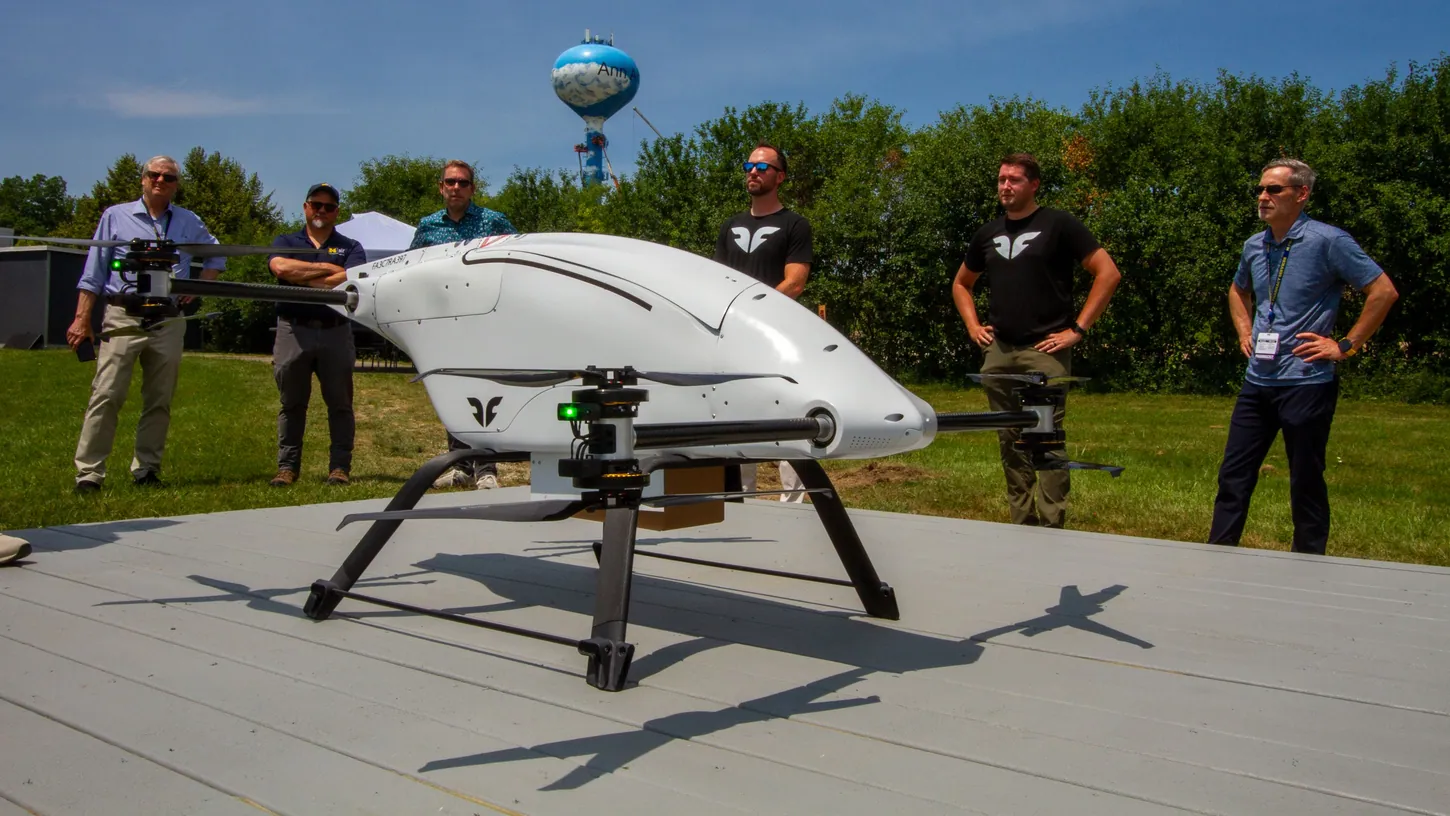
Matternet will sell its M3 drone delivery system through TransLogic, the Swisslog Healthcare unit whose pneumatic tube systems run inside more than 2,300 North American hospitals, including 18 of the top 20 U.S. hospitals, under a partnership the two companies announced Thursday morning. TransLogic’s sales team becomes a distribution channel for the M3 across its customer base of more than 3,000 hospitals worldwide. The first deployments target hospital systems in California, Florida and Arizona during the partnership’s first year.
The pitch is one automated network that runs from the tube station inside a hospital to the satellite buildings outside it, with the drone carrying medication, lab specimens and urgent supplies between buildings that couriers drive between today.
The aircraft the deal is built around has no FAA type certificate. Matternet unveiled the M3 on September 28 with commercial service targeted for the second half of 2027.
TransLogic Sells the M3 to Its Tube Customers and May Install It Too
The agreement makes TransLogic’s sales team the channel for Matternet’s M3 systems into hospitals that already buy its pneumatic tube, pharmacy automation and specimen tracking products. The two companies also plan to explore having Swisslog Healthcare’s field service organization install, support and maintain Matternet’s docks at hospital sites.
The M3 carries up to 11 pounds (5 kg) within a 10-mile (16 km) service radius and flies without anyone on site. Between flights it sits in the M3 Dock, which Matternet says fits on a hospital rooftop or any other unused space. Spread across a health system, the docks tie its buildings into one on-demand network, per Thursday’s release.
Swisslog Healthcare is the hospital arm of German robot maker KUKA, with more than 1,000 employees. TransLogic, based in Westminster, Colorado, builds the tube systems in the United States. Cory Kwarta, CEO of Swisslog Healthcare, said hospitals have automated what happens inside their walls for years, and “this partnership extends that automation to everything outside them.”
Matternet founder and CEO Andreas Raptopoulos described a lab specimen flying from a remote clinic to a central lab by drone, then riding the tube inside the hospital to its bench. “End-to-end automation will define the future of hospital logistics,” he said. The release names no hospital and puts no price or order count on the deal.
The M2 Flies Hospital Routes Today and Earned $121,439 Last Reported Quarter
Matternet booked $121,439 in revenue for the quarter ended June 30. The 10-Q it filed on August 19 puts the nine months to that date at $255,564. All of it came from Matternet M2 operations, the only delivery drone with a standard FAA type certificate.
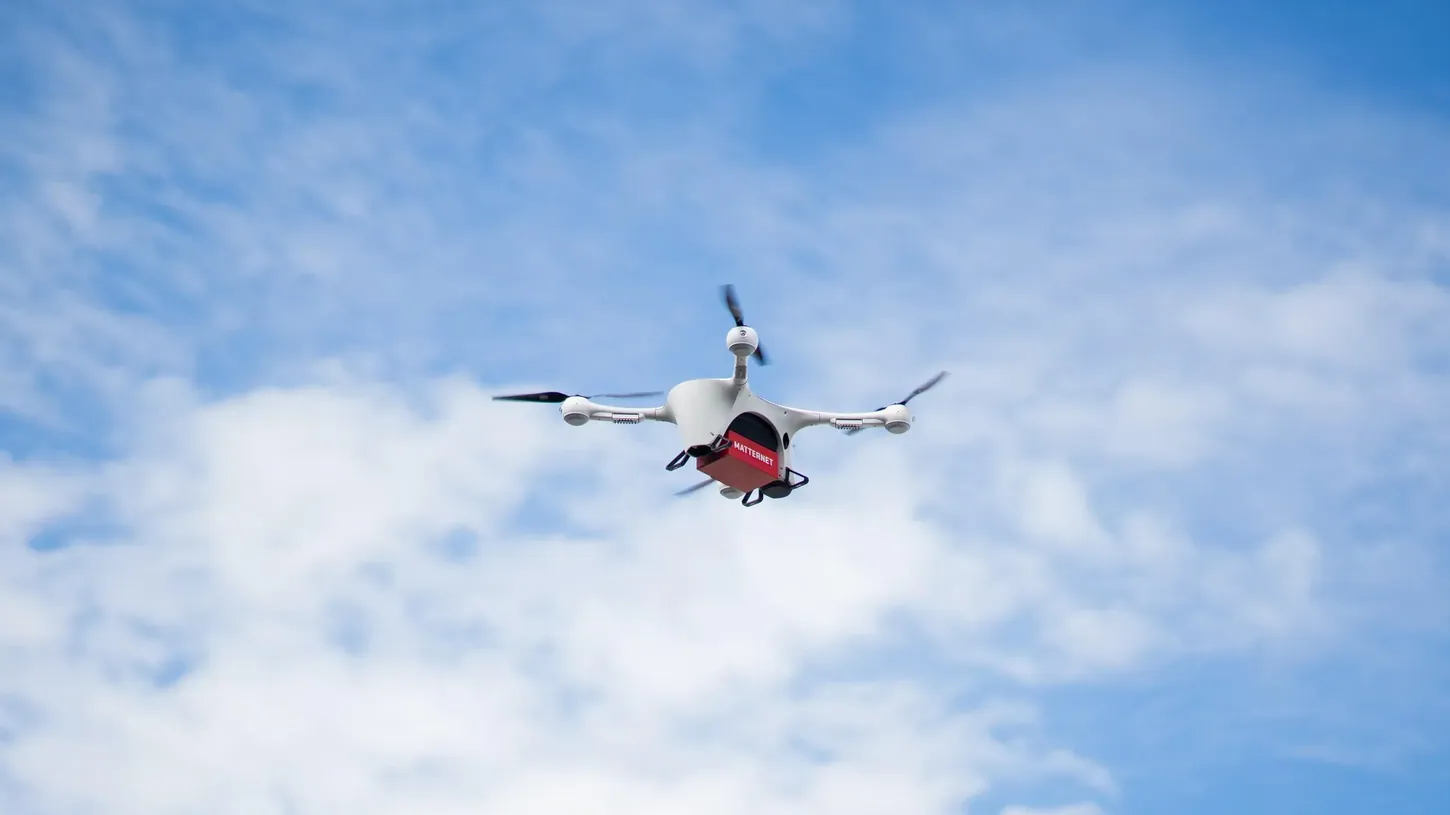
Matternet has flown for health systems since 2017 in Switzerland and since 2019 in the United States, where it started with WakeMed in Raleigh, North Carolina, and added Wake Forest Baptist Health in 2020. Those U.S. flights are flown by UPS Flight Forward and Ameriflight under their Part 135 certificates, because Matternet holds none of its own, and the filing says some customer programs depend on a single operator. One customer produced 80% of the nine months’ revenue.
The same filing says the company lost $15.1 million over those nine months, held $23.1 million in cash on June 30, and expects that cash to run out within a year of the filing under its current plan, which raises spending on the M3. Management says it can defer some of that spending, but not enough to close the gap, and it concluded that substantial doubt exists about the company’s ability to continue as a going concern, and said it plans to raise more money through debt or equity. Matternet went public in June through a $33 million reverse merger and has since named SoftBank Robotics America, Amprius, Beeline UAS, AVI-SPL, Dave’s Hot Chicken and Apian as partners. None of those announcements carried a dollar figure either.
The M2’s type certificate took 22 months from proposed airworthiness criteria to issuance, and as of Thursday the Federal Register holds no criteria for an M3. The BVLOS rule that would let hospital routes scale without case-by-case waivers, Part 108, sits unsigned too.
DroneXL’s Take
I think this is the best distribution deal Matternet has ever signed, and it is a sales channel for an aircraft that does not yet exist in the FAA’s eyes. A tube-system rep who already walks the loading dock at 2,300 hospitals is worth more than any launch partner on the list above, because hospital logistics directors buy from the vendor they already have a service contract with. Swisslog Healthcare installing and maintaining the docks would close the biggest gap in Matternet’s U.S. model, where someone else has flown every commercial route since 2019.
But 2,300 hospitals is a call list, not an order book. The product the reps will sell has no certificate and no flights before late 2027 by Matternet’s own calendar. The product that can fly today has been in U.S. hospitals since 2019 and brought in $121,439 in the last reported quarter, and the release names only the M3 without saying which aircraft flies the first-year deployments. My read is that this deal was priced for the fundraising the 10-Q says is coming, not for 2027 revenue. Matternet’s fiscal year closed September 30, so the 10-K due this winter is where a signed hospital or a dock order would first show up, and the drone delivery tracker will log the first one that does.
Source: Matternet press release, October 29, 2026, Matternet Form 10-Q, filed August 19, 2026, Matternet on X
DroneXL uses automated tools to support research and source retrieval. All reporting and editorial perspectives are by Haye Kesteloo. Read our editorial standards.