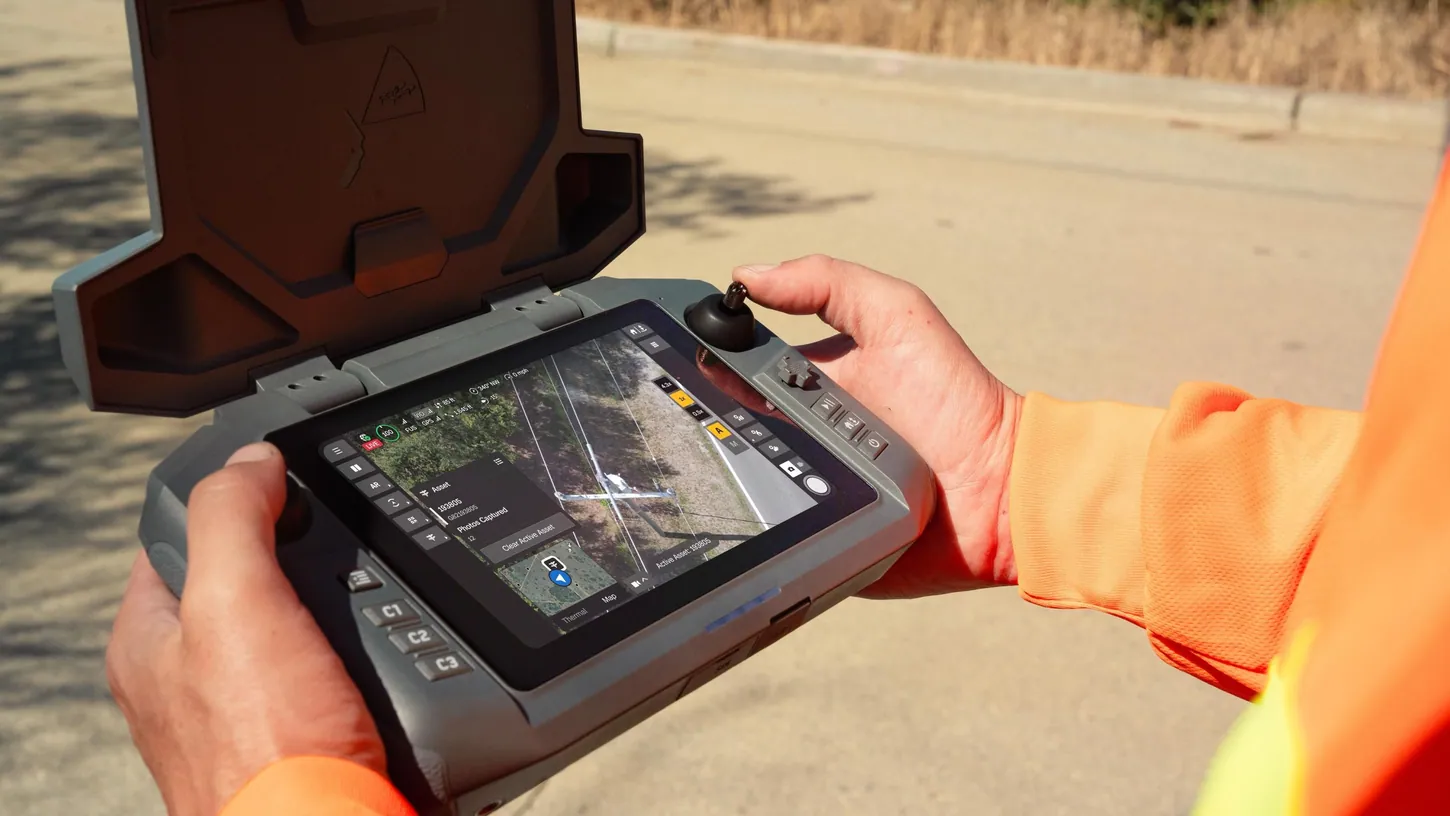
Skydio’s Controller 2, a new handheld controller for its X10, X10D and R10 drones, is going out to customers, CEO Adam Bry posted on LinkedIn on Sunday, November 8. Skydio had announced it on October 27 with a 7-inch screen rated at 2,000 nits sustained and more than 5 hours 45 minutes of battery life. It comes in the box with every new X10 and R10.
Skydio first showed the controller at its Ascend event in September, the same show where it unveiled the F10 Lightrunner, rated up to 100 mph. Bry’s post lists a bigger, brighter screen, better 5G performance, more I/O, and Skydio’s Command software on the controller for joint dock and controller missions. Skydio’s spec sheet also shows Controller 2 is 395 grams heavier than the X10 controller it replaces, with the same battery inside.
Controller 2 Weighs 395 Grams More and Runs 45 Minutes Longer
Controller 2 weighs 1,530 grams (3.4 pounds) against 1,135 grams (2.5 pounds) for the original X10 controller, per Skydio’s spec sheet. It runs about 45 minutes longer on the same 9,600 mAh battery and moves up to a 7-inch screen from 6.6 inches. It is rated IP55, up from IP54.
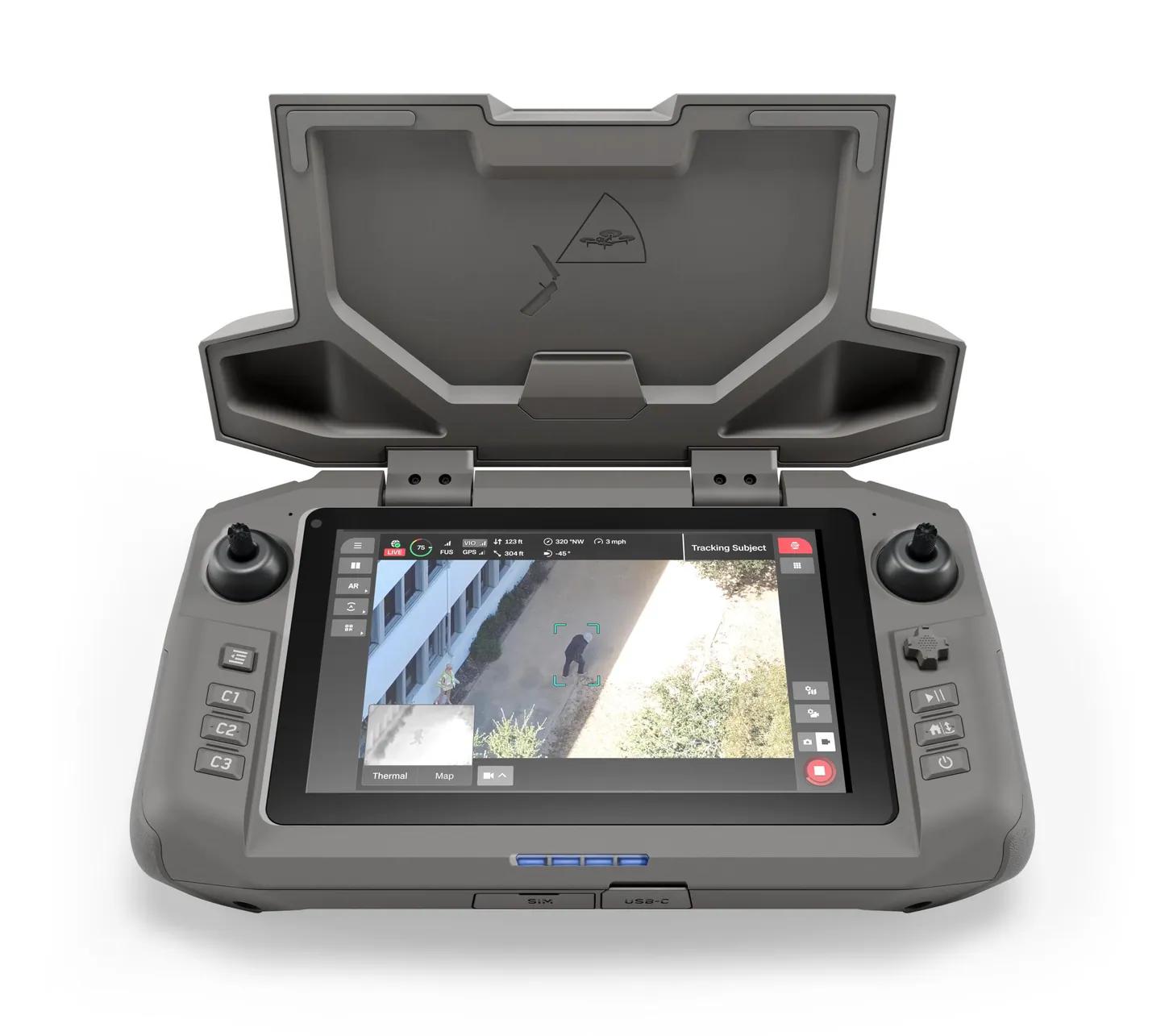
The screen changes type as well as size. The X10 technical specs list the original controller with a 6.6-inch AMOLED panel at 2340 x 1080 pixels and 120 Hz, rated at 1,750 nits outdoor peak. Controller 2 gets a 7-inch LCD at 1920 x 1200 and 60 Hz, rated at 2,000 nits sustained. A peak rating and a sustained rating measure different things, so the two brightness numbers don’t line up directly.
The IP55 rating adds protection against water jets where IP54 covers splashing. Controller 2 also has a built-in kickstand, protected control sticks, customizable physical buttons and wireless screencasting alongside its HDMI output. As of November 8, none of Skydio’s Controller 2 pages explains where the extra weight comes from.
Controller 2 Lets Crews Choose Among Approved 5G Carriers
Controller 2 runs Skydio Flight Deck for the X10, X10D and R10 and takes a swappable 5G SIM, with the data plan bought through Skydio or brought from an agency’s own carrier. X10D crews who need Microhard radios get Controller 2 MH, a separate version with External Radio Kit support.
Skydio’s launch post says that lets teams switch carriers when coverage changes from one location to another. Skydio’s spec sheet rates the 5G link’s range as unlimited wherever there is cellular coverage, against 7.5 miles (12 km) on Skydio’s own radio link and 6.2 miles (10 km) on Microhard. The Controller 2 MH page pitches that version for ISR Command, the software Skydio launched in October to let one soldier fly two X10Ds from a single controller.
The spec sheet calls Controller 2 NDAA compliant, with an AES-256 encrypted data link and trusted boot. Skydio’s X10, R10 and Dock for X10 made the Blue UAS Cleared List in July, which put them in reach of police departments buying with federal grant money. As of November 8, Skydio’s Controller 2 pages describe the controller as NDAA compliant but not as Blue UAS listed.
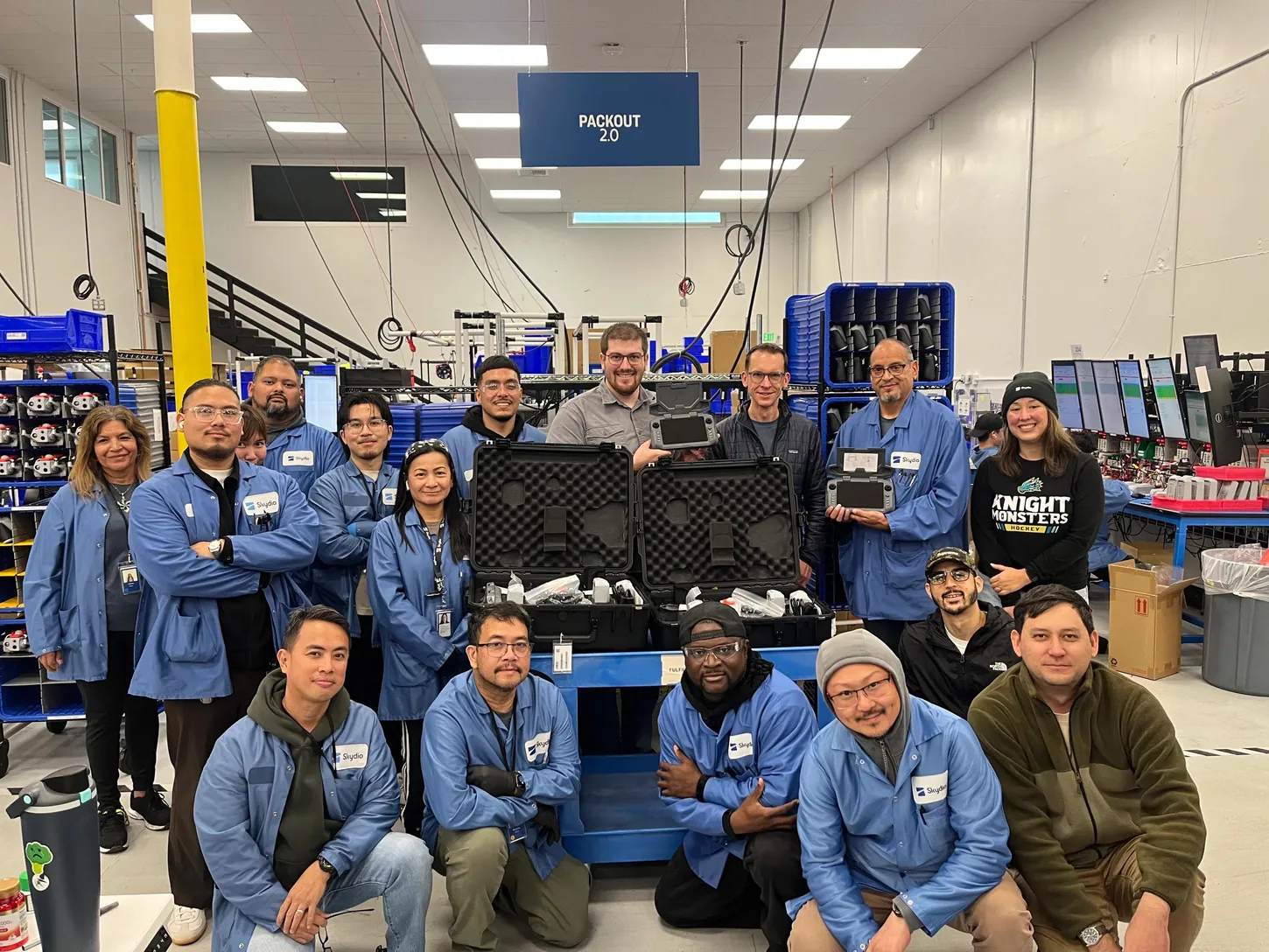
Bry’s LinkedIn post says “controllers aren’t going anywhere.” Owners of aircraft already in the field can order Controller 2 separately. As of November 8, none of Skydio’s Controller 2 pages lists a price for it.
DroneXL’s Take
Bry’s point that controllers still matter is the part of this launch I agree with most. To me, Skydio’s growth story for two years has been docks, more than 1,000 of them at public safety agencies by the company’s own September count. But somebody still has to clear a building with an R10 or fly an X10D for a squad, and that person holds the controller for the whole shift. I’d take 395 extra grams for 45 more minutes and a screen Skydio rates for direct sunlight, and the carrier choice is a real fix for agencies whose coverage changes across a county. What I couldn’t find is a price. A department already flying X10s that wants Controller 2 can’t budget for it from Skydio’s public pages yet.
Sources: Skydio, Adam Bry on LinkedIn, Skydio X10 technical specifications.
DroneXL uses automated tools to support research and source retrieval. All reporting and editorial perspectives are by Haye Kesteloo. Read our editorial standards.