
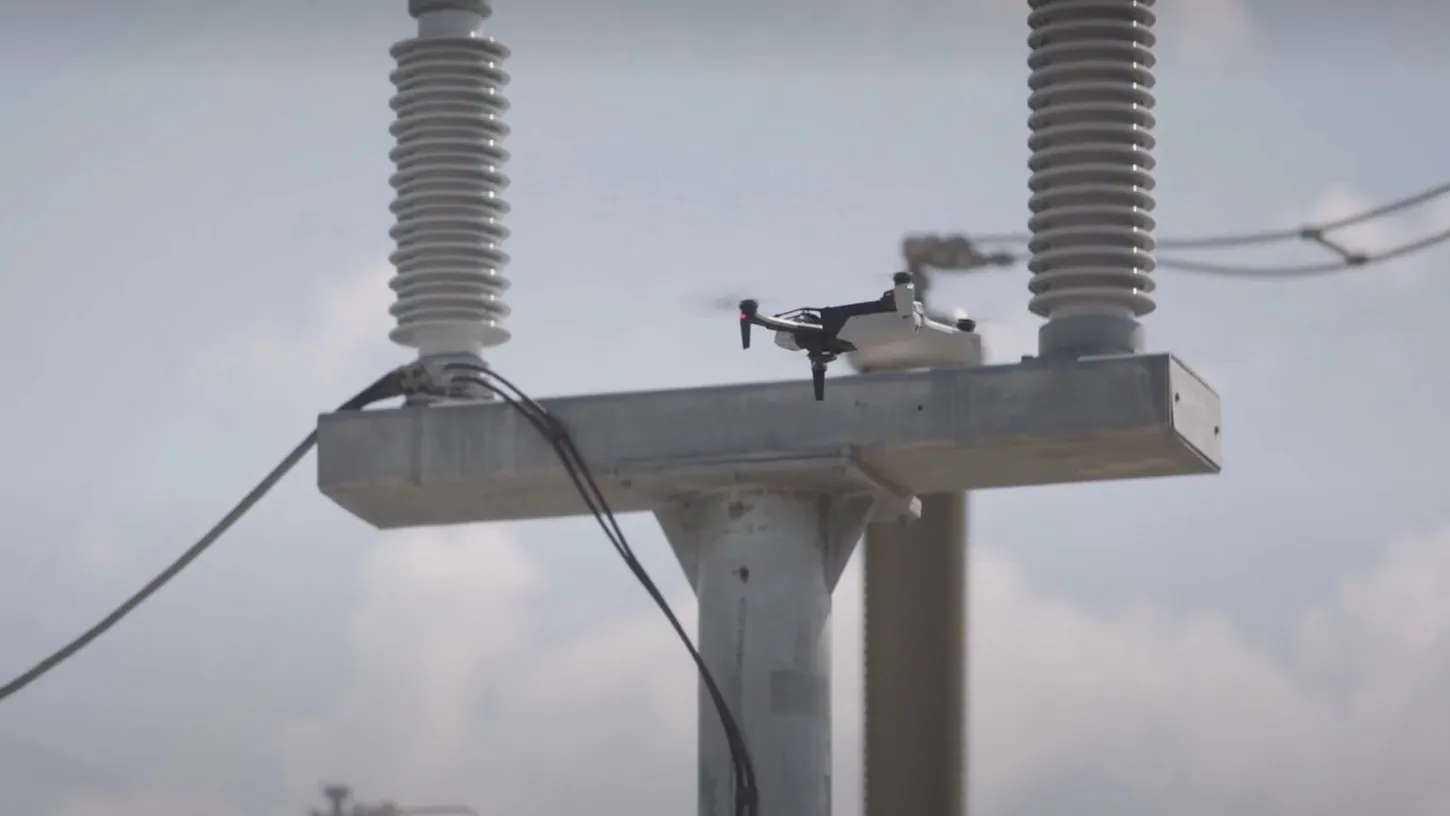
Skydio X10 · Skydio
Skydio: Dominion Adds 100 Docked Drones and Turns Linemen Into Pilots
Dominion Energy added 100 Skydio docked drones, says Adam Bry. Dominion says they save 8 to 12 hours per event and open pilot jobs for linemen.
Skydio’s flagship enterprise drone: the X10, the militarized X10D, and the DFR programs built on them.
The Skydio X10 is the drone most American public safety agencies buy when they cannot or will not buy DJI, and the aircraft carrying the largest small-drone order in US Army history. Launched in September 2023, and covered hands-on at that launch, it is rated at 40 minutes of flight and 35 of hover under lab conditions, deploys from a backpack in under 40 seconds, carries modular payloads including a FLIR Boson+ thermal sensor, and runs $16,000 to $25,000 a unit in public safety deployments. Our full X10 guide covers the spec sheet, the VT300-Z and VT300-L payloads, and what the X10D actually changes.
Procurement is where the X10’s position was won. The militarized X10D cleared Blue UAS in 2024, and in July 2026 the X10, the Dock for X10 and the R10 joined it, making Skydio the first manufacturer to put its complete active lineup on the Pentagon’s roster. That matters less as a certificate than as a key to federal grant money, which is how most agencies pay for these programs. A month earlier the US Army ordered more than 2,500 X10Ds for over $52 million, the largest single-vendor small-drone purchase in its history.
What the aircraft does day to day is the rest of this archive, and the results arrive quickly. Spokane logged 400 flights in three weeks. Port St. Lucie saved a life on day one. An X10 found a lost man at 3 a.m. in Florida on thermal, and another helped rescue three people from the Kishwaukee River. We cover the friction too, because buying an X10 is a political act in some cities: Minneapolis deadlocked 6-6 and killed a free Skydio trial over the company’s ICE and Israel ties, and Conroe funded its program with asset forfeiture money. The feed below carries every Skydio X10 story as we publish it.
Last updated October 16, 2026 — the feed below updates with every new story.
Dominion Energy added 100 Skydio docked drones, says Adam Bry. Dominion says they save 8 to 12 hours per event and open pilot jobs for linemen.
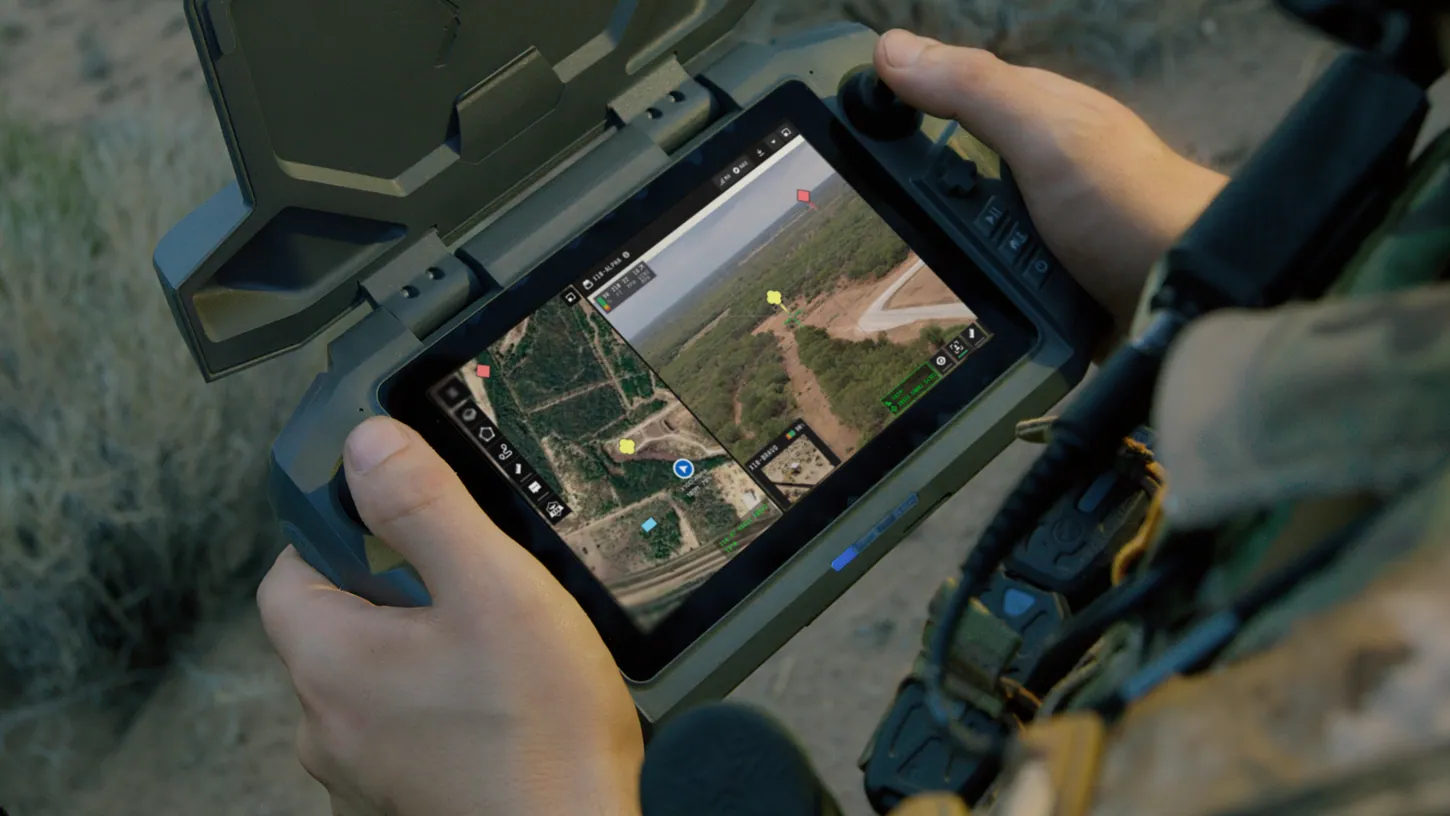
Skydio's new ISR Command lets one soldier fly two X10D drones and, Skydio says, pass target locations to platforms from strike drones to F-16s.

A DHS addendum obtained by DroneXL scores the DJI Matrice 4T at 4.6 and the Matrice 30T at 4.3 at Hudson Yards, above the Skydio X10D at 3.7. The public report left those numbers out. I think we're allowed to ask why.

Welcome to your weekly UAS news update. We have four stories for you this week: DSPA asks Congress to look at the DHS Blue UAS report, 15 states sue the FAA over drone delivery, DJI's next enterprise drone leaks in China, and Skydio unveils a fixed-wing drone and a robotic dock.

A DHS addendum marked For Official Use Only scores DJI's Matrice 4T at 4.6 and Matrice 30T at 4.3 at Hudson Yards, against 3.7 for the Skydio X10D.

DHS lab put Blue UAS before 26 public safety pilots: three of five could not fly Manhattan, links dropped at 50 feet, Chinese drone scores stay private.

Ohio's HB 251 police drone law starts Oct. 6. Cleveland's Skydio X10 rules already ban facial recognition, protest surveillance and all weapons.

St. Paul's council withdrew a $200,000 grant request for more police drones a week after the deputy chief said there was no other money to expand.
We have reported $16,000 to $25,000 per unit in public safety deployments, depending on payload and software. Adam Bry has put a standalone X10 without cloud software at about $15,000. The Army's March 2026 order of more than 2,500 X10Ds for over $52 million implies roughly $17,000 to $21,000 per unit depending on the final count.
Skydio rates it at 40 minutes of flight time and 35 minutes of hover under ideal lab conditions, which is the number to treat as a ceiling rather than a plan. Real DFR programs fly far shorter sorties because the aircraft launches, gets eyes on a scene, and returns.
The X10D is the defense variant, built to keep flying in GPS-denied and jammed environments. It cleared Blue UAS in 2024, two years before the rest of the lineup, and it is the aircraft behind the Army's Short Range Reconnaissance Tranche 2 selection and the March 2026 bulk order.
Yes. The X10, the Dock for X10 and the R10 indoor drone were added to the Pentagon's Blue UAS Cleared List in July 2026, joining the X10D from 2024. That made Skydio the first manufacturer to have its complete active lineup on the roster, which matters most to agencies buying with federal grant dollars.
Hundreds, and the pattern in our coverage is that programs produce results fast. Spokane logged 400 flights in three weeks. Port St. Lucie saved a life on day one. An X10 found a lost man at 3 a.m. in Florida on thermal, and another helped rescue three people from the Kishwaukee River in Illinois. Not every program survives politics: Minneapolis killed a free trial on a 6-6 council vote.
Modular payloads, with the FLIR Boson+ thermal sensor the one that shows up most in the rescue stories we cover. The aircraft is IP55 rated for weather, deploys from a backpack in under 40 seconds, and can be specified with 5G for beyond-line-of-sight operations.
One email with the drone news that matters — DJI, FAA, public safety, and everything in between, straight from the newsroom. No spam, no fluff.