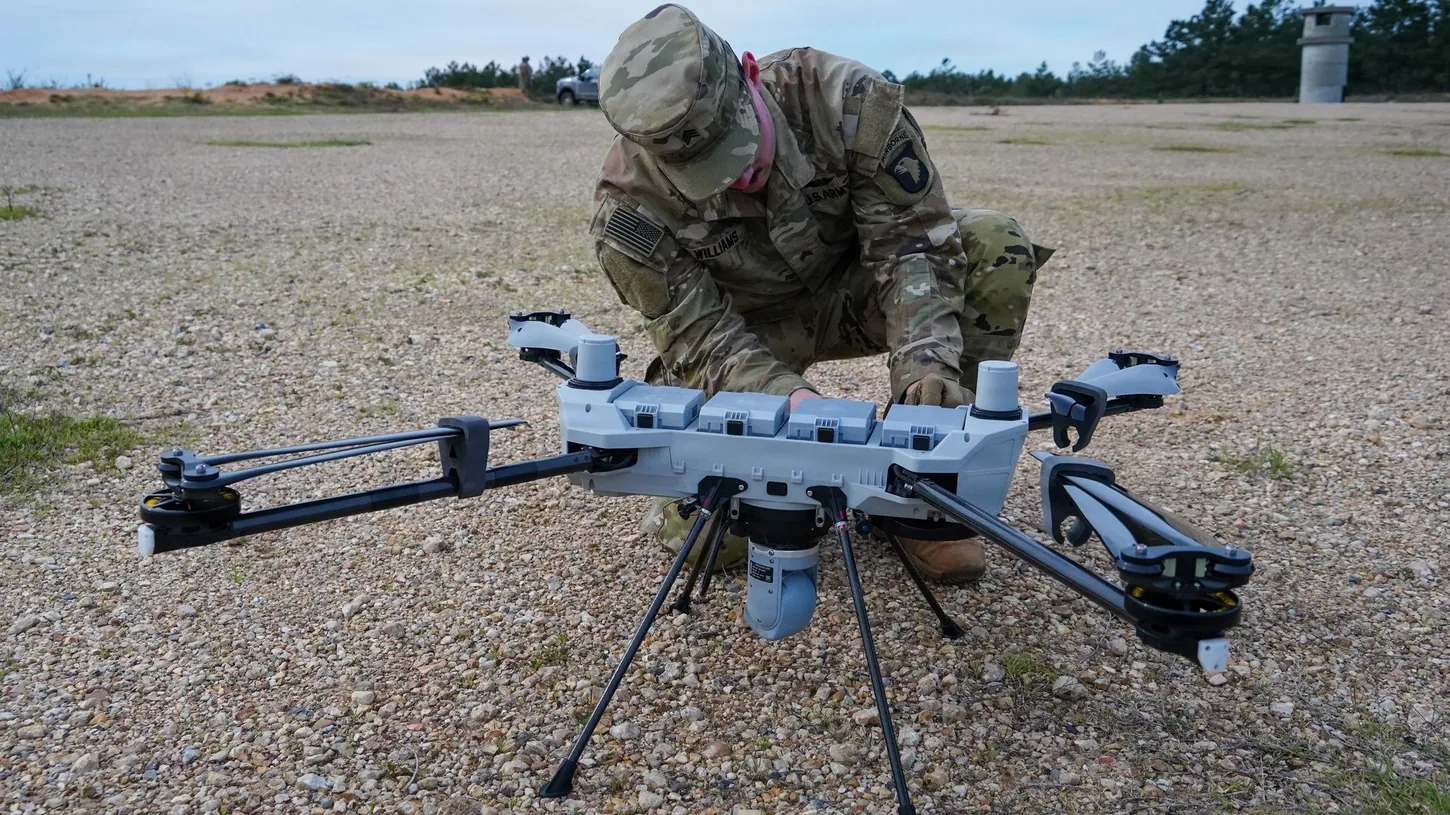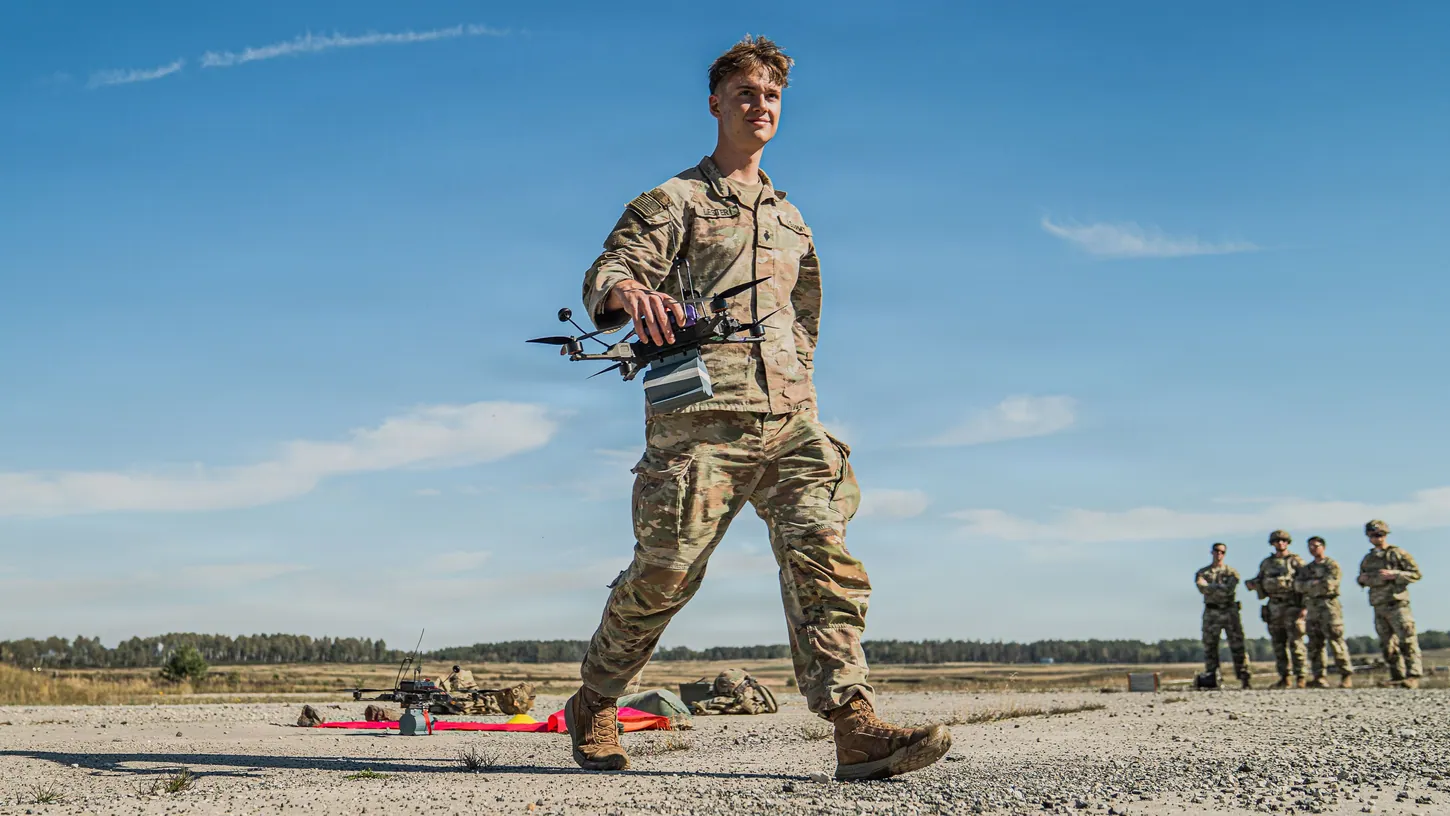
The U.S. Army’s small attack drones will be flown until they break and then replaced with new ones, with no repair and no stockpile, according to Jon Strzelec, the advanced manufacturing lead for small drones at Army Materiel Command. He described the approach to Breaking Defense’s Ashley Roque in an October interview the outlet published on Thursday, November 12. His word for it is “replace,” where the Army would normally say “sustain.”
Strzelec is the official who said in October that the Pentagon was “artificially” inducing drone demand. In the same Breaking Defense report, Performance Drone Works CEO James Slider said he needed a year of steady orders, which DroneXL covered on October 26. If broken drones are replaced and never repaired, every drone a soldier breaks in training has to be ordered again.
That puts the weight on the companies that build them. The Pentagon’s Drone Dominance Program placed its first base orders, 22,320 drones, in March, with the last of them due within four and a half months. By mid-September, three of the 11 winning companies had delivered everything.
Strzelec Says Building A New Drone Costs Less Than Reworking One
The cost argument is Strzelec’s. He told Breaking Defense that opening up a stored drone to swap a circuit card and reload its software costs more than building a fresh one on an assembly line, and that Russia can counter a new design in Ukraine within 72 hours.
The Army’s direction to his office, he said, was that “we have to manufacture to deliver, not to stock.” Drones from the program’s first round are going to units as training equipment, and he expects soldiers to crash them while they learn. Roque’s article has the full interview, Slider’s reaction and the sustainment concerns of two former Pentagon officials, and it is worth reading in full.
The Army says it is short on trained pilots. Col. Gregory Merkl, the Army’s Drone Dominance director, said on September 17 that the service had the drones for every squad and not enough soldiers qualified to fly them, as DroneXL reported in a piece on the shrinking pilot pipeline.
Hegseth’s Memo Made Group 2 Drones Consumable. The Army Sorts By Cost
Defense Secretary Pete Hegseth’s July 10, 2025, memo ordered that Group 1 and Group 2 drones, everything up to 55 pounds (25 kilograms), be “accounted for as consumable commodities, not durable property.” Strzelec keeps part of Group 2 on the repair side and says cost decides which get thrown away.
The wording comes from the memo’s attachment, quoted by TWZ the day it was released, which adds that small drones should be cheap and rapidly replaceable. DroneXL covered the directive the next day. Group 1 runs up to 20 pounds (9 kilograms) and Group 2 from 21 to 55 pounds.
Strzelec’s exception is the pricier end of Group 2, the aircraft flown on reconnaissance and delivery missions. He told Roque those are likely to stay in service, and that what a drone costs for its mission will decide whether it is kept or thrown away. The memo itself sorts drones by weight class.
Strzelec’s Program Stopped Building Whole Drones To Build Their Parts
The Army’s SkyFoundry effort set out to build 10,000 complete drones a month in Army depots during 2026. By October it had been renamed Advanced Manufacturing for sUAS, and Strzelec told Janes on October 6 that it had moved to making components.
He told Janes the American economy is not positioned to produce the 120,000 drones a year the program first called for, and that the bigger problem was bringing the subcomponents onshore. Tobyhanna Army Depot in Pennsylvania opened a brushless motor line on June 30. Rock Island Arsenal makes frames, Red River Army Depot in Texas makes batteries, and Army Materiel Command is scaling up chassis, circuit card assemblies and propellers, the Army says. The motor target is 50,000 by the end of fiscal 2027, a figure Strzelec gave Bloomberg that DroneXL reported on October 31.
Circuit cards are among the parts Roque’s article lists as exposed to countermeasures, along with software, radios and cameras. Air Force Col. Dustin Thomas, who commands the Defense Contract Management Agency’s US-X unit, made the matching argument in a September 2 essay for Breaking Defense. He wrote that the military should stockpile components and flexible manufacturing capacity in place of finished drones, or “we risk stockpiling obsolescence.”
Crashing 100,000 Drones A Year Would Use 40% Of The Pentagon’s 2027 Goal
Thomas followed up on October 14 with a second Breaking Defense essay that argues for making industry crash 100,000 drones next year. The Drone Dominance Program’s stated goal is about 250,000 drones by the end of 2027, so training at that rate would use up 40% of the goal.
Thomas is clear in the essay that he is not asking for 100,000 extra drones. He wants the Pentagon to plan on crashing and replacing a portion of what it already buys. He cites Travis Metz of the Defense Innovation Unit, who told the Senate Armed Services Committee this year that training should consume drones in “the hundreds of thousands per year.” Metz is also the official who gave Bloomberg the 250,000 figure.
The program’s own prices put a floor under the cost. Phase 3 lists Close Quarter Battle drones at $3,000 and Deep Strike drones at $5,000 before weaponization, as DroneXL reported when the round opened in September. At those prices 100,000 airframes cost $300 million to $500 million a year. The Pentagon has committed roughly $1.1 billion to all four phases of the competition.
Thomas also lists work that comes with expending drones at that scale: recovering the wrecks, harvesting usable components, handling damaged batteries, recycling materials and disposing of the rest.
Replacement Depends On Makers Who Missed Their First Delivery Dates
Gauntlet I winners had to ship half of their 22,320 base-order drones within two and a half months of the March awards. The rest were due within four and a half. By August 25 the program had received 13,440 of them, about 60% of the total.
Inside Unmanned Systems traced the shortfall to motors, batteries, sensors and chips that meet the Pentagon’s rules on Chinese parts. Those are the kinds of components the Army’s depots have started making. The program later moved 800 undelivered drones to Neros, which had shipped on time.
The money for a standing replacement order is not in hand either. The Pentagon’s fiscal 2027 request carries $54.6 billion for the Defense Autonomous Warfare Group, and about $53.6 billion of it sits in a reconciliation package that Congress has not passed.
DroneXL’s Take
I think “replace” is the most useful thing an Army official has said to drone makers this year. Slider asked for a year of steady orders, and a training range that breaks drones every week is a steady order. Anyone who has flown FPV will recognize the method too, because you learn a gap by hitting the gate a few times.
Costa has a point that the expensive aircraft need a sustainment plan, and Strzelec agrees with him on the costlier Group 2 drones. I’d take the Army’s math over a repair depot for a $3,000 quad.
I haven’t seen a replacement quantity for training in any Gauntlet order. The Army buys training ammunition every year as a planned quantity, and drones that are flown to destruction need the same treatment. So far the Gauntlet orders are one-off competition awards, and the money that could pay for steady replacement is waiting on Congress. I’ll be reading the Phase 3 contracts and the fiscal 2027 appropriation for a replacement quantity for training. If neither has one, units will fly their drones until they break and then wait for the next competition round to get new ones.
Sources: Breaking Defense (Ashley Roque’s interview with Jon Strzelec, and Col. Dustin Thomas’s essays of September 2 and October 14), Janes, U.S. Army, TWZ, Inside Unmanned Systems, Defense One.
DroneXL uses automated tools to support research and source retrieval. All reporting and editorial perspectives are by Haye Kesteloo. Read our editorial standards.